On Calle de Fuencarral, one of Madrid's most commercially active streets, ORIO Fuencarral represents the Basque pintxos tradition transplanted into the capital's Centro district. The format sits between a casual bar and a sit-down restaurant, with the kind of counter-driven energy that Madrid's dining scene has absorbed from northern Spain over the past decade.
Pearl is the En Primeur Club membership app — saves, bookings, and concierge access live there. Same editors, same standards.
- Address
- Calle de Fuencarral, 49, Centro, 28004 Madrid, Spain
- Phone
- +34915218318
- Website
- oriogastronomiavasca.com
- Directions
- Get directions
 Saves & bookings on Pearl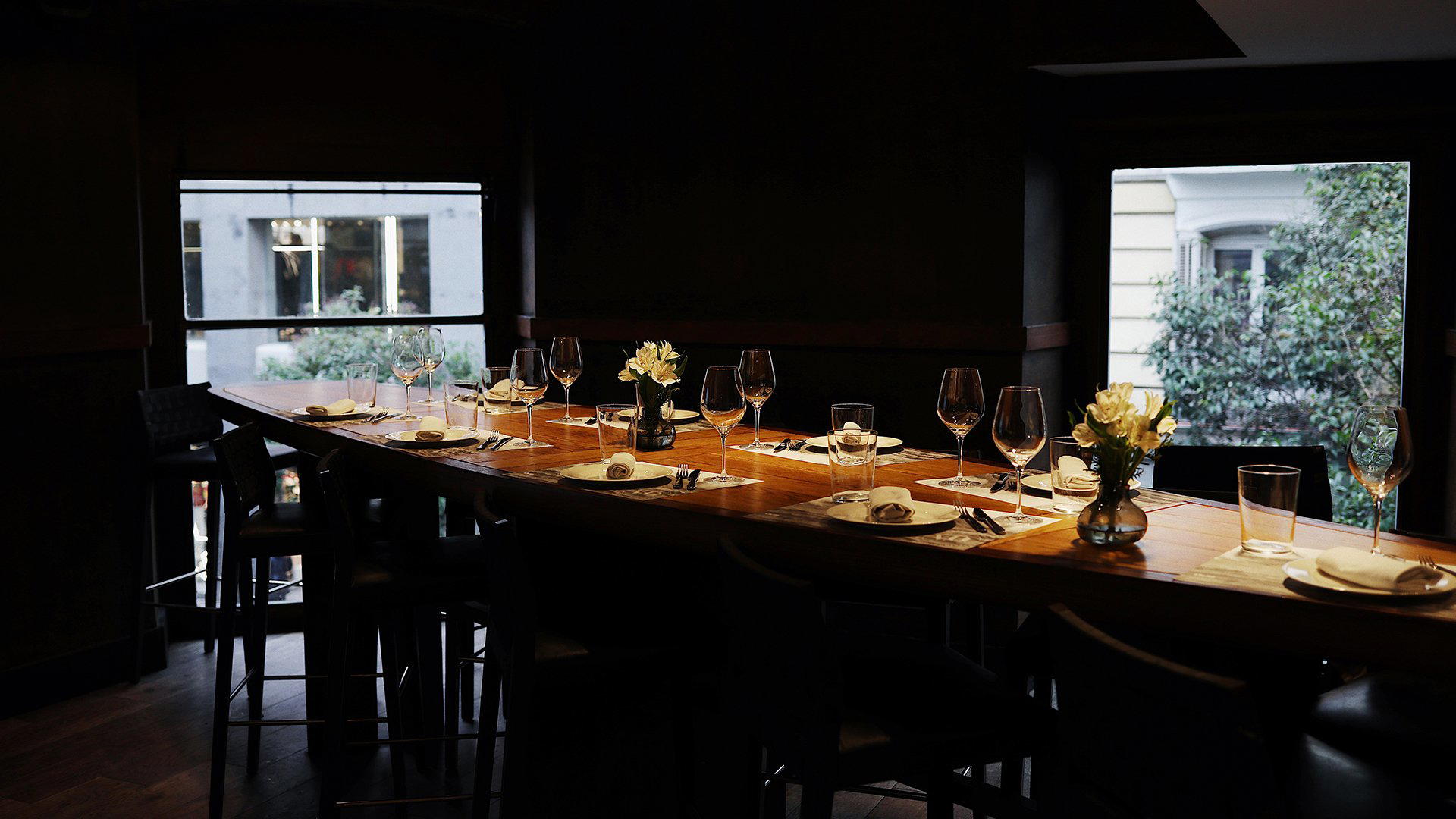
Fuencarral's Dining Register: Where Basque Tradition Meets Madrid Street Energy
Calle de Fuencarral runs north from Gran Vía through one of Madrid's densest retail and nightlife corridors, and the stretch around number 49 operates at a particular pitch: loud, mobile, and deliberately informal. The eating culture here tilts toward standing counters, shared plates, and the kind of tempo that suits a city that treats dinner as a social event rather than a ceremony. Into this register, ORIO Fuencarral inserts the logic of a Basque pintxos bar, a format that has migrated south from San Sebastián and Bilbao over decades and found consistent commercial traction in Madrid's Centro and Malasaña neighbourhoods.
The pintxos format itself carries a particular discipline. In its northern heartland, it functions as a bar culture built around small, precise preparations displayed on bread, often finished to order and priced individually. When that format travels to Madrid, it absorbs a different social pace: longer evenings, larger groups, and a public that treats it as a meal rather than a bar snack. The better operators in this translated format hold the kitchen standards while adapting the rhythm, a calibration that defines which venues in this city earn repeat traffic from both locals and informed visitors.
The Intersection of Basque Technique and Madrid's Appetite
The editorial angle that frames ORIO Fuencarral most clearly is not the address or the fit-out but the underlying food logic: Basque coastal and interior ingredients, prepared with the exacting standards that northern Spanish cuisine has exported across the country. Spain's serious restaurant conversation tends to cluster around multi-Michelin operations like DiverXO, Coque, Deessa, and DSTAgE, all of which operate at a different price tier and formality level. ORIO positions itself outside that bracket entirely, in the accessible-but-serious middle ground where the cooking credentials come from tradition rather than tasting-menu architecture.
That middle ground is increasingly competitive in Madrid. The city's restaurant scene has expanded its casual-but-ingredient-led tier considerably over the past five years, with concepts drawing from Galician, Castilian, and Andalusian traditions alongside the Basque model. What the Basque format brings that others struggle to replicate at this price level is an embedded culture of product quality: the txangurro, the anchovies, the peppers from Lodosa, the idiazabal. These are not decorative references to northern Spain; they are load-bearing ingredients in a kitchen tradition that has spent generations refining how to handle them.
Spain's broader dining geography rewards this kind of specificity. Operations like Arzak in San Sebastián, Azurmendi in Larrabetzu, and Mugaritz in Errenteria have built international reputations on Basque ingredient culture pushed to its outer technical limits. ORIO operates at the accessible end of the same lineage, without the tasting-menu format or the award-season positioning, but drawing on the same foundational argument: that the north of Spain produces ingredients worth treating with precision.
How ORIO Fuencarral Sits in the Madrid Casual Dining Tier
Madrid's mid-market dining options have become more differentiated, and the Basque pintxos bar occupies a specific slot: lower formality than a sit-down restaurant, higher kitchen ambition than a standard tapas bar. The ORIO group, which operates multiple sites across Spain, has established the format as a repeatable proposition rather than a single location. That consistency is part of the value in a city where independent casual operators can be unreliable at scale.
For comparison, the upper tier of Madrid's creative restaurant scene, including Paco Roncero and the venues already mentioned, requires significantly more planning, substantially higher spend, and a formality that does not suit every occasion. ORIO's format sidesteps those barriers while still anchoring the experience in a specific regional cooking tradition. That positioning earns it a different audience: the informed diner who wants product quality without the theatrical apparatus of a tasting menu.
Within Spain's wider restaurant scene, the contrast between accessible regional formats and high-concept operations is a structural feature rather than a hierarchy. El Celler de Can Roca in Girona, Martin Berasategui in Lasarte-Oria, and Quique Dacosta in Dénia occupy one end of that spectrum; places like ORIO hold the other, and both ends serve distinct purposes in how a serious traveller builds an itinerary. For context on how international kitchens approach the same local-technique tension, Atomix in New York City and Le Bernardin in New York City illustrate how imported ingredient traditions can be held with technical rigour at different price points.
Planning a Visit: Logistics and Positioning
The Fuencarral address places ORIO in Centro, within walking distance of Gran Vía, Chueca, and Malasaña. Evenings in this corridor run late by northern European standards: Madrid's kitchen culture operates on a schedule where 9pm is early for dinner and 11pm is unremarkable. Visitors arriving at 7pm will find a quieter room; by 9:30pm, the street and most venues on it are at full pace.
| Venue | Format | Price Tier | Advance Booking Required |
|---|---|---|---|
| The restaurant | Basque pintxos bar | Mid-range | Walk-in likely possible; evenings busier |
| DiverXO | Progressive tasting menu | €€€€ | Months in advance |
| Coque | Spanish creative tasting menu | €€€€ | Weeks to months ahead |
| Deessa | Modern Spanish creative | €€€€ | Weeks ahead recommended |
| Paco Roncero | Creative tasting menu | €€€€ | Weeks ahead recommended |
For a broader read on Madrid's dining scene across all tiers and neighbourhoods, see our full Madrid restaurants guide. Comparable regional-specialist operators elsewhere in Spain include Ricard Camarena in València, Cocina Hermanos Torres in Barcelona, Atrio in Cáceres, and Aponiente in El Puerto de Santa María, each anchored in a specific regional ingredient logic.
Peers in This Market
Comparable venues nearby, for context on price, style, and recognition.
| Venue | Cuisine | Price | Notes |
|---|---|---|---|
| ORIO FuencarralThis venue — the venue you are viewing | Basque Pintxos and Seafood | $$ | Not listed |
| Gallobúho | Modern Spanish Tapas | $$ | Justicia |
| Casa Parrondo | Traditional Asturian Tapas & Seafood | $$ | Sol |
| El 5 de Tirso | Modern Madrid Tapas | $$ | Lavapies |
| Restaurante 3B | Traditional Spanish Parrilla Grill | $$ | Salvador |
| Bovia Del Viso | Modern Spanish Steakhouse | $$ | Aguilas |
Continue exploring
More in Madrid
Restaurants in Madrid
Browse all →
Bars in Madrid
Browse all →
Hotels in Madrid
Browse all →


At a Glance
- Trendy
- Modern
- Lively
- Casual Hangout
- Date Night
- Group Dining
- Open Kitchen
- Street Scene
Current opening hours
- Monday
- 12 PM–12 AM
- Tuesday
- 12 PM–12 AM
- Wednesday
- 12 PM–12 AM
- Thursday
- 12 PM–12 AM
- Friday
- 12 PM–12 AM
- Saturday
- 12 PM–12 AM
- Sunday
- 12 PM–12 AM
Hours can change for holidays and private events. Last verified .
Iron, rust, and sea aromas create an informal, modern fishing-inspired space with a lively pintxos bar downstairs and quieter dining upstairs.