C.E.O Baas van het Vlees
Our verdict
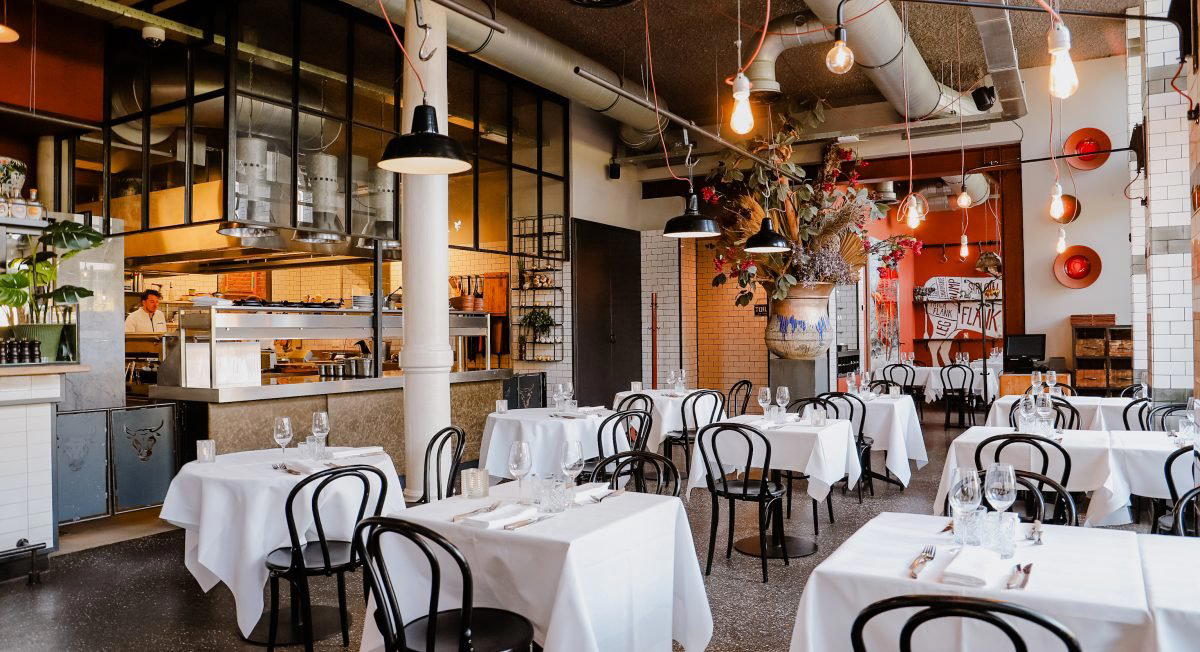
C.E.O Baas van het Vlees occupies a former industrial address on Sumatraweg in Rotterdam's south harbour fringe, where the name itself — 'Boss of the Meat' — signals exactly what's on the agenda. This is a meat-forward address operating at the intersection of Rotterdam's working-port character and its growing appetite for produce-led cooking. Expect the kind of directness that the city tends to reward.

Pearl is the En Primeur Club membership app — saves, bookings, and concierge access live there. Same editors, same standards.
The menu
What to order
- Côte de Boeuf
- Entrecôte
- Ossenhaas
- Tournedos Rossini
Meat on the Edge of the Harbour
Rotterdam's southern industrial belt has quietly become one of the city's more interesting dining territories. The Sumatraweg corridor, which takes its name from the Dutch colonial shipping era, sits close to the old Rotterdam-Zuid port infrastructure — a neighbourhood where warehouse conversions and repurposed logistics buildings have created the physical conditions for a certain kind of restaurant: large-format, materially honest, and built around a single dominant ingredient rather than a tasting-menu philosophy. C.E.O Baas van het Vlees, at Sumatraweg 1-3, belongs to that tradition. The name translates directly as 'Boss of the Meat,' and the address doesn't dress that proposition up.
Walking towards the building, the surroundings do most of the contextual work. This is not the polished Kop van Zuid waterfront, where Rotterdam's architectural ambitions are most visible, nor the compact Witte de Withstraat dining strip. Sumatraweg operates on a different register: wider roads, industrial-scale neighbours, the low ambient noise of a neighbourhood that was built to move cargo rather than host dinner. That context shapes what a restaurant here can credibly be, and C.E.O reads it correctly.
Where the Food Comes From, and Why That Matters
Rotterdam has long functioned as Europe's largest port, and the relationship between supply chain and table is arguably more literal here than in any other Dutch city. The leading meat-focused restaurants in the Netherlands have generally built their reputations on sourcing specificity: named farms, defined breeds, documented ageing protocols. That conversation has intensified in the past decade as Dutch diners have grown more attentive to provenance, partly driven by the broader European turn toward nose-to-tail eating and partly by the agricultural controversies that have made Dutch farming practices a recurring national debate.
A restaurant with the stated ambition of being 'boss of the meat' operates inside that context, whether it chooses to engage with it explicitly or not. In Rotterdam's current food scene, where FG - François Geurds and Fred represent the creative fine-dining tier and Parkheuvel holds the city's most established Michelin position, there is genuine appetite for addresses that do fewer things with more conviction. A meat-specialist in an industrial-adjacent space on the port fringe is a coherent position in that market.
The sourcing question is the one that ultimately determines whether a meat-focused restaurant earns its authority or simply performs it. Across Europe, the addresses that have built durable reputations in this space, from London's old St. John model to the Basque asadores, have done so by making the supply chain part of the proposition: named suppliers, visible cuts, minimal intervention between animal and plate. Whether C.E.O operates with that level of sourcing transparency is something a first visit will answer quickly. The directness of the name suggests an ambition in that direction.
Rotterdam's Meat Scene in Context
The Netherlands is not the first country that comes to mind when European meat cooking is discussed, but that underestimation misses some important structural facts. Dutch livestock farming operates at significant scale, and the country has a longstanding tradition of high-quality dairy and beef production concentrated in provinces like Groningen, Overijssel, and Gelderland. Rotterdam, as the distribution hub for that production and for imports from across Europe and South America, sits in a logical position to access premium cuts that other cities receive at one remove.
Meat-restaurant format itself has diversified considerably across Dutch cities in the past decade. The old steakhouse model, built around Argentinian or American cuts served with classic sauce accompaniments, has been supplemented by a more technically engaged approach: dry-ageing programmes, breed-specific menus, wood-fire cooking methods borrowed from Spanish and South American traditions. Rotterdam has seen versions of all of these. An address on Sumatraweg, with its industrial adjacency, sits more naturally in the direct, high-volume end of that spectrum than in the precision fine-dining register represented by Amarone or Fitzgerald closer to the city centre.
For a wider view of where Rotterdam's restaurants are moving, the full Rotterdam restaurants guide maps the city's dining geography across price tiers and neighbourhoods. Elsewhere in the Netherlands, Michelin-recognised addresses like De Librije in Zwolle, Inter Scaldes in Kruiningen, and De Nieuwe Winkel in Nijmegen define what the country's fine-dining ceiling looks like, while regional addresses such as De Lindenhof in Giethoorn, Tribeca in Heeze, De Groene Lantaarn in Staphorst, Brut172 in Reijmerstok, De Lindehof in Nuenen, De Bokkedoorns in Overveen, and De Treeswijkhoeve in Waalre illustrate how produce-led conviction shows up across different formats and price points. Internationally, the confidence to build a restaurant around a single ingredient with full commitment has precedent in programmes as different as Le Bernardin in New York City and Lazy Bear in San Francisco.
Planning Your Visit
C.E.O Baas van het Vlees is located at Sumatraweg 1-3, 3072 ZX Rotterdam, in the southern port-adjacent zone of the city. Public transport connections to this part of Rotterdam require some navigation, and a tram or taxi from Rotterdam Centraal is the practical approach for most visitors. The address sits outside the immediate tourist circuit, which is part of its character. Current booking methods, operating hours, and pricing are best confirmed directly before visiting, as the venue's operational details are not comprehensively published in third-party listings at the time of writing.
Frequently asked questions
What should I order at C.E.O Baas van het Vlees?
The name announces the kitchen's focus without ambiguity: meat is the primary reference point here. In Rotterdam's current dining scene, where the city's most awarded addresses like [Parkheuvel](https://www.enprimeurclub.com/restaurants/parkheuvel-rotterdam-restaurant) and [FG - François Geurds](https://www.enprimeurclub.com/restaurants/fg-franois-geurds-rotterdam-restaurant) operate in the multi-course creative register, an address that positions itself explicitly as 'boss of the meat' is making an ingredient-first argument. The logical order is whatever the kitchen considers its primary cut that day, prepared with the method the kitchen trusts most. Asking staff directly about sourcing and preparation will tell you more than any static menu description.
Can I walk in to C.E.O Baas van het Vlees?
Rotterdam's most discussed restaurant addresses across all price tiers, from €€€€ fine dining down to neighbourhood formats, increasingly operate on reservation systems rather than walk-in capacity, particularly on weekends. Given Sumatraweg's location outside the main dining corridors, spontaneous foot traffic is lower than it would be in the Witte de Withstraat area, which could make walk-in access more feasible on quieter evenings. That said, confirming availability in advance is advisable, since a dedicated trip to this part of the city without a confirmed table carries real risk.
Is C.E.O Baas van het Vlees suitable for large groups or private dining events?
Industrial-format restaurant spaces on Rotterdam's port fringe, like the Sumatraweg address, often have the physical capacity to accommodate larger parties that tighter city-centre premises cannot. Meat-focused formats with flexible seating configurations tend to suit group bookings around shared cuts and communal service styles, which aligns with the 'Boss of the Meat' proposition. If a group or private-hire event is your intention, contacting the venue directly is the only reliable way to confirm current capacity, minimum spend requirements, and advance notice needed, as none of these specifics appear in publicly accessible listings for this address.
Accolades, Compared
A quick peer reference to anchor this venue in its category.
| Venue | Cuisine | Price | Awards | Notes |
|---|---|---|---|---|
| C.E.O Baas van het VleesThis venue — the venue you are viewing | Premium Steakhouse | $50–100 | Not listed | Not listed |
| FG - François Geurds | Modern French Molecular Gastronomy | $100–150 | 2 Michelin Stars · La Liste Top Restaurants | Creative |
| Fred | Modern French Fine Dining | $200–300 | 2 Michelin Stars · La Liste Top Restaurants | Creative French |
| Parkheuvel | Modern French Fine Dining | $200–300 | 2 Michelin Stars · La Liste Top Restaurants | Modern Cuisine |
| Joelia | Modern French Fine Dining | Not listed | 1 Michelin Star | Modern French |
| Tres | Progressive Dutch Fine Dining | $200–300 | Michelin Plate · The Best Chef One Knife | Country cooking |
Continue exploring
More in Rotterdam
Restaurants in Rotterdam
All restaurants in Rotterdam →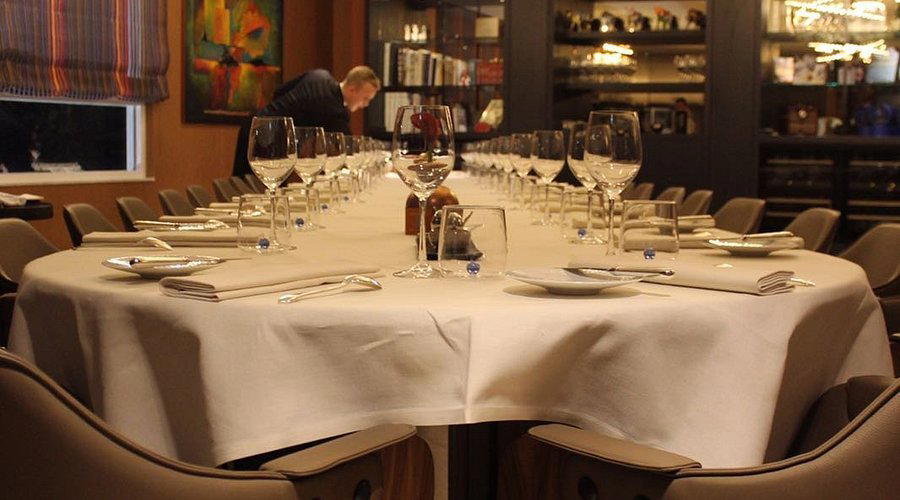
Bars in Rotterdam
All bars in Rotterdam →
Hotels in Rotterdam
All hotels in Rotterdam →
Wineries in Rotterdam
Browse all →
C.E.O Baas van het Vlees
The wine
- Wine program
- Curated wine list
- Extensive wine list
Details
- Industrial
- Lively
- Elegant
- Business Dinner
- Date Night
- Special Occasion
- Group Dining
- Open Kitchen
- Extensive Wine List
- Local Sourcing
- A La Carte
Current opening hours
- Monday
- Closed
- Tuesday
- 5–11 PM
- Wednesday
- 5–11 PM
- Thursday
- 5–11 PM
- Friday
- 5–11 PM
- Saturday
- 5–11 PM
- Sunday
- Closed
Hours can change for holidays and private events. Last verified .
Industrial chic with urban elegance, warm and cozy atmosphere.