The Setting on Daiserstraße
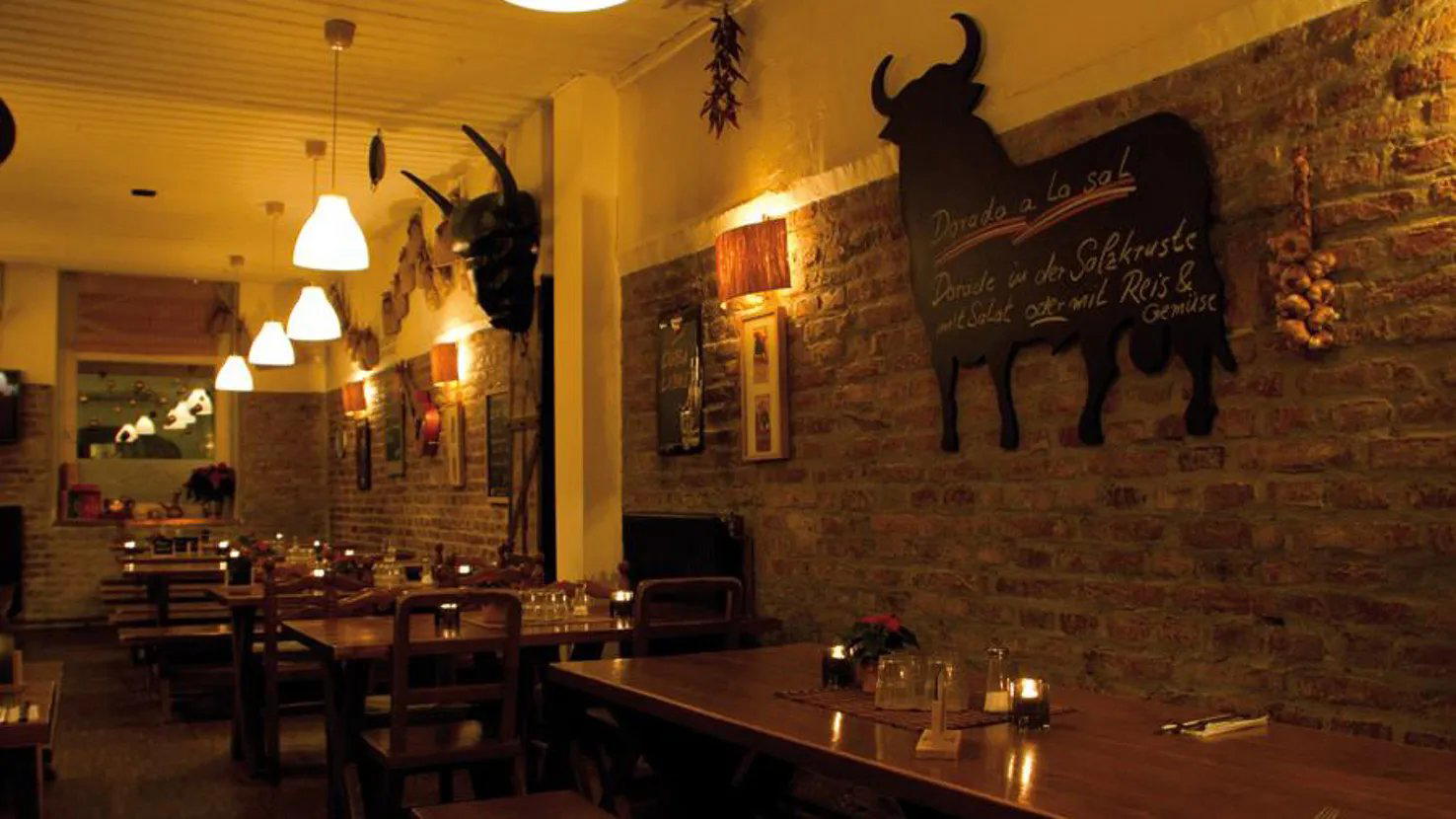
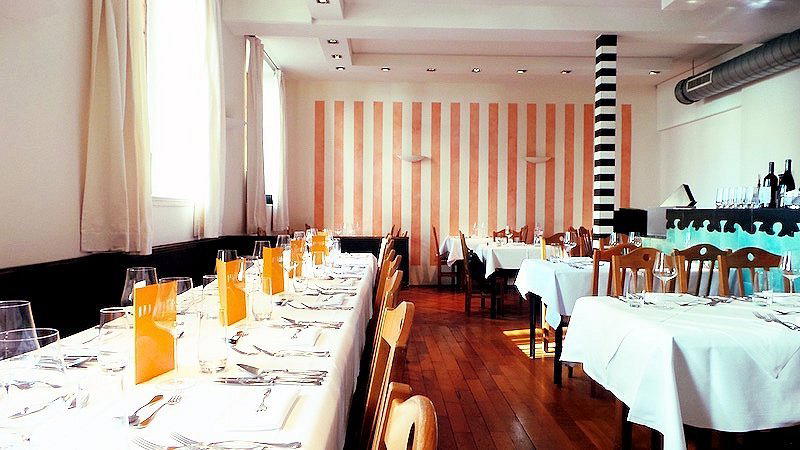
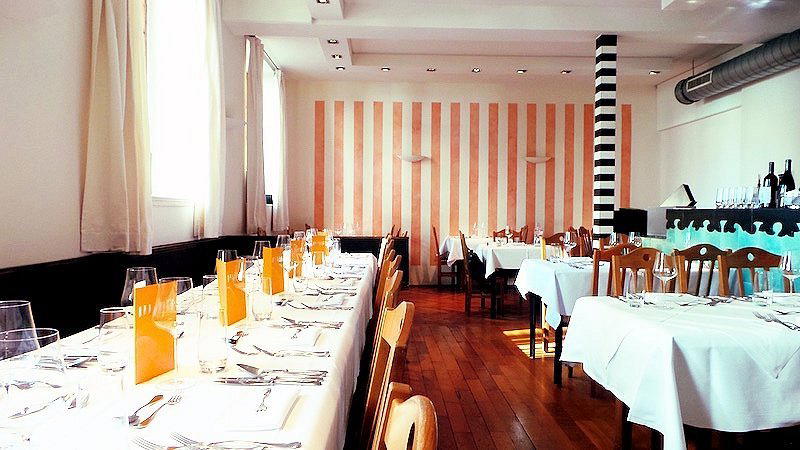
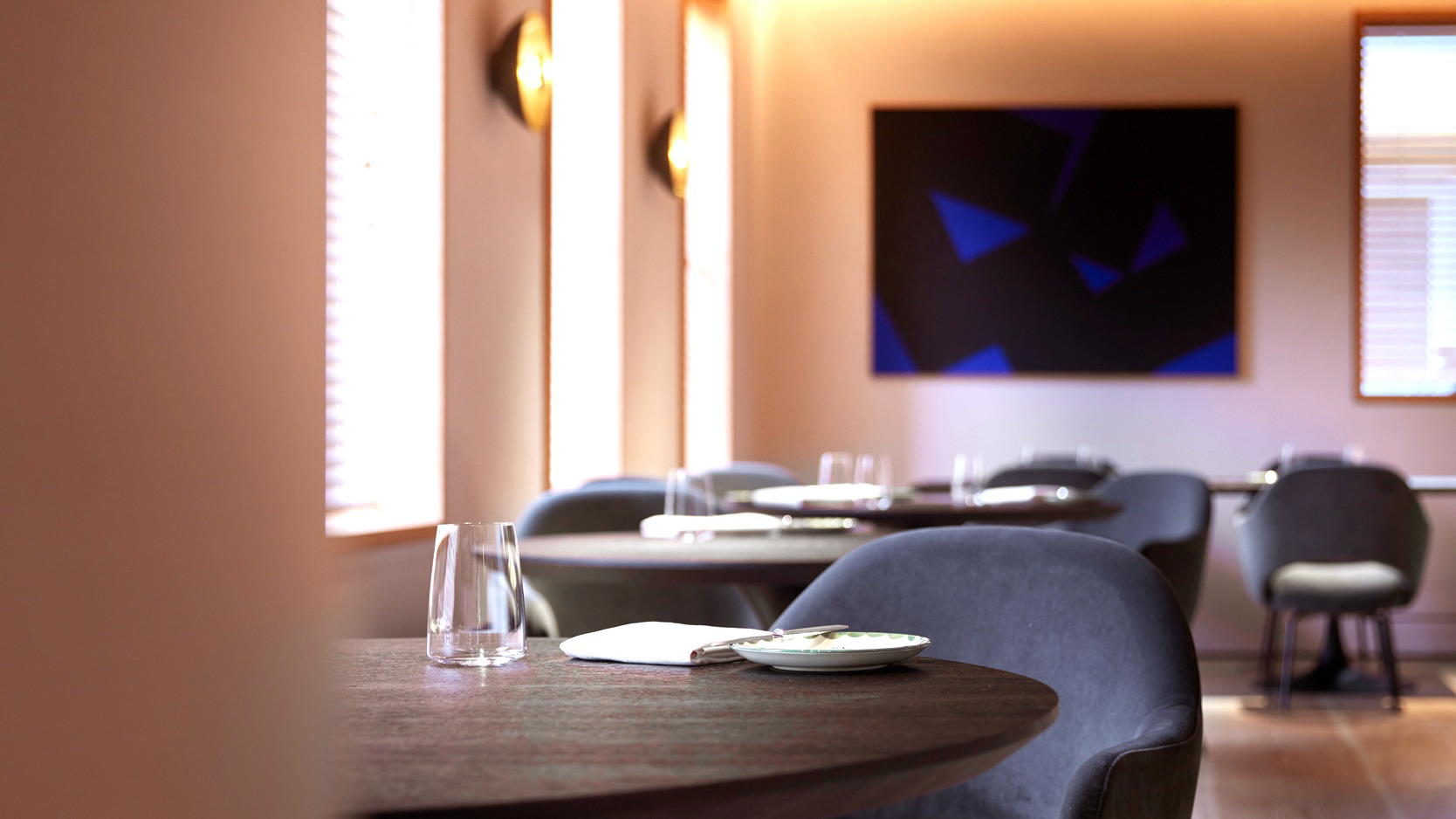
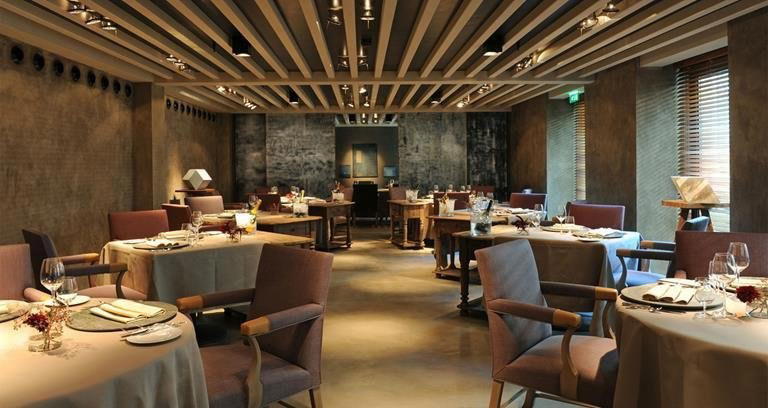
Sendling is the kind of Munich neighbourhood that does not advertise itself. Its streets run quieter than Maxvorstadt or Schwabing, the residential blocks are unfussy, and the dining options tend toward the practical rather than the performative. An approach along Daiserstraße gives you that texture directly: the street is wide enough to feel unhurried, and the buildings carry none of the architectural drama of the city's more photographed quarters. For a Spanish restaurant, this context is not incidental. Spanish neighbourhood dining, from the tascas of Madrid to the sidrerías of the Basque Country, has always been tied to regulars rather than tourists, and an address in Sendling enforces that logic whether by design or circumstance.
The intersection of imported culinary tradition with a German residential neighbourhood produces its own particular atmosphere. This is not a space calibrated for the Instagram circuit or the pre-theatre crowd. It is closer in spirit to the kind of place where a fixed local clientele returns week after week, where the menu is known before the waiter arrives, and where the rhythm of service reflects familiarity rather than performance. That model of dining, common in Spanish cities and increasingly rare in Munich's more polished dining zones, has its own value that does not show up easily in awards tables.
Spanish Cooking Traditions in a German Context
The editorial angle that matters most when thinking about Centro Español is the relationship between technique and place. Spanish cuisine encompasses considerable regional variation: the acid-bright seafood of Galicia, the ember-driven cooking of Castile, the sauce-forward traditions of Catalonia, the minimalist approach to prime ingredients that defines Basque cooking at its most serious. Each of these traditions carries its own logic about what cooking should do and what good produce demands.
Translating any of these traditions to Munich involves a negotiation between imported method and local supply. Germany's produce landscape is not Spanish: the olive oils, the salt-cured fish, the Ibérico pork products, and the specific varieties of pepper and legume that anchor regional Spanish cooking either travel expensively or do not travel at all. What local Bavarian markets offer instead is excellent dairy, seasonal game, freshwater fish, and vegetables from the surrounding agricultural region. Kitchens that take the intersection seriously tend to produce the most interesting food: Spanish technique applied to Bavarian market produce creates a different object from either tradition in isolation. This is the same dynamic visible at a much higher price point in Germany's cross-cultural fine-dining rooms, including JAN in Munich, which similarly draws on southern European registers while working in a northern European context.
The broader German fine-dining scene has engaged with exactly this kind of cultural transfer. Addresses like Schwarzwaldstube in Baiersbronn and Aqua in Wolfsburg demonstrate how French classical grounding has shaped Germany's top tier. At the other end of the experimental spectrum, CODA Dessert Dining in Berlin shows how a single imported format can anchor an entirely distinct dining identity. Spanish cooking has been slower to claim equivalent critical attention in Germany, which makes neighbourhood Spanish restaurants like Centro Español part of a quieter but genuine tradition worth tracking.
Munich's Broader Spanish Dining Context
Munich does not have a Spanish dining district in the way that certain other European cities have accumulated critical masses of regional cuisine. The Spanish restaurants that exist tend to be distributed across residential neighbourhoods rather than concentrated, which means each one builds its audience independently rather than benefiting from a cluster effect. This places a premium on word of mouth and repeat custom over discovery traffic. A restaurant that survives and maintains a loyal base in this environment has done so through consistency rather than novelty.
Across Germany's serious restaurant spectrum, the addresses that generate sustained conversation tend to be those with clear identity and disciplined execution: Vendôme in Bergisch Gladbach, Victor's Fine Dining by Christian Bau in Perl, Waldhotel Sonnora in Dreis, Schanz in Piesport, Restaurant Haerlin in Hamburg, Bagatelle in Trier, and ES:SENZ in Grassau. These are places with verified records. Centro Español operates without that kind of documented critical profile, which makes it harder to position with confidence, but also suggests a kitchen more focused on its local audience than on awards pursuit. That is neither a criticism nor a recommendation in isolation, but it frames the kind of experience to expect.
For comparison outside Germany, the model of Spanish cooking transplanted to a different culinary culture has produced genuinely interesting results in cities like New York, where the produce supply is richer and the critical apparatus more active. Le Bernardin in New York City and Lazy Bear in San Francisco both illustrate how strong culinary identity survives geographical displacement when the execution is disciplined. The question for any Spanish kitchen in Munich is whether that same discipline applies.
What to Expect When Visiting
The Daiserstraße address in Sendling places it in the southwestern residential belt, accessible by U-Bahn on the U3 or U6 lines toward Aidenbachstraße or Sendling. The neighbourhood character suggests a kitchen oriented toward dinner service rather than high-volume lunch trade, but confirmation from the venue directly is advisable before travel.
Visitors familiar with the Munich fine-dining tier at the top end of the city's restaurant scene should calibrate expectations accordingly. Centro Español is not competing in that bracket. It occupies a different part of Munich's dining ecology, one defined by neighbourhood loyalty and Spanish culinary tradition rather than tasting menus and sommelier-led service. That can be precisely what a meal in Munich should be, depending on what you are looking for.
Know Before You Go
- Address: Daiserstraße 20, 81371 München, Germany
- District: Sendling, southwest Munich
- Transit: U3 or U6 to Aidenbachstraße or Sendling station
- Phone: Not publicly listed — contact via in-person visit or local directory
- Website: Not currently available
- Reservations: Status unconfirmed; advance contact recommended for weekend visits
- Awards:
- Price range: Not confirmed; neighbourhood context suggests mid-range