At Bahnhofplatz 1, NENI München plants the NENI group's Middle Eastern-Mediterranean sharing format inside one of the city's most trafficked transit hubs. The all-day format and mezze-style progression distinguish it from Munich's fine-dining corridor, positioning it closer to the city's casual cosmopolitan end than to the white-tablecloth tradition that dominates its Michelin tier.
Pearl is the En Primeur Club membership app — saves, bookings, and concierge access live there. Same editors, same standards.
- Address
- Bahnhofpl. 1, 80335 München, Germany
- Phone
- +4989904001561
- Website
- nenifood.com
- Directions
- Get directions
 Saves & bookings on Pearl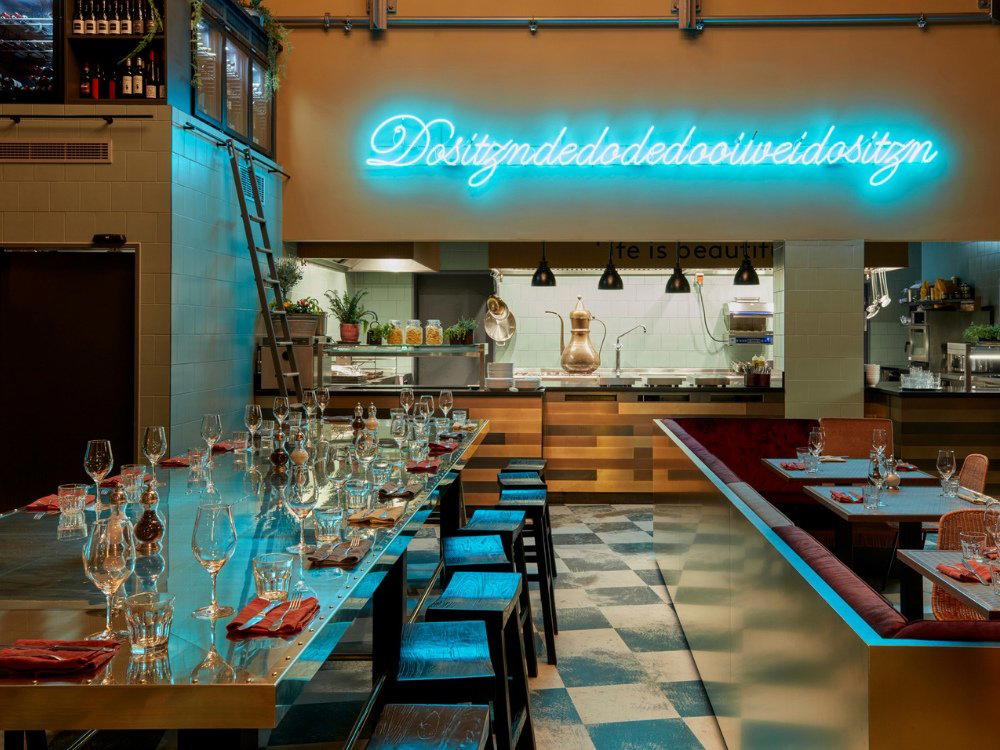
Arriving at the Hub: What Bahnhofplatz Tells You Before You Sit Down
NENI München is a restaurant in Munich serving Levantine Fusion Sharing Plates at Bahnhofpl. 1, 80335 München, Germany. The station square draws enormous foot traffic, yet the surrounding blocks have historically underperformed relative to the quality concentrated further north around Maxvorstadt or east toward the Gärtnerplatz quarter. That pattern has been shifting. The area's density of transient visitors, coupled with a growing resident appetite for all-day formats, has made Bahnhofplatz more interesting to operators willing to look past the postcard version of Munich dining. NENI München, sitting directly on that square, is one expression of that shift.
The NENI group originated in Vienna, built around a family-driven approach to Middle Eastern and Mediterranean cooking that emphasises sharing plates, hummus-forward starters, and produce-led mezze progressions. In Munich, the address places it in conversation not with the city's starred corridor, anchored by venues like Tantris or Atelier, but with a different set of questions entirely: what does the city offer in the mid-register, and where does a sharing-plate Mediterranean format fit within a dining culture still heavily weighted toward Bavarian tradition and French-influenced fine dining?
The Arc of the Meal: How a NENI Table Unfolds
The NENI format operates on a logic closer to Levantine hospitality than to the sequential European service model. A meal here does not move through a clear amuse-bouche-to-dessert arc. Instead, it accumulates. Cold dishes arrive first, typically built around dips, raw vegetables, and bread. The middle of the table fills gradually, with warm dishes arriving in an order that rewards patience rather than precision timing. The approach reflects a broader trend visible in European casual dining over the past decade: the Mediterranean sharing format has moved from specialty ethnic category to mainstream middle-market expectation, and Munich has been slower than Berlin or Hamburg to absorb it at scale.
For a diner accustomed to the structured progression at somewhere like Tohru in der Schreiberei, where each course carries deliberate pacing and editorial intent, the NENI format reads as deliberately open-ended. There is no tasting menu logic at work. The sequencing is the diner's responsibility, which either liberates or frustrates depending on expectation. Groups familiar with the format understand that ordering broadly and early produces the leading spread; solo diners or couples navigating the menu for the first time may find the lack of a fixed arc slightly disorienting.
The all-day structure matters here. Unlike Munich's fine-dining addresses, which operate within tight service windows, a Bahnhofplatz location benefits from continuous service covering lunch, afternoon, and dinner without a hard reset between services. That flexibility suits the neighbourhood's transient character and broadens the venue's functional appeal beyond destination dining.
Where NENI Sits in Munich's Dining Map
Munich's restaurant culture has long concentrated its prestige at the higher end of the price register. The cluster of creative and French-influenced tasting-menu restaurants, from JAN to Alois at Dallmayr, occupies a tier defined by formality, set menus, and advance booking requirements. NENI operates in a different register entirely, one where the competitive set is not defined by Michelin recognition but by accessibility, format flexibility, and cuisine breadth.
The sharing-plate Mediterranean category in Munich remains less developed than in comparable European cities. London, Amsterdam, and Berlin have all seen significant growth in this format over the past five years, driven partly by the success of operators like the Ottolenghi group and partly by a broader cultural shift toward communal eating formats. Munich's version of that shift has been slower, which means venues like NENI operate in a category that has more room to define itself than it would in a more saturated market.
For context on how Germany's wider fine-dining scene is structured, the contrast is instructive. Venues like Aqua in Wolfsburg or Schwarzwaldstube in Baiersbronn represent the country's most formally ambitious end, where tasting menus run to multiple courses and wine pairings are a structural expectation. At the other end, casual all-day formats like NENI's operate without that scaffolding, and the absence of it is precisely the point. Germany also has interesting outliers in the dessert-forward category: CODA Dessert Dining in Berlin has made a case for the full-course dessert progression as a legitimate dining format, which sits in interesting contrast to NENI's savoury, sharing-plate emphasis.
Planning Your Visit: Logistics and Comparisons
The Bahnhofplatz address carries one clear logistical advantage: it is directly accessible from Munich's central transport interchange, making it one of the more direct dining options for visitors arriving or departing by rail.
| Venue | Format | Price Tier | Booking Lead Time | Cuisine Focus |
|---|---|---|---|---|
| NENI München | All-day sharing plates | Mid-range (estimated) | Walk-in friendly | Middle Eastern-Mediterranean |
| Tantris | Tasting menu | €€€€ | Weeks to months ahead | Modern French |
| Alois at Dallmayr | Tasting menu | €€€€ | Weeks ahead | Creative |
| JAN | Tasting menu | €€€€ | Weeks ahead | Creative |
The comparison makes the category gap visible. Munich's upper tier requires advance planning and a significant per-head commitment, while NENI sits at a price tier around $30 per person. NENI's format sits outside that logic, functioning more like a cosmopolitan café-restaurant than a destination tasting-menu address. Visitors who have already committed a night to a place like Vendôme in Bergisch Gladbach or Victor's Fine Dining in Perl during a German trip will find NENI a useful counterpoint: a meal built for conversation and informality rather than ceremony.
A Credentials Check
Comparable venues nearby, for context on price, style, and recognition.
| Venue | Cuisine | Price | Notes |
|---|---|---|---|
| NENI MünchenThis venue — the venue you are viewing | Levantine Fusion Sharing Plates | $$ | Not listed |
| TUTU Kitchen | Levantine Mezze & Fish & Chips Fusion | $$ | Neuhausen |
| Restaurant Kabul | Authentic Afghan | $$ | Neuhausen |
| Wirtshaus Rechthaler Hof | Traditional Bavarian | $$ | Theresienwiese |
| Sim Sim | Middle Eastern Falafel Street Food | $ | Neuhausen |
| KIZUNA KITCHEN | Modern Japanese Fusion | $$ | Isarvorstadt |
At a Glance
- Lively
- Trendy
- Group Dining
- Family
- Casual Hangout
- Open Kitchen
- Hotel Restaurant
- Street Scene
Current opening hours
- Monday
- 12–3 PM, 5:30–10:30 PM
- Tuesday
- 12–3 PM, 5:30–10:30 PM
- Wednesday
- 12–3 PM, 5:30–10:30 PM
- Thursday
- 12–3 PM, 5:30–10:30 PM
- Friday
- 12–3 PM, 5:30–10:30 PM
- Saturday
- 12:30–3 PM, 5:30–10:30 PM
- Sunday
- 12:30–3 PM, 5:30–10:30 PM
Hours can change for holidays and private events. Last verified .