Casa Maggiolina

We're Smart World 1 Radish
Our verdict
A country estate at the foot of Monte Tuscolo, Casa Maggiolina sits inside the Castelli Romani Regional Park and draws its kitchen credentials partly from its own garden. The setting combines wide-plank wood floors, vintage objects, and panoramic terraces with a menu that follows seasonal and vegetarian-forward lines. For the Castelli Romani, it represents a grounded, ingredient-led alternative to the trattoria circuit closer to Rome.

Pearl is the En Primeur Club membership app, where members save venues, book tables and use the concierge.

The menu
What to order
- Spaghetti carbonara
- Tagliatelle with porcini mushrooms
The Castelli Romani Table: Sourcing as a Point of Difference
The hill towns south-east of Rome, Frascati, Marino, Grottaferrata, have long occupied a particular position in the capital's culinary orbit: accessible enough for a Sunday drive, rustic enough to feel like an escape, and historically associated with house wine poured from unlabelled carafes rather than any serious kitchen ambition. That picture has been shifting. A subset of estates and agriturismo-adjacent properties in the Castelli Romani Regional Park have started building their identity around ingredient provenance rather than folklore, and Casa Maggiolina, on the Via Tuscolana at the foot of Monte Tuscolo, is one address where that shift is clearest.
What makes the sourcing argument here credible is geography. The estate sits inside the regional park, surrounded by productive land, and a portion of the vegetables on the plate come from the property's own garden. In an era when farm-to-table has become hospitality shorthand for almost anything, that directness carries weight. The kitchen does not need a supply chain to explain where its zucchini or herbs originated. For comparison, the haute-cuisine tier that includes Atelier Moessmer Norbert Niederkofler in Brunico or Reale in Castel di Sangro makes terroir-driven sourcing a centrepiece of its Michelin-backed proposition and charges accordingly at the €€€€ level. Casa Maggiolina operates at a different price register and without that institutional recognition, but the underlying logic of cooking from what the land immediately provides is the same.
Reading the Vegetable-Forward Menu
Italian regional cooking has historically been far more vegetable-centred than its international reputation suggests. The cucina povera traditions of Lazio, cicoria ripassata, vignarola, carciofi alla romana, were built around what grew seasonally, often on smallholdings, and were rarely considered secondary to meat. Casa Maggiolina's consistently wide range of vegetarian options sits inside that tradition rather than representing a modern concession to dietary preference. The distinction matters. When vegetables arrive from the estate's own garden, the kitchen is working with produce at peak condition and designing dishes around what is ready, not what is fashionable.
Seasonality as a structural principle rather than a marketing phrase means the menu changes meaningfully across the year. In the Castelli Romani, spring produces artichokes and broad beans from the volcanic soil. Summer brings tomatoes and aubergines to the terraces at elevation. Autumn shifts toward porcini from the Monte Tuscolo slopes and hearty legume preparations. A kitchen anchored to its own supply will rotate accordingly, which is a different discipline from printing a seasonal menu while sourcing centrally from a wholesale distributor. For those planning a visit around a specific culinary moment, the spring and early summer window, when the estate garden is at its most productive, is worth targeting. See our full Grottaferrata RM restaurants guide for context on how the broader local dining scene maps across seasons.
The Estate Environment: Physical Setting and What It Signals
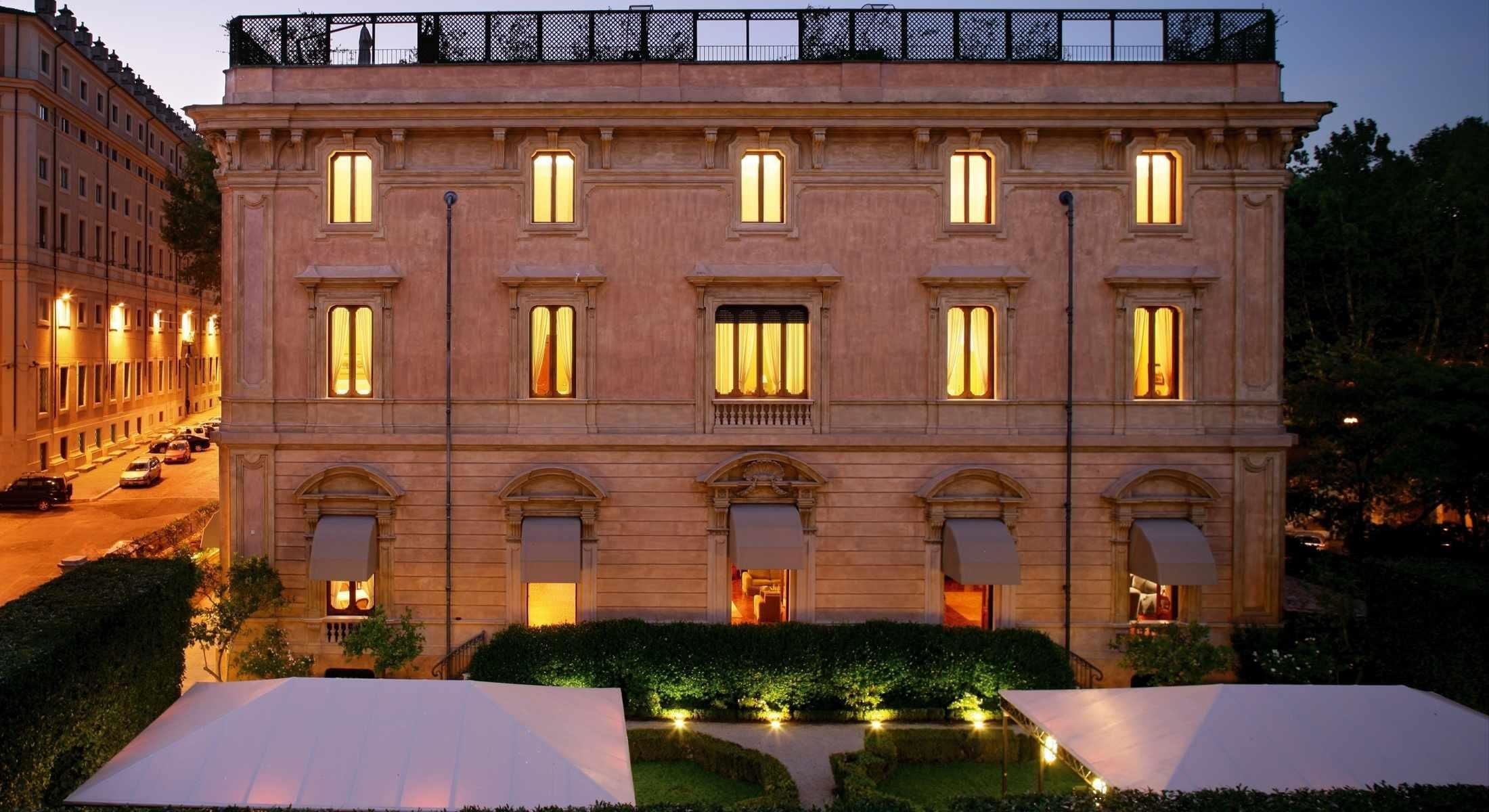
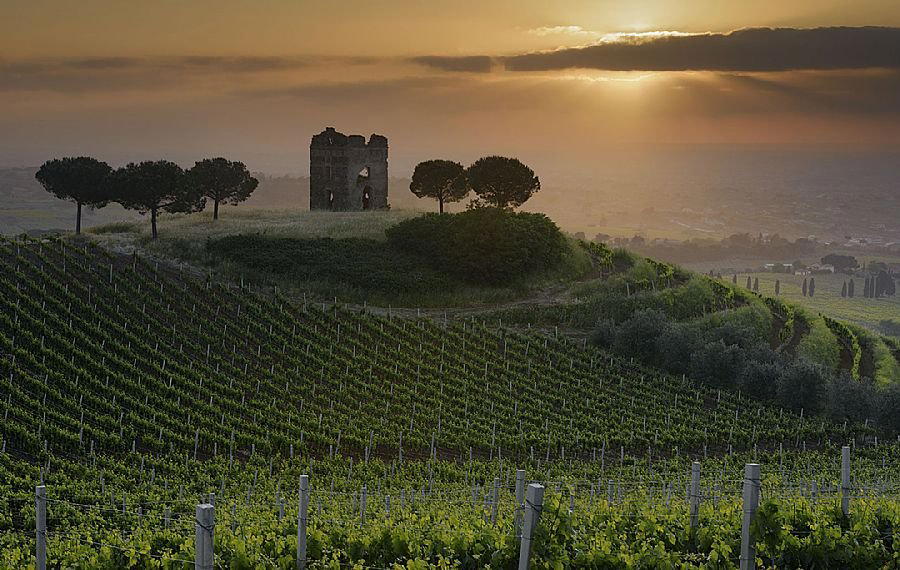
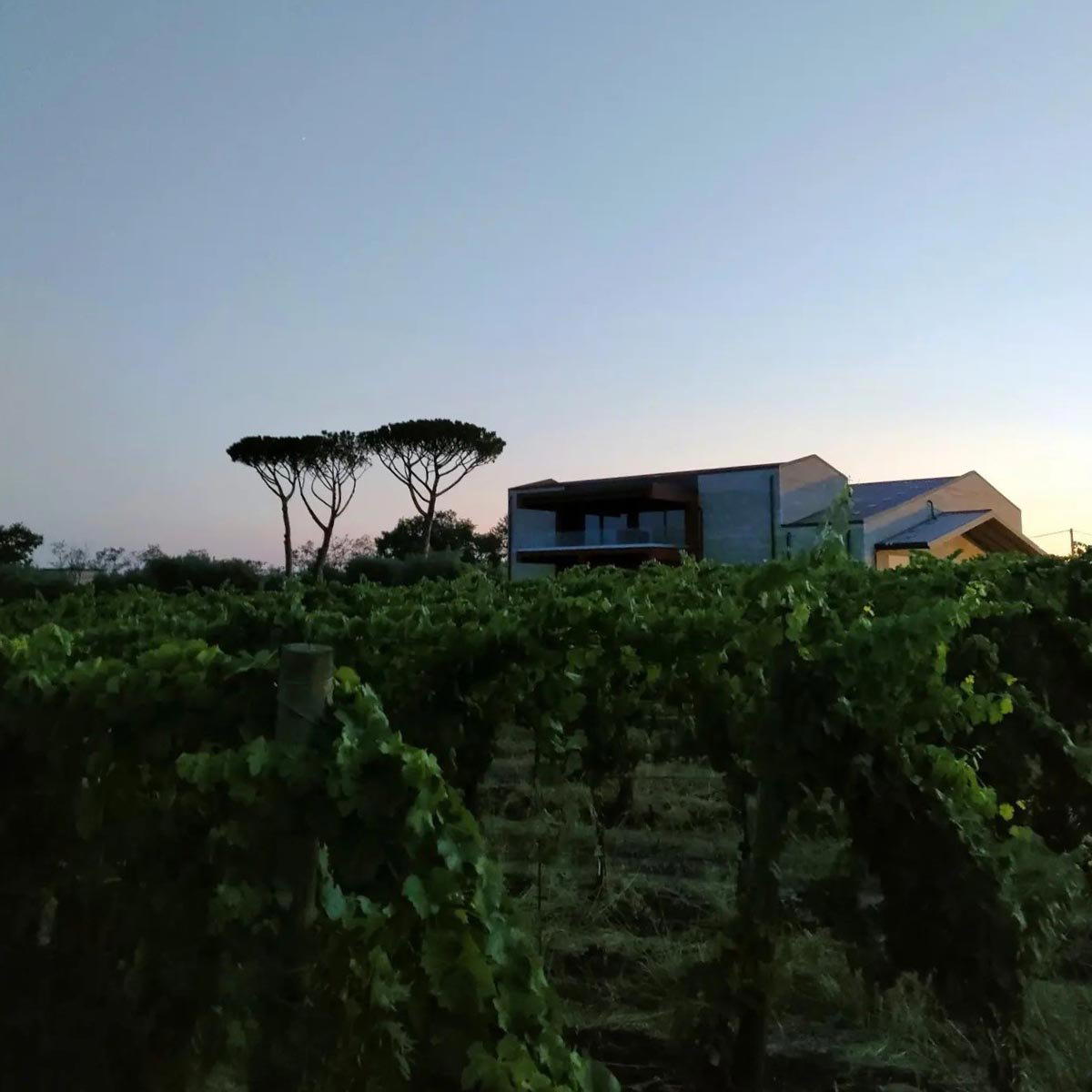
Approaching the property on the Via Tuscolana, the scale of the estate becomes apparent before the entrance. Majestic pine trees frame the building, and the position on the Monte Tuscolo slope means panoramic views open in multiple directions. This is not a compact urban restaurant that has decided to install a few planters; it is a functioning estate with land, garden, and outdoor dining infrastructure that includes a garden veranda, panoramic terraces, and a convivial social table with barbecue for open-air service.
Inside, the interior language is that of a country house where objects have been collected over time rather than sourced from a single hospitality fit-out. Wide planks of raw solid wood flooring, vintage typewriters, and old photographs create the kind of layered atmosphere that reads as lived-in rather than designed. This places Casa Maggiolina in the category of Italian country dining that values patina over polish, a different tradition from the high-design end of Italian hospitality, where properties such as Dal Pescatore in Runate or Enoteca Pinchiorri in Florence have built formal, award-laden environments to match their kitchen ambitions.
The outdoor structures deserve specific mention because they extend the dining experience beyond the interior. A garden veranda and multiple panoramic terraces are not simply overflow seating; in the Castelli Romani, where light and landscape are central to the appeal of eating outside Rome, they are the point. Warm-weather visits when the terrace is operational deliver a fundamentally different experience from a winter interior meal, and both have logic depending on what the visitor is looking for.
The Castelli Romani in Context
Grottaferrata sits roughly 20 kilometres south-east of Rome's centre, accessible by regional rail to the Frascati line or by road via the Via Tuscolana. The area has historically attracted Roman families for weekend meals and local wine, Frascati DOC territory begins immediately to the north, but it has rarely featured in the conversation around serious Italian dining that centres on destinations like Osteria Francescana in Modena, Le Calandre in Rubano, Piazza Duomo in Alba, Enrico Bartolini in Milan, Casa Perbellini 12 Apostoli in Verona, or Uliassi in Senigallia. Casa Maggiolina does not attempt to enter that conversation. Its value proposition is calibrated differently: an estate setting inside a regional park, honest cooking grounded in what the land produces, and a price point described as excellent value.
That positioning is specific and serves a particular kind of traveller: someone staying in Rome who wants a half-day excursion that delivers landscape, a proper meal, and a sense of the agricultural Lazio that the city has historically relied upon but rarely shows visitors. For accommodation and other options in the area, our full Grottaferrata RM hotels guide covers where to stay, and our full Grottaferrata RM experiences guide maps the regional park walks and cultural sites worth combining with a visit. Those interested in local wine can consult our full Grottaferrata RM wineries guide, and the local bar circuit is covered in our full Grottaferrata RM bars guide.
Planning a Visit
Casa Maggiolina is located at Via Tuscolana, 289, Grottaferrata. Given the estate's setting and the draw of outdoor dining, weekend tables, particularly on the terraces, are likely to move faster than weekday slots, and contacting the property ahead of any visit is advisable. The barbecue and social table format suggests it accommodates groups comfortably, which in turn means popular warm-weather weekends may have limited availability at short notice. For complementary high-end Italian dining references beyond the Castelli Romani, Quattro Passi in Marina del Cantone and internationally, Le Bernardin in New York City and Emeril's in New Orleans represent the EP Club coverage of the broader spectrum where ingredient provenance and setting define the offer.
Frequently asked questions
Would Casa Maggiolina be comfortable with kids?
The format suits families considerably better than a formal urban restaurant. The estate garden, outdoor terraces, and communal barbecue table at Via Tuscolana, 289 give children space to move, while the open-air dining structure removes the acoustic pressure of an enclosed room. The garden-sourced vegetable menu also means the kitchen is accustomed to cooking ingredients-first rather than elaborately sauced plates.
What kind of setting is Casa Maggiolina?
A country estate inside the Castelli Romani Regional Park, at the foot of Monte Tuscolo, with majestic pine trees framing the building and panoramic views across the park. Inside, wide raw solid-wood floors and vintage objects, typewriters, old photographs, give the rooms a lived-in character rather than a hotel-lobby finish. The social table with barbecue and the garden veranda are the venue's natural centre of gravity in warmer months.
Is Casa Maggiolina Michelin-listed?
Casa Maggiolina has received recognition including: At the foot of Monte Tuscolo, in the heart of the Castelli Romani Regional Park, stands Casa Maggiolina, a splendid and imposing country estate set in a commanding position over a landscape of rare beauty. Surrounded by a meticulously kept ….
What do regulars order at Casa Maggiolina?
The vegetable-forward dishes are where the sourcing story has most traction: many vegetables come directly from the estate's own garden, which anchors the menu to genuine seasonality rather than supplier catalogues. The cucina povera tradition of the Castelli Romani hill towns means that vegetarian options here are not an afterthought but a structural part of the cooking. Seasonal produce will vary, so what appears on the menu in spring differs considerably from the autumn offering.
What's Casa Maggiolina's location?
Casa Maggiolina is located at Via Tuscolana, 289, 00046 Grottaferrata RM, Italy, Grottaferrata RM.
Should I book Casa Maggiolina in advance?
On warm-weather weekends the outdoor terraces and barbecue table draw both local Grottaferrata visitors and Romans making the roughly 20-kilometre trip south-east from the capital, which compresses available covers. Advance contact is advisable for those dates.
In Context: Similar Options
Comparable venues nearby, for context on price, style, and recognition.
| Venue | Cuisine | Price | Awards | Notes |
|---|---|---|---|---|
| Casa MaggiolinaThis venue (the venue you are viewing) | Modern Italian Trattoria | Not listed | We're Smart World 1 Radish | Not listed |
| Taverna dello Spuntino | Traditional Roman Trattoria | $30–50 | Michelin Plate | Grottaferrata, Castelli Romani |
| Prato di Sopra | Modern Vegan Italian | $20–30 | We're Smart World 4 Radishes | Grottaferrata |
| Riccioli d’oro | Modern Italian Creative | $30–50 | We're Smart World 3 Radishes | Monte Sacro |
| Crunch! | Crunchy Roman Pizza | $20–30 | 50 Top Pizza Italy #90 | Foro Italico |
| Le Bistrot | Vegan Italian Bistro | $30–50 | Not listed | Ostiense |
Recognition history
Dated appearances from independent guides and award organizations, with the underlying list record or original source where available.
We're Smart World 1 Radish
We're Smart World
Continue exploring
More in Grottaferrata
Restaurants in Grottaferrata
All restaurants in Grottaferrata →

Bars in Grottaferrata
Browse all →

Details
- Charming
- Cozy
- Casual Hangout
- Family
- A La Carte
- Vegetarian Friendly
Current opening hours
- Monday
- 12:30–3 PM, 7 PM–12 AM
- Tuesday
- 12:30–3 PM, 7 PM–12 AM
- Wednesday
- 12:30–3 PM, 7 PM–12 AM
- Thursday
- 12:30–3 PM, 7 PM–12 AM
- Friday
- 12:30–3 PM, 7 PM–12 AM
- Saturday
- 12:30–3 PM, 7 PM–12 AM
- Sunday
- 12:30–3 PM, 7 PM–12 AM
Hours can change for holidays and private events. Hours as of .
Charming and pleasant atmosphere as described by guests