Canvas
Canvas occupies the upper floors of Hotel V Nesplein's Wibautstraat address, where the open terrace and industrial-scale room have made it a fixture in Amsterdam's east-side creative scene. The format sits closer to an all-day cultural hub than a conventional restaurant, with a menu that shifts register across breakfast, lunch, and dinner. Its position on the Wibautstraat corridor places it squarely in the city's emerging hospitality belt, east of the canal ring.
Pearl is the En Primeur Club membership app — saves, bookings, and concierge access live there. Same editors, same standards.
- Address
- Wibautstraat 150, 1091 GR Amsterdam, Netherlands
- Phone
- +31 20 261 2110
- Website
- volkshotel.nl
- Directions
- Get directions
 Saves & bookings on Pearl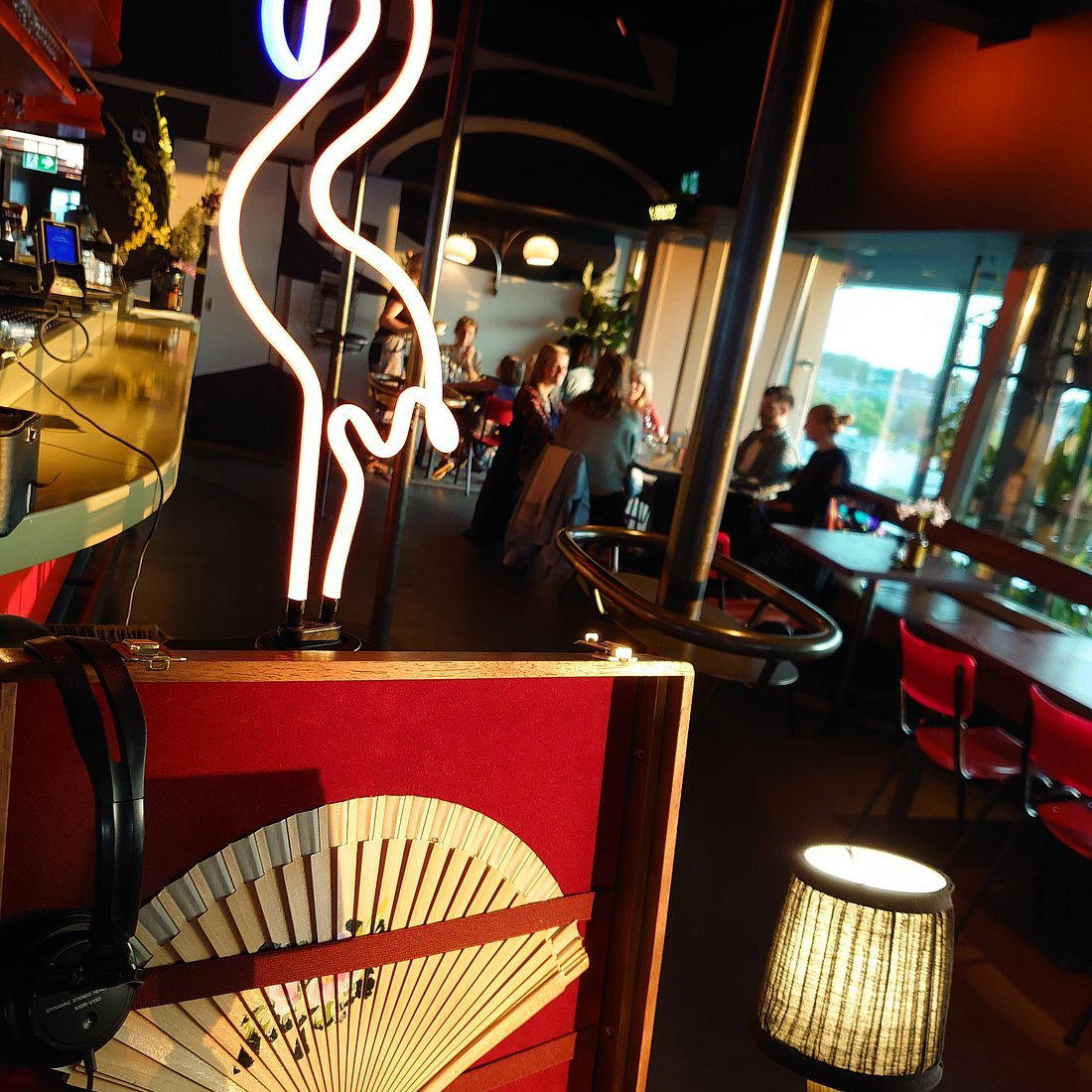
Where Wibautstraat Puts a Restaurant
Amsterdam's restaurant geography has a clear internal logic: the canal-ring addresses carry the white-tablecloth premium tier, while the streets fanning east toward the Amstel have accumulated something different over the past decade. Wibautstraat, once a traffic artery with little culinary identity, now anchors a hospitality corridor that trades on creative programming, industrial scale, and a younger, culturally literate clientele. Canvas is a restaurant at Wibautstraat 150 in Amsterdam, serving Dutch & International Rooftop fare at a price tier of 2. It sits in that corridor, on the upper floors of a building that also functions as a hotel, and its format reflects the character of the street rather than the conventions of a dining room.
That distinction matters when you are trying to place Canvas against Amsterdam's broader restaurant scene. The city's upper tier, represented by addresses like Ciel Bleu, Flore, Spectrum, and Vinkeles, competes on Michelin credentials and tasting-menu formats priced at €€€€. Canvas operates on a different register entirely, one defined by all-day accessibility, a rooftop-level view across the city's eastern districts, and a social format that makes it function more like a neighbourhood cultural anchor than a destination dining room.
The Architecture of an All-Day Menu
The editorial angle most useful for understanding Canvas is menu architecture: what the format reveals about the venue's actual priorities and its relationship to the city around it. In European hospitality, the all-day menu is often treated as a compromise, a way to fill covers across more hours without committing to a strong culinary identity at any one of them. The more considered version of this format, which Canvas represents, treats the different meal periods as distinct registers within a single coherent programme rather than as interchangeable offerings under one roof.
An all-day structure of this kind asks different things of a kitchen than a tasting-menu operation does. It requires the menu to hold up across a wide range of appetites, times, and social contexts, from a solo laptop lunch to a group dinner with cocktails before and after. It also positions the venue in a competitive set closer to Bistro de la Mer and the city's mid-tier creative operators than to the Michelin bracket. That is a deliberate positioning, not a default one, and it reflects a broader trend across European cities where hotel-adjacent dining rooms have moved away from the formal dinner-only model toward formats that serve a wider, more varied audience.
Internationally, venues that have handled this format with particularly credibility tend to be ones where the kitchen maintains a clear point of view even when the menu spans multiple meal periods. The standard for this kind of programme, in cities from New York to San Francisco, is set by places like Lazy Bear, where format discipline and chef credentials combine to give a non-traditional structure critical weight. Canvas operates in a different register and at a different price point, but the underlying question is the same: does the menu architecture serve a legible idea, or does it simply fill time?
The Rooftop Position and What It Implies
The physical setting of Canvas is not incidental to its identity. Rooftop or refined venues in Amsterdam carry a particular meaning in a city built close to water level, where height is genuinely scarce. A view across the eastern districts from the upper floors of a Wibautstraat building is not a decorative bonus; it is a spatial argument for why you would travel east rather than stay in the canal ring. For a venue without a Michelin star to justify the journey on culinary grounds alone, the physical setting does meaningful work in the overall proposition.
This pattern is well established in European restaurant culture. Cities with a clear geographic hierarchy, Amsterdam, London, Paris, tend to produce refined venues that use physical position to compensate for or complement culinary positioning. The rooftop or high-floor format attracts a social diner rather than a purely gastronomic one, which in turn shapes what the menu needs to deliver. At Canvas, this means the kitchen is serving a room that includes hotel guests, local creatives, and visitors who arrived primarily for the view and the atmosphere, a more demanding brief than serving a room of committed tasters who have booked three months ahead.
For readers who want the opposite of this model, the Netherlands has a strong tradition of destination dining in smaller cities and rural addresses. De Librije in Zwolle, Inter Scaldes in Kruiningen, and De Nieuwe Winkel in Nijmegen represent a tier of Dutch fine dining where the journey is the point and the menu is the primary justification for making it. Further afield, De Lindenhof in Giethoorn, Tribeca in Heeze, De Groene Lantaarn in Staphorst, Brut172 in Reijmerstok, De Lindehof in Nuenen, De Bokkedoorns in Overveen, and De Treeswijkhoeve in Waalre collectively show how seriously the Netherlands takes its regional fine dining outside the capital. Canvas does not compete in that category, and it does not try to.
Planning a Visit
Canvas is at Wibautstraat 150, in Amsterdam's Oost district, accessible from the city centre by tram or a short metro ride to Weesperplein or Wibautstraat station. The all-day format means the venue operates across a wider window than a conventional dinner restaurant, making it more flexible for visitors combining it with other plans in the eastern part of the city. The venue is recommended for reservations and follows a casual dress code, with hours running Mon to Thu 7 AM to 1 AM, Fri 7 AM to 3 AM, Sat 8 AM to 3 AM, and Sun 8 AM to 1 AM.
Where the Accolades Land
Comparable venues nearby, for context on price, style, and recognition.
| Venue | Cuisine | Price | Notes |
|---|---|---|---|
| CanvasThis venue — the venue you are viewing | Dutch & International Rooftop | $$ | Not listed |
| Olofspoort | Dutch Tasting Room | $$ | Stationsplein e.o. |
| Restaurant Olivar | Andalusian Spanish Tapas | $$ | Kop Zeedijk |
| Gió Cucina Italiana | Authentic Italian Cucina | $$ | Nieuwendijk Noord |
| Quattro Gatti | Authentic Italian Handmade Pasta | $$ | Felix Meritisbuurt |
| Mana Mana | Modern Middle Eastern | $$ | Frederik Hendrikbuurt Noord |
Continue exploring
More in Amsterdam
Restaurants in Amsterdam
Browse all →
Bars in Amsterdam
Browse all →
Hotels in Amsterdam
Browse all →
Wineries in Amsterdam
Browse all →
At a Glance
- Lively
- Trendy
- Modern
- Scenic
- Casual Hangout
- After Work
- Brunch
- Rooftop
- Open Kitchen
- Terrace
- Panoramic View
- Hotel Restaurant
- Craft Cocktails
- Skyline
Current opening hours
- Monday
- 7 AM–1 AM
- Tuesday
- 7 AM–1 AM
- Wednesday
- 7 AM–1 AM
- Thursday
- 7 AM–1 AM
- Friday
- 7 AM–3 AM
- Saturday
- 8 AM–3 AM
- Sunday
- 8 AM–1 AM
Hours can change for holidays and private events. Last verified .
Retro-chic indoor space with industrial and modern rustic elements, lively atmosphere especially lively on weekend nights, paired with sweeping outdoor terrace views.