Our verdict
Can Borbó sits on the Barceloneta waterfront along Passeig de Joan de Borbó, a stretch where seafood restaurants have traded on tourist footfall for decades. The question is whether this address has enough going on to justify the detour from Barcelona's more technically ambitious dining tier, and what to expect when you arrive without a map of the local conventions.

Pearl is the En Primeur Club membership app, where members save venues, book tables and use the concierge.
The menu
What to order
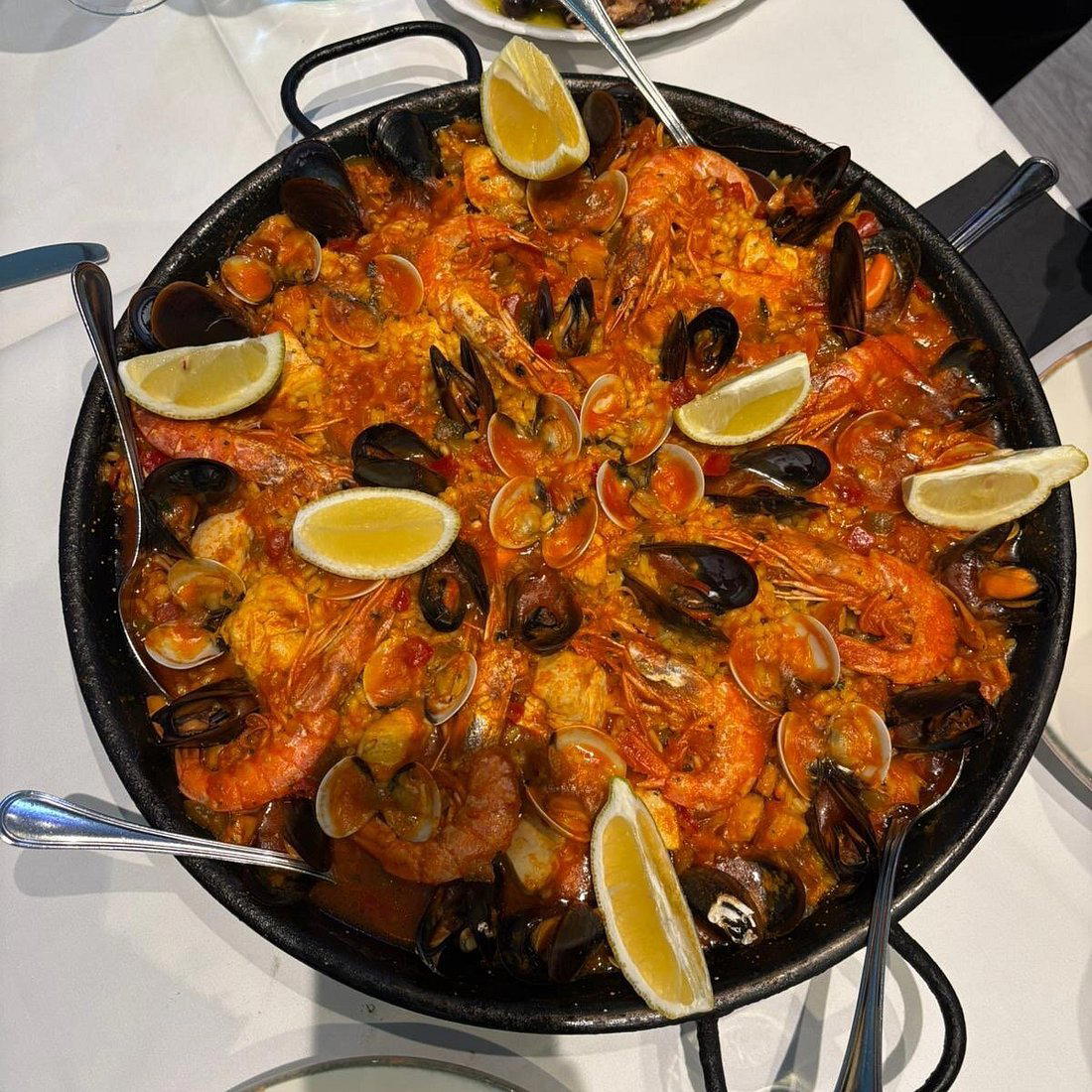
- Paella
- Parrillada de pescado
- Gran mariscada
The Waterfront Convention and Where Can Borbó Sits Within It
Passeig de Joan de Borbó has long operated as Barcelona's most legible seafood corridor. The wide promenade running through Barceloneta connects the old port to the beach, and the row of restaurants that lines it has historically attracted the kind of volume that comes with prime tourist geography. That context matters when planning a visit: the address signals one set of expectations, while the individual kitchen may deliver something different. Can Borbó occupies a spot on this stretch where the waterfront dining tradition, grilled fish, rice dishes, fideuà, and shellfish by the kilo, is the primary reference point.
That tradition is worth understanding before you book. Barceloneta's seafood identity is not the austere, technique-forward cooking associated with Barcelona's avant-garde tier, where venues like Disfrutar (Progressive, Creative) or Enigma (Creative) command months-long advance reservations and tasting menu formats measured in hours. The waterfront strip belongs to a different register entirely: abundant, convivial, rooted in Catalan coastal cooking, and measured more by the quality of the raw ingredient and the directness of its preparation than by the elaborateness of the technique. Can Borbó operates in that register, and visitors calibrated for it will find the experience more legible.
Booking, Timing, and What the Logistics Actually Look Like
The planning calculus for Passeig de Joan de Borbó restaurants differs substantially from the high-difficulty booking scenarios that define Barcelona's fine dining tier. At addresses like Cocina Hermanos Torres (Creative) or Lasarte (Progressive Spanish, Creative), reservations require strategic planning weeks or months in advance, with specific booking windows, waitlists, and prepayment structures. The waterfront end of Barcelona's dining spectrum typically operates with shorter lead times and walk-in windows, particularly outside peak summer weeks.
That relative accessibility comes with its own trade-offs. The Barceloneta strip absorbs enormous visitor volume between June and September, when tables at popular addresses on the Passeig fill from midday. Arriving before 1:00pm or after 3:30pm on weekdays, or booking a couple of days ahead during summer rather than relying on walk-in availability, reflects the practical intelligence of the neighbourhood. In shoulder months, late October through early December, or February and March, the same stretch operates with significantly more flexibility, and the crowd dynamics shift from tourist-heavy to a more local lunch rhythm. The contrast with the high-difficulty reservation infrastructure at ABaC (Creative) or the extended tasting-format planning required at Spain's destination restaurants such as El Celler de Can Roca in Girona or Mugaritz in Errenteria is considerable.
The Catalan Seafood Tradition at This Price Tier
Spain's coastal seafood tradition is one of the more geographically differentiated in Europe. The Mediterranean approach, dominated by rice, sofregit bases, and live shellfish, differs from the Basque preparation at a place like Arzak in San Sebastián, where the cooking vocabulary carries a different vernacular altogether. In Catalonia, the anchoring preparations are arròs negre (rice blackened with squid ink), fideuà (the noodle-based paella equivalent from further south along the coast, now firmly part of Barcelona's repertoire), suquet (a fisherman's stew built on potato and saffron broth), and whole grilled fish sold by weight.
This is cooking that rewards engagement with the sourcing rather than the technique. On a good day in Barceloneta, the gambas from Palamós or the clams from the Ebro delta represent genuinely specific ingredient quality. The preparation is often minimal, heat, salt, olive oil, occasionally a romesco or allioli on the side, and the result depends almost entirely on what the market offered that morning. It is a tradition that sits on the opposite end of the intervention spectrum from what a venue like Aponiente in El Puerto de Santa María does with Andalusian seafood, where the kitchen applies intensive creative transformation to marine ingredients.
How Can Borbó Compares Within the Neighbourhood
The Passeig de Joan de Borbó is not a uniform category. It ranges from quick fried-fish counters at the beach end to more composed restaurants with broader wine lists and table service. Can Borbó falls within this spectrum at a mid-to-upper position on the promenade, which in practical terms means a sit-down format, a menu that covers the standard Catalan seafood range, and a dining room orientation toward the street rather than a beach-bar configuration. The address puts it in a comparable bracket to several other longstanding names on the same stretch, rather than in a distinct tier of its own.
For visitors building a Barcelona itinerary around the full range of the city's dining, the waterfront sits at one end of a very wide spectrum. The creative tasting-menu tier, represented by Disfrutar and the city's two-Michelin-star addresses, occupies a different price band, a different booking complexity, and a different commitment in time. A lunch at Can Borbó and dinner at Cocina Hermanos Torres represent two discrete points on that spectrum, useful for building a picture of what Barcelona's dining range actually spans. For comparison across Spain's broader coastal seafood tradition, Quique Dacosta in Dénia and Ricard Camarena in València show how Mediterranean ingredients are handled at the technically ambitious end of the same regional tradition.
Barcelona's full restaurant range is covered in our full Barcelona restaurants guide, which maps venues across neighbourhoods and price tiers. For context on Spain's wider fine dining geography, the guides to Azurmendi in Larrabetzu, Martin Berasategui in Lasarte-Oria, DiverXO in Madrid, and Atrio in Cáceres illustrate how different the planning and booking experience becomes as you move up the ambition tier. For international reference points on seafood-focused restaurants at the upper end of the market, Le Bernardin in New York City and the event-format model at Lazy Bear in San Francisco offer useful contrast.
Know Before You Go
- Address: Pg. de Joan de Borbó, 50, Ciutat Vella, 08003 Barcelona, Spain
- Neighbourhood: Barceloneta, within the Ciutat Vella district
- Leading timing: Arrive before 1:00pm or after 3:30pm in summer; shoulder season (October–March) offers more flexibility
- Price tier: Mid-range by Barcelona waterfront standards; detailed in
- Nearby: The Barceloneta beach end is a short walk; the Barceloneta metro station (L4) provides direct access from the city centre
Frequently asked questions
What's the address for Can Borbó?
Can Borbó is located at Pg. de Joan de Borbó, 50, Ciutat Vella, 08003 Barcelona, Spain, Barcelona.
Is Can Borbó a good option for a long weekend lunch in Barcelona's Barceloneta neighbourhood?
Can Borbó's location at Passeig de Joan de Borbó 50, Ciutat Vella, places it directly on the promenade that anchors Barcelona's Barceloneta waterfront, a stretch where the midday meal is the main event, not an afterthought. The neighbourhood's seafood-and-rice format suits an extended lunch format better than a quick dinner stop. For visitors spending time in the Gothic Quarter or the port area, the address is a ten-minute walk from the centre of Ciutat Vella.
What's the best thing to order at Can Borbó?
Can Borbó sits on Passeig de Joan de Borbó, Barcelona's primary seafood corridor, where the kitchen tradition centres on Catalan coastal cooking: rice dishes built on sofregit, fresh Mediterranean fish, and shellfish sourced from the nearby waterfront. The rice preparations, the category that defines this stretch of Barceloneta, are the logical starting point.
How hard is it to get a table at Can Borbó?
Can Borbó is located at Passeig de Joan de Borbó 50, a high-footfall promenade that draws both Barcelona residents and visitors, particularly at weekend lunch. The booking difficulty here sits well below that of the city's reservation-only destination restaurants, but prime lunch slots on Saturdays and Sundays fill faster than weekday services. Contacting the venue directly will give the clearest picture of current wait times and walk-in availability.
What's the standout thing about Can Borbó?
The address itself is the defining factor: Passeig de Joan de Borbó is Barcelona's most direct waterfront dining corridor, running through Barceloneta with views toward the port. Can Borbó occupies number 50 on that stretch, placing it within the more composed, sit-down segment of the promenade rather than the quick fried-fish end closer to the beach. That position within a differentiated neighbourhood is what sets the context for the dining experience.
Is Can Borbó good for vegetarians?
The Catalan coastal tradition that defines Passeig de Joan de Borbó restaurants is built primarily around fish, shellfish, and rice cooked in seafood stock. Guests with dietary requirements should contact the restaurant before visiting to confirm what the current menu accommodates.
Style and Standing
Comparable venues nearby, for context on price, style, and recognition.
| Venue | Cuisine | Price | Awards | Notes |
|---|---|---|---|---|
| Can BorbóThis venue (the venue you are viewing) | Traditional Catalan Seafood | $30–50 | Not listed | Not listed |
| Lascar 74 | Peruvian-Inspired Cevicheria with Fusion | $30–50 | Not listed | el Poble Sec |
| Restaurante Balmes Marisqueria | Traditional Spanish Seafood | $50–100 | Macarfi 7.8 Food Rating | el Putxet i el Farro |
| Lluritu 2 | Grilled Seafood Tapas | $30–50 | Not listed | la Vila de Gracia |
| Murivecchi | Authentic Neapolitan Italian | Not listed | Not listed | Sant Pere, Santa Caterina i la Ribera |
| La Dolça Herminia | Traditional Catalan with Modern Mediterranean Twists | $20–30 | Not listed | Sant Pere, Santa Caterina i la Ribera |