





Dos Palilos occupies a dual-format space in Barcelona's Raval neighbourhood, pairing a walk-in sake bar at the entrance with a U-shaped gastronomic counter where a daily-changing tasting menu fuses Japanese technique with Iberian ingredients. Holders of a Michelin star since 2024 and ranked 247th among Europe's top restaurants by Opinionated About Dining in 2025, it represents one of the more considered Asian-Iberian hybrids operating in Spain today.
Pearl is the En Primeur Club membership app — saves, bookings, and concierge access live there. Same editors, same standards.
- Address
- Carrer d'Elisabets, 9, Ciutat Vella, 08001 Barcelona, Spain
- Phone
- +34 933 04 05 13
- Website
- dospalillos.com
- Directions
- Get directions
 Saves & bookings on Pearl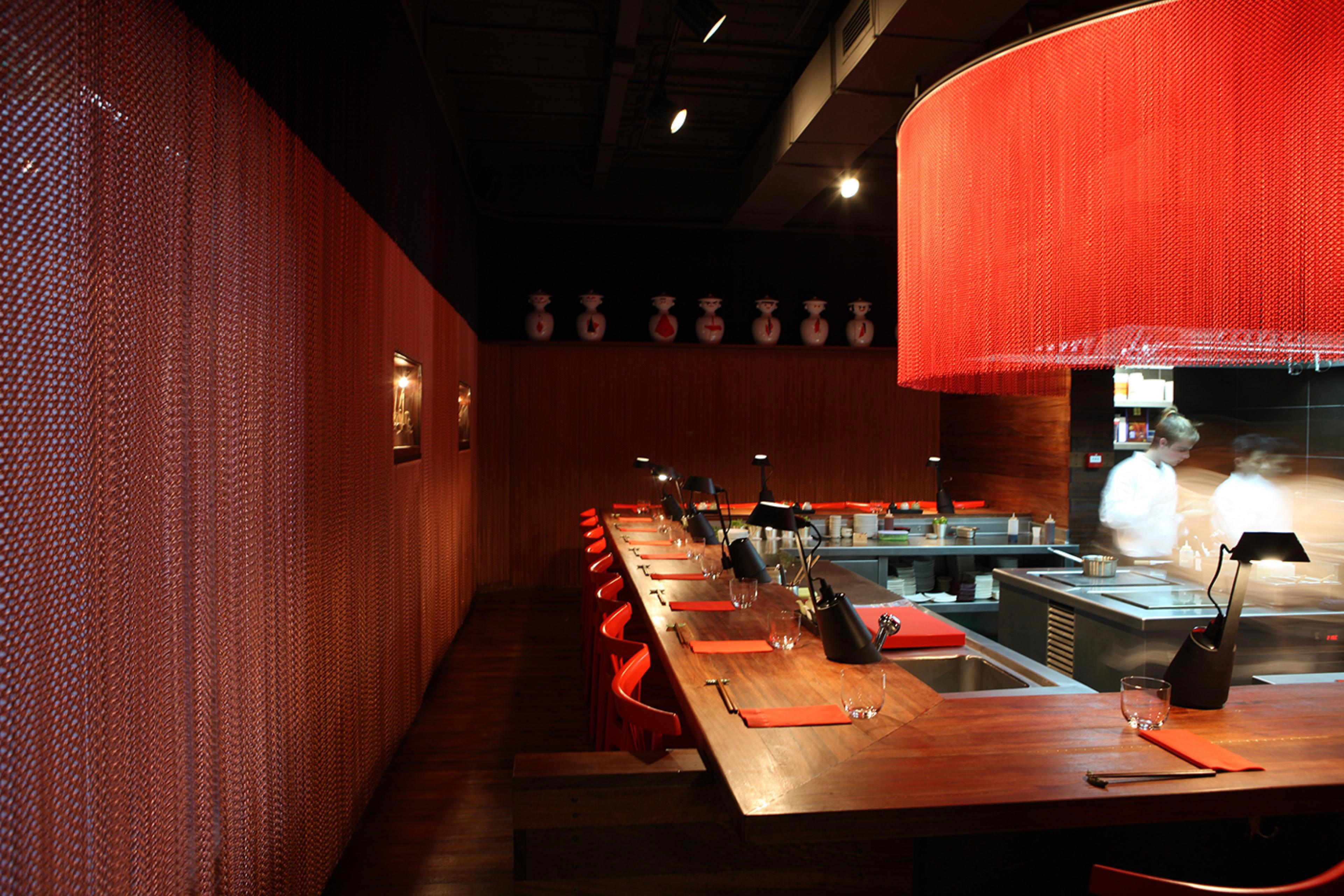
Two Rooms, One Argument: How Dos Palilos Rethinks What a Tapas Counter Can Be
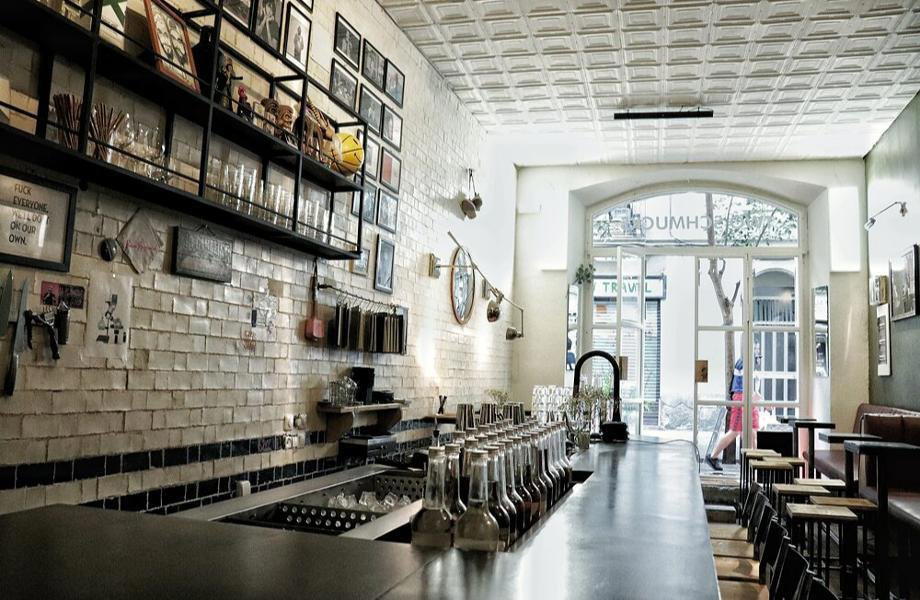
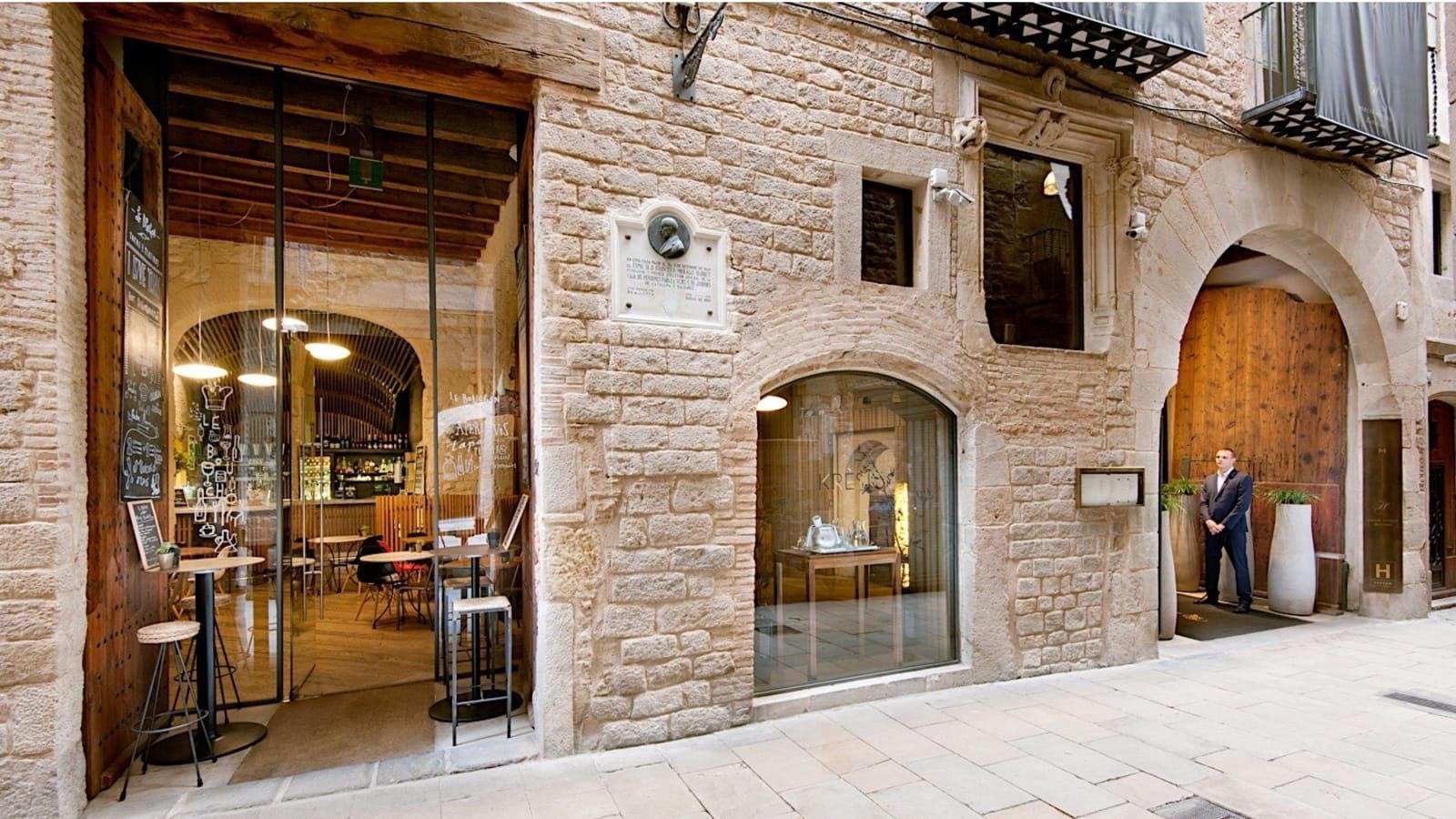
Walking into Dos Palilos from Carrer d'Elisabets, a narrow street a few steps from the Museu d'Art Contemporani de Barcelona, the first thing you register is the venue's compact scale. Tables sit close. The room hums with the compressed energy of a Tokyo izakaya rather than the expansive staging of Barcelona's higher-end creative restaurants. That density is not accidental. The restaurant's premise is that tapas are a philosophy of eating: small, shared, sequential, social. What the kitchen does with that premise is rather less conventional.
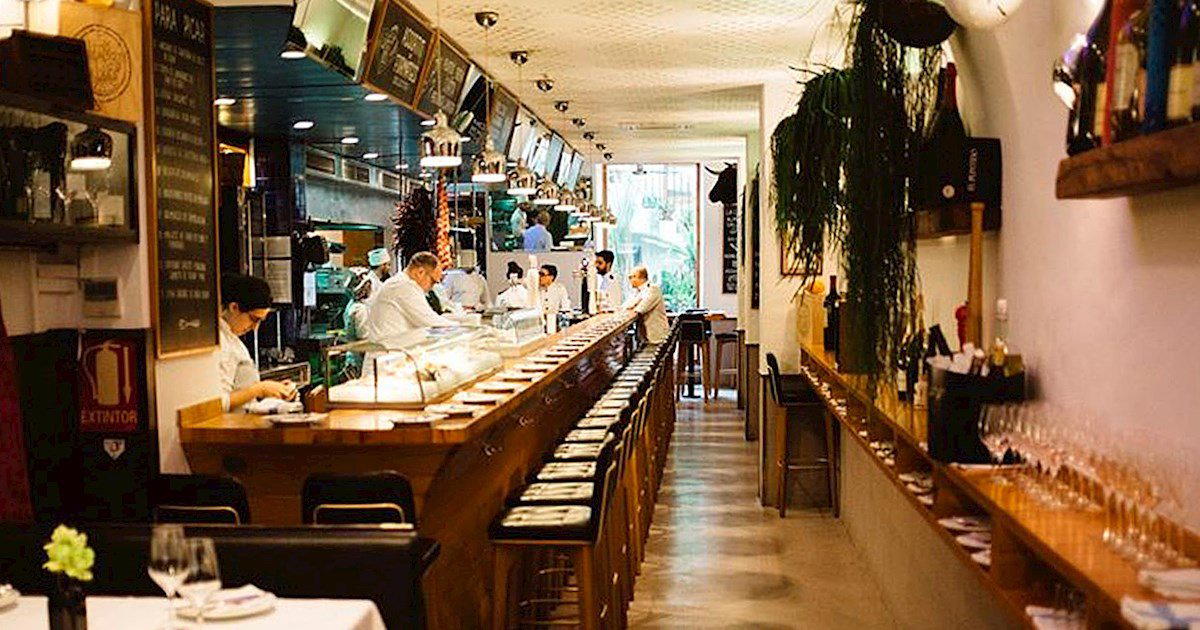
The physical layout reinforces the argument. Near the entrance, a sake bar operates as a no-reservation space where you can sit, order à la carte, and eat without commitment. Further in, a second room opens around a U-shaped counter enclosing an open kitchen. This is where the gastronomic tasting menu runs, and where the cooking becomes something harder to categorise. The two-room structure places Dos Palilos in a small cohort of Barcelona restaurants that have found workable ways to serve both spontaneous and planned dining without compromising either.
The Counter as Stage: Reading the Meal from Start to Finish
At the U-shaped counter, the format is as informative as the food itself. Guests face the kitchen directly, watching preparation in real time, which changes the rhythm of eating. You are not receiving dishes at intervals and guessing at what comes next; you are observing the sequence being assembled. This is a format associated more with high-end Japanese omakase than with Spanish tasting menus, and the connection is deliberate. Albert Raurich, who cooked at elBulli under Ferran Adrià before opening Dos Palilos, brought a specific point of reference to the project: the idea that precision, sequence, and ingredient respect are values shared between the Japanese counter tradition and Iberian cooking, even if the techniques and flavour registers diverge sharply.
The menu changes daily, which matters practically and editorially. A daily-rotation kitchen is harder to run and harder to communicate than a fixed seasonal menu, but it produces a different kind of attention in both kitchen and guest. At any given sitting, the progression moves through Asian cooking registers that lean predominantly Japanese, deploying Iberian ingredients at specific pressure points. Galician seafood appears as a recurring reference point, its brininess and texture working with umami-driven preparations in ways that Mediterranean fish would resist. The dish roster documented in the awards record includes Japanese pil-pil using kokotxas (the gelatinous throat cuts of cod or hake more familiar from Basque tradition), cold chicken pho, and chicken korma with baby lamb and mango pickle. Each of those dishes maps a different kind of cultural negotiation, drawing on French-influenced Spanish technique, Southeast Asian broth traditions, and South Asian spicing.
Within Spain's broader creative cooking scene, this kind of cross-cultural synthesis has become more common since the early 2000s, but Dos Palilos arrived early and has maintained a consistency that peers have not always matched. Compare it to the maximalist fusion theatrics at DiverXO in Madrid, where provocation is part of the format, or the classical Basque foundations at Arzak in San Sebastián. Dos Palilos operates in neither register. The fusion here is structural rather than decorative: the Japanese counter format is the delivery mechanism, Iberian ingredients are the raw material, and the synthesis happens through technique rather than plating gesture.
Where Dos Palilos Sits in Barcelona's Creative Tier
Barcelona's highest-profile creative restaurants currently cluster around the €€€€ price bracket and carry multiple Michelin stars or World's 50 Best recognition. Disfrutar, Cocina Hermanos Torres, Lasarte, ABaC, and Enigma occupy that upper tier. Dos Palilos holds one Michelin star.
Within the smaller category of Asian-Iberian or Asian-fusion restaurants operating at a gastronomic level in Europe, the comparable set is thinner. Aalto in Milan operates in an adjacent register, as does ANQI in Costa Mesa in a different market context. Neither maps directly onto what Dos Palilos does, which is partly why the restaurant has maintained a distinctive position for over a decade. The project is specific: a sake bar entry point, a gastronomic counter in back, Japanese methodology, Iberian pantry, and a daily-changing menu.
For context within Spain's wider gastronomic geography, it is worth noting that similar traditions of cross-cultural rigour appear at Aponiente in El Puerto de Santa María (where the focus is marine rather than Asian-Iberian), at Quique Dacosta in Dénia, and at Azurmendi in Larrabetzu. Each of those kitchens is operating a different argument about what Spanish cooking can absorb and transform. Dos Palilos makes its argument through the Japanese counter, quietly and without spectacular staging.
Planning Your Visit
Dos Palilos sits on Carrer d'Elisabets, 9 in Ciutat Vella, within easy walking distance of the MACBA and the Raval neighbourhood's cluster of cultural institutions. The kitchen runs Tuesday and Wednesday for dinner (7:30 PM to 10:30 PM), with Thursday, Friday, and Saturday also offering a lunch service (1:30 PM to 3 PM) and dinner (7:30 PM to 10:30 PM). The restaurant is closed Sunday and Monday. The sake bar near the entrance accepts walk-ins, which makes it the more accessible entry point for those without advance planning, while the gastronomic counter requires a reservation and runs the daily tasting menu format. If you are visiting Barcelona across multiple days and want to place Dos Palilos in broader context, our full Barcelona restaurants guide maps the city's creative and traditional dining tiers.
A 4.3 with that volume of reviews indicates that the format is landing consistently rather than dividing opinion sharply.
What to Order at Dos Palilos
The gastronomic counter operates exclusively on a daily-changing tasting menu, so there is no fixed ordering decision to make for that format. The menu is a surprise, and the progression is set. At the sake bar near the entrance, the à la carte format allows more selective ordering, and the documented dishes, including the Japanese pil-pil kokotxas and the cold chicken pho, give a clear direction: lean into the Iberian-Japanese crossover dishes rather than treating the sake bar as a tapas bar in the conventional Barcelona sense. The two formats serve different purposes. The sake bar is for spontaneous, drink-led eating; the counter is for following an argument through from first course to last, with the kitchen setting the pace and the sequence. The Michelin recognition reflects the counter experience, not the sake bar. Albert Raurich and Takeshi Somekawa have built a kitchen that insists on sequencing as meaning, and the tasting menu is where that insistence is most fully expressed.
Style and Standing
Comparable venues nearby, for context on price, style, and recognition.
| Venue | Cuisine | Price | Awards | Notes |
|---|---|---|---|---|
| Dos PalilosThis venue — the venue you are viewing | Asian-Catalan Fusion Tapas | $$$ | Michelin 1 Star | Not listed |
| MAE Barcelona | Mediterranean-Latin American Fusion | $$$ | Michelin 1 Star | Sant Gervasi - Galvany |
| Caelis | Contemporary Mediterranean Fine Dining | $$$$ | Michelin 1 Star | Barri Gotic |
| Teatro kitchen & bar | Creative Catalan Tapas | $$$$ | Michelin 1 Star | Sant Antoni |
| Hisop | Modern Catalan Fine Dining | $$$ | Michelin 1 Star | Sant Gervasi - Galvany |
| Angle | Modern Creative Spanish | $$$$ | Michelin 1 Star | l'Antiga Esquerra de l'Eixample |
Recognition history
Dated appearances from independent guides and award organizations, with the underlying list record or original source where available.
Falstaff Restaurant - 93 Falstaff Points
Falstaff
Guía Repsol 2 Soles
Guía Repsol
Macarfi 9 Food Rating
Macarfi
Michelin 1 Star
Michelin
Opinionated About Dining Top Restaurants in Europe Recommended
Opinionated About Dining
Michelin 1 Star
Michelin
Opinionated About Dining Top Restaurants in Europe Ranked #247
Opinionated About Dining
We're Smart World 1 Radish
We're Smart World
Michelin 1 Star
Michelin
Opinionated About Dining Top Restaurants in Europe Ranked #308
Opinionated About Dining
Opinionated About Dining Top New Restaurants in Europe Highly Recommended
Opinionated About Dining
Continue exploring
More in Barcelona
More from Chef Albert Raurich & Takeshi Somekawa
Browse all →
Restaurants in Barcelona
Browse all →
Bars in Barcelona
Browse all →
Hotels in Barcelona
Browse all →
At a Glance
- Trendy
- Modern
- Intimate
- Elegant
- Date Night
- Special Occasion
- Open Kitchen
- Sake Program
Current opening hours
- Monday
- Closed
- Tuesday
- 7:30–10:30 PM
- Wednesday
- 7:30–10:30 PM
- Thursday
- 1:30–3 PM, 7:30–10:30 PM
- Friday
- 1:30–3 PM, 7:30–10:30 PM
- Saturday
- 1:30–3 PM, 7:30–10:30 PM
- Sunday
- Closed
Hours can change for holidays and private events. Last verified .
Bustling and intimate with close tables reminiscent of Asian eateries, featuring an open kitchen counter for watching chefs prepare dishes in a theatrical setting.