






Cinc Sentits holds two Michelin stars and a consistent OAD European ranking, anchored by a tasting format that reads as a study in Catalan ingredient provenance: Palamós prawns, Maresme peas, Figueres onions. The Eixample address runs two menus only, Corto and Degustación, with a chef's table overlooking the kitchen that books well ahead of standard tables.
Pearl is the En Primeur Club membership app — saves, bookings, and concierge access live there. Same editors, same standards.
- Address
- Carrer d'Entença, 60, Eixample, 08015 Barcelona, Spain
- Phone
- +34 933 23 94 90
- Website
- cincsentits.com
- Directions
- Get directions
 Saves & bookings on Pearl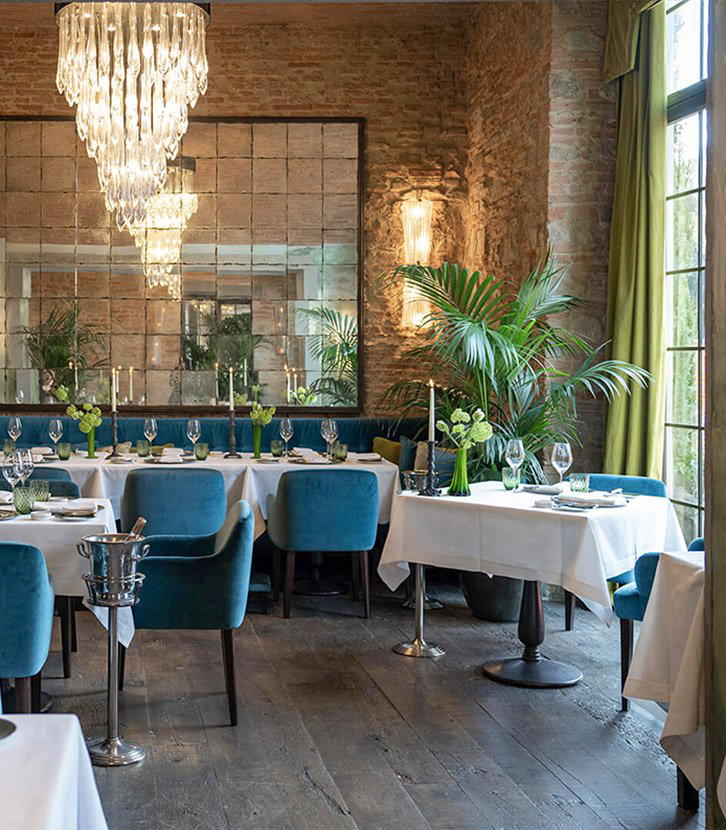
Where the Food Starts: The Catalan Sourcing Logic Behind Cinc Sentits
Barcelona's two-star tier has a consistent internal logic: the restaurants that hold position across multiple guide cycles tend to be those that treat regional ingredient sourcing as architecture, not decoration. Cinc Sentits, on Carrer d'Entença in the Eixample, operates precisely on that principle. Chef Jordi Artal works from a network of small-scale Catalan producers whose output shapes what appears on the plate rather than the other way around. Floreta peas from the Maresme coast, prawns from Palamós, onions from Figueres, pork from Sagàs: these are not garnishes or provenance tags added for marketing purposes. They are the menu's raw material, and the kitchen's role is to clarify what each ingredient already is.
That sourcing discipline places Cinc Sentits in a specific corner of Barcelona's fine-dining market. Compared with the maximalist technical programs at Disfrutar (Progressive, Creative) or the scale of the kitchen infrastructure at Cocina Hermanos Torres (Creative), this is a quieter operation: two menus, a constrained room, and a philosophy rooted in Catalan geography rather than international avant-garde. The 2025 Michelin two-star recognition, held also in 2024, confirms that the guide's inspectors read the approach as something more than regional cooking done carefully.
The Room and What It Communicates
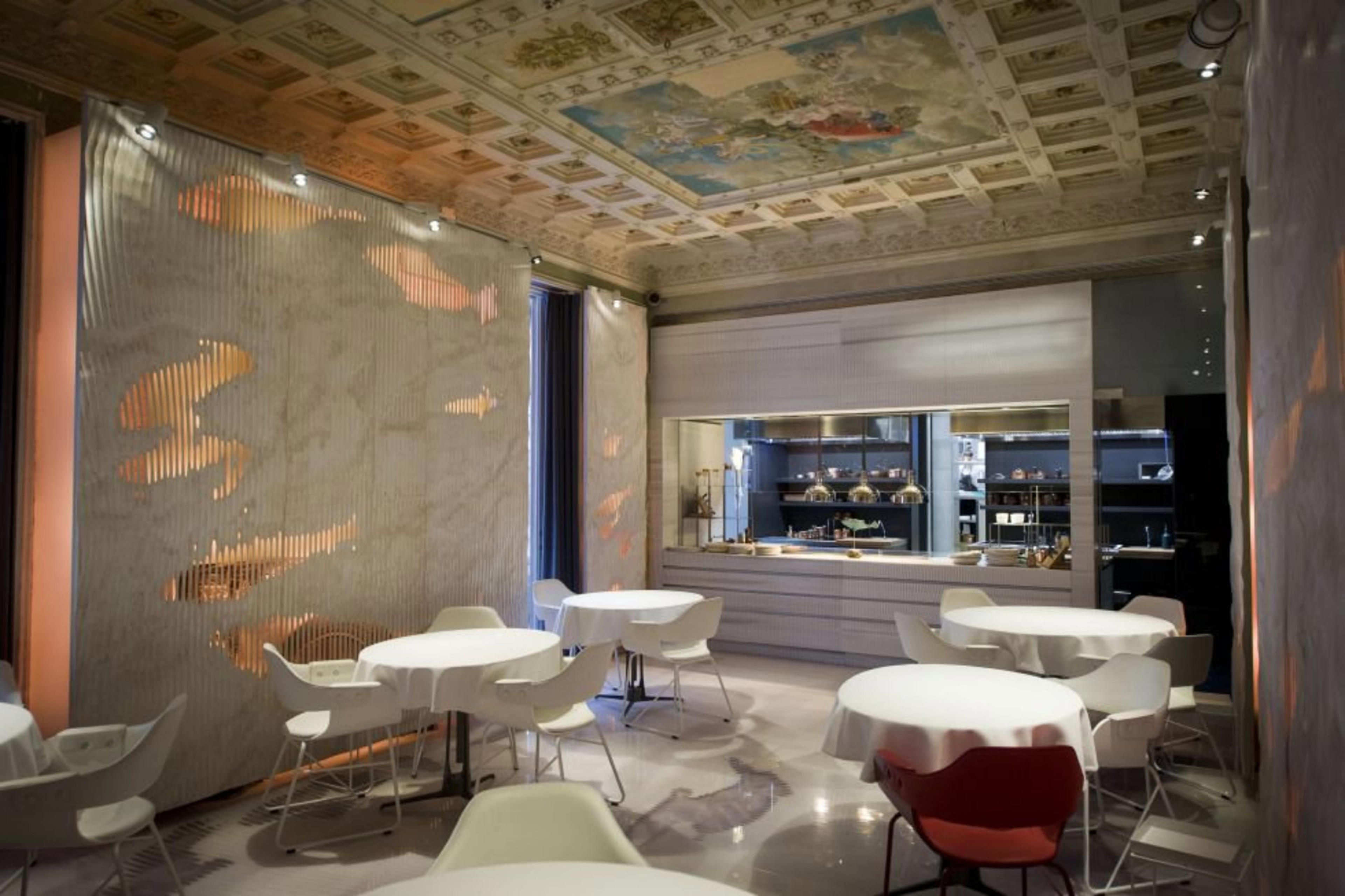
The physical design of Cinc Sentits is itself an argument about what the restaurant is doing. The space is divided into zones that correspond to different registers of the Artal family's culinary biography: an entry area framed around home-made vermouth and appetisers, a dining room whose references track a move from La Torre de l'Espanyol in Tarragona to Barcelona, and a Biblioteca Viva, a living library where jars of fermented products, garums, and kombuchas are displayed as working inventory rather than set-dressing. The effect is to make the backstage visible in a controlled way, turning the preserved and fermented archive into part of the experience before the tasting menus begin.
The chef's table, positioned with a direct sightline into the kitchen, operates as the room's most sought-after configuration. It books significantly ahead of standard dining positions and changes the register of the meal: what is already an ingredient-focused format becomes more transparent when you can observe the sequencing in real time. For anyone booking this far in advance, it is worth specifying the preference at reservation. Standard table availability moves faster, but the chef's table is the format the room is built around.
Two Menus, No à la Carte
Cinc Sentits does not offer à la carte. The choice is between two tasting formats: Corto (Short) and Degustación (Tasting). This is a structural decision with practical implications. It also means the sourcing network that defines the restaurant's identity is expressed across every course rather than concentrated in a few headline plates.
The Degustación format allows for greater depth across the Catalan ingredient roster; the Corto offers a compressed version of the same logic at a different pace. Both formats are priced at the high end of Barcelona's restaurant market, consistent with the €€€€ tier that includes peers such as Lasarte (Progressive Spanish, Creative) and ABaC (Creative). The La Liste 2026 score of 77 points (down from 80 in 2025) sits within the cohort of Barcelona's established two-star addresses but below the city's three-star operations.
Opinionated About Dining, which uses frequent-visitor data rather than anonymous inspection, ranked Cinc Sentits 443rd in Europe in 2025 and 411th in 2024. Both positions reflect a consistent presence in the upper tier of European fine dining without the breakout status of the city's most globally discussed addresses. That positioning is useful context for what kind of meal to expect: serious, technically assured, ingredient-driven, without the self-conscious spectacle of the restaurants operating at the very best of the OAD list.
Catalan Ingredients in the Context of Spanish Fine Dining
The emphasis on named Catalan producers at Cinc Sentits is part of a broader shift in Spanish fine dining that has run for roughly two decades. Kitchens that once borrowed freely from French sourcing networks and classical European pantries have moved toward granular regional sourcing, often with specific farm, coast, or valley attribution. El Celler de Can Roca in Girona and Arzak in San Sebastián represent different expressions of this tendency at the three-star level. Further south, Aponiente in El Puerto de Santa María applies a similar regional specificity to marine ingredients. Ricard Camarena in València and Quique Dacosta in Dénia do the same for the Valencian pantry. Cinc Sentits belongs to this broader pattern but applies it to a specifically Catalan geography, with a self-taught chef working outside the formal training lineages that define many of the kitchens around it.
That self-taught context is not incidental. Kitchens built on apprenticeship lineages, whether from elBulli, Arzak, or any of the major Spanish training houses, tend to carry a recognisable technical vocabulary. Artal's formation is different, and the La Liste commentary notes it directly: his flavour logic is characterised as surprising rather than orthodoxly precise.
Within Barcelona specifically, the restaurant occupies a position adjacent to but distinct from Moments and Disfrutar, both of which operate at the two-star level with different emphases. Moments foregrounds Catalan classical tradition; Disfrutar is among the most technically complex kitchens in Europe. Cinc Sentits sits between those poles, with a creative format that has more in common with Moments' rootedness than Disfrutar's experimentalism, but executed through a different and more personal sourcing framework.
Beyond Barcelona, the approach has parallels at Azurmendi in Larrabetzu and Casa Marcial in Arriondas, both of which treat northern Spanish regional ingredients as primary creative material. DiverXO in Madrid represents the opposite end of the spectrum: maximum technical density and global reference, minimal regional anchoring.
Planning a Visit: Practical Detail
Cinc Sentits operates Tuesday through Saturday, with lunch sittings at 1:30 pm and dinner at 8:30 pm across most of those days. Wednesday runs dinner only. The restaurant closes on Mondays and Sundays, and takes a summer closure in August — confirmed dates for 2024 were August 8 through 24, with similar timing likely in subsequent years. Any visit planned around that period should confirm availability directly.
Booking ahead by several weeks is standard for table positions; the chef's table requires more lead time and should be requested explicitly rather than assumed available at standard booking.
For anyone building a broader Barcelona itinerary around high-end dining, the city's two-star tier now includes several addresses worth considering alongside Cinc Sentits. The full Barcelona restaurants guide covers the range. For accommodation, the Barcelona hotels guide maps the city's main lodging tiers. Those looking to extend beyond restaurants will find relevant context in the Barcelona bars guide, the Barcelona wineries guide, and the Barcelona experiences guide.
A quick peer reference to anchor this venue in its category.
| Venue | Cuisine | Price |
|---|---|---|
| Cinc SentitsThis venue — the venue you are viewing | Modern Spanish, Creative | €€€€ |
| Disfrutar | Progressive, Creative | €€€€ |
| Cocina Hermanos Torres | Creative | €€€€ |
| Lasarte | Progressive Spanish, Creative | €€€€ |
| Enoteca Paco Pérez | Modern Spanish, Modern Cuisine | €€€€ |
| Aleia | Modern European, Creative | €€€€ |
Recognition history
Dated appearances from independent guides and award organizations, with the underlying list record or original source where available.
Falstaff Restaurant - 96 Falstaff Points
Falstaff
Guía Repsol 2 Soles
Guía Repsol
La Liste Top Restaurants
La Liste
Macarfi 8.5 Food Rating
Macarfi
Michelin 2 Stars
Michelin
Opinionated About Dining Top Restaurants in Europe Recommended
Opinionated About Dining
La Liste Top Restaurants
La Liste
Michelin 2 Stars
Michelin
Opinionated About Dining Top Restaurants in Europe Ranked #443
Opinionated About Dining
We're Smart World 2 Radishes
We're Smart World
Michelin 2 Stars
Michelin
Opinionated About Dining Top Restaurants in Europe Ranked #411
Opinionated About Dining
Opinionated About Dining Top New Restaurants in Europe Recommended
Opinionated About Dining
Continue exploring
More in Barcelona
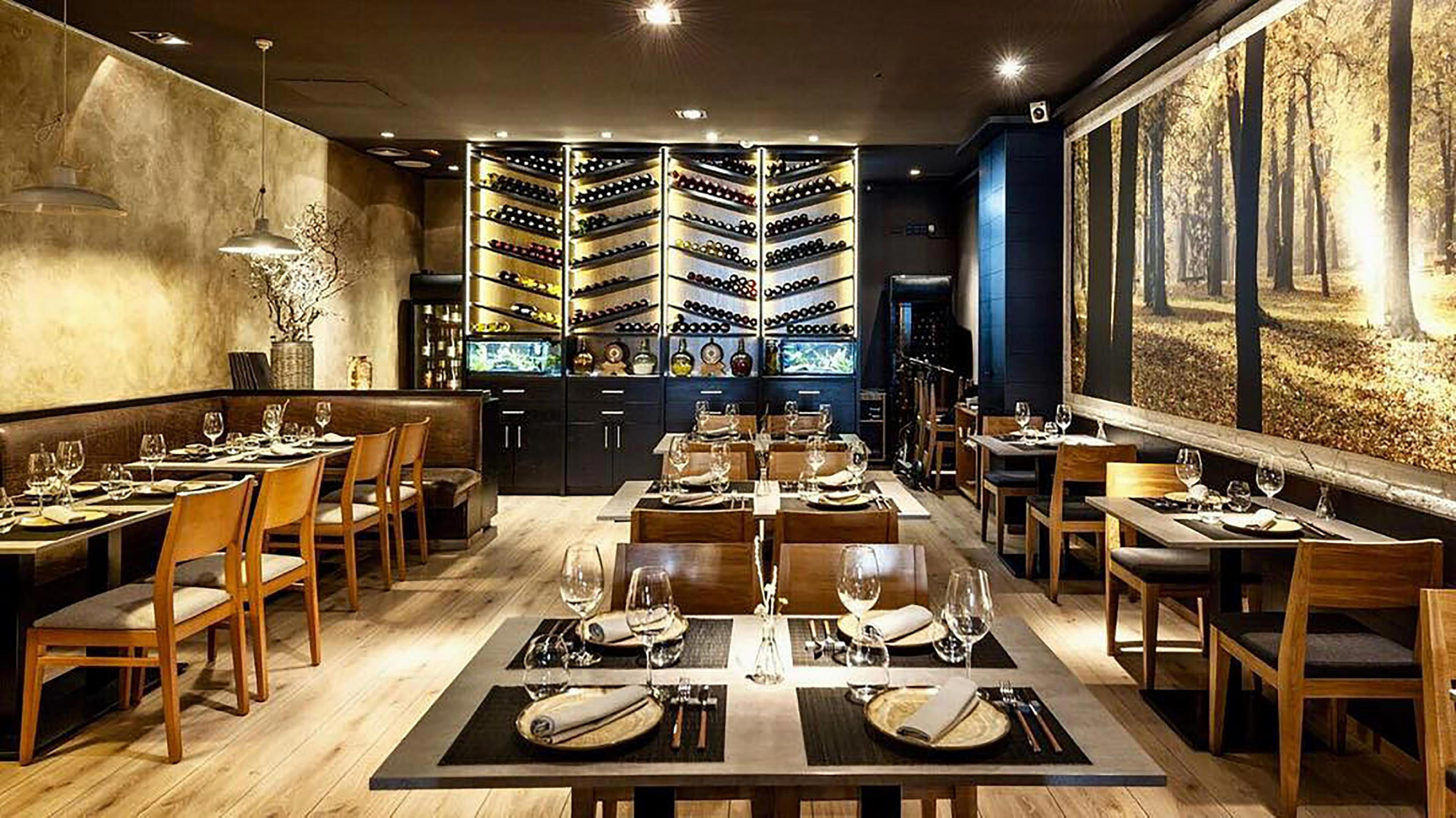
Restaurants in Barcelona
Browse all →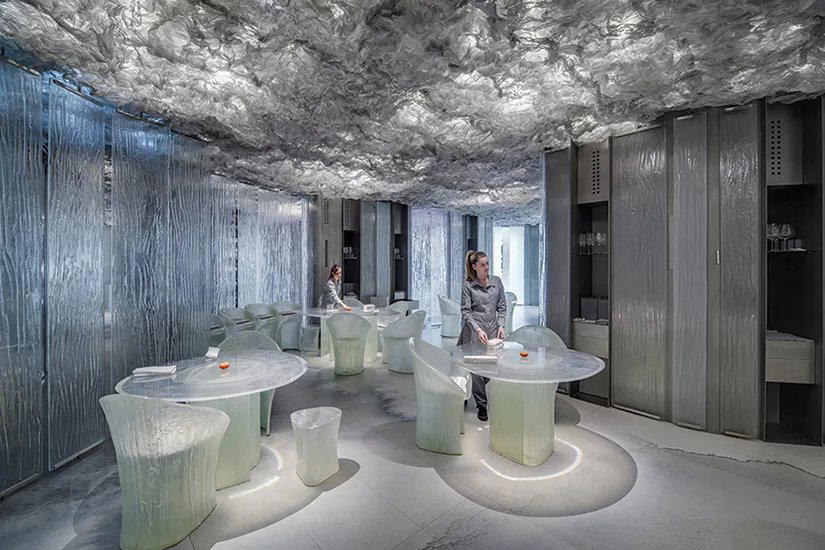
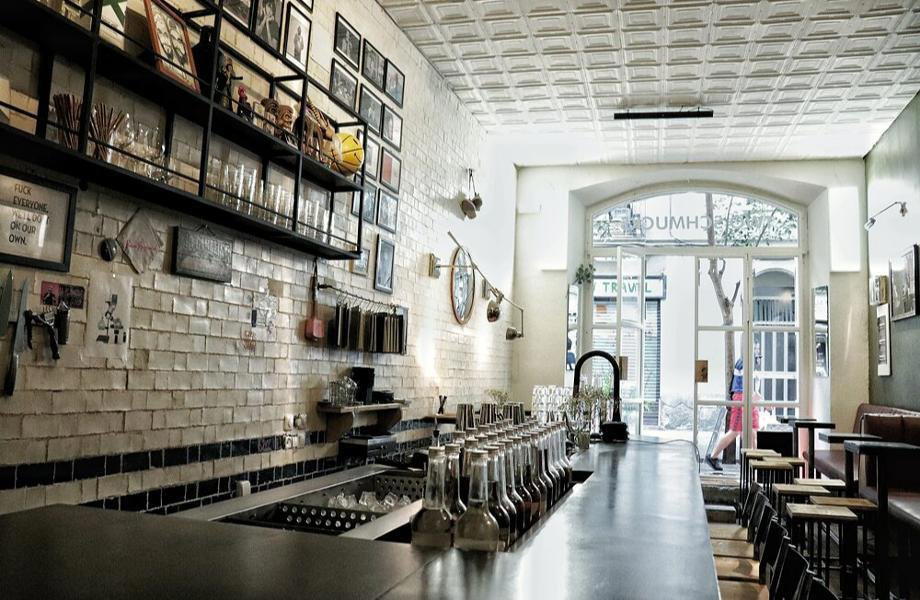
Bars in Barcelona
Browse all →
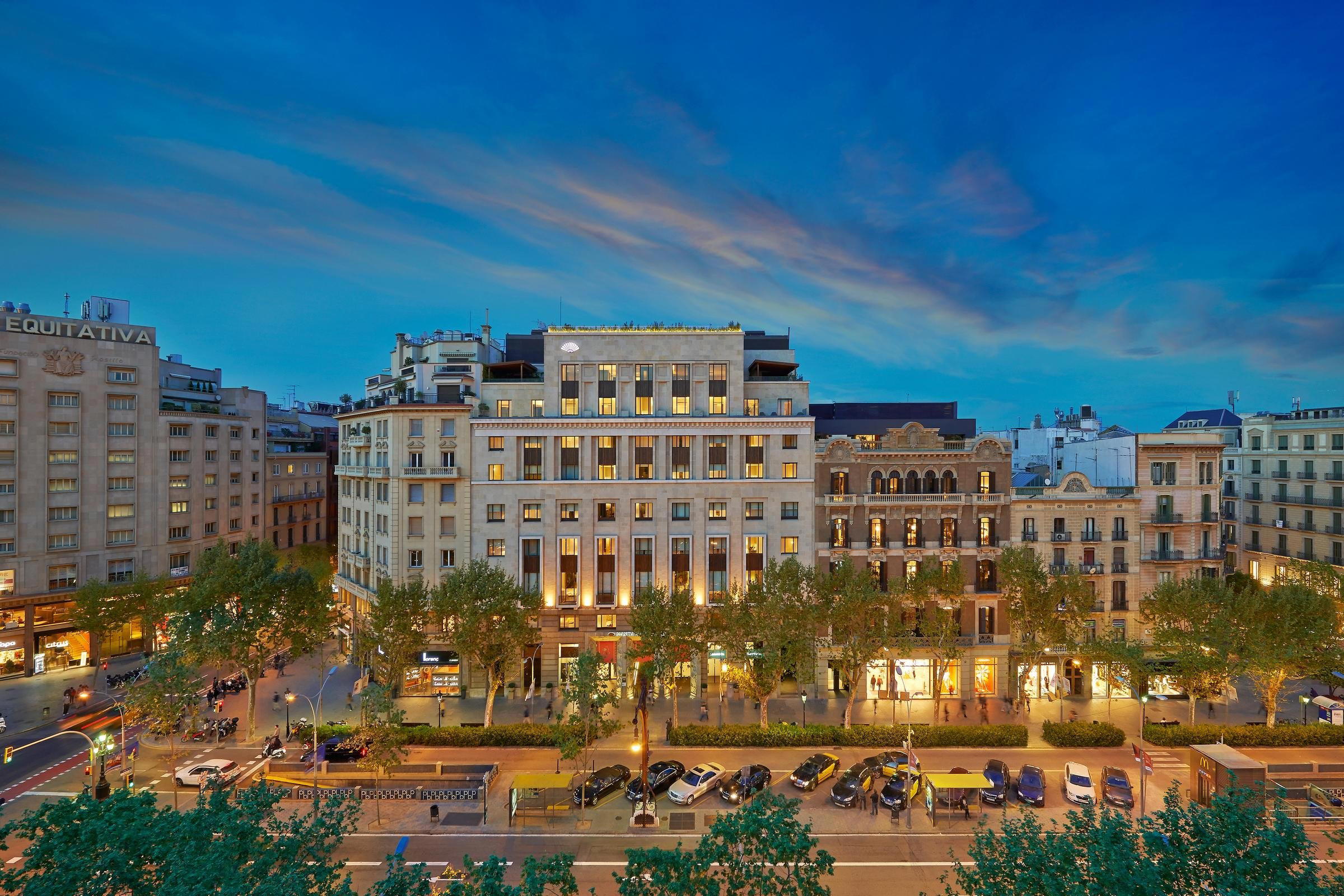
Hotels in Barcelona
Browse all →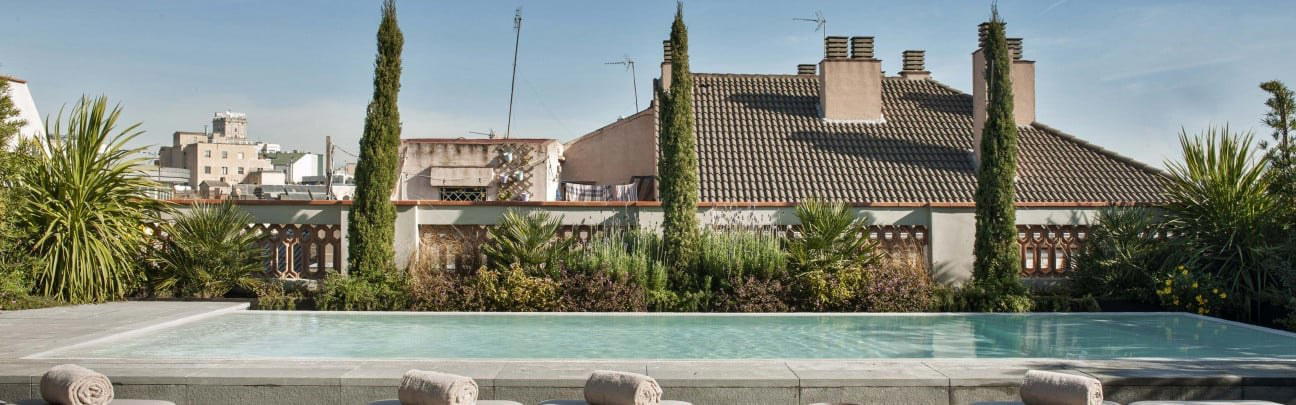

At a Glance
- Elegant
- Sophisticated
- Intimate
- Modern
- Cozy
- Special Occasion
- Date Night
- Celebration
- Open Kitchen
- Private Dining
- Extensive Wine List
- Sommelier Led
- Local Sourcing
Current opening hours
- Monday
- Closed
- Tuesday
- 6:15–10 PM
- Wednesday
- 6:15–10 PM
- Thursday
- 6:15–10 PM
- Friday
- 6:15–10 PM
- Saturday
- 1:30–2:30 PM, 8:30–9:30 PM
- Sunday
- Closed
Hours can change for holidays and private events. Last verified .
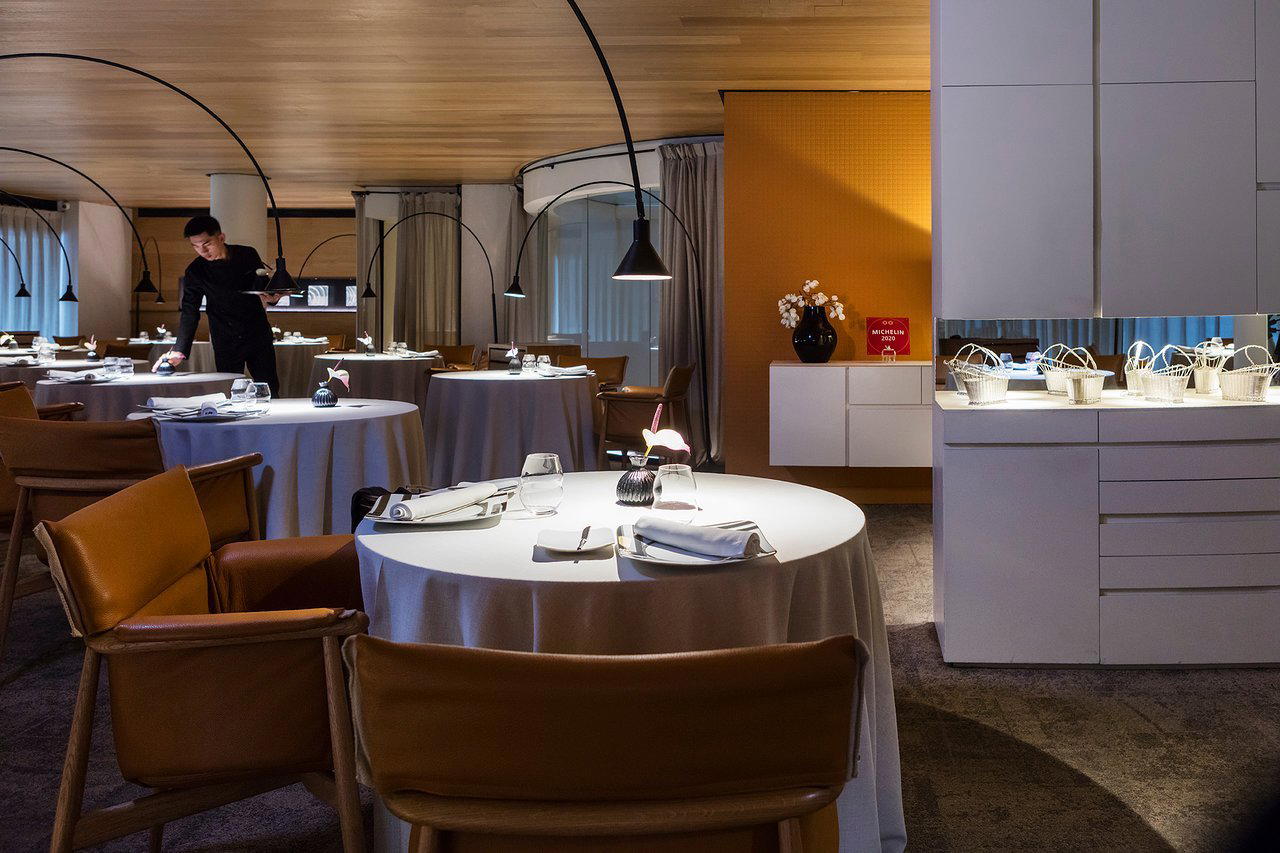
Minimalist, modern design inspired by Catalan landscapes with sophisticated, intimate lighting that highlights the culinary experience.
Know Before You Go
- Getting there
- Carrer d'Entença, 60, Eixample, 08015 Barcelona, Spain