On Trieste's grandest piazza, Caffè degli Specchi has been a fixture of the city's Central European café culture since the nineteenth century. Its mirrored interior and terrace facing Piazza Unità d'Italia place it at the intersection of Austro-Hungarian formality and Adriatic informality, a combination that defines the city's entire character. The café functions as a meeting point, a history lesson, and a working demonstration of Trieste's position at the edge of Italy.
Pearl is the En Primeur Club membership app — saves, bookings, and concierge access live there. Same editors, same standards.
- Address
- Piazza Unità d'Italia, 7, 34121 Trieste TS, Italy
- Phone
- +393940661973
- Website
- caffespecchi.it
- Directions
- Get directions
 Saves & bookings on Pearl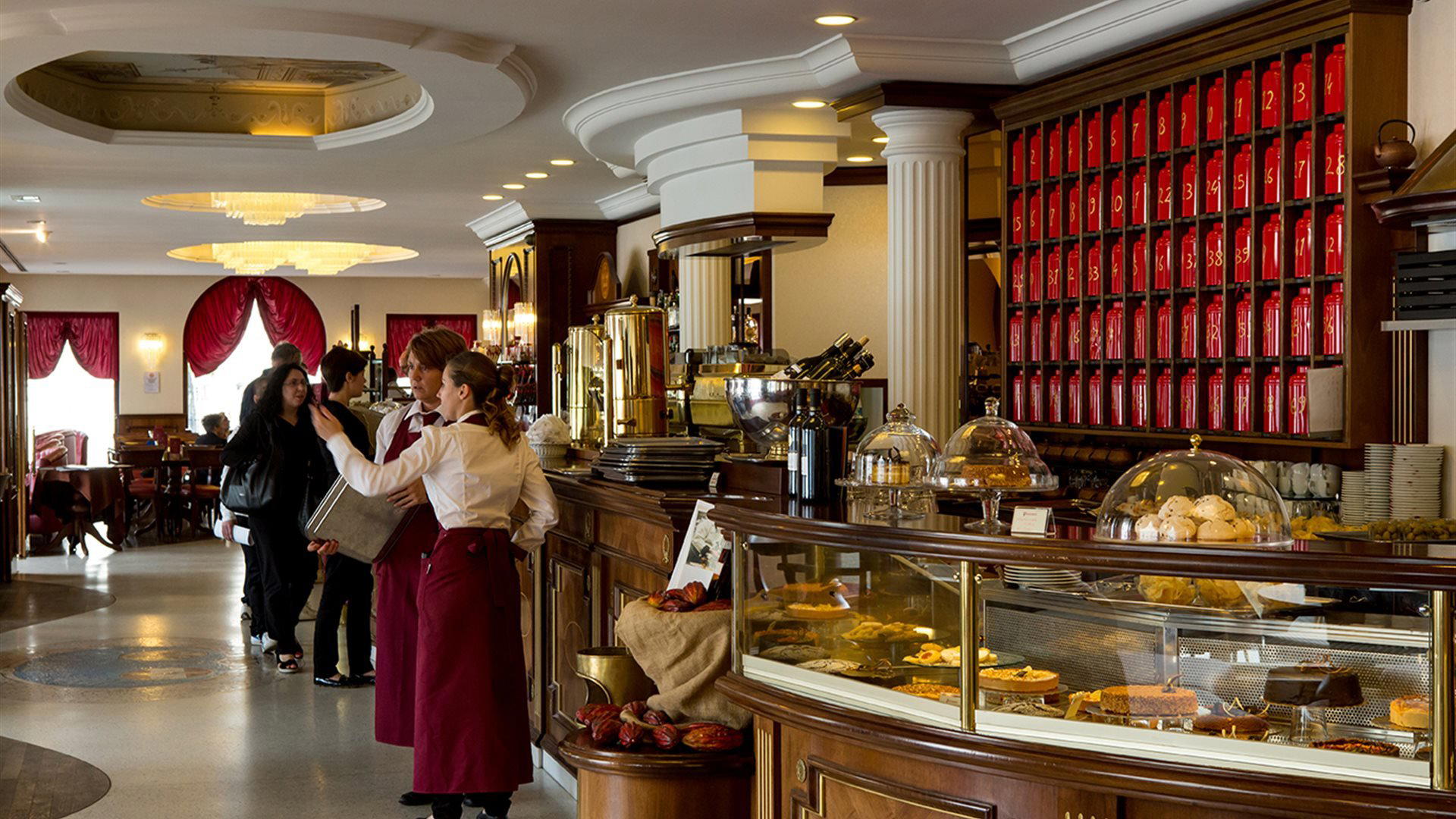
Where the Adriatic Meets the Habsburg Café Tradition
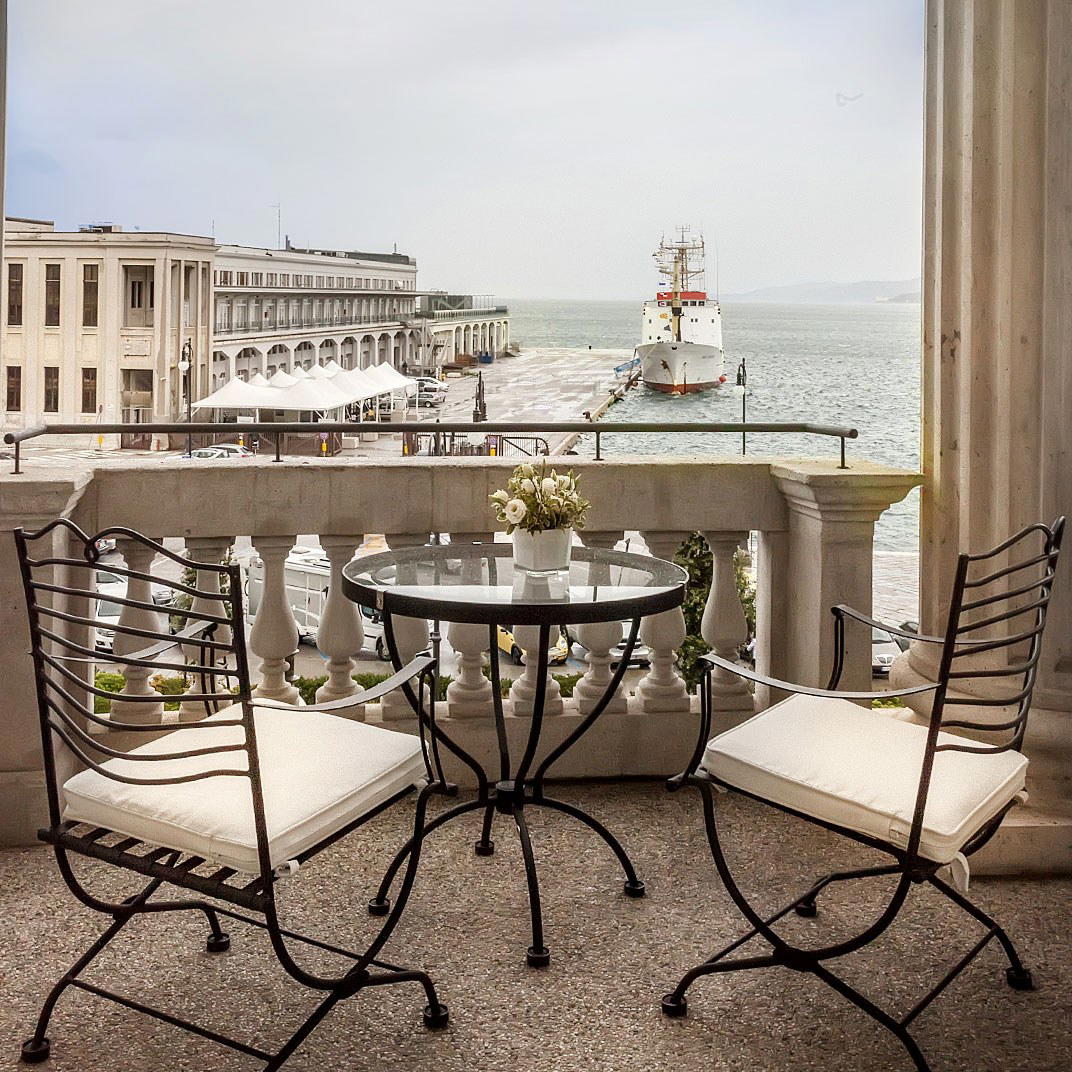
Piazza Unità d'Italia is one of Europe's few large civic squares that opens directly onto the sea, and Caffè degli Specchi occupies a corner of it that no architect of spectacle could have improved. The sensation on approach is one of layered formality: the stone-faced buildings, the proportions of the square, the low light off the gulf in the late afternoon. Trieste was the principal seaport of the Austro-Hungarian Empire, and the built environment of its centre still argues that case. Sitting on the terrace here is not a picturesque accident, it is the specific experience the city's urban planners built toward over two centuries.
Caffè degli Specchi is a historic Italian café in Trieste, on Piazza Unità d'Italia. The café belongs to a category that Trieste maintains seriously: the grand historic café, functioning as public institution rather than hospitality venue. The tradition connects directly to Vienna, Budapest, and Prague, and Trieste's version of it has a particular character shaped by the port, the cosmopolitan population that passed through it, and the literary figures, including James Joyce, who spent significant years in the city in the early twentieth century.
The Interior Logic of the Specchi
The name references the mirrors that line the interior walls, a design feature with deep roots in the Viennese café tradition, where mirrors served to expand the visual space of rooms and to create a sense of theatre for people-watching without direct eye contact. In Trieste, that function remains intact. The interior combines the formality of the Habsburg period with the particular Triestine habit of lingering over a single espresso for an hour without pressure from staff. This is not café culture in the Roman or Milanese sense, where the bar counter is for standing and speed. The seated ritual here is a distinct practice, closer to the Viennese model.
Al Bagatto or Ai Fiori, both of which operate as destination restaurants with structured menus. The café functions as a counterpart to those experiences, not a replacement. It is where the day begins, or where a late afternoon aperitivo extends into early evening, rather than where a considered dinner is built around a seasonal menu.
Trieste's Position Between Culinary Traditions
Editorial angle that Caffè degli Specchi most clearly illustrates is the intersection of imported techniques and local products that defines Triestine food culture at large. The city sits at a geographic and cultural border: Italian to the west, Slovenian to the east, Austrian to the north in historical terms. Its kitchen traditions absorbed each of those influences, and the café format itself is among the more visible traces of Central European practice surviving in an Italian urban context.
Coffee culture of Trieste operates by its own nomenclature. A nero is an espresso, a capo in b is a macchiato served in a glass, and a capo is a macchiato with milk foam. These terms are not decorative regionalism but markers of a genuinely distinct tradition that traces to the Viennese coffeehouse model adapted over more than a century of local practice. At Caffè degli Specchi, as at other historic cafés in the city, ordering correctly is a minor rite of passage that separates the informed visitor from the tourist.
For context on how this local specificity plays out across the broader Italian dining scene, place Trieste's tradition against some of Italy's most technically ambitious restaurants. At the level of Osteria Francescana in Modena, Piazza Duomo in Alba, or Le Calandre in Rubano, the relationship between local product and applied technique is the explicit subject of the menu. The restaurant operates in a different register, where the technique is institutional memory rather than tasting-menu architecture, but the principle of place-rooted practice applies equally.
The Aperitivo Hour and Seasonal Timing
Autumn and winter are the seasons when the internal character of the restaurant comes into its own. In summer, the terrace facing Piazza Unità is the obvious draw, and the square fills with visitors arriving by cruise ships docking at the adjacent port. That version of the piazza is legitimate but crowded. From October through March, the square takes on a different atmosphere. The Bora wind, the sharp northeasterly that defines Trieste's winter, empties the outdoor seating and sends regulars inside, where the mirrors and the warmth of the room create exactly the enclosed, contemplative café experience that the interior was designed for.
The aperitivo window, typically from five to seven in the evening, is when the café operates at the intersection of all its traditions simultaneously. The Adriatic light in autumn, the spritz or Terrano wine from the Karst plateau that runs along the Slovenian border, the food laid out in the manner closer to a Central European snack tradition than a Venetian cicchetti spread, these details place Trieste's café culture in a category that Italian hospitality terminology does not quite capture.
Harry's Piccolo represents the city's contemporary fine dining end, while Ai 3 Magnoni and Al Civicosei offer mid-range options rooted in the local culinary tradition. A full picture of the city requires both the restaurant tier and the café tradition.
Internationally, the comparison to seaside café institutions that carry civic weight alongside their hospitality function connects the restaurant to a small category. The sustained reference to coastal fine dining in Italy, from Uliassi in Senigallia to Quattro Passi in Marina del Cantone, tends to frame the Adriatic and Tyrrhenian coasts as the reference points for seafood-led menus. Trieste's café tradition sits outside that frame and asks to be assessed on different terms.
Planning a Visit
The restaurant is located at Piazza Unità d'Italia 7, at the centre of Trieste's historic waterfront. Walk-ins are the norm, though the terrace seats on the piazza fill quickly on warmer evenings. The practical case for visiting between October and April is the combination of reduced tourist volumes, the Bora weather that makes the interior the natural gathering point, and the fact that the café's character is more legible when the piazza is not at peak summer capacity.
Comparable Spots
Comparable venues nearby, for context on price, style, and recognition.
| Venue | Cuisine | Price | Notes |
|---|---|---|---|
| Caffè degli SpecchiThis venue — the venue you are viewing | Historic Italian Café | $$ | Not listed |
| Al Civicosei | Gourmet Italian Pizza | $$ | Centro |
| Bracerie Venete | Italian Steakhouse | $$$ | Centro |
| Suban | Traditional Triestine & Istrian | $$ | San Giovanni |
| Ristorante Le Vele | Italian Seafood | $$$ | :null |
| Trattoria Al Sub | Italian Seafood Trattoria | $$ | Barcola |
Continue exploring
More in Trieste
Restaurants in Trieste
Browse all →
Bars in Trieste
Browse all →
Hotels in Trieste
Browse all →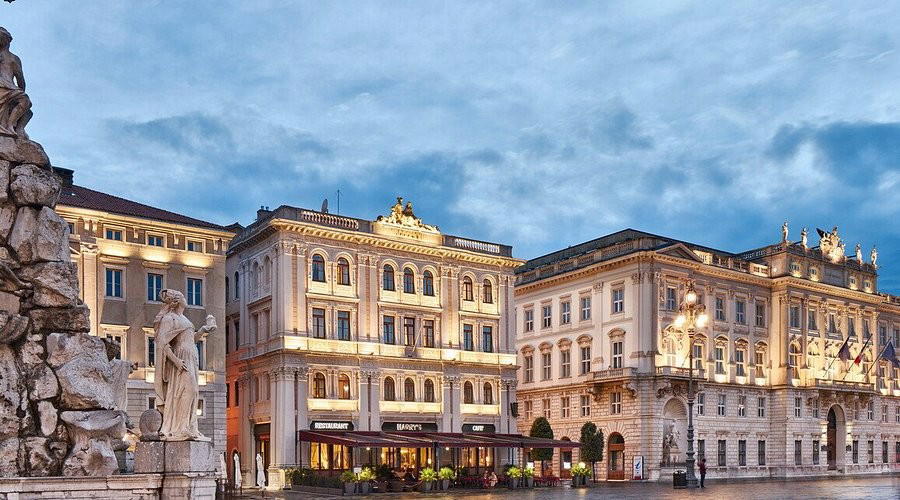
At a Glance
- Elegant
- Classic
- Well Known
- Sophisticated
- Historic
- Brunch
- Casual Hangout
- Special Occasion
- Historic Building
- Terrace
- Panoramic View
- Waterfront
- Street Scene
Current opening hours
- Monday
- 8 AM–12 AM
- Tuesday
- 8 AM–12 AM
- Wednesday
- 8 AM–12 AM
- Thursday
- 8 AM–12 AM
- Friday
- 8 AM–12 AM
- Saturday
- 8 AM–12 AM
- Sunday
- 8 AM–9 PM
Hours can change for holidays and private events. Last verified .
Refined stucco, mirrors, and armchairs evoking the Habsburg Empire's nostalgic charm with sea views.