On Augsburger Strasse in the heart of Berlin's Charlottenburg district, Le Faubourg occupies a position where French bistro tradition and the city's evolving fine dining scene intersect. The address places it among a competitive tier of European-leaning restaurants that have quietly reshaped what the western half of the city offers at the table. For visitors oriented around Berlin's broader restaurant circuit, it warrants a considered look.
Pearl is the En Primeur Club membership app — saves, bookings, and concierge access live there. Same editors, same standards.
- Address
- Augsburger Str. 41, 10789 Berlin, Germany
- Phone
- +4949308009990
- Website
- lefaubourg.berlin
- Directions
- Get directions
 Saves & bookings on Pearl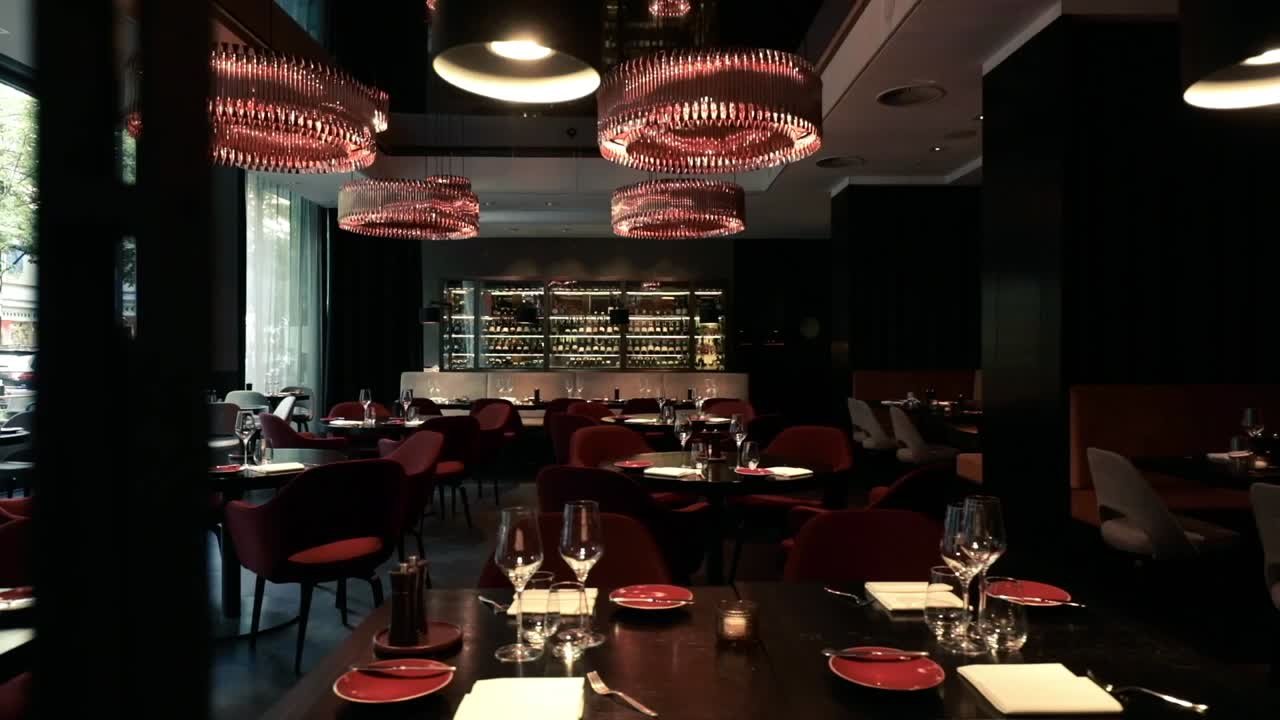
Where Charlottenburg's Dining Character Meets French Register
Le Faubourg is a restaurant in Berlin serving modern French with regional influences. Augsburger Strasse 41 sits in a part of Berlin that has never quite shed its pre-reunification identity. Charlottenburg carries its old West Berlin formality like a well-pressed jacket: the streets are wider, the facades more ornate, the ambient pace a register slower than Mitte or Prenzlauer Berg. It is in this context that Le Faubourg makes its case. The address is not a coincidence of real estate but a statement of orientation. French-referencing names in this quarter are not affectations; they tap into a long-standing cultural current that ran through West Berlin's restaurant culture for decades, when the city looked westward by necessity and French cuisine carried one legible prestige signal.
That history matters because it shapes how a restaurant like Le Faubourg is read against its surroundings. Berlin's fine dining conversation today is dominated by the Michelin-decorated rooms on the eastern and central side of the city: Rutz with its wine-driven modern European tasting menus, Nobelhart and Schmutzig with its hyper-regional sourcing doctrine, FACIL operating from its courtyard garden inside the Mandala Hotel, and CODA Dessert Dining reframing the entire grammar of a tasting menu around a dessert-first logic. Against that cohort, a French-inflected address in Charlottenburg occupies a different register entirely: less conceptually driven, more anchored in the tradition of the European dining room.
The Question of Reinvention in a Changing City
Berlin has changed faster than almost any European city over the past thirty years, and its restaurant culture has tracked that change unevenly. The rooms that held prestige in the early 2000s have either adapted, closed, or contracted into irrelevance. The ones that survived did so by finding a specific lane: either committing to a culinary point of view sharp enough to travel internationally, or rooting themselves deeply enough in neighbourhood loyalty that their value became social rather than gastronomic. The restaurant sits on Augsburger Strasse at a moment when that question of lane-definition is not academic but operational.
Across Germany, French-trained or French-inflected fine dining has taken different trajectories. Vendôme in Bergisch Gladbach occupies a rarefied three-star position anchored in classical technique. Victor's Fine Dining by Christian Bau in Perl has built its reputation on a hybrid French-Japanese vocabulary. Waldhotel Sonnora in Dreis represents a kind of fortress classicism, where the cooking changes slowly and the loyalty of its clientele is generational. Each of those rooms has resolved the question of what kind of French-influenced restaurant it wants to be. That resolution is precisely what stronger examples from this category do over time: they evolve toward a clearer identity rather than a broader one.
Within Berlin specifically, Restaurant Tim Raue offers a useful contrast. Raue's cooking draws on Asian architecture rather than European classicism, and the restaurant's international profile reflects that distinctiveness. The rooms that have found durable recognition in Germany's capital are those where the culinary argument is specific enough to generate a reason for travel, not just a reason for a neighbourhood booking.
Charlottenburg as a Dining Destination
For visitors arriving in Berlin with a structured restaurant itinerary, the western districts require a different logic than the centre. Charlottenburg's dining addresses tend to reward familiarity with the neighbourhood rather than first-time discovery. The quarter's character is residential at its edges and commercial along its main arteries, and the restaurants that thrive here generally do so because they serve a local clientele with consistent expectations rather than a tourist circuit chasing novelty. Augsburger Strasse itself runs close to Kurfürstendamm, which means the restaurant is accessible from the major western hotel corridor and positioned for guests staying in that part of the city. The U-Bahn connection via Augsburger Strasse station places it within direct reach of most central Berlin addresses.
That positioning has parallels elsewhere in Germany. Restaurant Haerlin in Hamburg operates from within the Fairmont Hotel Vier Jahreszeiten, serving a combination of hotel guests and destination diners in a similarly formal register. Schanz in Piesport has built a loyal regional audience over years of consistent cooking. The pattern across these addresses is similar: the restaurant's relationship with a specific geography and clientele matters as much as the cooking itself in determining durability.
Reading Le Faubourg Against a Broader European Frame
French bistro and brasserie formats have undergone significant pressure in European cities over the past decade. In Paris, the traditional bistro has bifurcated into a low-cost neighbourhood format and a premium neo-bistro category, with little viable middle ground. In London, French fine dining spent years ceding ground to Asian and Middle Eastern influences before a partial rehabilitation. In Berlin, where French cuisine never had the deep institutional roots it built in other cities, the question of what a French-referencing restaurant does with its inheritance is more open.
Internationally, the benchmark for French-rooted fine dining with sustained critical recognition includes rooms like Le Bernardin in New York City, where a specific culinary philosophy has been maintained across decades with consistent award recognition, or Atomix in New York City, which shows how a defined tasting menu format can generate long-term critical and commercial traction. Neither model maps directly onto a Charlottenburg address, but the underlying principle applies: specificity compounds over time, while generalism erodes.
For visitors building an itinerary that reaches beyond Berlin, comparable high-end European-inflected rooms across Germany include Aqua in Wolfsburg, JAN in Munich, Schwarzwaldstube in Baiersbronn, ES:SENZ in Grassau, and Bagatelle in Trier. Each of those rooms has resolved its identity question in a different direction, and the contrast is instructive for understanding what the category can look like at its clearest.
Planning a Visit
The restaurant is located at Augsburger Str. 41, 10789 Berlin, placing it within Charlottenburg's main commercial zone and close to the Kurfürstendamm corridor.
A Minimal comparable set
Comparable venues nearby, for context on price, style, and recognition.
| Venue | Cuisine | Price | Notes |
|---|---|---|---|
| Le FaubourgThis venue — the venue you are viewing | Not listed | $$$ | Not listed |
| Bostich | Wilmersdorf, French-Swiss Bistro | $$$ | Not listed |
| CARTE BLANCHE | Tiergarten, French Brasserie | $$$ | Not listed |
| Restaurant Pastis | Wilmersdorf, Classic French Bistro | $$ | Not listed |
| Hauptstadtrestaurant Gendarmerie | Not listed | $$$ | Mitte, French Brasserie with German Accents |
| VOLK | Not listed | $$ | Scheunenviertel, French Oyster Bar & Bistro |
Continue exploring
More in Berlin
Restaurants in Berlin
Browse all →
Bars in Berlin
Browse all →
Hotels in Berlin
Browse all →

At a Glance
- Elegant
- Modern
- Sophisticated
- Minimalist
- Date Night
- Business Dinner
- Special Occasion
- Hotel Restaurant
- Terrace
- Extensive Wine List
- Sommelier Led
- Local Sourcing
Current opening hours
- Monday
- 12–3 PM
- Tuesday
- 12–3 PM, 6–11 PM
- Wednesday
- 12–3 PM, 6–11 PM
- Thursday
- 12–3 PM, 6–11 PM
- Friday
- 12–3 PM, 6–11 PM
- Saturday
- 6–11 PM
- Sunday
- Closed
Hours can change for holidays and private events. Last verified .
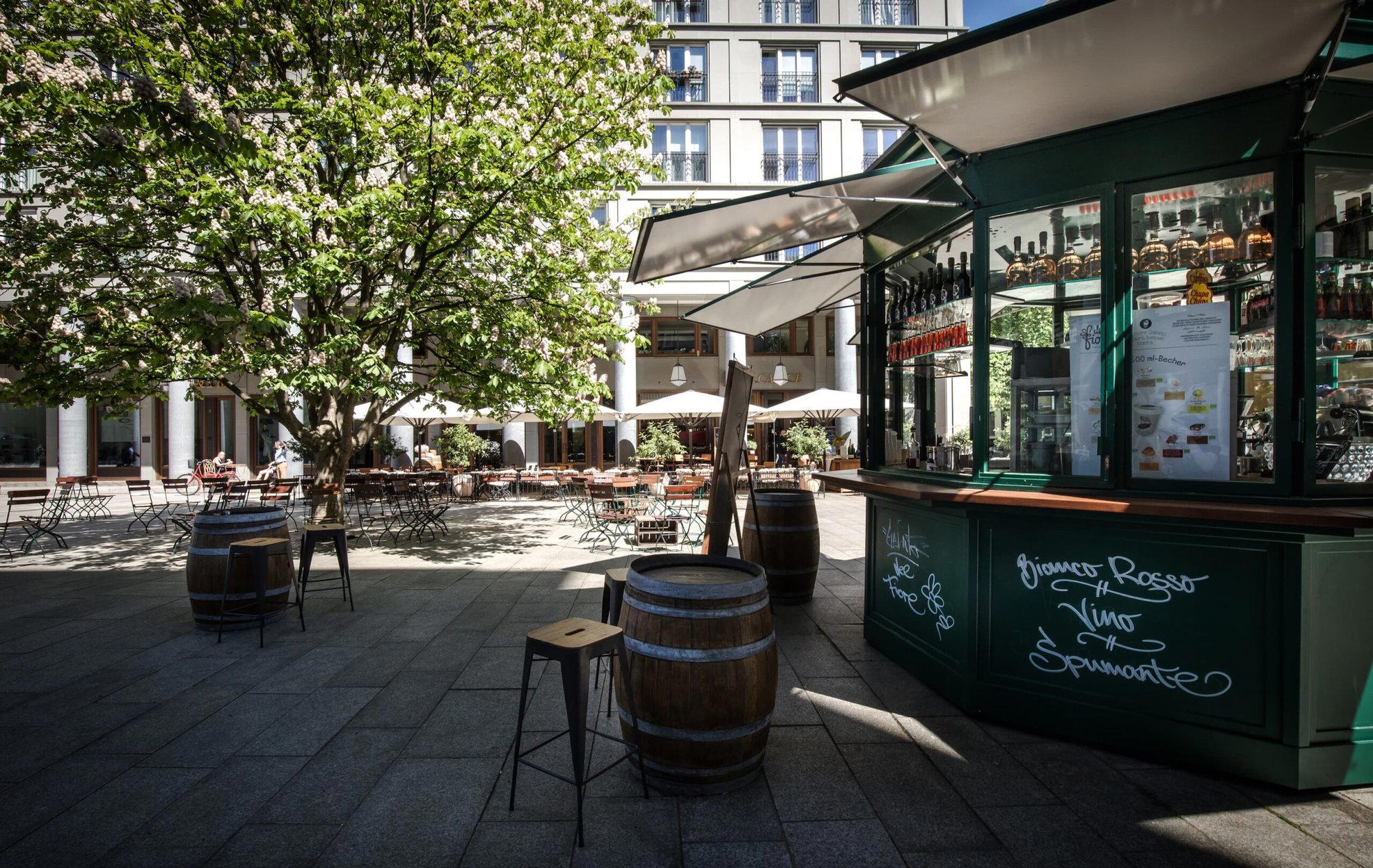
Stylish minimalist interior with Bauhaus design classics, offering an elegant yet casual chic Parisian flair.