On Borgo Pio, the pedestrian street that runs parallel to the Vatican walls, Borgo Nuovo occupies a stretch of Rome where tourist infrastructure and genuine neighbourhood life still intersect. The restaurant sits within a dining quarter defined by proximity to the Tiber and centuries of pilgrimage trade, placing it in a category of Roman addresses where context is as instructive as what arrives on the plate.
Pearl is the En Primeur Club membership app — saves, bookings, and concierge access live there. Same editors, same standards.
- Address
- Borgo Pio, 104, 00193 Roma RM, Italy
- Phone
- +39 06 689 2852
- Website
- social.quandoo.com
- Directions
- Get directions
 Saves & bookings on Pearl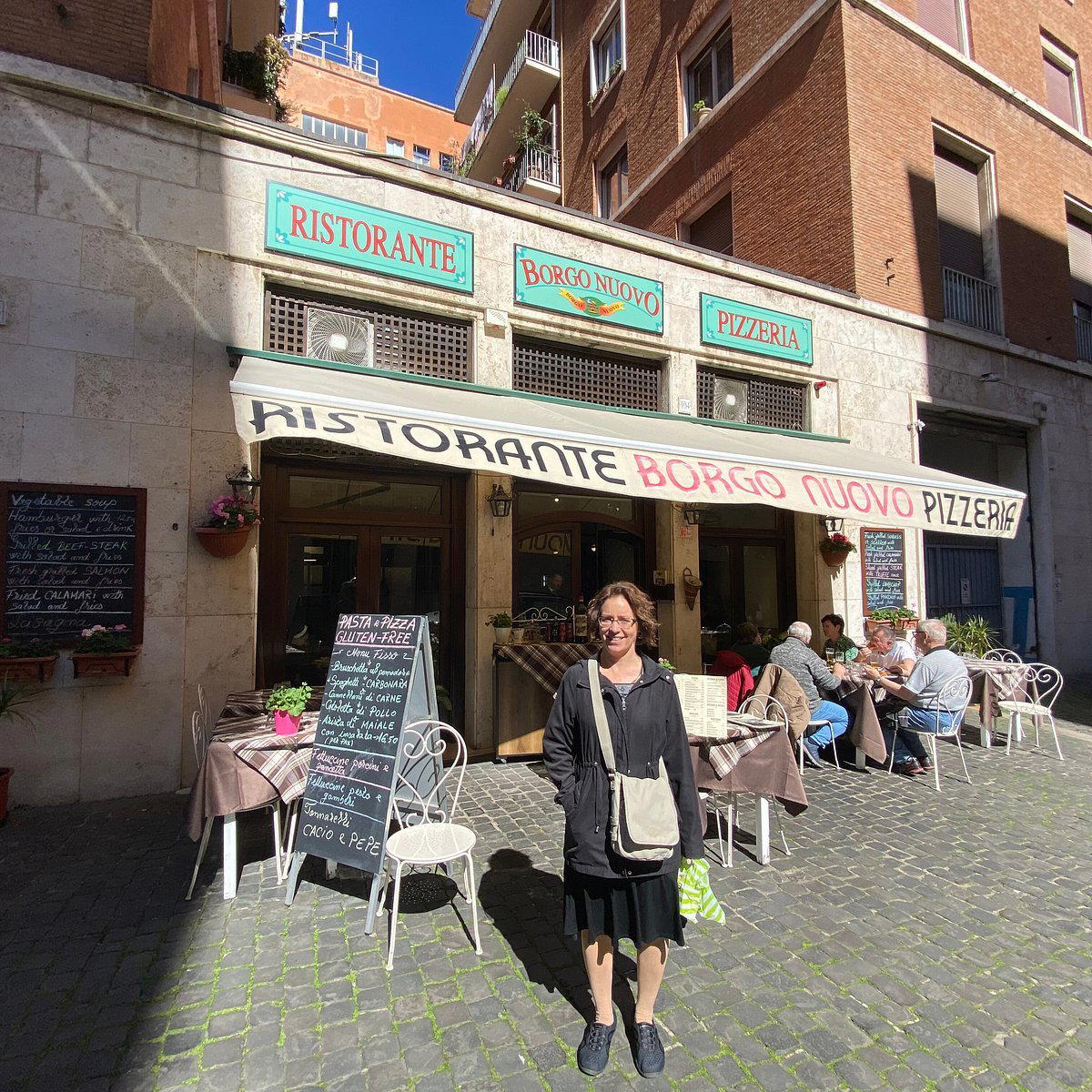
The Street, the Quarter, the Table
Borgo Pio is one of those Roman streets that rewards the traveller willing to walk past the obvious. The via runs inside the wedge of the Borgo rione, pressed between Castel Sant'Angelo to the east and the colonnade approach to St Peter's to the west. For centuries this district fed pilgrims, cardinals, and the working population of the Vatican's administrative apparatus. The food culture that accumulated here sits in a middle register shaped by constant foot traffic and a residential population that has thinned over decades.
Within that context, Borgo Nuovo at number 104 operates as a Roman trattoria and pizzeria at the address. The broader Borgo dining scene has long been shaped by Vatican crowds and the restaurant choices that cater to them. Those looking for the kind of multi-course, produce-led meal that defines the better end of contemporary Roman dining have historically looked elsewhere: toward the creative formats at Il Pagliaccio or Acquolina, or the polished tasting rooms of Enoteca La Torre and Achilli al Parlamento. Borgo Nuovo's position on Borgo Pio places it at the edge of that conversation, in a neighbourhood that has not yet been fully mapped by the city's serious dining circuit.
How a Meal Unfolds on Borgo Pio
The architecture of a meal at a Roman restaurant in this quarter tends to follow a pattern that reflects the neighbourhood's layered identity: an opening gesture toward the city's deep culinary grammar, followed by courses that test how far the kitchen is willing to push past convention. Rome's indigenous cooking tradition is built on a small canon of preparations, the quinto quarto offal repertoire, pasta forms like cacio e pepe and carbonara, anchovy-forward antipasti, and any serious local restaurant must position itself in relation to that tradition, either by honouring it faithfully, inflecting it with contemporary technique, or departing from it with enough authority to justify the departure.
At Roman tables, the opening courses carry diagnostic weight. Antipasti in this city's tradition are not throat-clearers; they signal the kitchen's philosophy. A well-constructed sequence will layer cured meats and preserved vegetables against something acidic or charred before the pasta courses arrive. The pasta tier is where Roman kitchens are most exposed: the margin between a technically correct cacio e pepe and a broken one is narrow. Italian tasting formats at addresses like Reale in Castel di Sangro or Uliassi in Senigallia demonstrate how pasta can function as a structural pivot in a longer meal; the question for a Borgo Pio address is whether ambition is matched by execution at a comparable level.
Second courses in this register typically turn on protein quality and sourcing specificity: the provenance of a lamb, the age of a suckling pig, the decision to work with whole-animal cuts rather than the same three fillets that appear on every Roman menu in a tourist quarter. Dessert, in Rome's better independent restaurants, has shifted away from the tiramisu default toward something that references the city's pastry tradition, ricotta-based preparations, seasonal fruit with aged vinegar, espresso in forms other than a postprandial shot, while still reading as locally grounded rather than internationally abstracted.
Borgo Pio in the Wider Italian Dining Frame
Understanding where a Borgo Pio restaurant sits in Italian dining's broader hierarchy requires stepping back to the national picture. Italy's most decorated tables cluster in the north: Osteria Francescana in Modena, Le Calandre in Rubano, Piazza Duomo in Alba, and Enoteca Pinchiorri in Florence define a tier of Italian fine dining that operates at international competition level. Rome's own fine-dining ceiling is represented by the three-Michelin-star benchmark of La Pergola, which sits in a category defined by Heinz Beck's three-decade residency and consistent international recognition. Below that ceiling, the creative mid-tier, restaurants working with tasting menus and serious wine programs at the €€€€ bracket, is represented by Il Pagliaccio and Enoteca La Torre among others. Further afield, addresses like Atelier Moessmer Norbert Niederkofler in Brunico, Quattro Passi in Marina del Cantone, and Dal Pescatore in Runate show how regional identity can coexist with technical ambition at a national level.
Borgo Nuovo operates below that credentialed tier, in a neighbourhood where the competitive set is defined more by location than by cuisine ambition. That positioning is not a criticism; it describes a real opportunity. The Borgo rione has the physical character, cobbled streets, medieval street plans, a low-rise residential scale that has survived Rome's twentieth-century expansion, to support a serious dining address without the price expectations of Parioli or the tourist-premium inflation of Trastevere. For a traveller whose itinerary crosses the Vatican quarter, the restaurant represents a more considered choice than the surrounding offer, in a part of the city where considered choices are genuinely scarce.
Planning a Visit
Borgo Pio is on foot from Castel Sant'Angelo, a ten-minute walk from Piazza Navona, and within the taxi or rideshare catchment of most central Roman hotels. The street itself is pedestrianised through its central stretch, which changes the approach considerably from Rome's noisier arteries. The restaurant recommends reservations; the restaurant is open Monday through Saturday from 9 AM to 8 PM and is closed on Sunday. Pricing is moderate, at about $25 per person.
Cuisine and Awards Snapshot
Comparable venues nearby, for context on price, style, and recognition.
| Venue | Cuisine | Price | Notes |
|---|---|---|---|
| Borgo NuovoThis venue — the venue you are viewing | Roman Trattoria & Pizzeria | $$ | Not listed |
| ZI ROSETTA | Traditional Roman Trattoria | $$ | San Eustachio |
| Ciampini Bistrot | Traditional Roman Trattoria | $$ | Campo Marzio |
| Il Barroccio | Traditional Roman Osteria | $$ | Colonna |
| Osteria dal 1931 | Traditional Roman Osteria | $$ | Gianicolese |
| Trattoria L'avvolgibile | Traditional Roman Trattoria | $$ | Appio-Latino |
Continue exploring
More in Rome
Restaurants in Rome
Browse all →
Bars in Rome
Browse all →
Hotels in Rome
Browse all →

At a Glance
- Cozy
- Rustic
- Classic
- Casual Hangout
- Family
- Terrace
- Historic Building
- Extensive Wine List
- Street Scene
Current opening hours
- Monday
- 9 AM–8 PM
- Tuesday
- 9 AM–8 PM
- Wednesday
- 9 AM–8 PM
- Thursday
- 9 AM–8 PM
- Friday
- 9 AM–8 PM
- Saturday
- 9 AM–8 PM
- Sunday
- Closed
Hours can change for holidays and private events. Last verified .
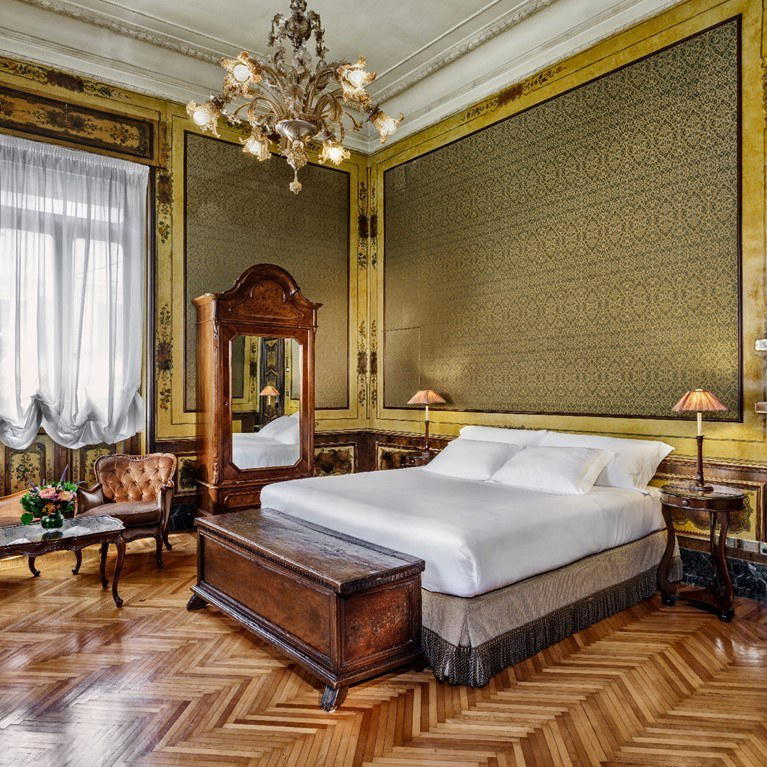
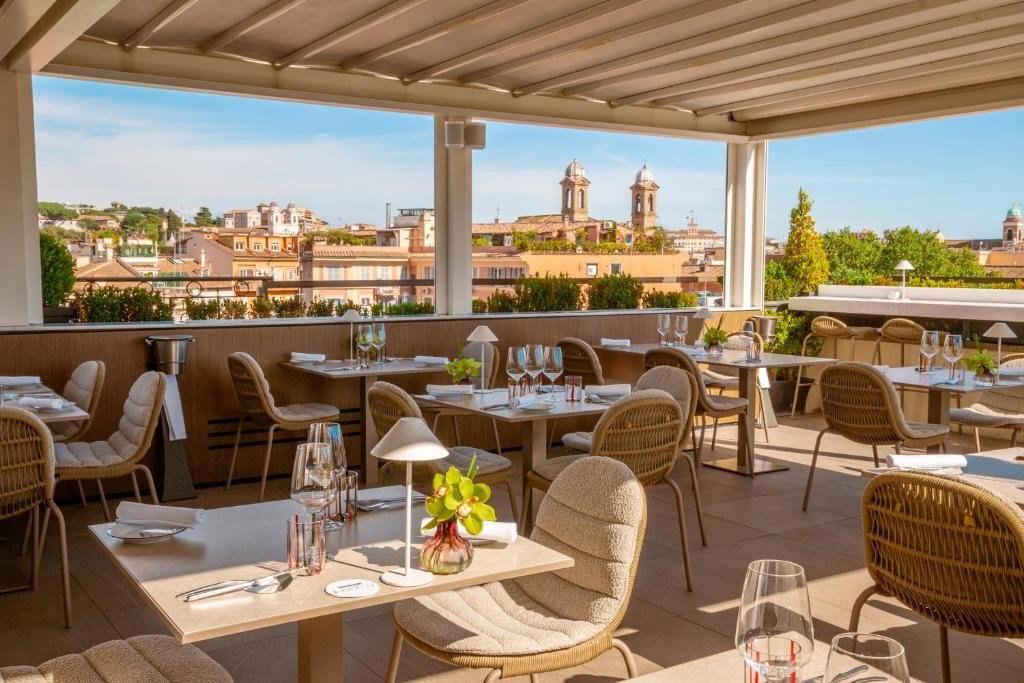
Cozy and welcoming historic setting with ample indoor and outdoor seating under linen tablecloths.