Bluejacket
Bluejacket occupies a converted 19th-century boilerhouse in Washington D.C.'s Navy Yard, positioning itself among the city's more considered dining options east of the Capitol. The space draws from the industrial fabric of Tingey Street SE, where a wave of serious restaurants has quietly reshaped expectations for the neighbourhood. For a fuller picture of the D.C. dining scene, see our complete Washington D.C. restaurants guide.
Pearl is the En Primeur Club membership app — saves, bookings, and concierge access live there. Same editors, same standards.
- Address
- 300 Tingey St SE #180, Washington, DC 20003
- Phone
- +12025244862
- Website
- bluejacketdc.com
- Directions
- Get directions
 Saves & bookings on Pearl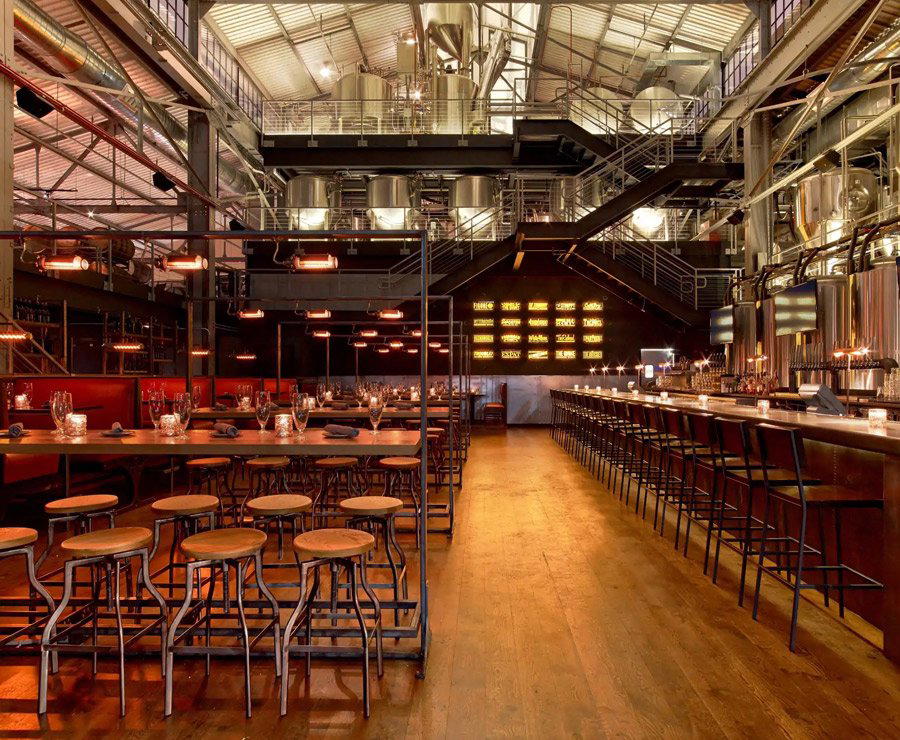
The Navy Yard's Shift from Waterfront Novelty to Dining Address
Bluejacket is an American Brewery Gastropub in Washington, D.C. at 300 Tingey St SE #180, with a casual dress code and reservations recommended. The Navy Yard neighbourhood's transformation since then has followed a pattern visible in several American cities: industrial-era buildings repurposed not for chain concepts but for restaurants with specific sourcing commitments and clearly defined culinary identities. Bluejacket, at 300 Tingey St SE, sits in that context. The address places it in a part of D.C. that now competes with Capitol Hill and 14th Street NW for serious dining traffic, rather than functioning as a spillover option for Nationals Park crowds.
Washington D.C.'s wider dining scene has grown more differentiated over the same period. The city now holds a range of formats from counter-service tasting menus at minibar to produce-driven neighbourhood restaurants like Oyster Oyster, Middle Eastern cooking rooted in regional sourcing at Albi, and Peruvian precision at Causa. The city's most discussed contemporary rooms, including Jônt, now benchmark against national peers rather than local convention.
What the Boilerhouse Setting Demands of the Kitchen
The building Bluejacket occupies is a 19th-century boilerhouse, a typology that carries its own weight in the American craft beer and dining revival. High ceilings, exposed ironwork, and masonry walls create an acoustic and visual register that pushes food and drink programs toward the substantial rather than the delicate. This is a space that suits long tables, direct service, and cooking that can hold its own against the room. Counterparts in other cities have demonstrated how the converted industrial format works well when the kitchen sources with the same directness the architecture implies: regional producers, seasonal constraints, and a menu that changes when supply dictates rather than on a fixed quarterly cycle.
That sourcing-first framework is increasingly the standard against which serious American dining rooms are judged. At Blue Hill at Stone Barns in Tarrytown, the farm-to-kitchen relationship is both the program's premise and its operating constraint. At Single Thread Farm in Healdsburg, the sourcing chain is extended to the hotel and the broader estate.
Ingredient Sourcing in the Mid-Atlantic Context
Washington D.C. occupies one of the more productive agricultural corridors on the East Coast. The Chesapeake Bay watershed to the east, the Shenandoah Valley to the west, and the Virginia and Maryland coastal plains in between give D.C. kitchens access to a supplier network that few American cities of its size can match. Oysters from the Rappahannock and the Eastern Shore, blue crab from the Bay, lamb from the Virginia hills, and stone fruit from the Piedmont orchards all fall within a plausible day-trip radius of Tingey Street. For a restaurant operating in this geography, the sourcing argument is not aspirational; it is logistically achievable in ways that sourcing programs in landlocked cities are not.
That regional specificity matters because it separates a sourcing narrative grounded in actual supplier relationships from one built on marketing language. The distinction is visible across the national dining tier. Providence in Los Angeles has built a reputation on sustainable Pacific seafood sourcing backed by documented supplier certifications. Smyth in Chicago connects its urban kitchen to a working farm in Illinois. Addison in San Diego draws on Southern California's year-round growing season. In each case, the sourcing claim is made credible by geography and by the specificity of what appears on the plate. D.C.'s mid-Atlantic position makes the same argument available to any kitchen willing to build the supply chain.
How Bluejacket Sits in the D.C. comparable set
D.C.'s dining conversation has historically centred on fine dining formality and power-lunch convention. The city's recent evolution has moved toward a more varied register: casual-luxury formats, chef-driven neighbourhood rooms, and internationally inflected menus that reflect D.C.'s diplomatic and immigrant communities. Bluejacket's Tingey Street address places it at some remove from the Pennsylvania Avenue corridor and the traditional downtown cluster, which creates both a challenge and a positioning advantage. Restaurants that establish themselves east of the Capitol tend to draw guests with a specific intention rather than a passing foot-traffic audience.
Within Washington's comparable set, the closest comparators are rooms that combine a specific built environment with an equally specific food identity. The Inn at Little Washington operates at a different price point and format, but it demonstrates that the region around the capital can sustain nationally recognised dining at the summit tier. Lazy Bear in San Francisco and Emeril's in New Orleans both show how a distinctive physical setting contributes to a restaurant's position in its city's dining hierarchy. The building, in these cases, is not incidental to the program; it sets the terms of the experience before the first course arrives.
At the national level, the sourcing-forward American dining format that Bluejacket's context suggests also appears at The French Laundry in Napa and at Le Bernardin in New York City, though in both cases the sourcing argument is subordinate to a broader culinary identity built over decades. Atomix in New York and Atelier Moessmer Norbert Niederkofler in Brunico both demonstrate how a sourcing commitment, applied with discipline over years, can become the defining credential of a room rather than a supporting note.
Know Before You Go
| Address | 300 Tingey St SE #180, Washington, DC 20003 |
|---|---|
| Neighbourhood | Navy Yard / Capitol Riverfront |
| Closest Metro | Navy Yard-Ballpark (Green Line) |
| Booking | Reservations are recommended. |
| Price range | Not confirmed at time of publication |
| Hours | Mon to Thu and Sun, 11 AM to 12 AM; Fri and Sat, 11 AM to 1 AM. |
| Phone |
A Tight Comparison
Comparable venues nearby, for context on price, style, and recognition.
| Venue | Cuisine | Price | Notes |
|---|---|---|---|
| BluejacketThis venue — the venue you are viewing | Not listed | $$$ | Not listed |
| Westend Bistro | West End, Modern American Bistro | $$$ | Not listed |
| Proper 21 | East End, Modern American Sports Bar | $$$ | Not listed |
| Jardenea | West End, Modern American Farm-to-Table | $$$ | Not listed |
| Juniper | West End, Seasonal American Brasserie | $$$ | Not listed |
| The Lafayette | Not listed | $$$ | Golden Triangle, Upscale Contemporary American with French influences |
Continue exploring
More in Washington DC
Restaurants in Washington DC
Browse all →
Bars in Washington DC
Browse all →
Hotels in Washington DC
Browse all →
At a Glance
- Lively
- Industrial
- Trendy
- Energetic
- Group Dining
- Casual Hangout
- After Work
- Late Night
- Open Kitchen
- Beer Program
- Craft Cocktails
- Local Sourcing
Current opening hours
- Monday
- 11 AM–12 AM
- Tuesday
- 11 AM–12 AM
- Wednesday
- 11 AM–12 AM
- Thursday
- 11 AM–12 AM
- Friday
- 11 AM–1 AM
- Saturday
- 11 AM–1 AM
- Sunday
- 11 AM–12 AM
Hours can change for holidays and private events. Last verified .
Big open industrial space with warm inviting atmosphere, comfortable seating, and visible brewing system under string lights on expansive patio.