Beef Grill Club sits at Leipziger Platz 12, positioning itself within one of central Berlin's most architecturally loaded addresses. The format centres on grilled beef in a city whose fine-dining scene has increasingly fragmented into tasting-menu-only territory, making a dedicated grill house a deliberate counterpoint to that trend. Booking details and hours are best confirmed directly with the venue before visiting.
Pearl is the En Primeur Club membership app — saves, bookings, and concierge access live there. Same editors, same standards.
- Address
- Leipziger Pl. 12, 10117 Berlin, Germany
- Phone
- +493020644390
- Website
- beefgrillclub.com
- Directions
- Get directions
 Saves & bookings on Pearl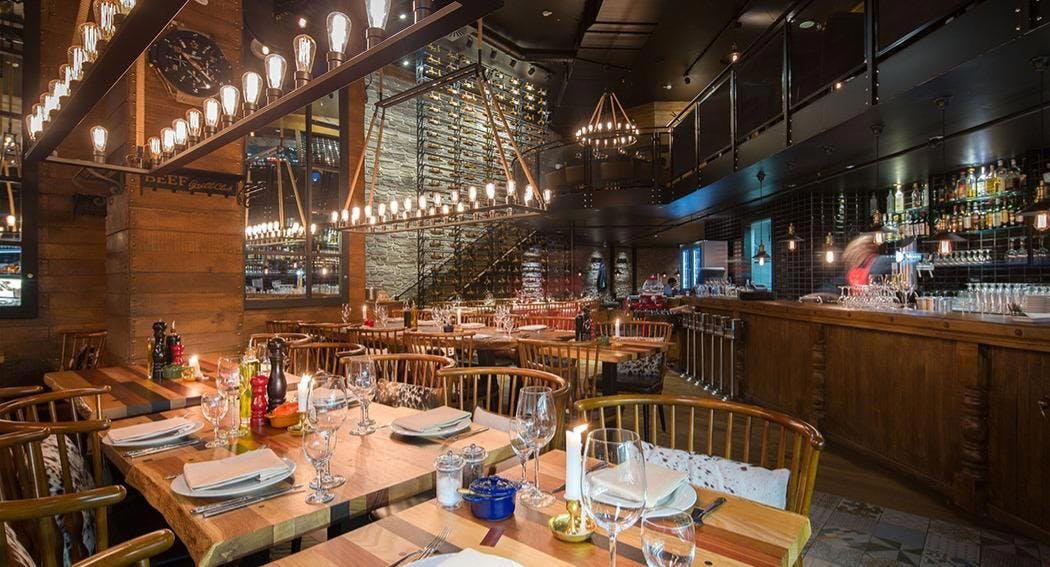
A Grill House at the Edge of Mitte
Leipziger Platz carries a particular weight in Berlin's urban geography. The octagonal square sits at the eastern end of the former Potsdamer Platz development zone, where post-reunification construction produced some of the city's most formally ambitious commercial architecture. Number 12 places Beef Grill Club inside that architectural frame: a building envelope that belongs to the wave of large-scale commercial projects completed in the 2000s, characterised by high ceilings, structured facades, and interior volumes that favour drama over intimacy. In a neighbourhood defined by government buildings, cultural institutions, and the occasional high-end hotel, a dedicated beef and grill format reads as a deliberate positioning choice rather than an accident of real estate.
That address also situates the restaurant within easy reach of several of Berlin's reference-point dining rooms. FACIL, the contemporary European room inside the Mandala Hotel on Potsdamer Strasse, operates within walking distance and represents the tasting-menu end of the spectrum. Nobelhart & Schmutzig on Friedrichstrasse pushes a different edge entirely, with its strictly regional sourcing philosophy and counter-only format. Beef Grill Club occupies a different register from both: the grill tradition sits closer to a brasserie logic than to the progression-dish format that dominates Berlin's Michelin tier.
The Architecture of the Room
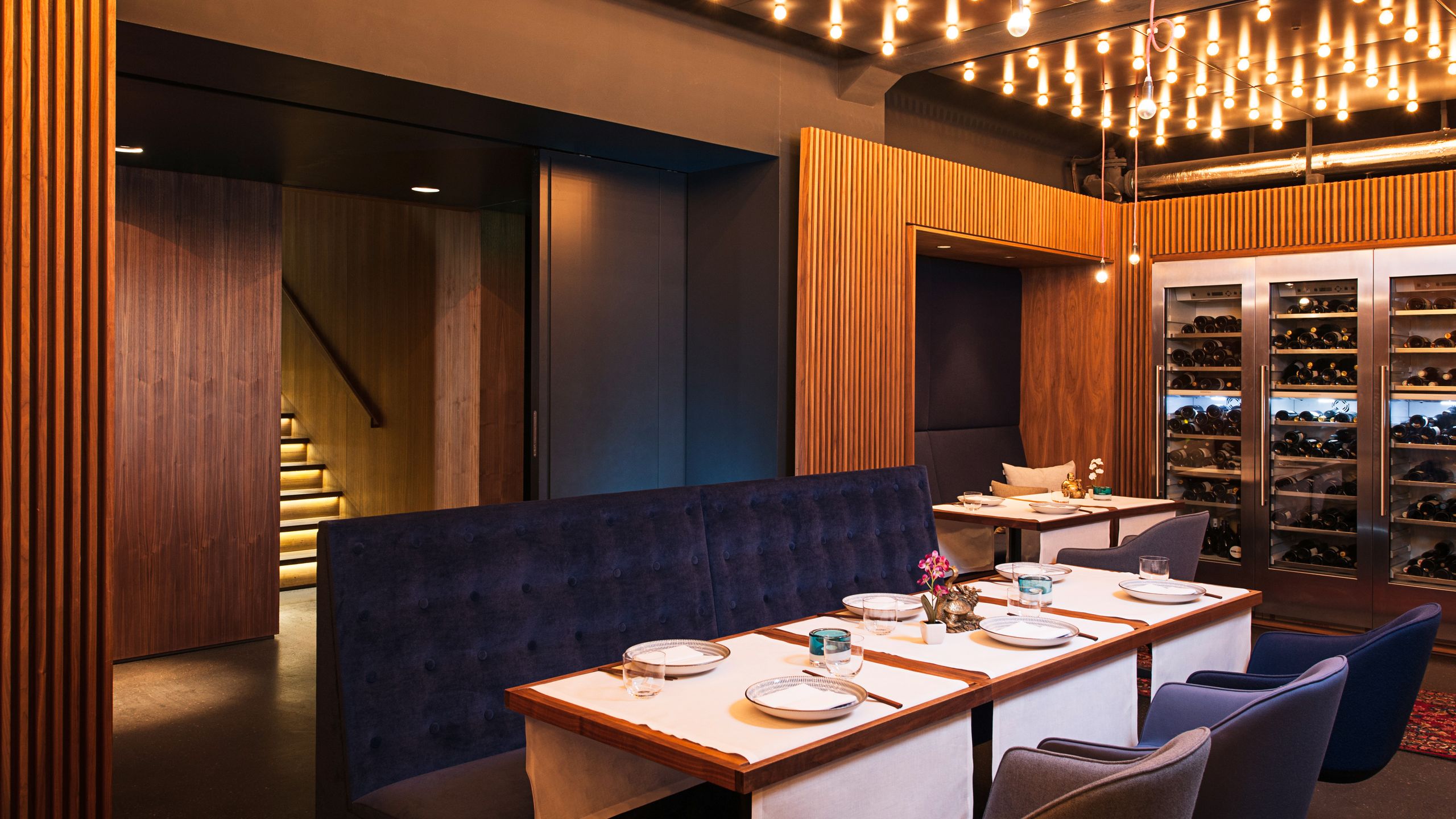
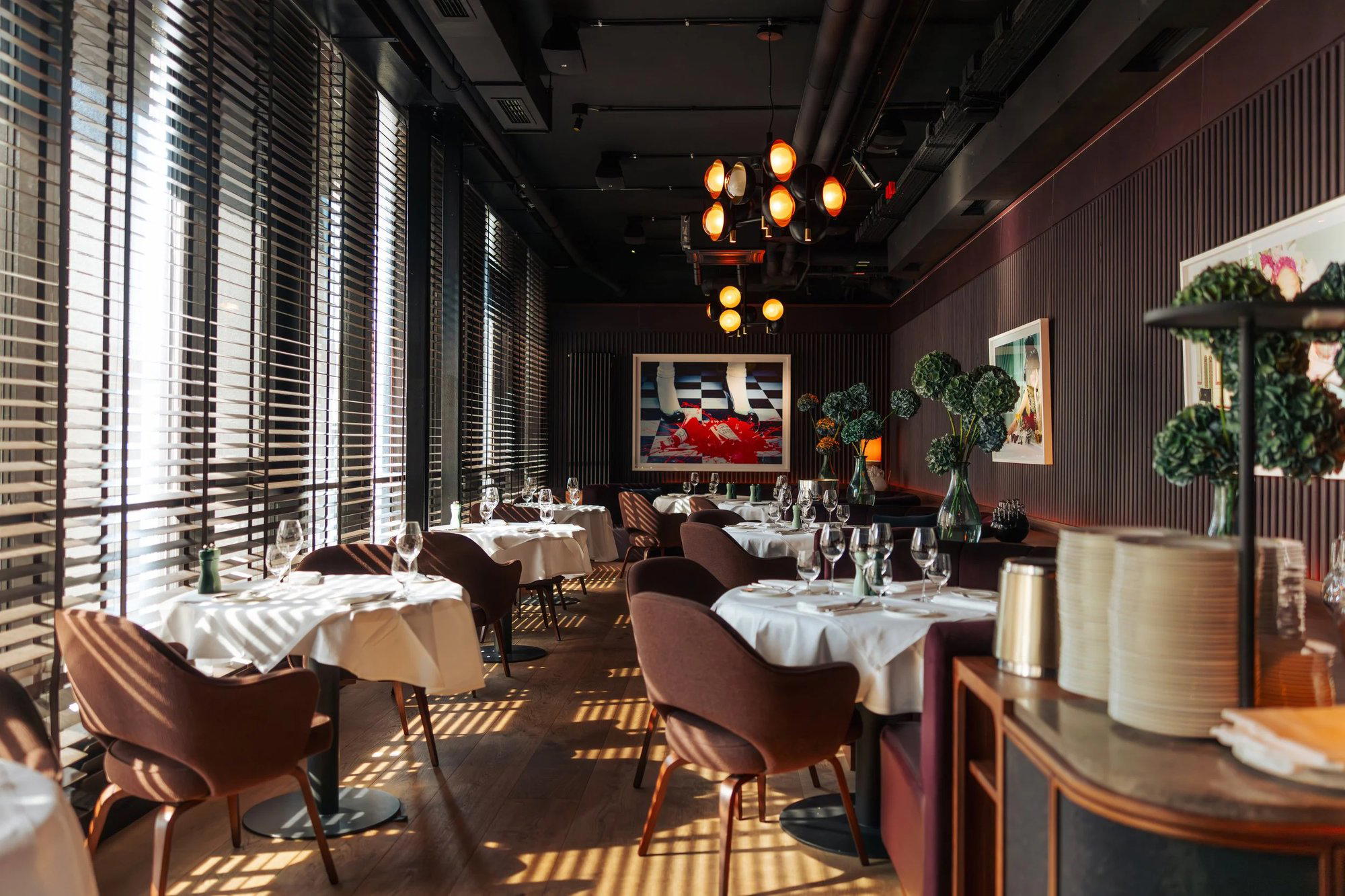
Berlin's post-reunification commercial interiors tend toward one of two modes: the exposed-industrial approach borrowed from the city's warehouse culture, or the formal European restaurant register that signals seriousness through panelling, upholstery, and controlled lighting. A venue operating under a name as direct as Beef Grill Club, in a building of this vintage at this address, is more likely to sit in the latter category. The physical container at Leipziger Platz 12 suggests rooms with height, structured seating arrangements, and the kind of spatial logic that supports a longer meal rather than a quick turnover. High-volume grill houses in European city centres typically design for a throughput that the room itself moderates: wider spacing between tables, acoustic treatment that keeps the noise from collapsing into din, and a bar or display kitchen that gives the space a focal point beyond the plates themselves.
That spatial register matters because it shapes the meal's tempo. A grill format without tasting-menu progression relies on the room to do some of the work that courses would otherwise perform. The physical sequence of arrival, the bar moment, the transition to the table, the visibility of the kitchen or the grill itself: these become the structural elements that mark time across an evening. It is a format more common in London, Paris, and New York than in Berlin, which has historically leaned toward either the casual end of grilled meat (the city's kebab and currywurst infrastructure remains formidable) or the high-abstraction end of fine dining represented by rooms like Rutz on Chausseestrasse.
The Grill Format in Berlin's Dining Context
Berlin's premium dining scene has consolidated significantly around the tasting-menu model over the past decade. CODA Dessert Dining runs one of the city's more conceptually singular formats, built entirely around dessert logic applied to a savoury progression. Restaurant Tim Raue on Rudi-Dutschke-Strasse anchors its menu in Chinese culinary structure. The venues that carry serious recognition in the city, from Rutz to FACIL, almost uniformly operate on the fixed-progression model. Against that backdrop, a dedicated grill house occupies a genuinely different tier of expectation: the guest chooses cuts and sides, the kitchen delivers execution rather than narrative, and the value proposition centres on product quality and fire technique rather than on the arc of a multi-course menu.
Across Germany's broader restaurant geography, the premium end is heavily weighted toward this tasting-menu convention. Schwarzwaldstube in Baiersbronn, Aqua in Wolfsburg, and Vendôme in Bergisch Gladbach all operate in that fixed-menu register. JAN in Munich, Victor's Fine Dining by Christian Bau in Perl, ES:SENZ in Grassau, and Schanz in Piesport follow similar structures. Even destinations like Waldhotel Sonnora in Dreis and Bagatelle in Trier lean into the progression model. A grill concept that operates outside that convention, particularly in a capital city market, positions itself to attract guests who want product-focused eating without the commitment of a three-hour tasting sequence. In comparable international markets, dedicated premium grill rooms such as those that have driven reputations in New York (where Le Bernardin demonstrates what single-format precision looks like at the highest level) and San Francisco (where Lazy Bear takes a different, counter-service communal approach) show that format discipline is itself a credibility signal.
Hamburg's premium dining scene offers a parallel. Restaurant Haerlin in Hamburg operates in the classic grand-hotel fine-dining register. Berlin's equivalent addresses tend to be newer, less institutionally rooted, and more subject to the city's appetite for format experimentation. The restaurant's position on Leipziger Platz puts it in the city's more formal commercial quarter, where the clientele skews toward business visitors, hotel guests, and the political class that clusters around the nearby Bundesrat and Topography of Terror.
Planning Your Visit
Leipziger Platz 12 is directly accessible from S-Bahn and U-Bahn services at Potsdamer Platz, one of the better-connected transport nodes in the city centre. The area draws a mixed daytime population of tourists, office workers, and gallery visitors, but thins out significantly in the evenings, which tends to make the immediate surroundings quieter than the central tourist corridors around Unter den Linden or Alexanderplatz. The restaurant is recommended for reservations and currently opens daily from 12 PM to 12 AM, with an average price of about $80 per person.
Cost and Credentials
Comparable venues nearby, for context on price, style, and recognition.
| Venue | Cuisine | Price |
|---|---|---|
| Beef Grill ClubThis venue — the venue you are viewing | Not listed | $$$$ |
| The Taste of Beef and Seafood | Charlottenburg, Steakhouse & Seafood | $$$$ |
| JW Steakhouse Berlin | Tiergarten, Modern Steakhouse | $$$$ |
| Goldhorn-Beefclub | Gatow, Exclusive Steakhouse | $$$ |
| Cara | Mitte, Modern Italian | $$$$ |
| Grand Cafe Saint-Germain | Charlottenburg, Classic French Brasserie | $$$$ |
Continue exploring
More in Berlin
Restaurants in Berlin
Browse all →
Bars in Berlin
Browse all →
Hotels in Berlin
Browse all →

At a Glance
- Elegant
- Sophisticated
- Classic
- Date Night
- Business Dinner
- Special Occasion
- Open Kitchen
- Extensive Wine List
- Sommelier Led
Current opening hours
- Monday
- 12 PM–12 AM
- Tuesday
- 12 PM–12 AM
- Wednesday
- 12 PM–12 AM
- Thursday
- 12 PM–12 AM
- Friday
- 12 PM–12 AM
- Saturday
- 12 PM–12 AM
- Sunday
- 12 PM–12 AM
Hours can change for holidays and private events. Last verified .
Casual yet elegant atmosphere with an open show kitchen, attention to detail in grill style decor, and a striking wine bottle wall.