On Savignyplatz, one of West Berlin's most enduring café squares, Grand Cafe Saint-Germain draws its name and reference points from the Left Bank tradition of the all-day French café. The address places it squarely in Charlottenburg's literary and bourgeois past, where the neighbourhood's café culture predates the city's reunification and its subsequent restaurant boom. It occupies a tier of Berlin dining that is more about sustained atmosphere than tasting-menu ambition.
Pearl is the En Primeur Club membership app — saves, bookings, and concierge access live there. Same editors, same standards.
- Address
- Savignypl. 13, 10623 Berlin, Germany
- Phone
- +493031991099
- Website
- grandcafe-saintgermain.de
- Directions
- Get directions
 Saves & bookings on Pearl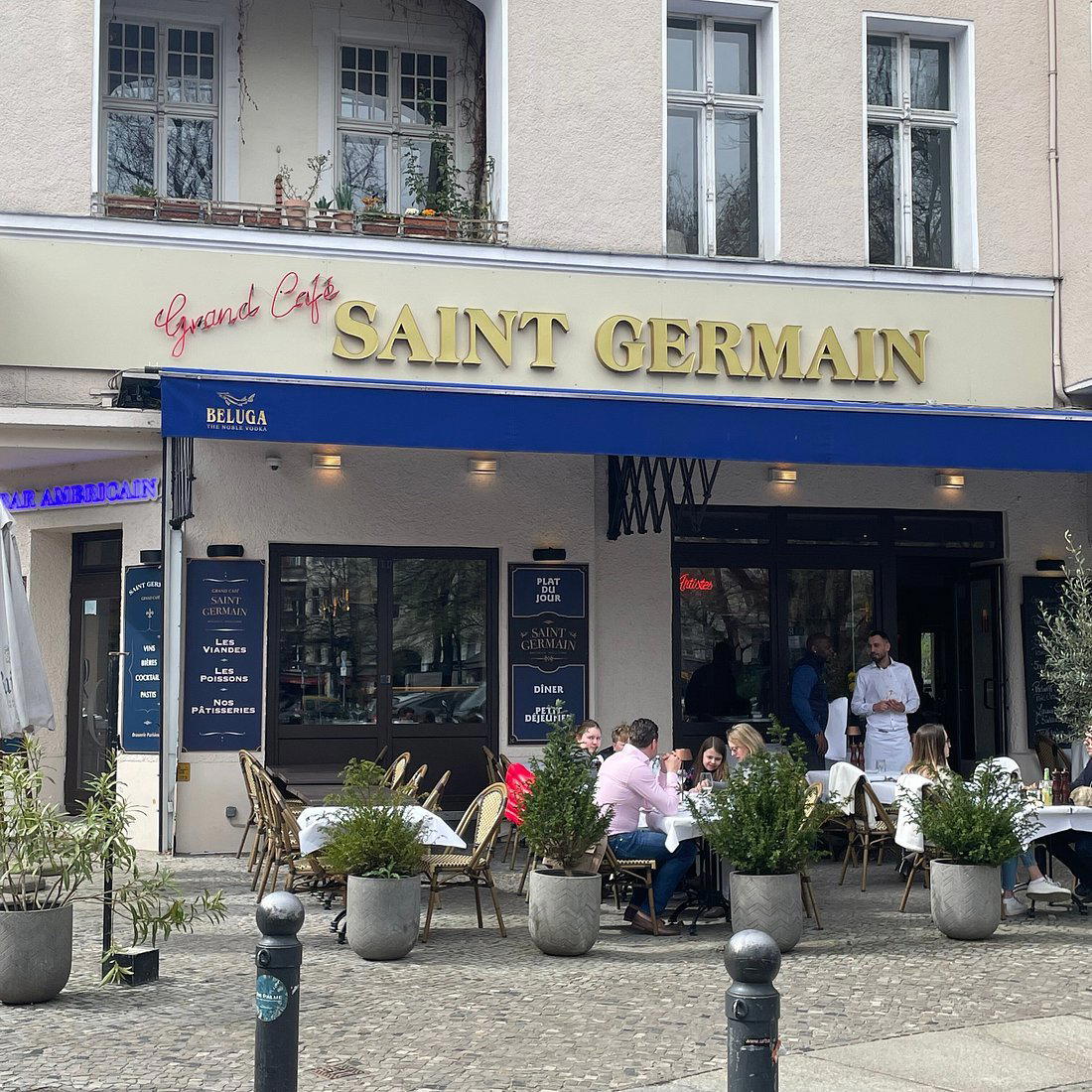
Savignyplatz and the All-Day Café Tradition
There is a particular type of European square that functions less as a destination than as a gravitational centre for a neighbourhood's daily rhythm. Savignyplatz in Charlottenburg is one of them. The square and its surrounding streets have operated as West Berlin's informal intellectual and creative quarter since at least the postwar decades, when the area around the S-Bahn arches filled with secondhand bookshops, wine bars, and cafés that stayed open well past the point when other parts of the city had closed. Grand Cafe Saint-Germain at Savignyplatz 13 takes its name from the Left Bank arrondissement in Paris that codified the idea of the all-day café as a serious cultural institution, not merely a place to eat. It belongs to a different tradition entirely.
Berlin's fine-dining scene has consolidated significantly over the past decade around a cluster of restaurants with serious tasting-menu ambitions. Rutz and Nobelhart & Schmutzig represent the modern German strand of that movement, while FACIL and Restaurant Tim Raue operate at the summit of their respective European and Asian-inflected categories. CODA Dessert Dining has pushed the city's creative credentials further still. Grand Cafe Saint-Germain does not sit in that competitive set. It occupies the older, more continuous tradition of the neighbourhood café-restaurant, where the measure of quality is consistency, atmosphere, and the reliability of a well-executed midday plate, not the ambition of the evening tasting menu.
The Lunch and Evening Divide
The lunch-versus-dinner distinction is one useful frame for thinking about a venue like Grand Cafe Saint-Germain. In the French café tradition the name invokes, lunch has always carried more social weight than dinner. The midday service at the great Paris brasseries was never a lesser version of the evening meal; it was often the primary event, structured around a set formula, priced for regulars, and designed to turn tables without making anyone feel rushed. That model, the serious, unhurried weekday lunch as the true measure of a café's quality, is increasingly rare in Berlin, where restaurant economics have pushed most ambitious kitchens toward evening-only or dinner-led formats.
At an address like Savignyplatz 13, the daytime proposition has a different character from the evening one. Lunch at a café in this tradition tends to be the more relaxed and often better-value service: a shorter menu, lighter preparations, and a clientele drawn from the neighbourhood rather than from across the city. The square itself frames the experience differently in daylight. The old plane trees along the central garden strip filter the afternoon light in a way that shifts entirely once evening sets in and the area's wine bars and restaurants take on a more deliberate, destination-oriented atmosphere. Visitors arriving for dinner at a Charlottenburg café-restaurant enter a mood that is more considered than spontaneous, the tables held by reservation rather than the fluid drop-in logic of the lunch hour.
Across Germany's broader restaurant tier, the lunch-dinner divide maps onto a wider pattern. At destinations like Aqua in Wolfsburg, Schwarzwaldstube in Baiersbronn, or Vendôme in Bergisch Gladbach, the evening tasting menu is the core product and lunch, where offered, is a structured subset of it. Venues further along the prestige axis, Victor's Fine Dining by Christian Bau in Perl, Waldhotel Sonnora in Dreis, or ES:SENZ in Grassau, often operate dinner-only, treating the midday service as irrelevant to their proposition. The all-day café model inverts this entirely. Lunch is not a discount version of the evening; it is the format the concept is built around.
Charlottenburg Context
West Berlin's café culture has a specific historical texture that distinguishes Charlottenburg from the city's post-reunification neighbourhoods. Where Mitte, Prenzlauer Berg, and Kreuzberg developed much of their restaurant identity in the 1990s and 2000s, Charlottenburg's café squares were already functioning social institutions through the divided-city decades. The clientele that shaped venues on and around Savignyplatz tended toward the literary and professional: publishers, architects, the kind of regulars who treated their table at a particular café as a semi-permanent office. That demographic inheritance is still visible in the area's café character, which skews older and more neighbourhood-specific than the more trend-responsive dining scenes found east of the Tiergarten.
The Saint-Germain reference in the name is not accidental. It signals an allegiance to a particular model of the French café as a space with cultural weight, not just a place to eat. Paris restaurants operating under the same conceptual banner, the Left Bank café as intellectual institution, have their own analogue in other European cities, from Vienna's Ringstrasse coffeehouses to Amsterdam's brown café tradition. Berlin's version is looser and more improvised, shaped by the city's interrupted history, but Charlottenburg comes closest to producing the density of long-running, neighbourhood-rooted café addresses that make the comparison functional rather than merely aspirational.
Planning Your Visit
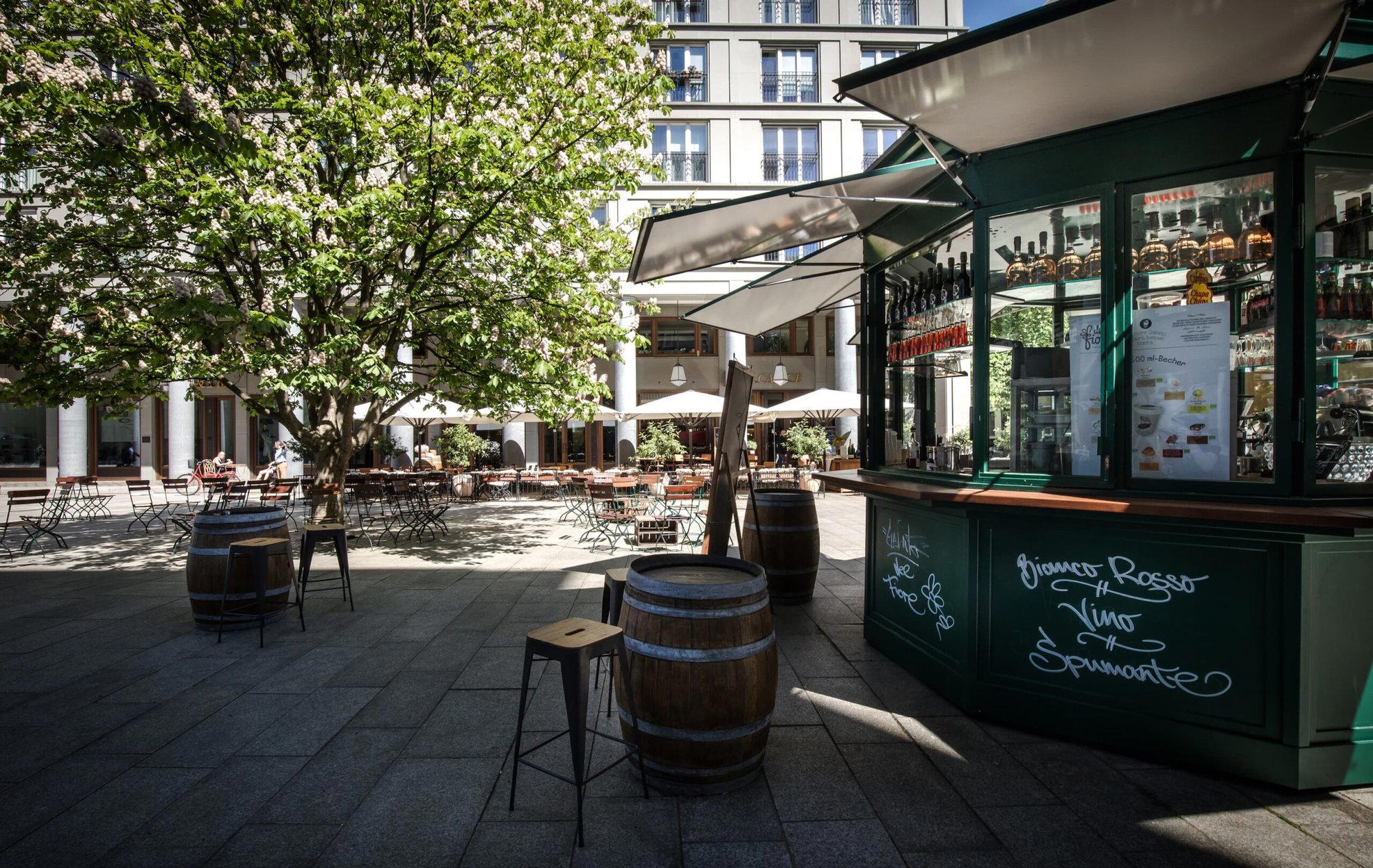
The restaurant is located at Savignyplatz 13 in Charlottenburg, a short walk from Savignyplatz S-Bahn station, which places it roughly fifteen minutes by train from central Mitte. The square itself is pedestrian-friendly with outdoor seating common to the area during warmer months, making it a natural choice for a midday visit when the neighbourhood's daytime rhythm is at its most active. Charlottenburg's café strip is competitive enough that walk-in availability varies considerably between weekday lunches and weekend evenings.
Cuisine-First Comparison
Comparable venues nearby, for context on price, style, and recognition.
| Venue | Cuisine | Price | Notes |
|---|---|---|---|
| Grand Cafe Saint-GermainThis venue — the venue you are viewing | Classic French Brasserie | $$$$ | Not listed |
| Restaurant Petit | Immersive French-Inspired Fine Dining Show | $$$$ | Mitte |
| Belmondo | Classic French Bistro | $$$ | Charlottenburg |
| Bostich | French-Swiss Bistro | $$$ | Wilmersdorf |
| Brasserie Le Paris | Classic French Brasserie | $$$ | Charlottenburg |
| MANON | Modern French Brasserie | $$$ | Charlottenburg |
Continue exploring
More in Berlin
Restaurants in Berlin
Browse all →
Bars in Berlin
Browse all →
Hotels in Berlin
Browse all →

At a Glance
- Elegant
- Classic
- Sophisticated
- Romantic
- Date Night
- Business Dinner
- Group Dining
- Special Occasion
- After Work
- Brunch
- Terrace
- Standalone
- Extensive Wine List
- Craft Cocktails
- Local Sourcing
- Street Scene
Current opening hours
- Monday
- 11 AM–12 AM
- Tuesday
- 11 AM–12 AM
- Wednesday
- 11 AM–12 AM
- Thursday
- 11 AM–12 AM
- Friday
- 11 AM–12 AM
- Saturday
- 11 AM–12 AM
- Sunday
- 11 AM–12 AM
Hours can change for holidays and private events. Last verified .
Warm and inviting with sophisticated décor, nicely decorated spaces, and a cozy yet refined atmosphere reminiscent of a typical Brasserie Parisienne.