On a quiet stretch of Mitte's Kleine Hamburger Strasse, Cara occupies the kind of address that rewards those who seek it out rather than stumble upon it. The restaurant sits within Berlin's densely contested fine-dining tier, where multi-course progression and considered pacing define the format. For those who take the meal seriously, it merits a place on any thoughtful itinerary of the city's better tables.
Pearl is the En Primeur Club membership app — saves, bookings, and concierge access live there. Same editors, same standards.
- Address
- Kleine Hamburger Str. 2, 10115 Berlin, Germany
- Phone
- +493098396198
- Website
- caraberlin.de
- Directions
- Get directions
 Saves & bookings on Pearl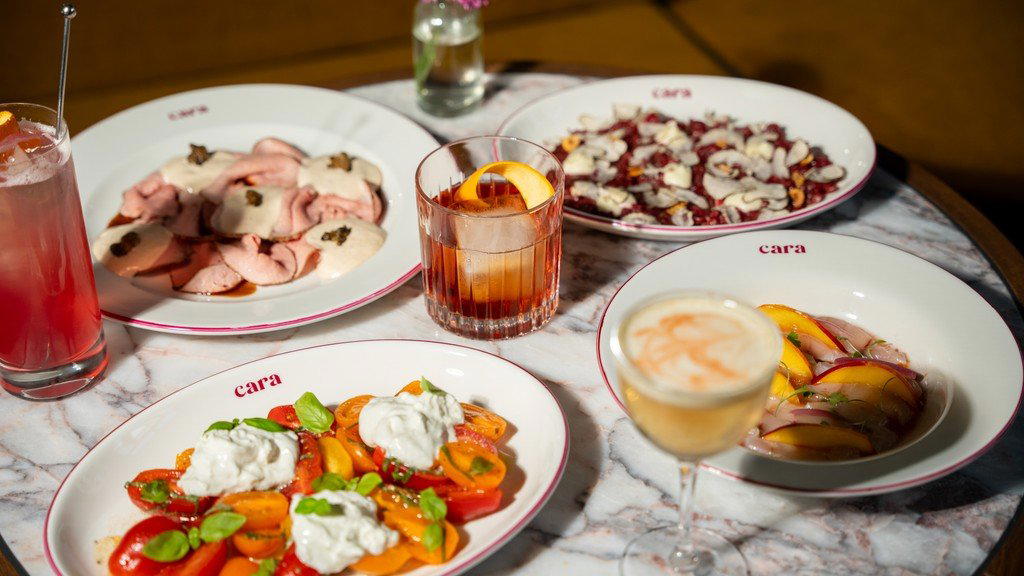
A Street in Mitte, a Room That Signals Intent
Kleine Hamburger Strasse runs quietly through the older fabric of Mitte, a district that has absorbed decades of reinvention without losing its residential grain. The street itself carries little commercial noise, no queues, no neon, no obvious theatre, and that restraint turns out to be relevant context for what happens inside Cara. Berlin's serious dining scene has, over the past decade, pulled away from the bombast that characterised its early post-reunification years and toward something more considered: smaller rooms, longer menus, more deliberate pacing. Cara is a modern Italian restaurant in Berlin's Mitte district.
The approach on arrival sets the register. This is not a room designed to impress on entry so much as one that settles into focus over the course of a meal. In a city where Nobelhart & Schmutzig built its identity around radical localism and confrontational austerity, and where Rutz has held Michelin recognition across a decade of refinement, the competitive set for a restaurant at this address is not entry-level. Dining rooms in this part of Mitte speak to guests who have already made a decision about what kind of evening they want.
The Architecture of a Meal: How the Progression Reads
Multi-course tasting formats have become the dominant grammar of Berlin's upper dining tier. What separates the better examples from the merely expensive is how well the kitchen manages momentum, whether the sequence builds in a way that feels inevitable rather than mechanical, and whether the later courses arrive with enough energy to justify the journey.
Across Germany's serious restaurant circuit, from Schwarzwaldstube in Baiersbronn to Aqua in Wolfsburg and Vendôme in Bergisch Gladbach, the tasting progression has evolved into something more than a delivery mechanism for dishes. It is the primary editorial act of the kitchen, the argument the chef makes about how flavour should accumulate, when to introduce contrast, and where to place weight. Victor's Fine Dining by Christian Bau in Perl and ES:SENZ in Grassau both demonstrate how a well-structured arc can make a long meal feel shorter than it is.
In Berlin specifically, the question of how a kitchen sequences its courses intersects with a wider conversation about identity. FACIL has long used a contemporary European grammar, adjusting to seasonal supply with enough precision to hold two Michelin stars. CODA Dessert Dining inverts the conventional logic of progression entirely, building a menu around sweetness as a structural principle rather than a finale. Each represents a different answer to the same question: how do you make a sequence of plates feel like more than the sum of its parts?
Cara in the Berlin Dining Context
Berlin's fine-dining scene sits in an interesting position relative to its European peers. The city has a Michelin presence that has grown steadily, but it operates under a different commercial pressure than Paris, London, or Copenhagen. Rents in Mitte remain lower than in equivalent central districts elsewhere, which has historically allowed smaller operators to take format risks that would be financially prohibitive in other capitals. The result is a tier of restaurants, Cara among them, that can sustain intimate formats without the pressure to maximise covers.
That intimacy changes what the meal feels like. When Restaurant Tim Raue built its identity around high-intensity flavour and an Asian-inflected repertoire, it made a deliberate choice to operate at scale and visibility. The model at a quieter Mitte address runs in the opposite direction: the investment is in depth of experience per guest rather than breadth of audience. Internationally, this maps onto a format increasingly visible at places like Lazy Bear in San Francisco, where the communal-table, fixed-progression model creates a different social contract between kitchen and guest than a conventional à la carte room does.
Germany's restaurant scene has also been shaped by a generation of kitchens that trained through rigorous classical lineage and then adapted outward. Schanz in Piesport, Waldhotel Sonnora in Dreis, and Restaurant Haerlin in Hamburg each reflect this inheritance differently. In Berlin, the inheritance is filtered through a city that values conceptual clarity over classical convention, which tends to produce menus that justify themselves through ideas rather than technique alone.
Where Cara Sits on a Berlin Itinerary
For visitors planning a serious dining itinerary across the city, the Mitte address places Cara within walking distance of a cluster of culturally weighted destinations, the Hamburger Bahnhof, the Jewish Memorial, the older residential streets that survived and those that didn't. The neighbourhood provides a frame that a meal inside Cara can either acknowledge or set aside, but the physical context is never entirely absent from how an evening reads.
Those building a longer German dining programme might place Cara within a wider arc that includes JAN in Munich or Bagatelle in Trier, restaurants that share a commitment to considered progression without the volume or visibility of the country's most-discussed kitchens. The comparison with Le Bernardin in New York City is instructive from a distance: both occupy a register where the meal's architecture matters as much as individual dishes, and where the room's quietness is a design decision rather than an oversight.
A Quick Peer Check
Comparable venues nearby, for context on price, style, and recognition.
| Venue | Cuisine | Price | Notes |
|---|---|---|---|
| CaraThis venue — the venue you are viewing | Modern Italian | $$$$ | Not listed |
| Il Sorriso | Authentic Italian | $$$ | Tiergarten |
| Ponte | Modern Italian Trattoria | $$$ | Schoneberg |
| Zola | Neapolitan Pizza | $$ | Kreuzberg |
| Lagalante | Modern Italian Fine Dining | $$$ | Schoneberg |
| CRUST Pizza | Neapolitan Pizza | $$ | Mitte |
Continue exploring
More in Berlin
Restaurants in Berlin
Browse all →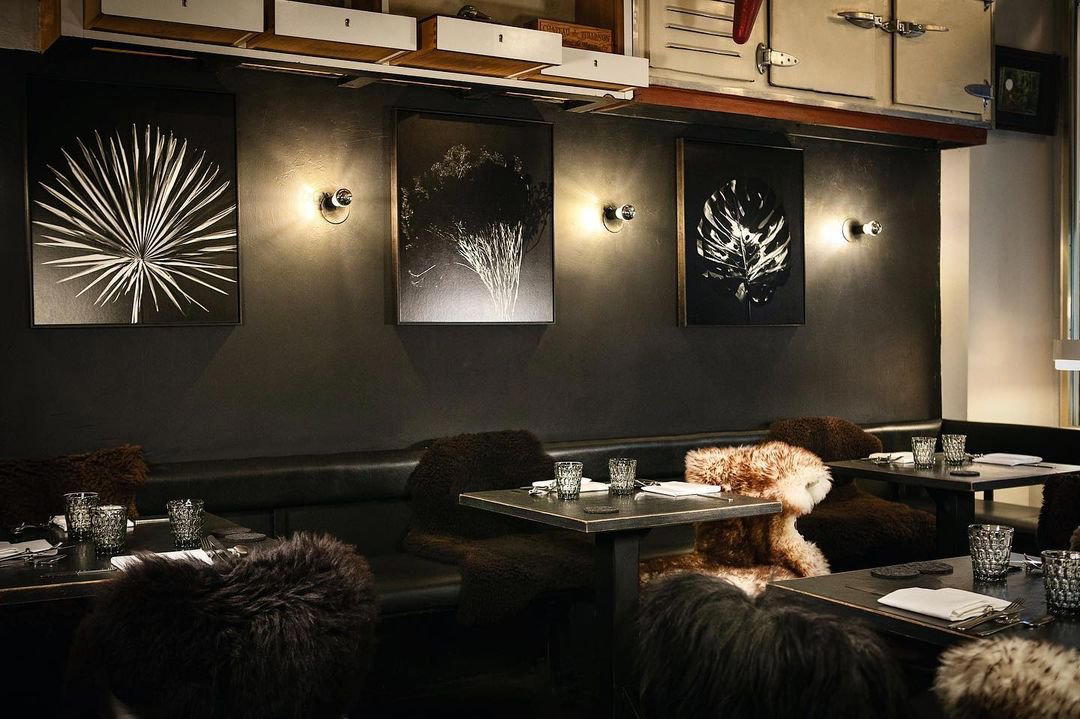
Bars in Berlin
Browse all →
Hotels in Berlin
Browse all →

At a Glance
- Elegant
- Trendy
- Lively
- Modern
- Sophisticated
- Date Night
- Special Occasion
- Terrace
- Open Kitchen
- Craft Cocktails
Current opening hours
- Monday
- 6 PM–12 AM
- Tuesday
- 6 PM–12 AM
- Wednesday
- 6 PM–12 AM
- Thursday
- 6 PM–1 AM
- Friday
- 6 PM–2 AM
- Saturday
- 6 PM–2 AM
- Sunday
- 6 PM–12 AM
Hours can change for holidays and private events. Last verified .
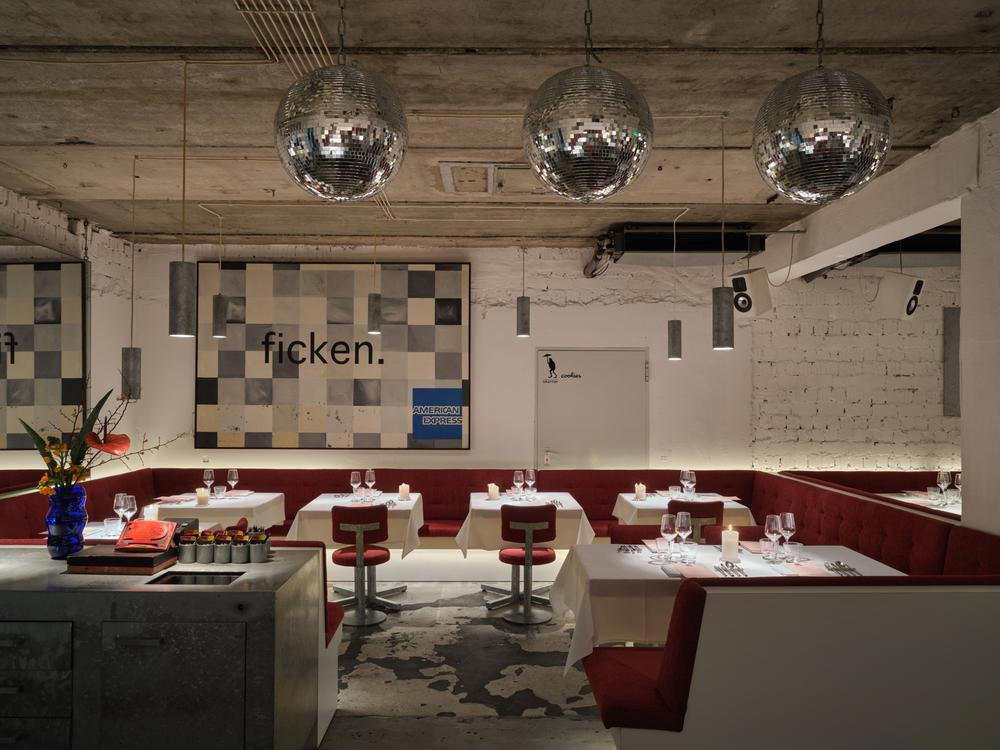
Modern, stylish, and cozy with attentive service, bold music-filled atmosphere, and a lively posh party vibe.