Balwoo

Our verdict
Balwoo occupies a quietly significant address in Jongno District, bringing temple food, the centuries-old Korean Buddhist cooking tradition of sache eumsik, into a formal restaurant setting. Ranked among Asia's top dining destinations by Opinionated About Dining in both 2024 and 2025, it operates six days a week across lunch and dinner sittings, with Sunday closed.

Pearl is the En Primeur Club membership app, where members save venues, book tables and use the concierge.
The menu
What to order
- Bomnamul-japchae
- Modeum-beoseot-gangjeong
- Yeonipbap
- Hwajeon
- Insam naengchae
The Address of Silence: Temple Food in Jongno
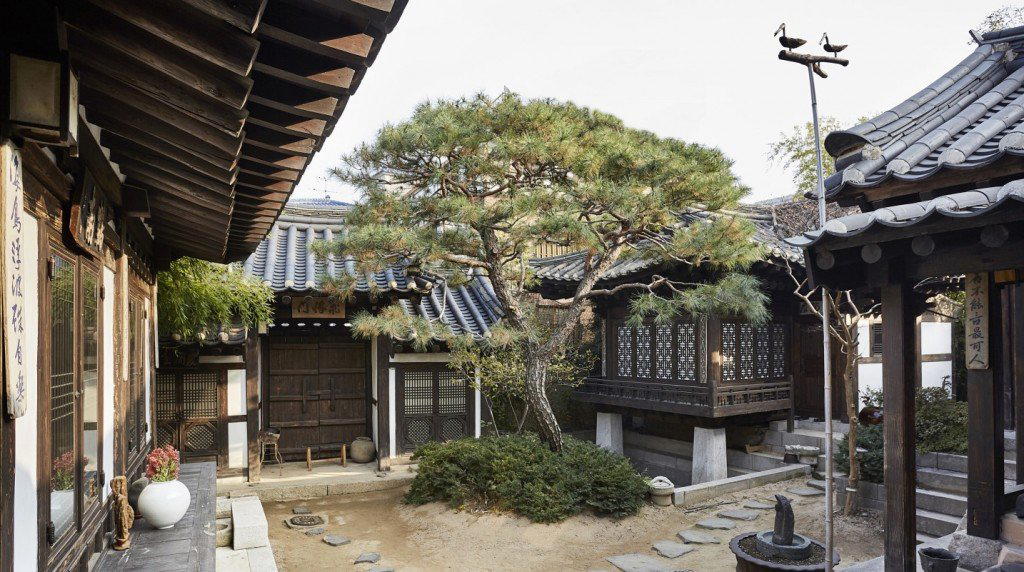
Jongno District carries a particular weight in Seoul's built environment. The neighbourhood sits at the historical centre of the city, where Joseon-era architecture survives in fragments alongside Buddhist temple compounds and the kind of low-rise streets that feel deliberately resistant to the glass-and-steel redevelopment that has transformed so much of the capital. Approaching the address at 71 Gyeonji-dong, the pace slows by necessity. The setting frames the meal before the meal begins.
What Balwoo serves is not simply vegetarian food. It belongs to the tradition of sache eumsik, the temple cuisine of Korean Buddhism, which excludes not only meat and fish but the five pungent vegetables, garlic, green onions, wild chives, leeks, and chrysanthemum greens, believed in Buddhist teaching to disturb concentration and emotional equilibrium. This is a cooking tradition with a documented history stretching back more than a thousand years, developed within monastic communities where food preparation was understood as a form of spiritual practice. The absence of those ingredients forces an unusually disciplined approach to flavour, one that relies on fermented condiments, seasonal produce, and the natural complexity of well-aged ingredients.
Where the Ingredients Come From, and Why That Matters
Korean temple cooking has always been tied to specific landscapes and seasonal rhythms in ways that modern farm-to-table marketing has borrowed but rarely replicates with the same rigour. Monastic kitchens traditionally sourced from the land surrounding their compounds: foraged greens in spring, preserved and fermented preparations that carried nutrition and flavour across the winter months. Doenjang (fermented soybean paste), ganjang (soy sauce), and gochujang (chilli paste) are aged in onggi earthenware over extended periods, developing complexity that no shortcut process reproduces. The same fermentation culture that defines temple food also underpins the broader architecture of Korean cooking, but in the temple tradition, fermented condiments do the work that meat stock does elsewhere.
At Balwoo, under Chef Kim Ji Young, this sourcing logic shapes the menu's structure. The kitchen operates within the doctrinal constraints of sache eumsik, which in practice means that ingredient quality and provenance carry more structural responsibility than they might in a kitchen where seasoning can pivot to richer animal-based foundations. Seasonal variation is not a marketing point here; it is the logical consequence of cooking within a framework that was never designed around year-round ingredient availability. Visitors in autumn eat differently than visitors in spring, and that distinction is genuine rather than cosmetic.
Opinionated About Dining, which applies a data-driven scoring methodology based on aggregated expert votes rather than anonymous inspection, ranked Balwoo among its Leading Restaurants in Asia in 2024 at position 433 and again in 2025 at position 472. The 2023 listing carried a Recommended designation before the full ranking entry. That trajectory represents sustained critical recognition within a category, Korean temple food presented at restaurant level, that has only recently attracted the attention of international food press. It also places Balwoo in a competitive set distinct from the Michelin-starred Korean restaurants that dominate much of Seoul's fine dining conversation: venues like Mingles, Jungsik, and Kwonsooksoo, or the innovative formats at Soigné and alla prima. Those restaurants are working within a modernist or contemporary Korean idiom. Balwoo is doing something structurally different: it is presenting a codified historical tradition with the production standards of a serious restaurant kitchen.
Temple Food as a Distinct Critical Category
The international appetite for temple cuisine has grown alongside broader interest in plant-based eating, but the two things are not the same, and conflating them misses the point. Temple food is not designed as a health programme or an ethical statement about meat consumption in the contemporary sense. It is a culinary tradition rooted in a specific religious and philosophical framework, and its flavour logic follows from that framework rather than from nutritional optimisation. The restraint is doctrinal. The complexity that results from working within those constraints, and from leaning on fermentation, aging, and precise seasonal sourcing, is incidental to the original purpose but consequential for the eating experience.
Seoul now has a small tier of restaurants working seriously within this tradition at a high production level. Gaon addresses Korean royal court cuisine with similar archival seriousness. Baegyangsa Temple in Jangseong-gun offers the experience closer to its monastic source. What Balwoo represents is a specific translation of that tradition into a formal restaurant format accessible to diners without prior familiarity with Buddhist practice, while maintaining ingredient discipline that reflects the tradition's original logic rather than a simplified version of it.
For context beyond Korea, this kind of discipline around plant-forward cooking at the high end finds loose parallels at restaurants like Le Bernardin in New York City, where a single protein category, fish, defines the entire kitchen's creative and sourcing framework, or at Atomix, where the Korean fine dining tradition meets rigorous tasting format. The comparison is structural rather than stylistic: the discipline of a defined framework produces its own category of complexity.
Planning the Visit
Balwoo operates Tuesday through Saturday for both lunch (11:30 am to 3 pm) and dinner (6 pm to 9:30 pm), and on Monday for the same split service. Sunday is closed. The split service format, with a clear break between lunch and dinner, is consistent with how serious tasting-format restaurants manage kitchen preparation and pacing. It is worth noting that the lunch sitting offers access to the same kitchen and tradition at what is typically a shorter commitment than a full evening service, making it a practical option for visitors with tighter schedules.
The Jongno District address places Balwoo within reach of Seoul's broader historical and cultural centre, an area that also connects logically to Kwonsooksoo in nearby Jongno and to the Gangnam-gu location for those moving between Seoul's distinct dining neighbourhoods. For visitors building a broader Korea itinerary, the temple food tradition extends geographically: Mori in Busan and The Flying Hog in Seogwipo represent different ends of the country's restaurant spectrum. Emeril's in New Orleans and other international reference points demonstrate how regionally rooted cooking traditions travel differently when they stay in their place of origin versus when they are exported.
For a fuller picture of what Seoul offers across dining, lodging, and other experiences, the EP Club guides to Seoul restaurants, Seoul hotels, Seoul bars, Seoul wineries, and Seoul experiences cover the full range.
Frequently asked questions
Who is the chef connected to Balwoo?
The chef associated with Balwoo is Kim Ji Young.
What's the signature dish at Balwoo?
No single preparation has been confirmed as a signature through verified sources. Balwoo's kitchen, led by chef Kim Ji Young, operates within the framework of Korean Buddhist temple cooking, where the defining output is the system itself: seasonal ingredients, the exclusion of pungent roots like garlic and onion, and fermentation techniques developed over centuries of monastic practice. The Opinionated About Dining panel ranked Balwoo among Asia's top restaurants in both 2024 and 2025, pointing to consistent execution across the menu rather than any one standout dish.
What are the operating hours at Balwoo?
Hours at Balwoo: Hours: Monday 11:30 am–3 pm, 6–9:30 pm Tuesday 11:30 am–3 pm, 6–9:30 pm Wednesday 11:30 am–3 pm, 6–9:30 pm Thursday 11:30 am–3 pm, 6–9:30 pm Friday 11:30 am–3 pm, 6–9:30 pm Saturday 11:30 am–3 pm, 6–9:30 pm Sunday Closed.
| Venue | Cuisine | Price | Awards | Notes |
|---|---|---|---|---|
| BalwooThis venue (the venue you are viewing) | Korean Buddhist Temple Cuisine | $30–50 | Not listed | Not listed |
| 7th Door | Modern Korean Fermentation Fine Dining | $100–150 | 1 Michelin Star · World's 50 Best #49 | Korean, Contemporary |
| Solbam | Contemporary Neo-Classical Korean | $200–300 | 1 Michelin Star · World's 50 Best #55 | Contemporary |
| Onjium | Modern Korean Royal Court Cuisine | Not listed | 1 Michelin Star · World's 50 Best #14 | Korean |
| L'Amitié | Classic French Fine Dining | $100–150 | 1 Michelin Star · La Liste Top Restaurants | French |
| Zero Complex | Modern French Neo-Bistro | $100–150 | 1 Michelin Star · La Liste Top Restaurants | Korean-French, Innovative |
Recognition history
Dated appearances from independent guides and award organizations, with the underlying list record or original source where available.
Opinionated About Dining Top Restaurants in Asia Ranked #472
Opinionated About Dining
Full recognition history (3 entries)
Opinionated About Dining Top Restaurants in Asia Ranked #433
Opinionated About Dining
Opinionated About Dining Top Restaurants in Asia Recommended
Opinionated About Dining
Continue exploring
More in Seoul
Restaurants in Seoul
All restaurants in Seoul →
Bars in Seoul
All bars in Seoul →
Details
- Elegant
- Quiet
- Minimalist
- Sophisticated
- Intimate
- Special Occasion
- Celebration
- Date Night
- Private Dining
- Historic Building
- Design Destination
- Organic
- Local Sourcing
- Tasting Menu
- Set Menu
- Prix Fixe
- Vegetarian Friendly
- Vegan Options
- Gluten Free Options
Current opening hours
- Monday
- 11:30 a.m.–3 p.m., 6–9:30 p.m.
- Tuesday
- 11:30 a.m.–3 p.m., 6–9:30 p.m.
- Wednesday
- 11:30 a.m.–3 p.m., 6–9:30 p.m.
- Thursday
- 11:30 a.m.–3 p.m., 6–9:30 p.m.
- Friday
- 11:30 a.m.–3 p.m., 6–9:30 p.m.
- Saturday
- 11:30 a.m.–3 p.m., 6–9:30 p.m.
- Sunday
- Closed
Hours can change for holidays and private events. Hours as of .
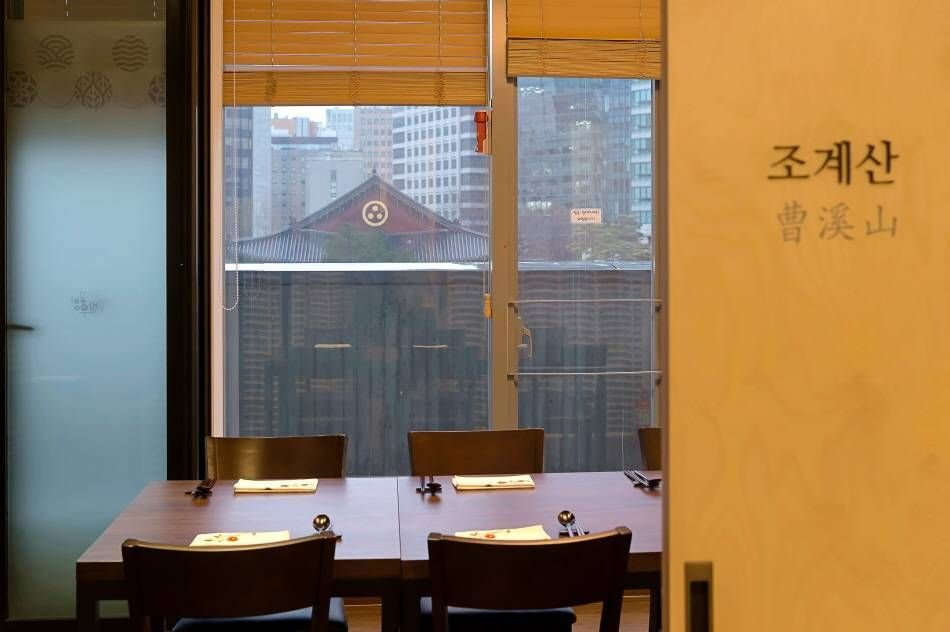
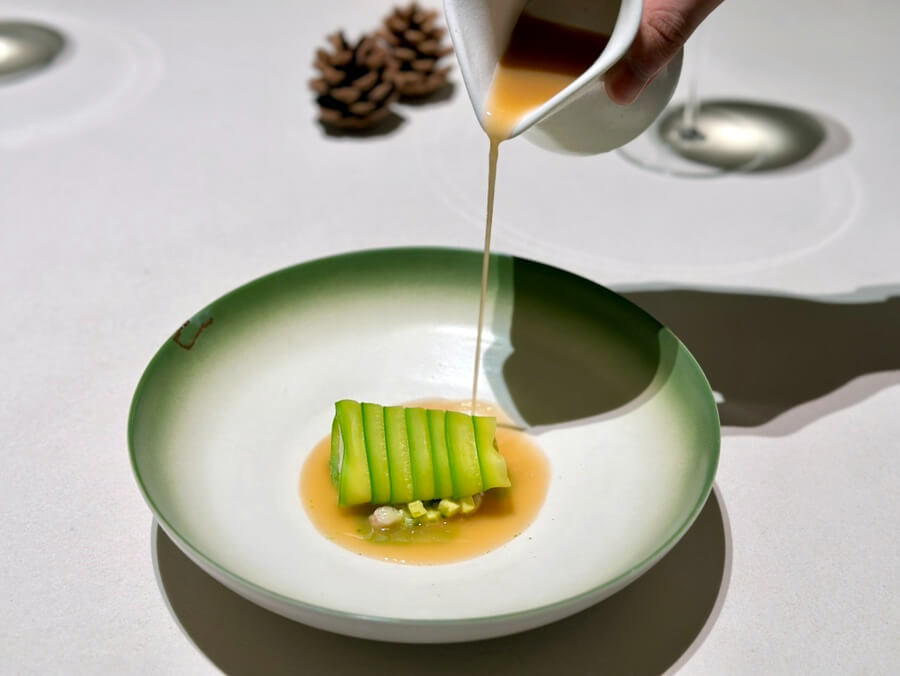
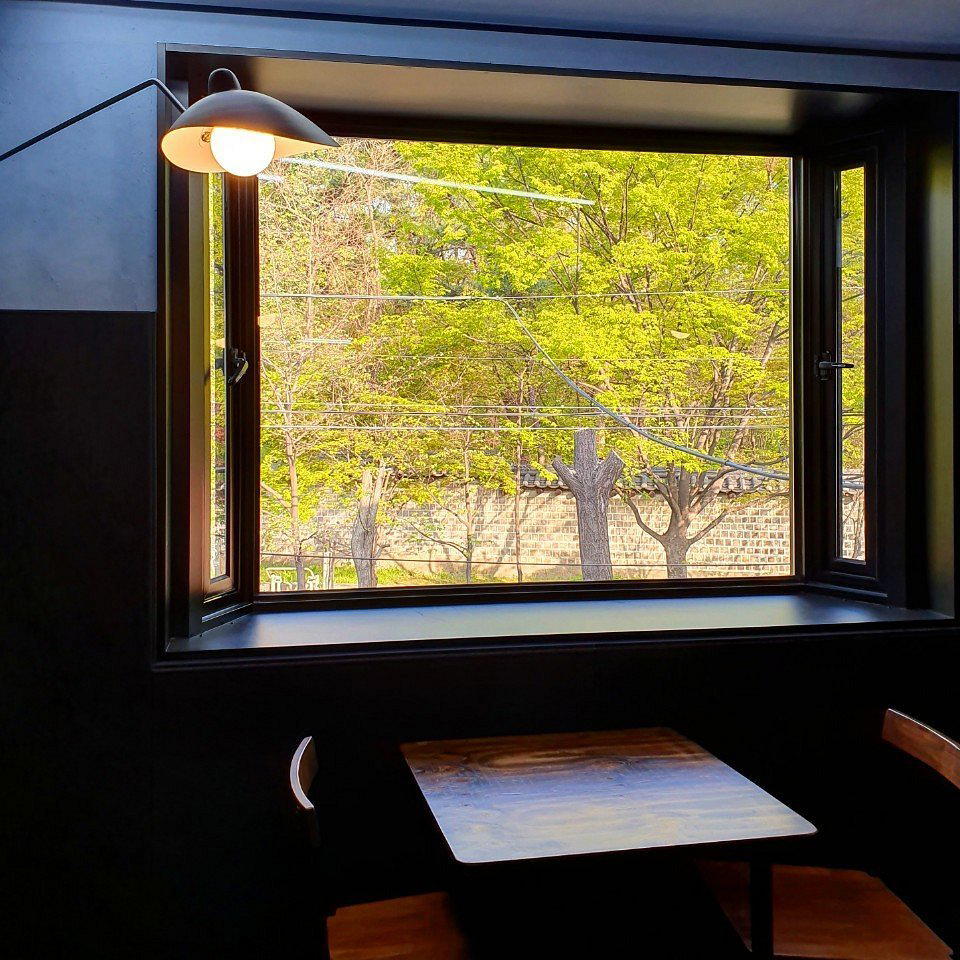
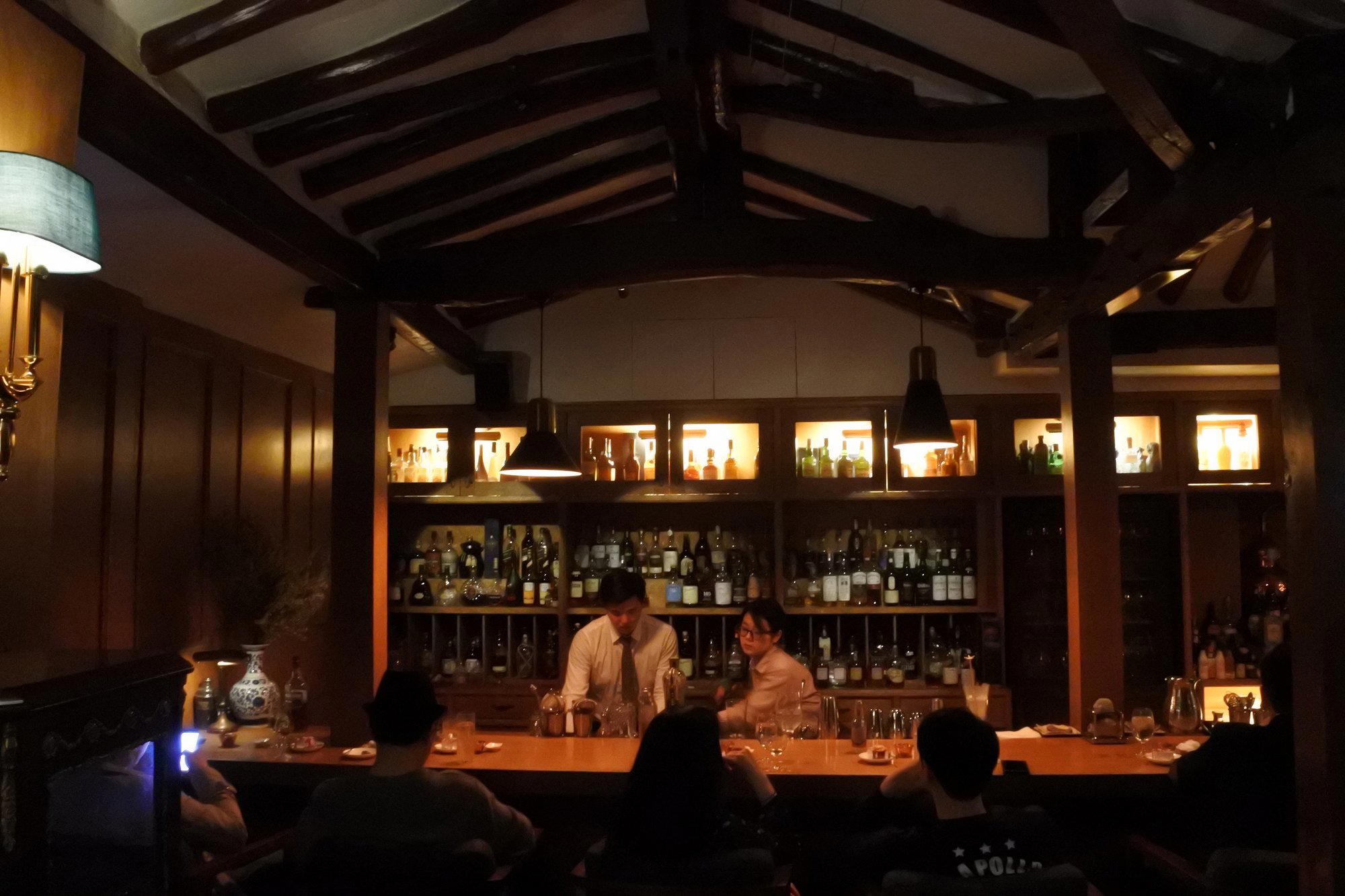
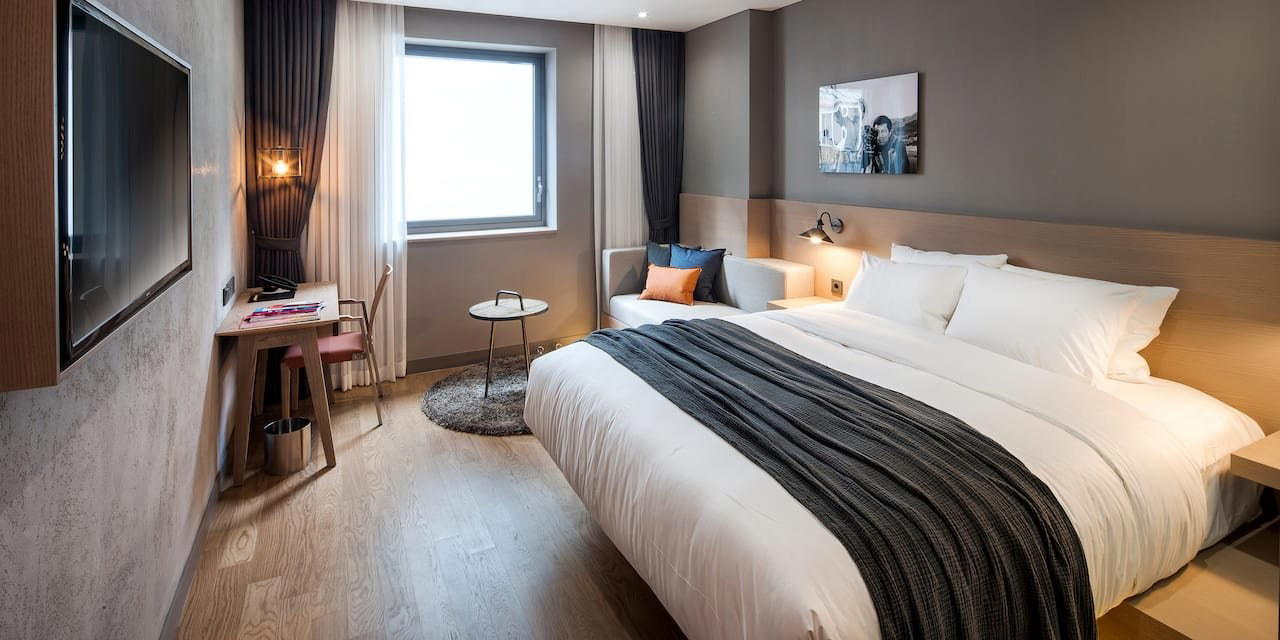
Simple, zen interior with clean modern design; guests dine in private rooms with soft, contemplative lighting that encourages peaceful, unhurried dining.