
ARCACHON Honten brings Tokyo’s serious sweets culture into a small Nerima setting near Hoya, with cake, bread and cafe service rather than Ginza-style ceremony. Its repeated selection for Tabelog Sweets TOKYO 100 in 2018, 2019, 2020, 2022 and 2023 places it among the city’s more closely watched patisserie addresses.
Pearl is the En Primeur Club membership app — saves, bookings, and concierge access live there. Same editors, same standards.
- Address
- 5 Chome-34-4 Minamioizumi, Nerima City, Tokyo 178-0064, Japan
- Phone
- +81 3-5935-6180
- Website
- arcachon.co.jp
 Saves & bookings on Pearl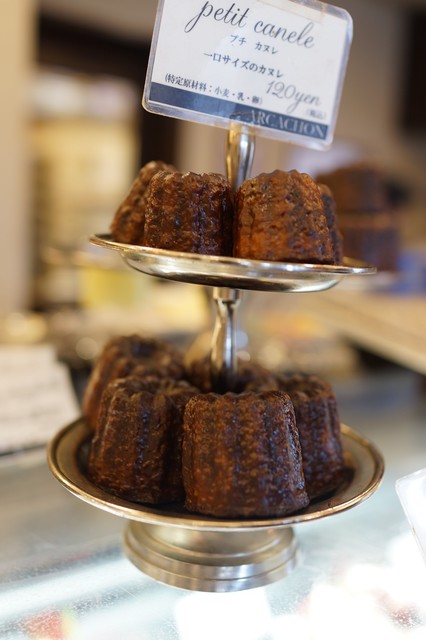
Approaching a suburban Tokyo patisserie is unlike entering a hotel dessert salon or department-store sweets floor. The cues are quieter: residential street, house-scale room, counter, take-out rhythm. In Nerima, that scale matters. Tokyo sweets culture is often framed through central-city luxury, yet much of its discipline lives in neighbourhood shops where cake, bread and cafe formats overlap and repeat customers set the tempo.
ARCACHON Honten belongs to this quieter pastry map. Its Minamioizumi address, near Hoya, sits away from tourist circuits shaping many Tokyo dining itineraries. That does not mean modest ambition. Selection for Tabelog Sweets TOKYO 100 in 2018, 2019, 2020, 2022 and 2023 gives the shop a measurable place in the city’s sweets conversation, especially in a competitive category with strong neighbourhood loyalty.
Nerima pastry culture judged by repeat precision, not spectacle
Tokyo pastry has several registers: luxury hotel counters, French-influenced boutiques in central shopping districts, department-store concessions for gifting, and residential shops where cake, bread and cafe service reveal how locals buy sweets. ARCACHON Honten sits in the last camp, which is its editorial value. It shows how far Tokyo’s pastry standards extend beyond Aoyama, Ginza or Roppongi.
The listed categories, cake, bread and cafe, point to a broader format than a single-purpose dessert counter. That breadth is common in Japanese patisserie, where viennoiserie-adjacent baking, celebration cakes and sit-down coffee service often share one identity. The small room, with 9 seats divided between counter and tables, feels closer to a neighbourhood salon than a destination dining room. For readers used to tasting-menu dessert formats, it shows Tokyo’s sweets hierarchy is not built only around long reservations or chef-led counters.
The Tabelog score of 3.76 needs context. On Japanese review platforms, especially in competitive metropolitan categories, numbers in this range can signal sustained confidence rather than viral novelty. More persuasive is repeated appearance on the Sweets TOKYO 100 list. One selection can reflect a moment; five named years suggest a shop that held attention through changing dessert fashions, including recurring waves of canelé, tart, choux, parfait and laminated-dough enthusiasm.
Within the surrounding Tokyo set, the shop occupies a different register from practical dining options such as Sobakiri Suzuki, Teuchi Udon Hasegawa, BUTCHER'S TABLE Ooizumi gakuen ten and Yoshoku Miura Tei. Those names map everyday eating around the Seibu corridor; ARCACHON Honten maps the area’s sweets seriousness. Blondir, another Tokyo patisserie in the comparison group, sits at a higher stated spend band, making ARCACHON’s lower listed range part of the story: recognition here is not tied to a luxury price signal.
A sweets counter where curation replaces a cellar
In a patisserie, the parallel is the display case. A good sweets shop works like a compact cellar, with limited room and a constant need to balance accessible staples against technical showpieces. The available facts do not name individual cakes or breads, so the stronger editorial point is format rather than item-by-item praise. Cake, bread and cafe together demand range; the small seating count forces discipline.
That discipline makes Tokyo sweets shops revealing. The city has demanding gifting culture, exacting expectations around packaging and freshness, and customers who notice texture, temperature and finishing. Even without a named chef or signature item, the repeated awards history supplies trust: this is not simply a pleasant local bakery, but a shop that entered a citywide sweets index in several editions.
For travellers, the decision is less chasing rarity than reading Tokyo at neighbourhood scale. A central-city itinerary can overrepresent omakase counters and cocktail rooms while missing the daily craft supporting residential districts. Pairing a sweets stop in Nerima with a broader Tokyo dining plan gives the city texture. For contrast, EP Club’s Tokyo restaurant coverage ranges from Akihabara seafood at . 鮪と炭火焼き うお炭 秋葉原店 to Shinjuku dining at 12/10 Shinjuku ten, yakitori at 124. KAGURAZAKA (Yakitori), graphic cafe culture at 2D Cafe and curry specialization at 3 Chome no Curry Ya San.
How to place it in a Tokyo itinerary
The strongest use of this address is as a focused sweets stop, not a full restaurant anchor. Service includes take-out, and the room is small, so it suits a day built around western Tokyo or the Seibu Ikebukuro Line more than a cross-city detour between major sightseeing zones. The setting rewards travellers who care about Tokyo’s everyday excellence: residential bakeries, soba rooms and yoshoku counters, not only reservation-led dining.
That distinction matters because Tokyo coverage can flatten into one hierarchy of famous rooms. The restaurant argues for another reading: a city where a Nerima patisserie can earn repeated sweets recognition while operating at neighbourhood scale. The shop opened in 2005 and later resumed at its current site after relocation, giving the address a longer arc than many trend-driven dessert counters. The non-smoking policy, credit-card and electronic-payment acceptance, and compact seating are practical signals; the editorial signal is continuity.
Readers building a wider Japan plan can compare this local-specialist stop with EP Club coverage beyond Tokyo, including -Grilled beef Sukiyaki- KAMAKURA TANUKIAN 鎌倉 たぬき庵 in Kamakura.cafe in Osaka.know in Kumamoto, (Shoku) Vietnam in Kawasaki, [Curry Senmon Ten] Maruyama Kyoju. in Sapporo and [ki:] in Kyoto. For international contrast, the archive also includes Jōdo Saké Bar in Los Angeles and Onigiri Time in Pasadena.
For the wider city edit, use Our full Tokyo restaurants guide alongside Our full Tokyo hotels guide, Our full Tokyo bars guide, Our full Tokyo wineries guide and Our full Tokyo experiences guide. The point is not to treat a Nerima patisserie as a substitute for central Tokyo dining, but to correct the itinerary’s bias. Tokyo’s serious food culture is not confined to rooms with elaborate service rituals. Sometimes the sharper read is a 9-seat sweets shop with repeated citywide recognition and customers who know the difference between fashion and craft.
Recognition, Side-by-Side
Comparable venues by price and recognition.
| Venue | Cuisine | Price | Notes |
|---|---|---|---|
| ARCACHON HontenThis venue — the venue you are viewing | French-style patisserie & café | $$ | Not listed |
| Pâtisserie Très Calme | French-style pâtisserie and cake shop | $$ | Bunkyō |
| Le Pain Quotidien Shibakouen ten | Belgian organic bakery café & restaurant | $$ | Minato |
| BURDIGALA TOKYO | French Bakery-Cafe | $$ | Chiyoda |
| ル ボーズ | French-Japanese Fusion | Not listed | Chūō |
| Pan au Sourire | French-style artisan bakery & café | $$ | Shibuya |
Recognition history
Dated appearances from independent guides and award organizations, with the underlying list record or original source where available.
Tabelog 100 #95 · No. 95
Tabelog · Tabelog 100 - Sweets - TOKYO - 2023
Continue exploring
More in Tokyo
Restaurants in Tokyo
Browse all →



Bars in Tokyo
Browse all →




Hotels in Tokyo
Browse all →




Wineries in Tokyo
Browse all →
At a Glance
- Classic
- Cozy
- Quiet
- Casual Hangout
- Solo
- Family
- After Work
- Celebration
- Standalone
Current opening hours
- Monday
- Closed
- Tuesday
- Closed
- Wednesday
- 10:30 AM–7 PM
- Thursday
- 10:30 AM–7 PM
- Friday
- 10:30 AM–7 PM
- Saturday
- 10:30 AM–7 PM
- Sunday
- 10:30 AM–7 PM
Hours can change for holidays and private events. Last verified .
Traditional French‑patisserie feel with showcases of colorful cakes and baked goods, a few non‑smoking counter and table seats, and a calm, everyday neighborhood atmosphere suited to quiet coffee and sweets.