Our verdict
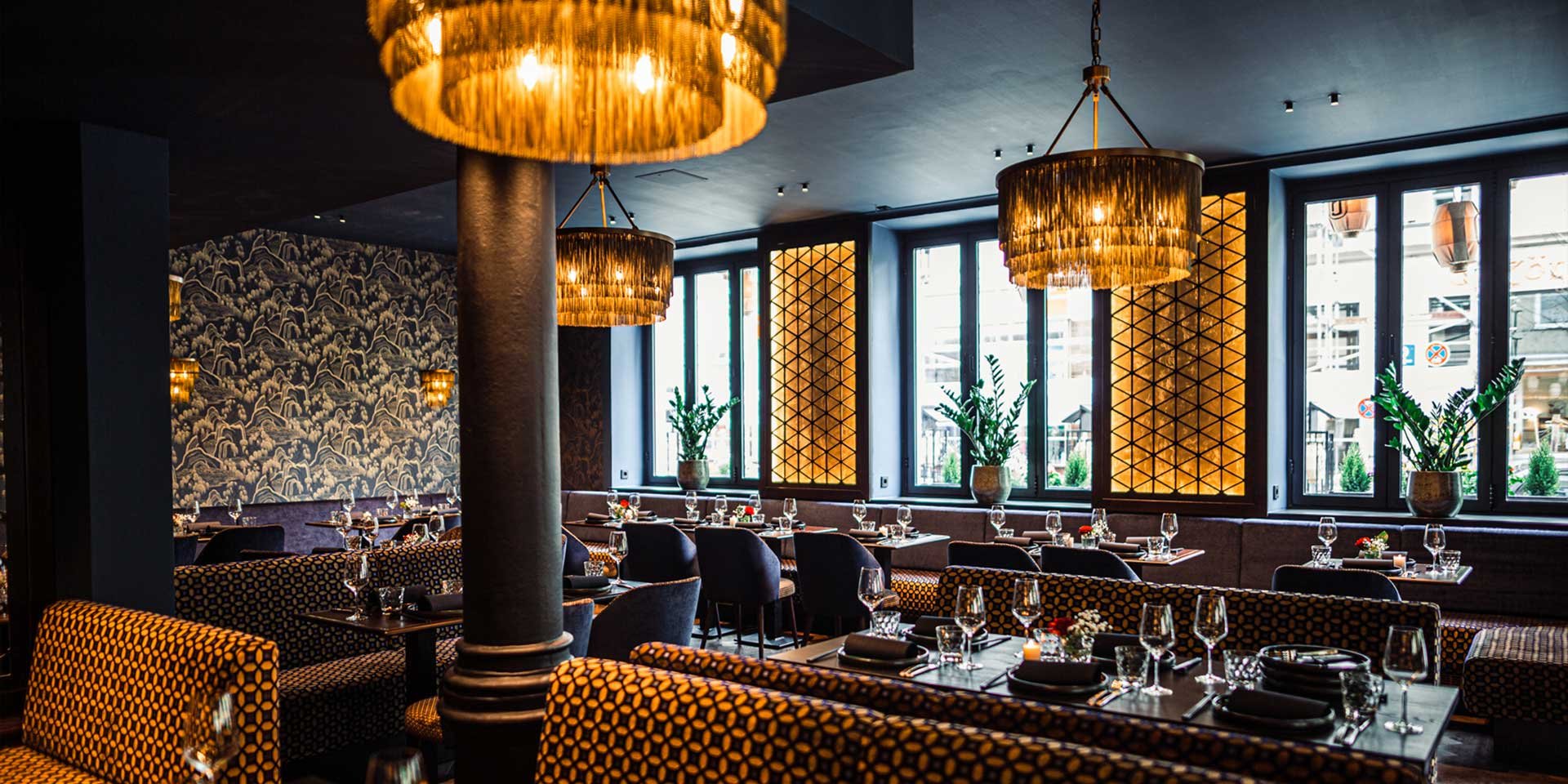
Anji occupies a modest address on Donnersbergerstraße in Munich's Neuhausen district, operating in a city where the fine dining conversation is increasingly shaped by Asian-influenced menus and neighbourhood restaurants with loyal, returning crowds. The kitchen draws regulars rather than tourists, and the experience is defined more by consistency and familiarity than by spectacle.

Pearl is the En Primeur Club membership app — saves, bookings, and concierge access live there. Same editors, same standards.
- Address
- Donnersbergerstraße 30, 80634 München, Germany
- Phone
- +498912113568
- Hours
- Mon–Thu 11:30 AM–2:30 PM, 5–11:30 PMFri 9:30 AM–3 PM, 5–11:30 PMSat–Sun 9 AM–11 PM
- Website
- anji-restaurant.de
- Directions
- Get directions
- Booking
- Book on OpenTable
The menu
What to order
- Poke bowl
- Anji bun
- Gegrillter Octopus
- Sushi menus
A Neighbourhood Address in a City That Rewards Consistency
Munich's dining scene has a quality that visitors sometimes miss: the restaurants that matter most to the city's own residents are rarely the ones with the biggest profiles. Donnersbergerstraße 30 sits in Neuhausen, a residential quarter west of the Hauptbahnhof that has accumulated a quiet density of neighbourhood restaurants precisely because it is not a tourist corridor. Anji occupies that address, and its position within Munich's food culture is shaped by that context more than by any awards bracket or tasting-menu format.
The broader shift in German dining worth noting here is the growing number of kitchens that operate with Asian culinary frameworks alongside European produce and technique. Munich has seen this most clearly at Tohru in der Schreiberei, where a Modern German-Japanese approach anchors one of the city's most respected tasting menus. Anji works in a different register, but it exists within the same cultural moment, one where Asian cooking traditions are read in Munich not as novelty but as an established part of the city's culinary grammar.
What Regulars Come Back For
In any neighbourhood restaurant that sustains a loyal clientele, the draw is almost never the headline dish alone. It is the accumulated sense that the kitchen knows what it is doing and doesn't deviate under pressure. The regulars at addresses like Anji are not dining tourists checking off a list; they are people who return because the ratio of quality to reliability holds across visits. That dynamic is harder to manufacture than a single impressive tasting menu, and it is more telling as a signal of a kitchen's actual competence.
This is the context in which Munich's middle tier of serious dining operates. The city's upper bracket, which includes Tantris with its Modern French lineage, Alois - Dallmayr Fine Dining, and Atelier with its Creative French format, operates at €€€€ price points with formal structures and defined booking windows. Below that, and in some ways more interesting as a category, are the places where the absence of ceremony is itself a choice. Returning guests understand the unwritten rules: arrive without a reservation and you may wait, but regulars often know when the room has room.
Germany's wider fine dining circuit reinforces how distinct Munich's mid-tier is from the country's destination restaurants. The three-star addresses, including Schwarzwaldstube in Baiersbronn, Aqua in Wolfsburg, and Vendôme in Bergisch Gladbach, require advance planning, formal commitment, and often a journey. Neighbourhood restaurants in Munich require none of that, and for locals, that accessibility is precisely the point.
Asian Cooking in Munich: Beyond the Tourist Circuit
There is a meaningful difference between Asian restaurants that serve a transient dining public and those that earn sustained loyalty from a local, repeat clientele. The latter tend to have a clearer sense of what they are doing and why, because they cannot rely on the churn of first-time visitors to sustain covers. They have to be good enough to bring people back, and in a city like Munich, that bar is higher than it appears from the outside.
The German context matters here. Compared to Berlin, where CODA Dessert Dining has helped reframe what an avant-garde dining format can look like, Munich's Asian restaurant scene has historically been more conservative. The city's culinary confidence has tended to express itself through European frameworks. That is changing, slowly, and addresses in residential quarters like Neuhausen are part of that change, operating with less fanfare than the Michelin-listed rooms but with no less seriousness about what arrives on the plate.
For the full picture of where Anji sits within Munich's dining options, the EP Club Munich restaurants guide maps the city's serious dining across price tiers and cuisine categories. Comparable Asian-influenced kitchens have earned significant recognition nationally: Victor's Fine Dining by Christian Bau in Perl and ES:SENZ in Grassau both demonstrate how Asian technique integrated into German fine dining can reach the best of the national conversation. Anji operates at a different scale and without those credentials, but it serves a different function: the neighbourhood restaurant that locals trust across seasons rather than the destination address that demands a pilgrimage.
The Practical Layer
Donnersbergerstraße 30 is accessible by U-Bahn via the Donnersbergerbrücke stop, placing Anji within easy reach of central Munich without being inside the tourist-heavy inner ring. For a Neuhausen restaurant of this type, timing matters more than most first-time visitors expect. Regulars tend to arrive at the edges of peak service, either early or in the later evening slots, when the rhythm of the room is more relaxed. Contact details and current hours are best confirmed before visiting, as neighbourhood restaurants in this bracket often adjust seasonally. For comparison, the broader category of serious German dining at comparable or higher price points, including Schanz in Piesport, Waldhotel Sonnora in Dreis, Restaurant Haerlin in Hamburg, and Bagatelle in Trier, all require advance reservation and operate within defined formal structures. Anji's value to its regulars is partly the absence of that overhead.
Internationally, the comparison that holds for restaurants of this type is not the grand address but the neighbourhood anchor. Le Bernardin in New York City and Lazy Bear in San Francisco both operate at the opposite end of the formality and price spectrum, but they share one quality with places like Anji: a core of regulars who return not because the room is spectacular but because the kitchen has earned that trust over time. At the neighbourhood level, in Munich's Neuhausen, that is the only credential that ultimately matters. For Munich's other creative kitchen addresses, JAN offers a reference point for what the city's creative dining tier looks like when it operates with formal ambition.
Frequently asked questions
What's Anji's location?
Anji is located at Donnersbergerstraße 30, 80634 München, Germany, Munich.
Is Anji suitable for a midweek dinner close to central Munich?
Donnersbergerstraße 30 is served directly by the Donnersbergerbrücke U-Bahn stop, making Anji a practical option from central Munich without requiring a taxi or significant travel time. The location in Munich's western residential zone means the surrounding streets are quieter than the Altstadt or Schwabing, which suits a low-key weeknight dinner. Hours are not published online, so calling ahead before a weekday visit is advisable.
What should I eat at Anji?
The menu specifics at Anji are not published in detail, which is itself a signal: the kitchen operates for regulars who already know what to order rather than for first-timers scanning a laminated tourist menu. Sitting at Donnersbergerstraße 30 in Munich's western residential belt, the approach rewards asking staff directly what is working that day. That kind of dialogue is standard in restaurants built on repeat custom rather than one-visit footfall.
Do they take walk-ins at Anji?
Anji does not publish a reservations policy, so walk-in availability is best confirmed by contacting the restaurant directly at Donnersbergerstraße 30, Munich. Neighbourhood restaurants in this part of the city tend to fill steadily on weekday evenings and more sharply on Fridays and Saturdays. Arriving early in the service window gives you the best chance without a booking.
What's the defining dish or idea at Anji?
Without a publicly documented menu, pinning a single defining dish would be speculative. What the restaurant's position in Munich's western residential fabric does suggest is a kitchen oriented toward consistency and returning guests rather than seasonal headline changes. The address on Donnersbergerstraße, away from the tourist corridors, points to cooking that earns its audience through repetition rather than novelty.
Can Anji handle vegetarian requests?
Anji's menu is not publicly listed, so a definitive answer requires checking with the restaurant directly at Donnersbergerstraße 30, Munich. Asian cooking traditions span a wide range of vegetable-forward dishes, and restaurants that sustain a local clientele in Munich typically accommodate dietary preferences as a matter of course. Confirming in advance remains the most reliable approach.
Budget Reality Check
Comparable venues nearby, for context on price, style, and recognition.
| Venue | Cuisine | Price | Notes |
|---|---|---|---|
| AnjiThis venue — the venue you are viewing | Modern Asian Sushi & Vietnamese | $30–50 | Not listed |
| Y.OUR Pavillon | Modern International with Regional Focus | $20–30 | Neuhausen, Modern International with Regional Focus |
| Kashgar Uyghur Restaurant | Uyghur / Xinjiang | $20–30 | Isarvorstadt, Uyghur / Xinjiang |
| Conti Restaurant | Traditional German & International Bistro | $20–30 | Lehel, Traditional German & International Bistro |
| KIZUNA KITCHEN | Modern Japanese Fusion | $20–30 | Isarvorstadt, Modern Japanese Fusion |
| Wirtshaus Hohenwart | Traditional Bavarian | $20–30 | Au, Traditional Bavarian |