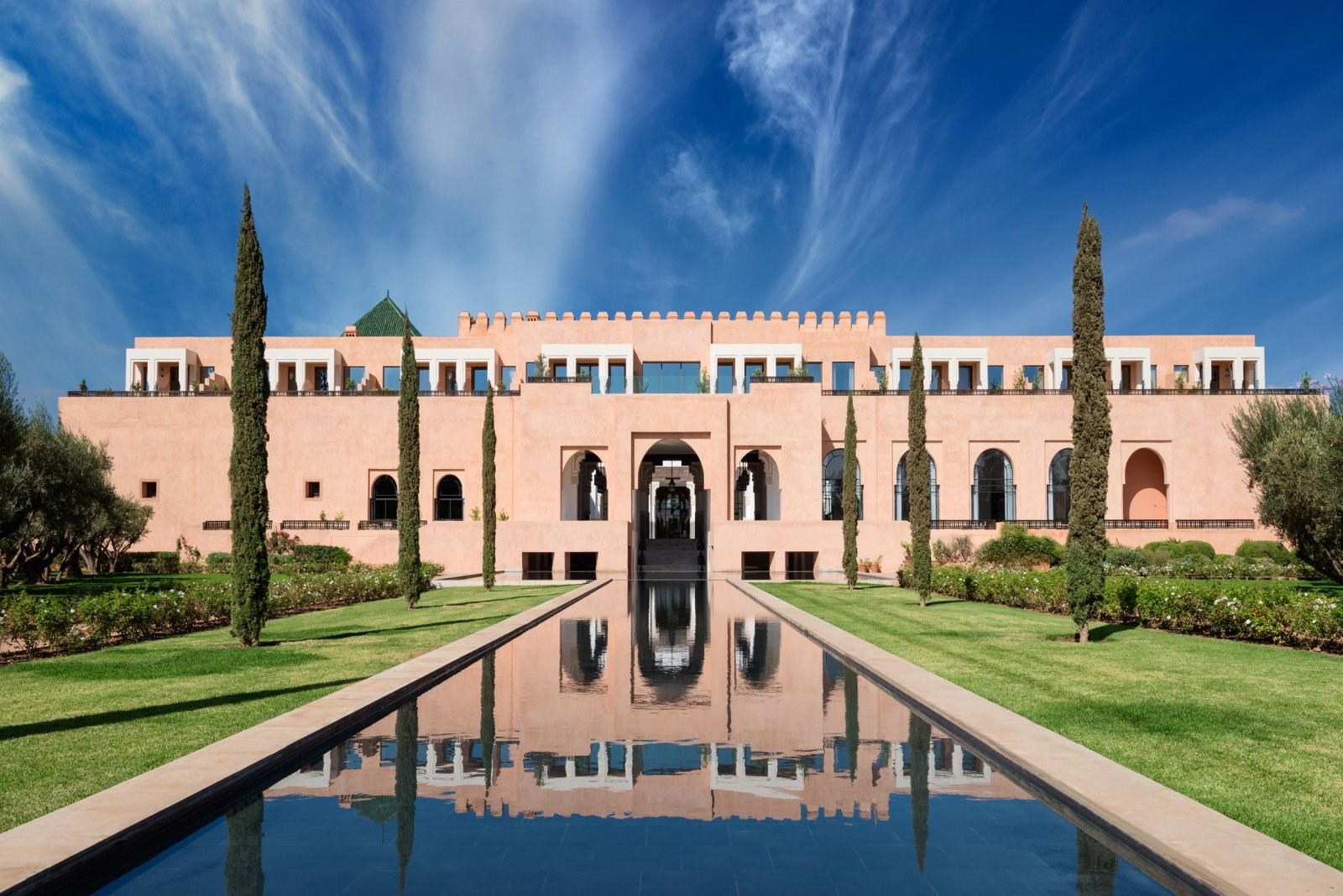
Amanjena sits on the Route de Ouarzazate, around 12 kilometres from Marrakesh's medina, within a property that draws from the architectural vocabulary of southern Moroccan kasbahs. The dining here operates at the intersection of Moroccan culinary tradition and the controlled, unhurried pace that defines Aman properties globally. For travellers arriving from the city's more concentrated dining scene, it offers a deliberate shift in register.
Pearl is the En Primeur Club membership app — saves, bookings, and concierge access live there. Same editors, same standards.
- Address
- km 12, Route de Ouarzazate، Marrakech 40000, Morocco
- Phone
- +212524399000
- Website
- aman.com
- Directions
- Get directions
 Saves & bookings on Pearl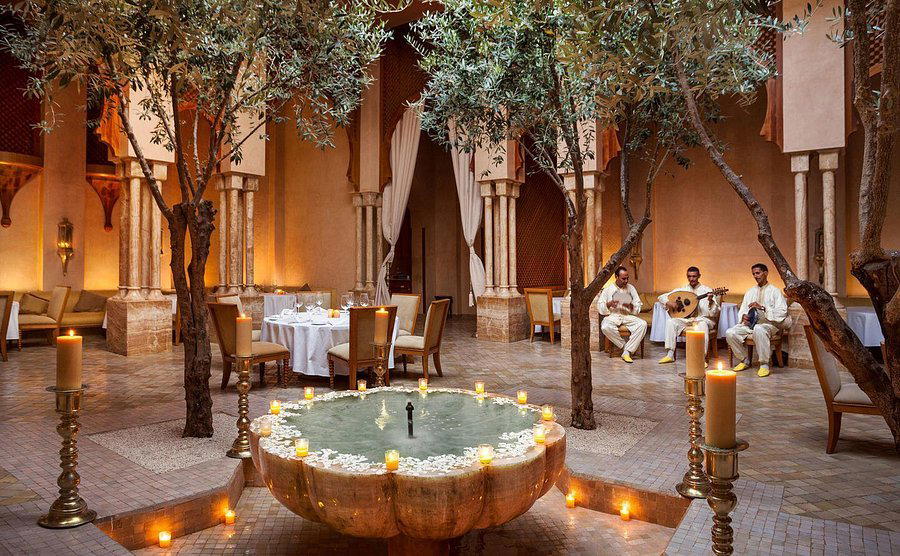
The Road South and What It Signals
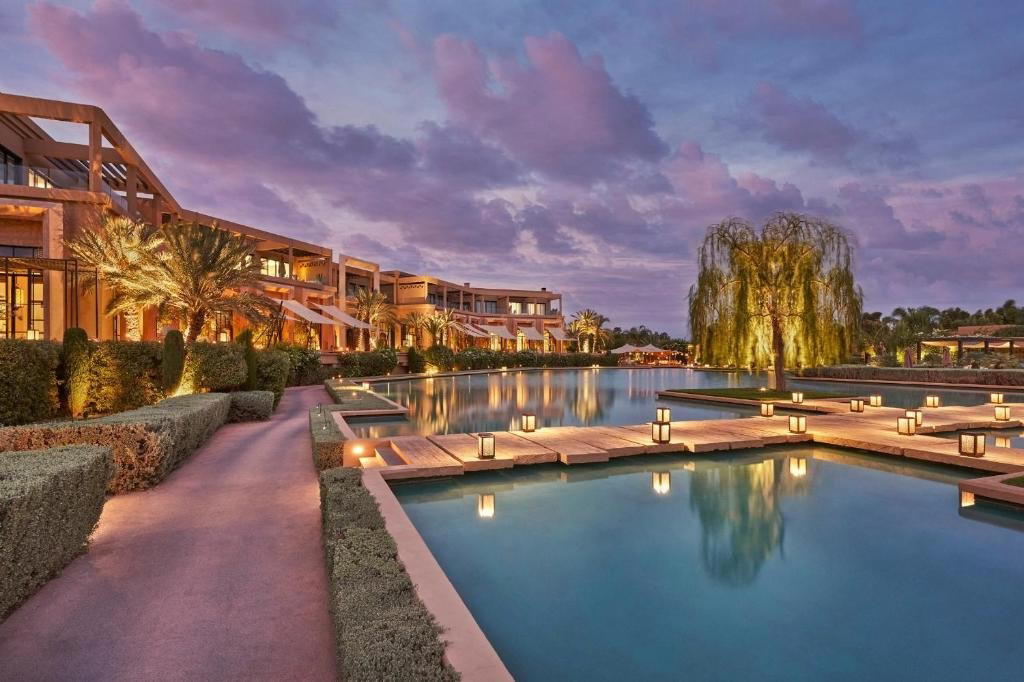
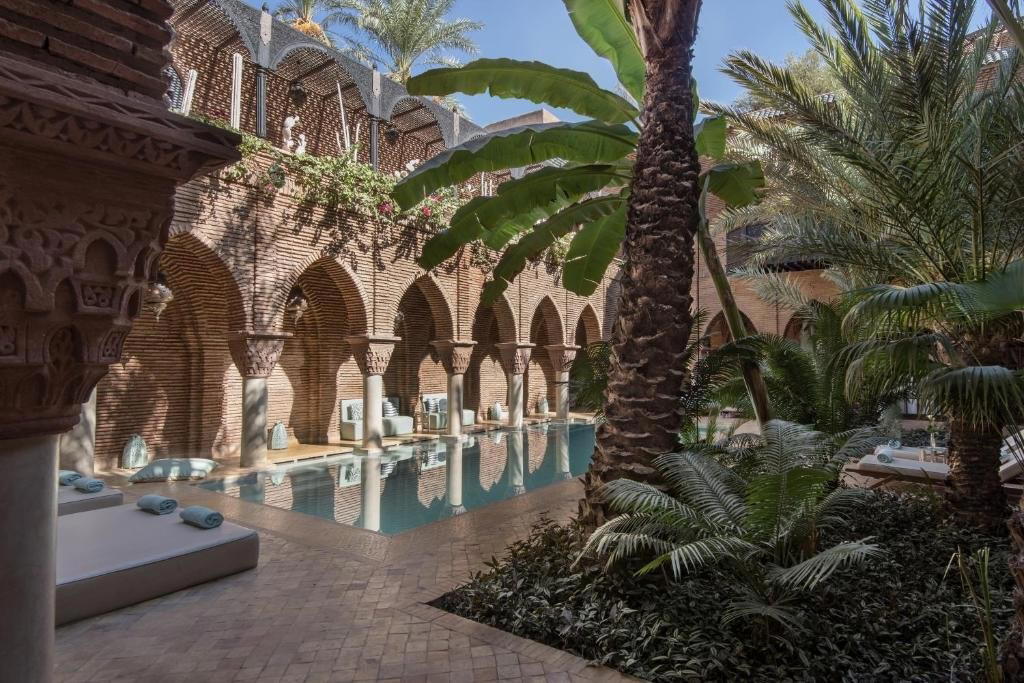
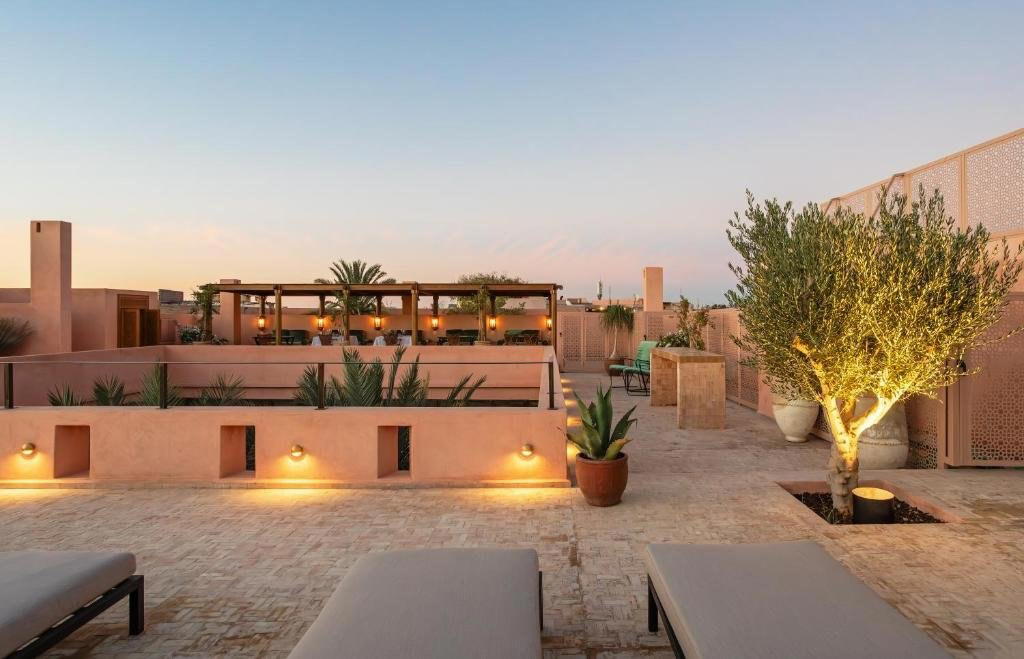
The Route de Ouarzazate runs out of Marrakesh toward the Atlas foothills, and properties along it tend to broadcast their intentions through scale rather than subtlety. Amanjena, at km 12, works in a different register. The approach is via ochre walls and a layout that draws directly from the pisé architecture of Moroccan riads and desert kasbahs: enclosed courtyards, basins fed by seguia channels, pavilions arranged around water rather than view. Before a plate arrives, the architecture is already making an argument about what kind of Moroccan experience this is.
This matters as context for the dining, because in Marrakesh the gap between tourist-facing Moroccan food and the real thing is considerable. The city's medina has always supported both — the theatrical taguine-and-couscous circuit aimed at visitors, and the quieter, more precise tradition kept alive in domestic kitchens and a smaller number of serious restaurants. Amanjena's position, both geographically and commercially, aligns it with the latter ambition.
Moroccan Cuisine at This Register
Moroccan cooking is one of the more misunderstood traditions in the broader conversation about North African food. Outside Morocco, it collapses into a handful of dishes — the tagine, the bastilla, harira soup, stripped of the internal variation that marks different regional schools. In reality, Moroccan cuisine spans a wide spectrum: the Fassi school from Fes, considered by many food historians to be the country's most refined culinary tradition; the coastal seafood cooking of Essaouira and Agadir; the Berber-influenced preparations of the High Atlas; and the Arabic-Andalusian inheritance that shaped the imperial cities. For a sense of how Fes-influenced cooking translates to a contemporary hospitality context, Cafe Clock in Fes offers useful comparison.
The preserved lemon, the argan oil, the blend of warm spice with restrained heat, these are not shortcuts but a coherent culinary syntax developed over centuries of Persian, Berber, Arab, and Andalusian exchange. Properties operating at Amanjena's level are expected to present this syntax in its more considered form, which means sourcing that reflects regional specificity, preparations that take time rather than cut corners, and a table format that allows the food to lead.
For context on how Moroccan cooking presents at the more formal end of the Marrakesh dining spectrum, La Grande Table Marocaine at Royal Mansour represents the most decorated reference point in the city, with a culinary program that has attracted sustained critical attention. Al Fassia, run entirely by women and focused on traditional Moroccan recipes without concession to fusion formats, holds a different but equally important position in the city's dining map.
Where Amanjena Sits in Marrakesh's Dining Scene
Marrakesh's premium dining has consolidated around a few distinct poles. The Royal Mansour's food and beverage program represents one end: formally conceived, awards-adjacent, oriented toward international fine-dining conventions applied to Moroccan ingredients. A second group, places like Sesamo or La Grande Brasserie by Hélène Darroze, operates at the intersection of French and Moroccan culinary traditions, reflecting the historical relationship between the two countries as much as any direct fusion impulse. A third tier covers the more democratic but no less serious operations, like Amal Gueliz Center, a social enterprise training disadvantaged women in traditional Moroccan cooking, which produces food as authentic as anywhere in the city.
Amanjena belongs to a fourth category: the destination-resort dining experience, where the room, the service ratio, and the deliberate removal from urban density are as much a part of the offer as the food itself. This is a format that rewards guests who are already staying on property and disadvantages walk-in visitors who haven't planned around it. For those staying elsewhere in Marrakesh, the question of whether to travel out to km 12 is a different calculation than for guests already in residence.
For broader orientation across the city's options, our full Marrakesh restaurants guide covers the range from medina traditionalists to contemporary hotel dining. Beyond Marrakesh, Morocco's dining scene extends in interesting directions: Le Salon Oriental in Essaouira and Andalus in Tangier each offer strong regional expressions, while La Grande Table Marocaine at Royal Mansour Casablanca extends the Royal Mansour culinary program to the country's commercial capital. Gayza in Fès and L'Oliveraie in El Hajeb are worth knowing for travellers moving between cities. For wine alongside Moroccan food, Château Roslane represents the country's serious wine production in the Meknès region.
Planning a Visit
The address, km 12, Route de Ouarzazate, places Amanjena well outside the Jemaa el-Fna and medina concentration where most visitors base themselves. A taxi or pre-arranged transfer is the practical approach; ride-hailing apps operate in Marrakesh but coverage on the southern routes can be less reliable than within the city proper. Timing matters more here than at a medina restaurant: the setting operates at its most atmospheric in the late afternoon and evening, when the light on the pisé walls shifts and the heat of the day has passed. Given the scale of the property and its orientation toward guests in residence, non-staying visitors should contact the property directly to confirm dining access and current arrangements before making the trip out.
For those comparing Amanjena's dining proposition against other destination experiences in the broader region, BÔ ZIN in Tassoultante and Hyatt Place Taghazout Bay in Agadir occupy adjacent points on the map of out-of-medina Moroccan hospitality dining. Internationally, the format of resort dining that is architecturally led and deliberately paced has parallels at properties covered elsewhere in the EP Club network, including Le Bernardin in New York City and Lazy Bear in San Francisco, where format and setting are as deliberate as the food itself. Closer to home, +61 offers another angle on international dining sensibility applied to the Marrakesh context.
Price Lens
| Venue | Price | Awards |
|---|---|---|
| AmanjenaThis venue — the venue you are viewing | This venue | Not listed |
| La Grande Table Marocaine - Royal Mansour | World's 50 Best | Moroccan Cuisine |
| Palais Ronsard | Moroccan French | Not listed |
| L’Italien par Jean-Georges | French Moroccan | Not listed |
| La Villa des Orangers | Moroccan Cuisine | Not listed |
| Le Jardin d'Hiver | Moroccan Traditional | Not listed |
Continue exploring
More in Marrakech
Restaurants in Marrakech
Browse all →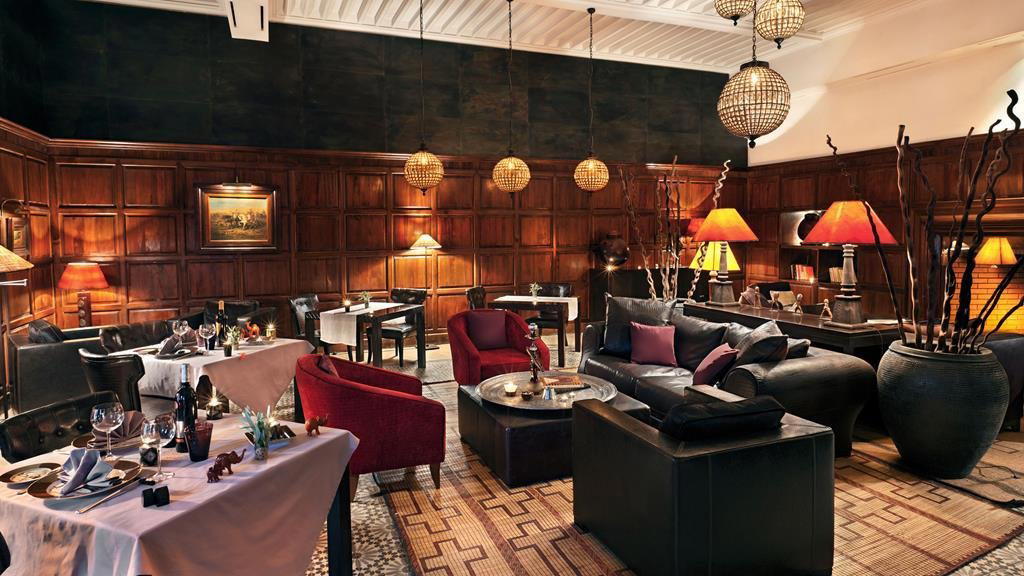
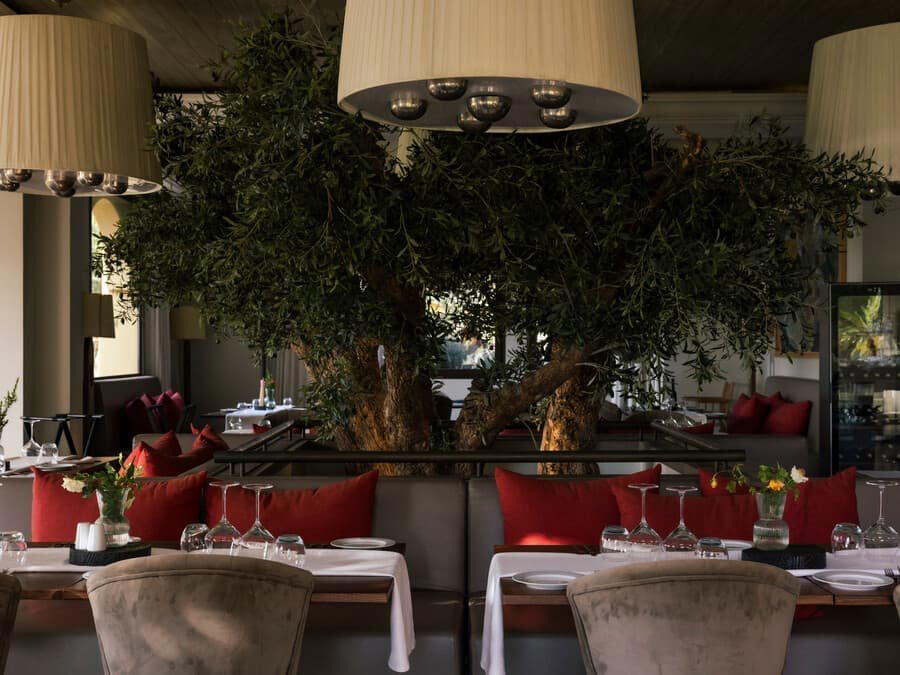
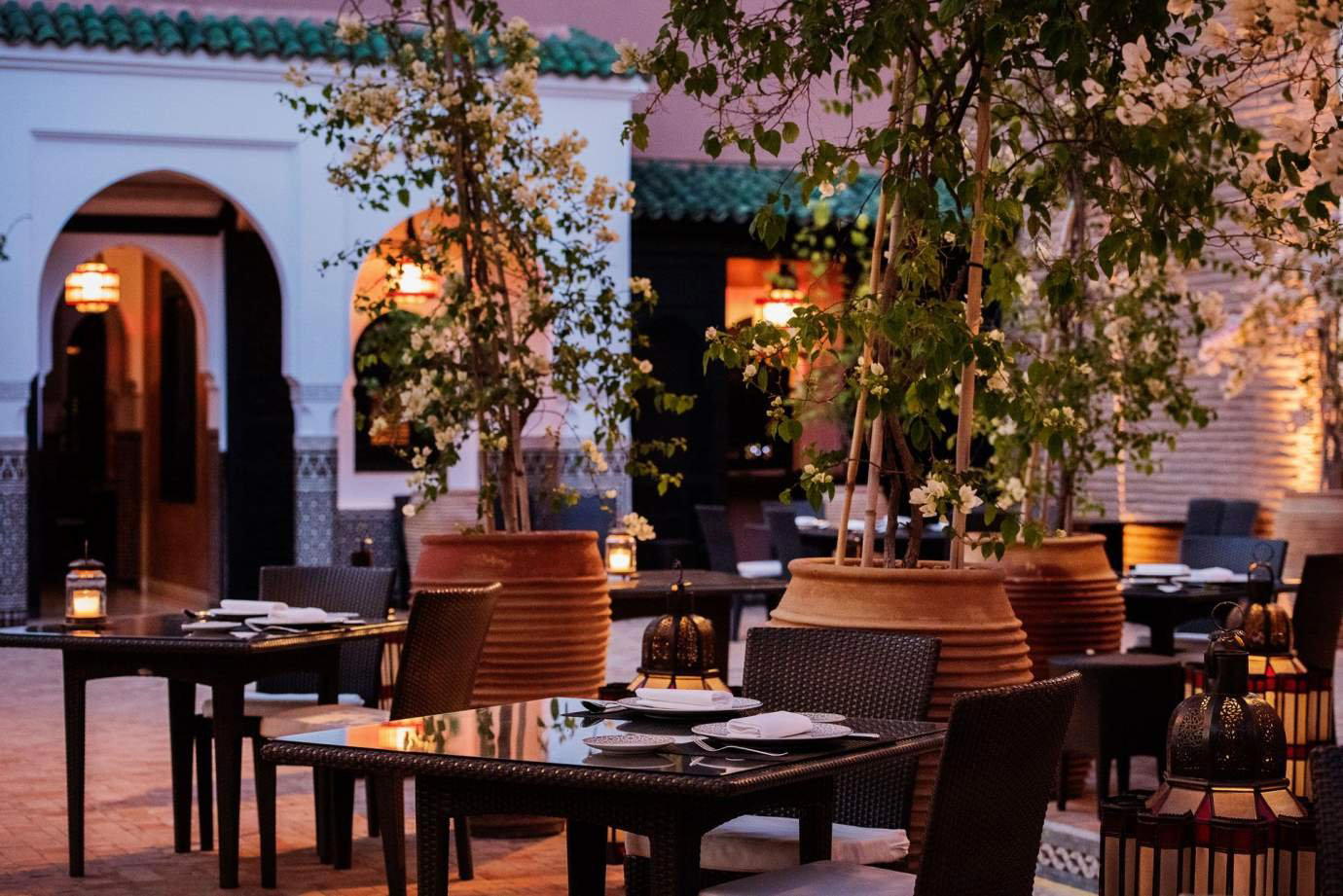
Bars in Marrakech
Browse all →
Hotels in Marrakech
Browse all →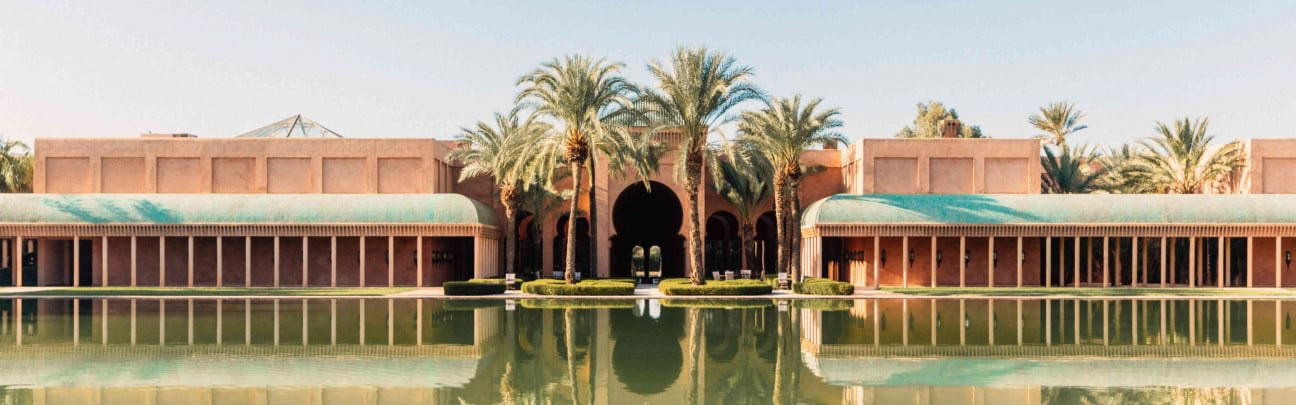
Wineries in Marrakech
Browse all →
At a Glance
- Elegant
- Romantic
- Serene
- Ornate
- Sophisticated
- Date Night
- Special Occasion
- Celebration
- Courtyard
- Live Music
- Hotel Restaurant
- Private Dining
- Craft Cocktails
- Local Sourcing
- Garden
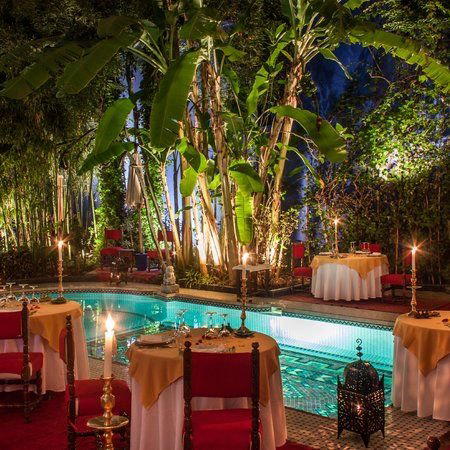
Serene courtyard illuminated by candlelight with live local musicians, evoking historic Moroccan palaces.
Know Before You Go
- Getting there
- km 12, Route de Ouarzazate، Marrakech 40000, Morocco