Our verdict
Altensteiner Krug sits on Altensteinstraße in Berlin's Dahlem district, a neighbourhood better known for its Free University campus and villa-lined streets than for restaurant traffic. The address alone signals something deliberate: a destination that earns its audience through reputation rather than footfall. For occasion dining in southwest Berlin, it occupies a tier of its own.

Pearl is the En Primeur Club membership app, where members save venues, book tables and use the concierge.
The menu
What to order
- Bauernfrühstück
- Obazda
- Matjesfilets Hausfrauen Art
Southwest Berlin and the Logic of the Destination Restaurant
Dahlem is not where Berlin goes to be seen. The southwest district runs on a quieter register: broad, tree-lined streets, early-twentieth-century villas, the Free University campus, and a residential calm that the city's more photogenic neighbourhoods have long since traded away. Restaurants that plant themselves here do so with a particular confidence. There is no passing trade, no tourist overflow from a nearby hotel corridor. The audience arrives because it has decided to arrive. Altensteiner Krug, at Altensteinstraße 42, operates inside that logic.
Across Germany's serious dining scene, the most durable occasion restaurants tend to share this characteristic: they are not convenient, and they do not need to be. Schwarzwaldstube in Baiersbronn sits deep in the Black Forest; Waldhotel Sonnora in Dreis requires a drive into the Eifel countryside. The effort of getting there becomes part of the occasion's structure. A table at Altensteiner Krug, reached by U-Bahn to Dahlem-Dorf or by cab through the Grunewald fringe, carries some of that same deliberateness.
The Neighbourhood Approach
Dahlem's dining character has historically been defined by longevity rather than trend cycles. The restaurants that survive here do so across decades, not seasons. They serve the same families at anniversary dinners and graduation lunches, accumulating a regulars list that functions more like a membership than a customer base. This is a different model from the one that drives Berlin's Mitte or Prenzlauer Berg restaurant economy, where turnover is fast and visibility on platforms matters more than institutional memory.
That context shapes how a place like Altensteiner Krug fits into Berlin's broader dining picture. The city's high-end tier has consolidated around a cluster of addresses further north and east: Rutz and Nobelhart & Schmutzig in Mitte, FACIL off the Tiergarten, Restaurant Tim Raue near Checkpoint Charlie, and CODA Dessert Dining in Neukölln. Altensteiner Krug occupies a different geography and, by extension, a different relationship with its guests. For southwest Berlin residents planning a significant meal, it functions as the local anchor that those other addresses cannot.
What Occasion Dining Requires
The conditions that make a restaurant work for milestone meals are specific and not always correlated with Michelin recognition or tasting-menu format. Occasion dining demands a room that holds the mood across two or three hours. It demands a floor team that reads a table correctly: whether the couple in the corner is celebrating quietly or the group at the round table is there to make noise. It demands that the food arrive as a coherent sequence, not a series of interruptions.
Germany's leading occasion restaurants have historically understood this. Vendôme in Bergisch Gladbach built its reputation on exactly this kind of sustained hospitality. JAN in Munich and Schanz in Piesport operate in a register where the meal's architecture matters as much as the individual dishes. The same expectation applies in neighbourhood restaurants that have earned long-term trust with their local audience, even if they operate at a different price point and without trophies on the wall.
For the international comparison, the principle holds at every level. Le Bernardin in New York City has held its position for decades partly because its service model is calibrated for the kind of table where something important is being discussed. Lazy Bear in San Francisco built a different version of the same logic into its communal-table format, where the event structure itself creates occasion. The underlying requirement is consistent: the guest must feel held by the experience, not merely fed by it.
Berlin's Southwest and Where to Eat Well Beyond Altensteiner Krug
For visitors who arrive in Berlin's southwest for a longer stay, the dining options beyond Altensteiner Krug require some planning. Dahlem and its immediate neighbours are not well-served by the density of restaurants found in the inner districts. Nearby Zehlendorf offers a slightly wider selection, and the Wannsee lakeside area has a seasonal character that suits summer lunches. Those willing to travel further into the German dining circuit will find Restaurant Haerlin in Hamburg a manageable day trip, and Bagatelle in Trier a worthwhile longer excursion through wine country. For a comprehensive view of what the capital offers across categories and price points, the EP Club Berlin restaurants guide covers the full range.
Within Berlin itself, occasion-seekers who want the highest tier of recognition alongside their celebratory meal will gravitate toward the Michelin-starred addresses in the centre. Aqua in Wolfsburg and Victor's Fine Dining by Christian Bau in Perl represent the far end of Germany's fine dining ambition, while ES:SENZ in Grassau offers a regional alternative for those travelling south. Each occupies a distinct position in Germany's dining hierarchy, calibrated for different kinds of occasions and different levels of formality.
Planning a Visit
Altensteiner Krug sits at Altensteinstraße 42 in the 14195 postcode, reachable via the U3 line to Dahlem-Dorf, which leaves guests a short walk through one of Berlin's quieter residential pockets. The address works well approached with some intention: a booking made in advance, an occasion attached to the evening, an awareness that this part of Berlin operates on a different tempo from the city's more active districts.
The broader pattern across Dahlem's long-standing restaurants is that weekend evenings fill first, particularly during the academic year when the university's extended community adds to the residential dinner trade. A mid-week booking, where one exists, tends to produce a quieter room and more attentive service conditions. Those specifics are worth investigating directly with the restaurant before finalising plans.
Frequently asked questions
Where exactly is Altensteiner Krug?
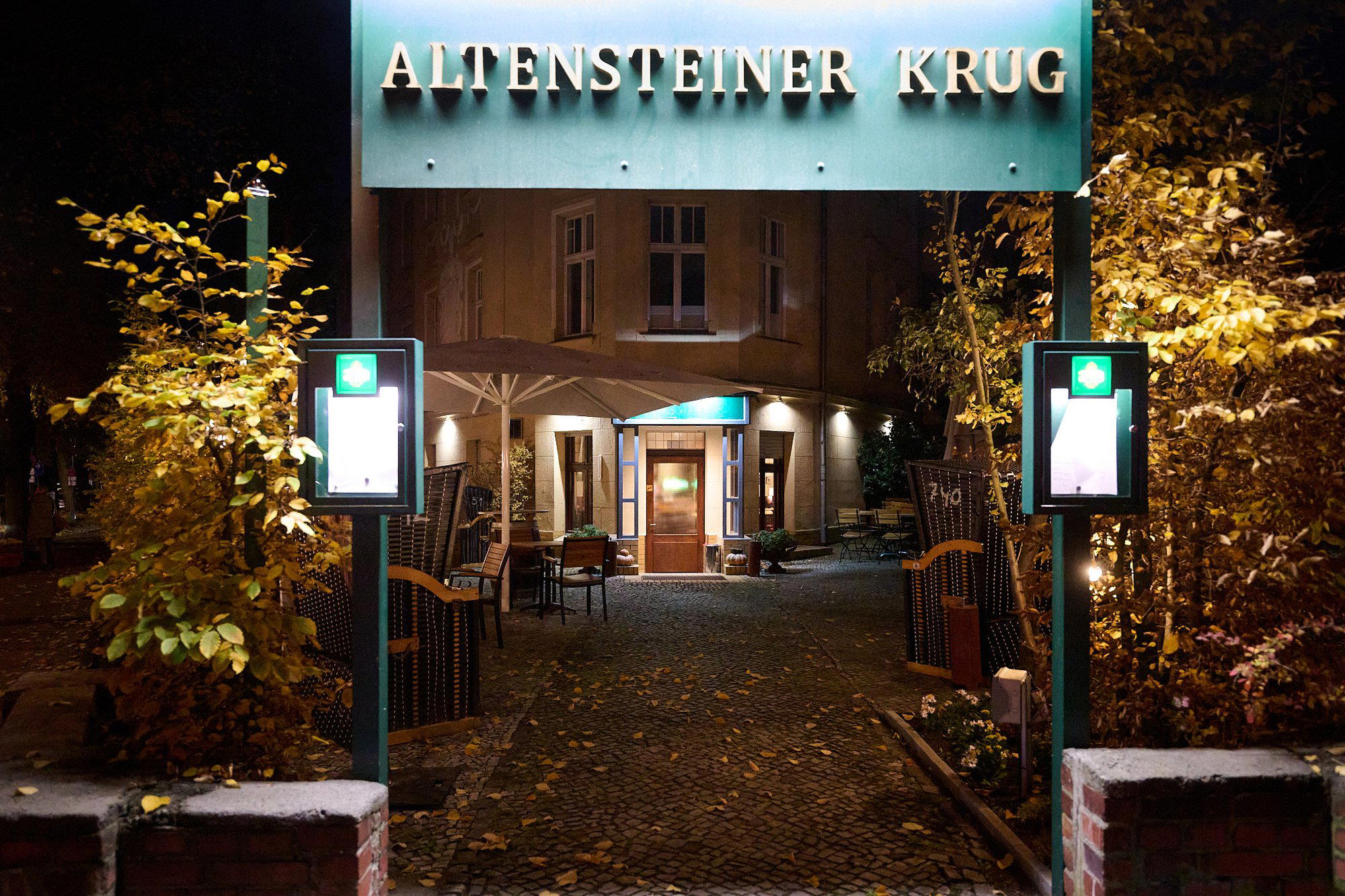
Altensteiner Krug is located at Altensteinstraße 42, 14195 Berlin, Germany, Berlin.
Is Altensteiner Krug a good choice for a special occasion dinner in Berlin?
For milestone meals in Berlin's southwest, Altensteiner Krug's location in Dahlem positions it as a destination rather than a convenience stop, guests arrive by design, typically via the U3 to Dahlem-Dorf. The district's dining culture favours longevity and consistency over tasting-menu theatre, which suits occasions where atmosphere and reliability matter more than Michelin-tracked ambition. Whether that format matches a specific celebration depends on the occasion, but the southwest Berlin setting itself adds a remove from the city's more crowded dining circuits.
What's the signature dish at Altensteiner Krug?
Altensteiner Krug's kitchen focus has not been catalogued in publicly available menus, so naming a single signature dish would be speculation. What the Dahlem address and its decades-long presence suggest is a kitchen oriented toward consistent, repeatable cooking rather than seasonal tasting formats. Visitors planning around specific dishes should check the venue's official channels before booking.
How hard is it to get a table at Altensteiner Krug?
Dahlem operates outside Berlin's central reservation pressure, and restaurants at Altensteinstraße 42 in the 14195 postcode typically do not face the multi-week lead times common to Mitte or Prenzlauer Berg venues. That said, smaller neighbourhood restaurants in this district often have limited covers, and weekend evenings or occasions tied to the Free University academic calendar can tighten availability. Booking a few days ahead is prudent rather than essential for most visits.
Comparable Venues
Comparable venues nearby, for context on price, style, and recognition.
| Venue | Cuisine | Price | Notes |
|---|---|---|---|
| Altensteiner KrugThis venue (the venue you are viewing) | Traditional German Hausmannskost | $20–30 | Not listed |
| Wiener Conditorei Caffeehaus | Viennese Bakery Café | $10–20 | Grunewald |
| Brisgavi | Modern German Bistro | $30–50 | Schlachtensee |
| Restaurant Hackescher Hof | Modern German Regional | $30–50 | Mitte |
| Mirabelle | Traditional German | Not listed | Pankow |
| Café Anna Blume | Classic German Café with Breakfast and Cakes | $20–30 | Prenzlauer Berg |