Our verdict
On Via della Croce in Rome's Tridente district, Pastificio Guerra is a working pasta shop that doubles as a stand-up lunch counter, selling fresh-made pasta by weight alongside a short rotation of sauced plates. The format is deliberately spare: no tables, no reservations, no ceremony. It belongs to a Roman tradition where the production and consumption of pasta happen in the same narrow room.

Pearl is the En Primeur Club membership app — saves, bookings, and concierge access live there. Same editors, same standards.
- Address
- V. della Croce, 8, 00187 Roma RM, Italy
- Phone
- +39 06 679 3102
- Hours
- Daily 1–9 PM
- Website
- pastificio-guerra.shop
- Directions
- Get directions
A Counter in the Tridente
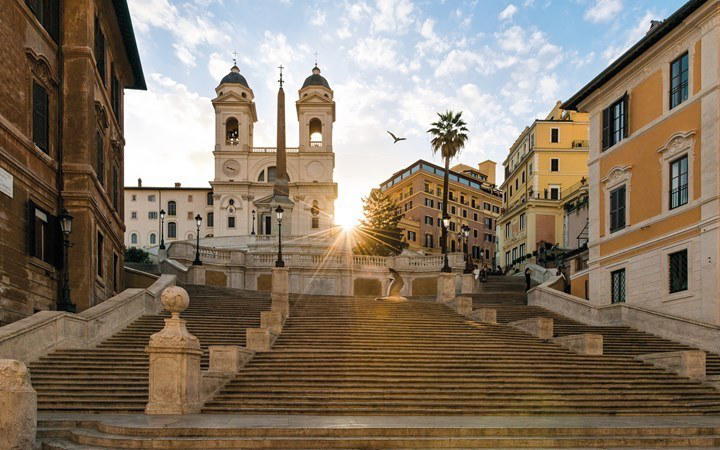
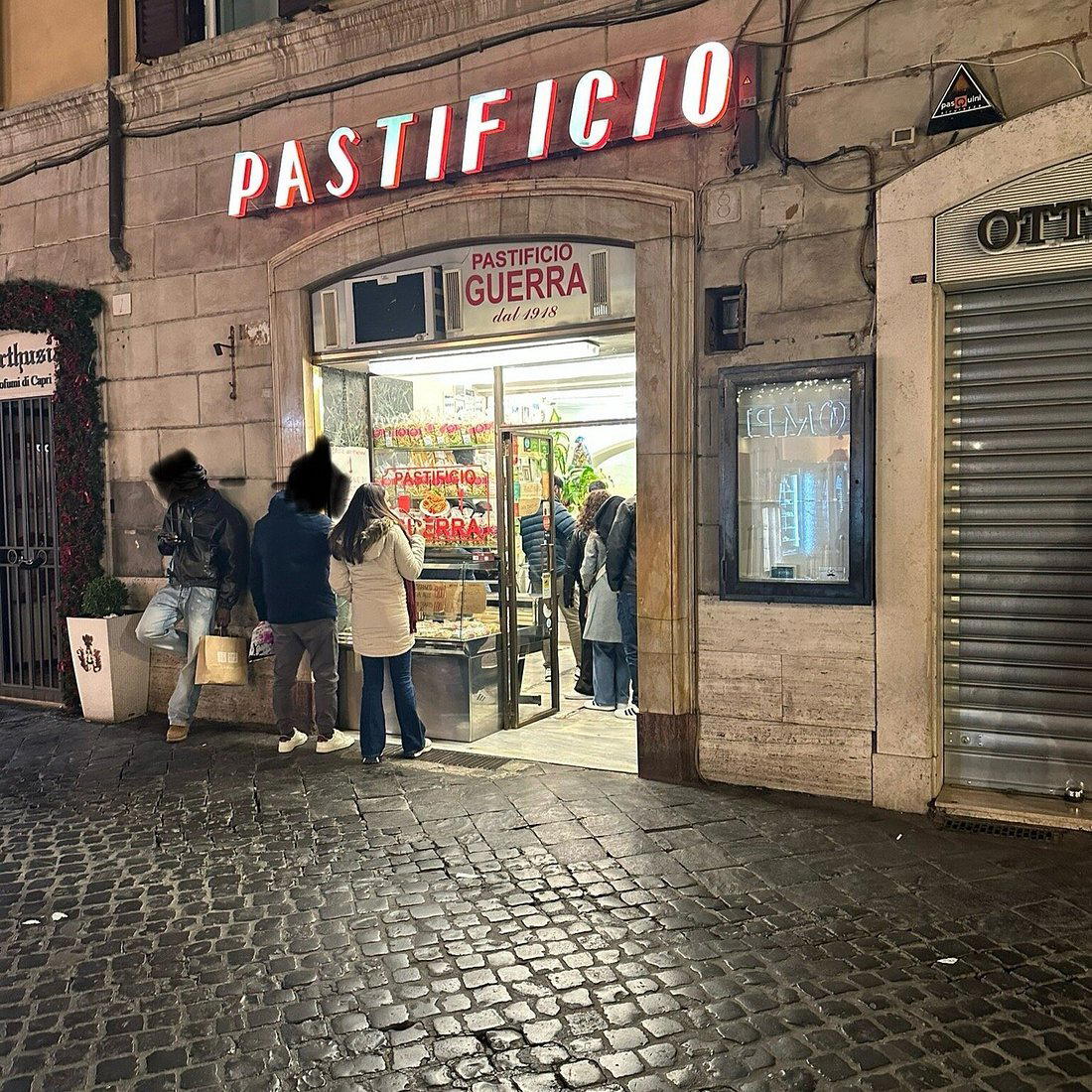
Via della Croce cuts through the Tridente at a quiet angle, running between the Spanish Steps and the market logic of Via del Corso. The street has held food shops at this address for decades, and Pastificio Guerra reads as a continuation of that pattern rather than an interruption of it. The shopfront is small, the interior narrower still, and the display case runs the length of one wall: coils of tonnarelli, sheets of lasagne, pillows of fresh ravioli arranged by type and priced by weight. This is not a restaurant in any conventional sense. It is a pasta laboratory that happens to serve lunch, and the distinction matters when you are deciding how to use it.
Rome's relationship with fresh pasta is more complicated than the city's reputation suggests. The canonical Roman kitchen leans toward dried pasta: spaghetti, rigatoni, mezze maniche. Egg-based fresh pasta, the kind that defines Dal Pescatore in Runate or the Emilian tradition further north, occupies a smaller and more specialist niche in the capital. Shops like Pastificio Guerra are where that niche survives at street level, away from tasting-menu formats and the grander ambitions of places like La Pergola or Il Pagliaccio. The register here is entirely different: municipal, functional, low-cost.
The Ritual of the Midday Queue
The dining ritual at a Roman pasta shop is its own genre, and Pastificio Guerra follows the form with some precision. There are no seats in the conventional sense. Plates are handed across the counter. You eat standing, or you take the container to the steps of a nearby church, or you balance it on a ledge on the street. The queue forms before noon, particularly among people who work in the surrounding offices and know the window before the selection thins. By early afternoon, several varieties will have sold out.
This standing-counter format is not a quirk or an affectation. It reflects the actual economics of fresh pasta production in a city-centre shop with limited space. The pasta is made on the premises, the saucing is brief and direct, and the throughput depends on moving product quickly at lunch. The absence of table service is a structural feature, not a shortcoming. Visitors accustomed to the pacing of a formal meal at, say, Enoteca La Torre or Acquolina should arrive with different expectations entirely.
The broader category of Rome's lunch counter culture operates on a code that rewards regulars and penalises the unprepared. You are expected to know what you want when you reach the counter. You point or name. You pay and move aside. The transaction is quick because the queue behind you is real. This is not unfriendliness; it is the logic of a place that serves a neighbourhood function rather than a tourist one, even when tourists are present in significant numbers.
Pasta Production as the Point
What distinguishes a working pasta shop from a restaurant serving pasta is the visibility of production. At Pastificio Guerra, the pasta you order was made that morning. The variety on offer is not a fixed menu but a reflection of what was prepared: the shapes, the fillings, the quantities. This daily variation is characteristic of the format across Italy, from Le Calandre's region in the Veneto to the Ligurian shops that sell trofie by the half-kilo. The Italian tradition of the pasta shop as both producer and vendor has survived in cities where real estate still allows small-footprint food production, and central Rome, despite its pressures, still harbours several examples.
The price structure reflects the production model. Pasta sold by weight is priced at the gram; plated portions at the counter are priced per serving at a level that puts them well below the entry point of Rome's formal dining tier. For context, the creative and contemporary Italian restaurants that represent Rome's upper bracket, including Achilli al Parlamento and others in the €€€€ range, are serving pasta as a course within a longer format at multiples of what a plate at Pastificio Guerra costs. The two categories do not compete; they occupy entirely separate positions in the city's food geography.
Where It Sits in Rome's Eating Map
The Tridente is not, by instinct, a neighbourhood associated with serious eating. The concentration of designer retail and tourist accommodation has pushed many functional food businesses away from the area over the past two decades. What remains at this density of quality is increasingly notable. Pastificio Guerra holds a position on Via della Croce that has become harder to replicate as rents in the zone have risen. Its continued presence is, in practical terms, a function of the shop's production-first model: the revenue from retail pasta sales supports the economics of the lunch counter in a way that a restaurant-only format in this location probably could not.
For visitors building a Rome itinerary that moves across different registers, the shop functions as a useful counterpoint to the city's more formal dining options. A morning at the Vatican or the Borghese Gallery, followed by a standing lunch at Pastificio Guerra, then an evening at a creative Italian table like Il Pagliaccio, gives a reasonable cross-section of what the city's food culture actually contains. The range of Italian cooking at this level, from working pasta shops to three-Michelin-star rooms, is part of what separates Italy's dining culture from most European peers. You can find analogues in the formal tier at Osteria Francescana in Modena or Enoteca Pinchiorri in Florence, but the informal tier has its own coherence and its own standards.
For a broader orientation to the city's dining options across all price points and formats, the EP Club Rome restaurants guide covers the range from neighbourhood trattorias to the leading tasting-menu counters.
Planning Your Visit
Pastificio Guerra is a daytime operation oriented around the lunch hour. The practical advice is consistent across sources: arrive before noon if you want full selection, arrive later if you are comfortable with whatever remains. There are no reservations and no booking system; the walk-in queue is the only mechanism. Payment is typically cash-forward in shops of this type in Rome, though this should be confirmed on arrival. The address on Via della Croce places it within easy walking distance of the Spanish Steps, making it direct to incorporate into a morning in the Tridente without diverting significantly from any standard route through the neighbourhood.
Frequently asked questions
Where is Pastificio Guerra located?
Pastificio Guerra is located at V. della Croce, 8, 00187 Roma RM, Italy, Rome.
How does Pastificio Guerra fit into the broader Rome pasta shop tradition?
Rome has a distinct category of working pasta shops — distinct from restaurants and distinct from take-away counters — where production is visible and the transaction is fast, affordable, and standing. Pastificio Guerra on Via della Croce, 8 operates squarely within this tradition, in a neighbourhood (the Tridente) where such shops are rare given the concentration of retail and tourist accommodation. That scarcity is part of why it draws a consistent lunchtime crowd from both locals and informed visitors.
What should I order at Pastificio Guerra?
Pastificio Guerra is a working pasta shop on Via della Croce, 8, so the menu rotates around whatever pasta is being produced that day. The format is counter service: point to what is available, pay a small sum, eat standing. Arriving close to opening gives you access to the widest selection before popular formats sell out.
Do they take walk-ins at Pastificio Guerra?
Pastificio Guerra operates entirely on a walk-in basis — there are no seats and no reservations. The practical constraint is timing: sources consistently advise arriving before noon to avoid the queue and secure your preferred pasta. The shop is a daytime operation oriented around the lunch hour, so late arrivals risk finding reduced options.
What do critics highlight about Pastificio Guerra?
Commentary across editorial sources focuses on two things: the visibility of pasta production and the price-to-quality ratio relative to the Tridente neighbourhood, which is not generally associated with serious everyday eating. The standing-counter format and the proximity to the Spanish Steps make it a reference point for Rome lunch spots that prioritise the product over the setting.
Is Pastificio Guerra good for vegetarians?
Fresh pasta is the core offering at Pastificio Guerra, and egg-based pasta preparations are inherently compatible with a vegetarian diet. The rotating daily format means specific sauces and accompaniments vary, so vegetarians should check what is available at the counter on arrival. The shop's location at Via della Croce, 8 in Rome makes it accessible for a quick midday stop.
Price Lens
A small set of peers for context, based on recorded venue fields.
| Venue | Cuisine | Price | Awards | Notes |
|---|---|---|---|---|
| Pastificio GuerraThis venue — the venue you are viewing | Traditional Roman Pasta Takeout | $1–10 | Not listed | Not listed |
| Enoteca La Torre | Modern Italian Fine Dining | $200–300 | 2 Michelin Stars · La Liste Top Restaurants | Creative |
| Il Pagliaccio | Modern Italian-Japanese Fusion Fine Dining | $150–200 | 2 Michelin Stars · La Liste Top Restaurants | Contemporary Italian, Creative |
| Aroma | Modern Roman Fine Dining | $200–300 | 1 Michelin Star · Falstaff Restaurant - 93 Falstaff Points | Modern Cuisine |
| Idylio by Apreda | Modern Mediterranean-Asian Fusion | $150–200 | 1 Michelin Star · La Liste Top Restaurants | Modern Italian, Italian Contemporary |
| La Palta | Country cooking | Not listed | Michelin 1 Star | Not listed |