Osteria Bonelli sits on Viale dell'Acquedotto Alessandrino in Rome's Pigneto-adjacent east, occupying a register that the city's centro storico dining circuit rarely touches: Roman trattoria cooking anchored to seasonal, locally sourced ingredients. For readers more familiar with the white-tablecloth tier represented by La Pergola or Il Pagliaccio, Bonelli operates at a deliberately different frequency, neighbourhood-rooted, ingredient-led, and worth understanding on those terms.
Pearl is the En Primeur Club membership app — saves, bookings, and concierge access live there. Same editors, same standards.
- Address
- Viale dell'Acquedotto Alessandrino, 172/174, 00177 Roma RM, Italy
- Phone
- +39 329 863 3077
- Website
- osteriabonelli.it
- Directions
- Get directions
 Saves & bookings on Pearl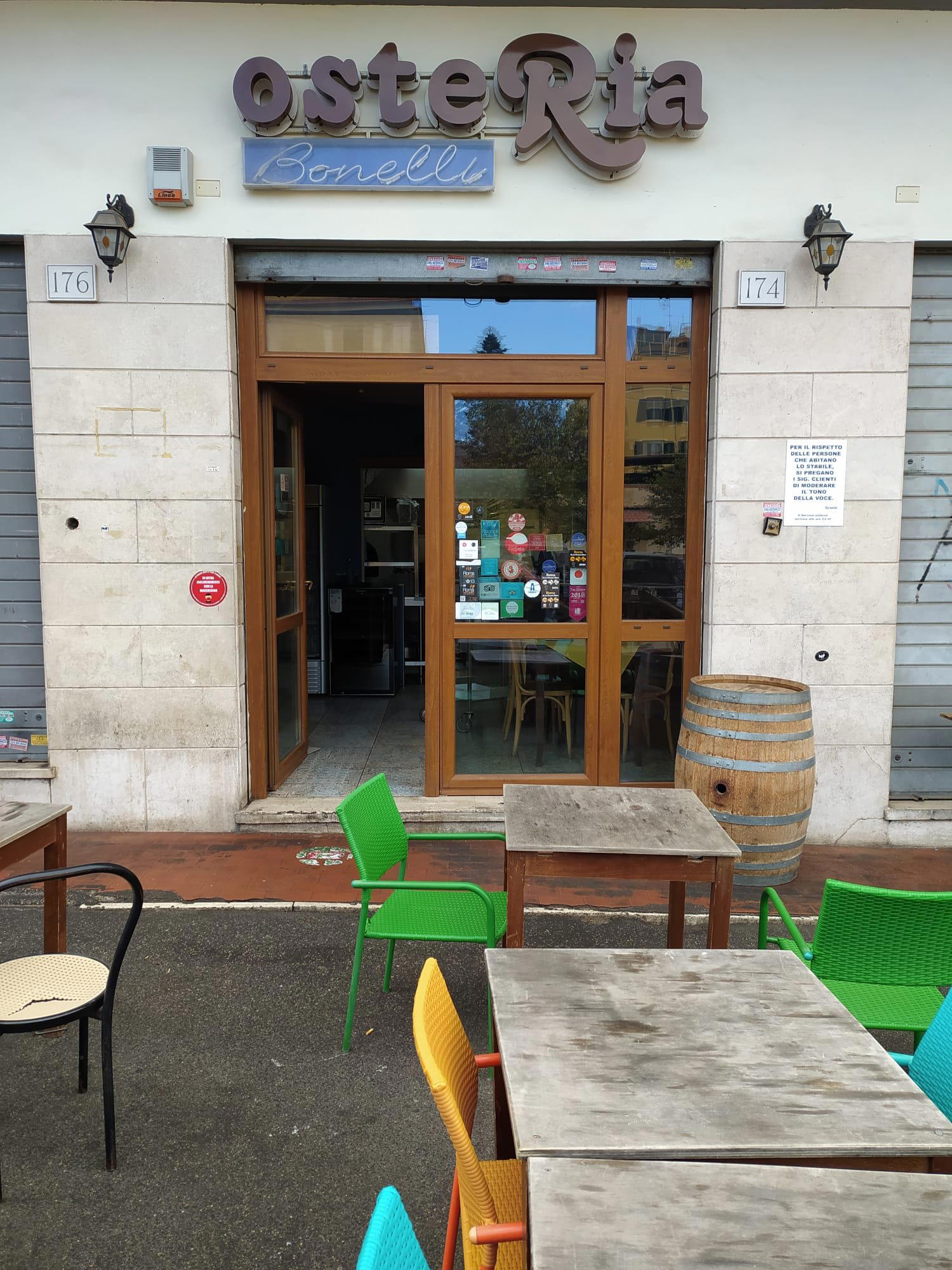
Where the Aqueduct Quarter Meets the Table
The address tells you something useful before you even arrive. Viale dell'Acquedotto Alessandrino runs through a working-class eastern quarter that most first-time visitors to Rome never reach, its name drawn from the ancient aqueduct whose ruined arches still cross the suburban plain beyond the ring road. This is not the Rome of travertine fountains and tourist-facing trattorias; it is a traditional Roman trattoria in Rome, Osteria Bonelli on Viale dell'Acquedotto Alessandrino. The approach on foot or by tram from the centre, roughly twenty minutes east of Termini, passes through a neighbourhood of low-rise apartments, local bars, and the kind of produce vendors whose seasonal rotation sets the rhythm of the local kitchen.
That physical context matters editorially because it shapes the sourcing logic underpinning the food. In Italy's capital, the distance between a restaurant and the market that feeds it is often one reliable indicator of what ends up on the plate. Osteria Bonelli's location in the city's working east places it closer, geographically and philosophically, to the producers and market stalls that supply the cucina romana tradition than any comparable room inside the historic centre would allow.
The Sourcing Logic of Roman Trattoria Cooking
Roman cuisine is, at its foundation, a cuisine of what was available and what nothing went to waste. Offal, dried legumes, seasonal greens foraged from the surrounding countryside, and the cheaper cuts of meat that the city's abattoir workers took home as pay: these are the ingredients that built the canon. Coda alla vaccinara, cacio e pepe, vignarola in spring, puntarelle in winter, each dish is inseparable from a specific season, a specific market, and a specific relationship between producer and cook.
Osteria Bonelli operates inside this tradition. The key signal for any reader evaluating where a Roman trattoria sits on the sourcing spectrum is whether its menu shifts with the season rather than printing a fixed list year-round. Rome's markets follow the agricultural calendar of Lazio closely: artichokes from Ladispoli arrive in late winter and early spring, broad beans and fresh peas mark April and May, and the summer-to-autumn transition brings the courgettes, tomatoes, and peppers that anchor the city's warm-weather vegetable cooking. A kitchen tethered to that cycle will change what it serves; one operating on a fixed year-round menu is drawing from a different supply chain entirely.
This is the category of Roman dining that sits furthest from the creative tasting-menu format pursued by rooms like Enoteca La Torre or Il Pagliaccio, both of which apply a contemporary, technique-driven lens to Italian ingredients, or the three-Michelin-star ambition of La Pergola. Bonelli belongs instead to the trattoria tier that Italy's regional dining tradition has always considered its backbone: no tasting menus, no amuse-bouches, simply the direct expression of a market basket translated into lunch or dinner.
Why the East of Rome Produces This Kind of Restaurant
The neighbourhoods east of the Aurelian Walls, Pigneto, Tor Pignattara, Casilino, developed their culinary identity independently of the tourist infrastructure that concentrated around the historic centre. Restaurants here have historically survived on local custom rather than passing trade, which creates different incentives. A room that depends on the same neighbourhood diners returning week after week has a strong reason to track what is good at the market rather than what photographs well on a menu card.
This is a pattern visible across Italian cities: ingredient-faithful cooking tends to cluster in residential quarters where the audience knows the difference. Comparable dynamics operate in Milanese neighbourhoods like Nolo, in Florentine spots south of the Arno, and in the towns of Lazio's agricultural hinterland, where producers sell direct to restaurants with a regularity that larger, more central venues cannot always sustain. For readers who have eaten at places like Dal Pescatore in Runate, another room whose identity is inseparable from its rural sourcing context, the logic will be familiar: geography and supply chain are not background detail; they are the editorial subject.
Placing Bonelli in Italy's Broader Trattoria Tradition
Italy's restaurant criticism has spent considerable energy in recent years distinguishing between restaurants that perform tradition and restaurants that practice it. The distinction matters. Performing tradition means a fixed menu of recognisable Roman dishes prepared to a reliable standard for a broad audience. Practicing tradition means a menu that reflects what was worth buying this week, prepared in the manner that makes most sense for that specific ingredient at that specific moment in the season.
The broader Italian scene includes restaurants operating at every point on that spectrum. At the ambitious end, places like Osteria Francescana in Modena, Reale in Castel di Sangro, or Piazza Duomo in Alba use sourcing as the foundation of a creative, award-recognised programme. At the trattoria end, the ambition is simpler and no less serious: let the ingredient speak without obscuring it. Bonelli sits in the latter camp. The value proposition is not innovation; it is fidelity to a seasonal market rhythm and the cooking grammar that Roman tradition has built around it.
For readers whose Italian dining reference points run toward the northern creative tradition, Le Calandre in Rubano, Enrico Bartolini in Milan, or Enoteca Pinchiorri in Florence, the register at Bonelli will read as deliberately plain. That plainness is the point. Roman cucina povera does not dress itself up.
Planning Your Visit
Osteria Bonelli is located at Viale dell'Acquedotto Alessandrino 172/174, in Rome's eastern residential belt. The practical approach for most visitors is tram or metro from the centre: the area is accessible but not a short walk from the tourist circuit.
In terms of timing, late autumn through early spring is generally the strongest season for Roman cucina tradizionale: the offal-based dishes are at their most coherent in cooler months, artichoke season runs from November through April, and the puntarelle that defines Roman winter salads is at its sharpest from December to February. Visitors arriving in summer will find a different menu logic, built around the courgette blossoms, tomatoes, and aubergines that fill Lazio's markets from June onward.
- Cacio e Pepe
- Carbonara
- Tonnarelli
- Saltimbocca alla Romana
- Fried Zucchini Flowers
- Gricia
Peers Worth Knowing
Comparable venues nearby, for context on price, style, and recognition.
| Venue | Cuisine | Price | Notes |
|---|---|---|---|
| Osteria BonelliThis venue — the venue you are viewing | Traditional Roman Trattoria | $ | Not listed |
| CasaManco | Roman Pizza al Taglio | $ | Testaccio |
| Mordi & Vai | Roman Street Food Sandwiches | $ | Testaccio |
| FA.SE Osteria Moderna | Modern Roman Osteria | $$ | Tuscolano |
| Li Rioni a Santiquattro | Roman-Style Pizza | $$ | Celio |
| Tullio Pizza | Roman Pizza al Taglio | $ | Monte Mario |
Continue exploring
More in Rome
Restaurants in Rome
Browse all →
Bars in Rome
Browse all →
Hotels in Rome
Browse all →


Wineries in Rome
Browse all →

At a Glance
- Rustic
- Cozy
- Classic
- Lively
- Casual Hangout
- Group Dining
- Family
- Standalone
- Open Kitchen
- Local Sourcing
- Street Scene
Current opening hours
- Monday
- 12:30–4 PM, 7:30 PM–12 AM
- Tuesday
- 12:30–4 PM, 7:30 PM–12 AM
- Wednesday
- 12:30–4 PM, 7:30 PM–12 AM
- Thursday
- 12:30–4 PM, 7:30 PM–12 AM
- Friday
- 12:30–4 PM, 7:30 PM–12 AM
- Saturday
- 12:30–4 PM, 7:30 PM–12 AM
- Sunday
- 12:30–4 PM
Hours can change for holidays and private events. Last verified .
Simple, unpretentious interior with narrow dining spaces and a family-run atmosphere; bustling and crowded during peak hours with servers moving quickly between the kitchen and tables.