Our verdict
中華菜館同發本館 sits in Yokohama's Yamashita-cho district, the geographic heart of one of Japan's oldest and most historically layered Chinatowns. The restaurant represents the Cantonese-rooted dining tradition that has defined this neighbourhood for well over a century, making it a considered choice for milestone meals in a city where Chinese cuisine carries genuine historical weight.

Pearl is the En Primeur Club membership app — saves, bookings, and concierge access live there. Same editors, same standards.
- Address
- 中区山下町148, 横浜市, 神奈川県, 231-0023
- Directions
- Get directions
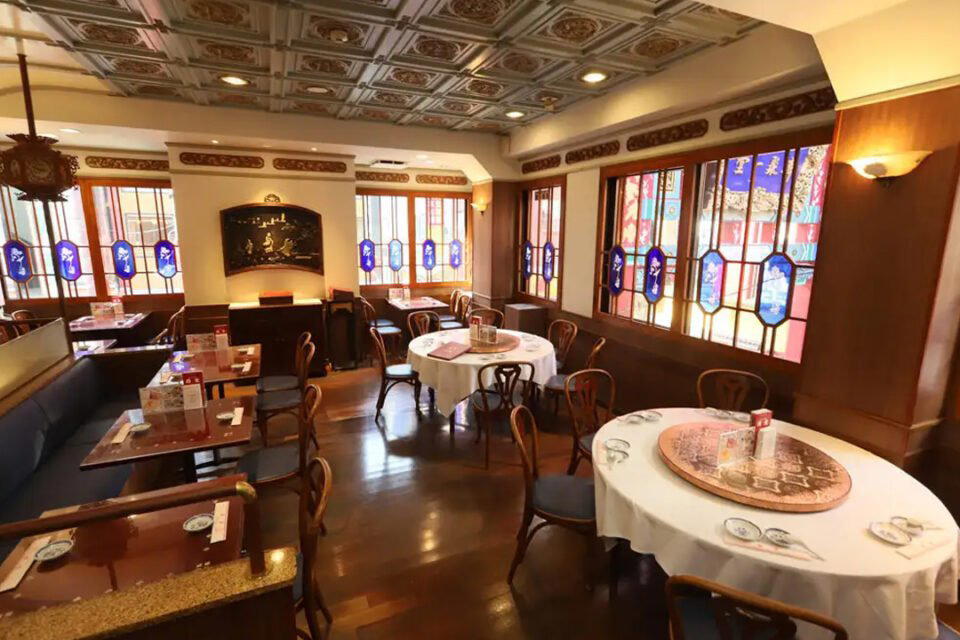
The menu
What to order
- 叉燒
- 明炉叉焼
- 皮酥肉嫩
Yamashita-cho and the Weight of Yokohama's Chinatown Tradition
Yokohama's Chinatown, centred on Yamashita-cho, is not a recent culinary destination. It is one of the oldest continuously operating Chinese commercial districts in Japan, with roots stretching back to the treaty port era of the mid-nineteenth century. The restaurants that have endured here carry something that newer venues in Tokyo or Osaka cannot manufacture: institutional memory accumulated across generations of trade, immigration, and cultural exchange. 中華菜館同發本館, addressed at Yamashita-cho 148, sits within this fabric, occupying the address on the same street grid that has housed Chinese merchants and restaurateurs for well over a hundred years.
This matters for anyone considering the restaurant as the setting for a celebratory meal. In Japan's premium dining culture, occasion dining tends to migrate toward venues where the environment itself is doing something beyond serving food. Yamashita-cho provides exactly that kind of weight. The district's lantern-lit main thoroughfares, the density of competing establishments, and the ambient noise of a neighbourhood that has never really stopped being itself all contribute to a setting that feels historically earned rather than designed for consumption.
A Cantonese Reference Point in a City Built on Chinese Commerce
Yokohama's Chinatown is predominantly Cantonese and Shanghainese in its culinary orientation, a direct reflection of the port city's historical trade relationships with southern China. The Cantonese tradition in this context is not a transplant: it arrived with merchants who made Yokohama a permanent home, and it adapted slowly and deliberately over decades rather than being reinvented for Japanese tastes. The cooking that emerged here sits in a distinct tier from the Chinese restaurants common in Tokyo's city centre, shaped more by lineage than by market trends.
中華菜館同發本館 operates within this Cantonese-influenced framework. For a celebration dinner in Yokohama, this positioning carries specific meaning. The venue is not offering fusion or a domesticated interpretation of Chinese cuisine for a Japanese palate primed by izakaya conventions. It belongs to a longer tradition in which the cooking itself is the cultural statement. For guests marking a significant occasion, that distinction is worth understanding before booking.
Occasion Dining in Yokohama: How the City Frames the Meal
Yokohama occupies an interesting position relative to Tokyo in Japan's dining hierarchy. It is close enough to the capital to draw the same standards of expectation, yet distinct enough to have its own reference points and institutions. For milestone meals, the city's premium restaurants range from refined Japanese formats like the sushi counter at Nakajo and the eel preparations at Nodaiwa (野田岩), to the yakitori precision found at 1000 (Yakitori) in the JPY 15,000–19,999 bracket, to the kaiseki-adjacent formats that have established roots here.
Chinese cuisine in Yokohama occupies a separate but equally serious register. Within Chinatown itself, the competitive set is dense. Manchinro Tenshinpo (萬珍樓 點心舗) is the most formally recognised name in the district, with decades of institutional standing. 中華菜館同發本館 sits in the same neighbourhood, which means it competes on the terms that Chinatown itself defines: longevity, authenticity of tradition, and the kind of service experience that comes from operating in a place where diners return across generations rather than once for a novelty visit. Our full Yokohama restaurants guide maps the broader competitive field across cuisines and price points.
Setting and Approach: Reading the Room for Special Occasions
The structural variant of an occasion-dining choice at 中華菜館同發本館 is this: it is a restaurant in one of Japan's most historically layered ethnic dining districts, which means the environment is not neutral. Coming to Yamashita-cho for a birthday dinner, a family celebration, or a milestone anniversary meal is a deliberate choice to place the event within a specific cultural context. That is a different proposition from booking a private room in a hotel restaurant or a seasonal kaiseki counter.
Across Japan's higher-end dining spectrum, similar decisions play out at venues where historical weight and cultural specificity are core to the experience. Gion Sasaki in Kyoto and HAJIME in Osaka both demonstrate how a specific sense of place becomes part of the occasion itself, even when the food format differs entirely. In Yokohama, 中華菜館同發本館 offers something analogous within the Chinese dining tradition: a venue where the address, the neighbourhood, and the institutional history are inseparable from what arrives at the table.
For broader comparison across Japan's regions, the premium dining experiences at Enishi in Yokohama, Goh in Fukuoka, akordu in Nara, and Harutaka in Tokyo each demonstrate how a strong regional identity anchors a venue's occasion-dining credentials. 中華菜館同發本館's equivalent anchor is the Chinatown district itself.
Planning Your Visit
The restaurant is located at 中区山下町148, 横浜市, 神奈川県 231-0023, in the centre of Yokohama's Chinatown. Yamashita-cho is accessible directly via the Minatomirai Line to Motomachi-Chukagai Station, which places the district's main entrance within a short walk of the address. Weekend evenings in Chinatown attract significant foot traffic, and the most sought-after tables at the district's established restaurants tend to fill well in advance for Friday and Saturday sittings. For a celebratory meal with a specific date in mind, confirming a reservation ahead of the occasion is advisable. Phone and online booking details should be confirmed directly, as contact information for 中華菜館同發本館 is not currently listed in public directories we can verify.
Frequently asked questions
How do I find 中華菜館同發本館?
中華菜館同發本館 is located at 中区山下町148, 横浜市, 神奈川県, 231-0023, Yokohama.
How does 中華菜館同發本館 differ from other Chinese restaurants in Yokohama's Chinatown?
中華菜館同發本館 is one of the longer-established names within Yamashita-cho, a district that has operated as a Chinese commercial and dining quarter since the Meiji period. While Yokohama's Chinatown has over 200 restaurants, the 同發 name carries generational association with the area's Cantonese heritage rather than the newer wave of tourist-facing operators. That distinction matters for visitors seeking a meal grounded in the neighbourhood's historical culinary identity rather than its contemporary commercial surface.
What should I eat at 中華菜館同發本館?
The restaurant sits within Yokohama's Chinatown, a district shaped by Cantonese and Shanghainese culinary traditions rooted in the port city's trading history. That context points toward classic Chinese banquet formats, shared dishes, and the kinds of preparations the neighbourhood has built its reputation on over generations.
Do they take walk-ins at 中華菜館同發本館?
Yokohama's Chinatown restaurants vary considerably, with some large-format venues accommodating walk-ins while smaller or occasion-focused rooms fill quickly on weekends and holidays. Visiting on a weekday or arriving early in the evening generally improves your chances.
What do critics highlight about 中華菜館同發本館?
The restaurant operates in Yamashita-cho, which carries its own weight as one of Japan's oldest and most historically documented Chinese commercial districts, a context that shapes expectations for any serious Chinese dining room on this street.
Can 中華菜館同發本館 accommodate dietary restrictions?
Chinese banquet-style dining in Yokohama's Chinatown typically involves shared dishes and advance communication is the most reliable route for dietary requirements. Contacting the restaurant directly before your visit is the practical step here.
Is 中華菜館同發本館 good value for money?
Yokohama's Chinatown generally positions itself below Tokyo's comparable Chinese dining rooms in price, though occasion-format meals with full table service and banquet courses will sit at the higher end of the neighbourhood range. The address at 中区山下町148 places it in the commercial heart of the district where competition keeps most operators accountable on value.
Price and Recognition
Comparable venues nearby, for context on price, style, and recognition.
| Venue | Cuisine | Price | Awards | Notes |
|---|---|---|---|---|
| 中華菜館同發本館This venue — the venue you are viewing | Traditional Cantonese Roasted Meats | $30–50 | Not listed | Not listed |
| Sichuan Restaurant Chin Yokohama ten | Upscale Sichuan (Szechwan) Chinese | $50–100 | Tabelog 100 #24 | Nishi, Upscale Sichuan (Szechwan) Chinese |
| SUIRINKAKU | Nouvelle Chinese fine dining in Yokohama Bashamichi | $100–150 | Tabelog 100 #67 | Naka, Nouvelle Chinese fine dining in Yokohama Bashamichi |
| Manchin ro Honten | Historic Cantonese fine dining in Yokohama Chinatown | $50–100 | Tabelog 100 #87 | Naka, Historic Cantonese fine dining in Yokohama Chinatown |
| Banri | Chinese Dumplings | $20–30 | Tabelog 100 #57 | Naka, Chinese Dumplings |
| Ryuho | Traditional Chinese (Yokohama Isezakicho) | $10–20 | Tabelog 100 #63 | Naka, Traditional Chinese (Yokohama Isezakicho) |











Details
- Classic
- Well Known
- Family
- Group Dining
- Casual Hangout
- Historic Building
- Sake Program
- A La Carte
Traditional and luxurious with bright entrance hall and classic Chinatown atmosphere preserving old-world charm.