Eating at the Foot of Rtanj: What the Mountain Brings to the Table There is a particular quality to dining in the shadow of Rtanj. The mountain — a pyramid-shaped peak in eastern Serbia that locals have long associated with medicinal herbs, clean air, and an almost mythologised sense of isolation — shapes what ends up on plates in Boljevac in ways that urban restaurants simply cannot replicate. The foraging culture here is not a trend imported from Nordic kitchens. It is the default mode. Thyme, wild garlic, St. John's wort, and a dense catalogue of edible plants grow across Rtanj's slopes, and local cooks have worked with them across generations long before herb-forward menus became a selling point in Belgrade's newer restaurants. The à la carte restaurant at Rudnička 38 sits within this context. The address places it at the edge of Boljevac, where the road toward Rtanj begins to climb and the surrounding terrain starts doing most of the storytelling. Arriving here, you are not entering a destination built for food tourism. You are arriving at a place that exists because the region has always needed somewhere to eat well, and where the menu answers that need through proximity to its ingredients rather than distance from them. Ingredient Geography: Why Eastern Serbia Eats Differently Understanding what lands on a plate in this part of Serbia requires a short detour into geography. The Zaječar and Boljevac corridor sits between the Carpathians to the north and the Balkan mountain range to the south, creating microclimates that push pasture quality higher and extend the wild herb season. Lamb raised on these gradients carries a mineral character noticeably different from lowland rearing. Game, primarily wild boar and deer, is hunted through autumn and winter across forests that cover the slopes above 600 metres, and that proximity to the source shortens the supply chain to almost nothing. This is not a regional coincidence. Eastern Serbian cooking has always organised itself around what the terrain provides, and à la carte formats in this area typically reflect seasonal availability rather than a fixed yearly menu. Compare this to something like RESTORAN FIG in Rakovac, which operates closer to the Fruška Gora wine corridor and pulls from a different set of agricultural traditions, or Lovački dom in Valjevo, where game-focused cooking sits inside a hunting-lodge tradition further west. In Boljevac, the sourcing logic is more compressed: the mountain is visible from the dining room, and much of what it produces arrives without the intermediary of a distribution network. The Boljevac Dining Context Boljevac is not a city with a dense restaurant culture. That fact shapes expectations in both directions. But it also means that the standard against which this restaurant is measured is a regional one, set by the quality of produce available and the consistency of execution rather than by Michelin ambition or peer-set anxiety. Travellers who reach Boljevac are typically doing so with purpose: hiking on Rtanj, visiting the Bor copper basin to the east, or tracing the Via Dinarica trail network through eastern Serbia. That audience tends to arrive hungry and with less patience for concepts than for portions. À la carte formats in this context function as both a practical convenience and a small concession to choice in a part of the country where set menus and kafana traditions dominate. For a broader picture of what the local eating scene looks like, our full Boljevac restaurants guide provides useful orientation. Placing This Address in a Wider Serbian Picture Serbia's restaurant range runs from ambitious modern cooking in Belgrade, Langouste in Belgrade operates at the upper end of the capital's contemporary scene, to deeply traditional kafana formats that have changed little across decades. The middle ground, particularly outside the major cities, is where places like this one operate: competent, ingredient-led, and rooted in regional rather than national or international reference points. That positioning is not a limitation. In a country where the distance between a field and a kitchen is still measured in kilometres rather than continents, ingredient-led cooking in the regions often outperforms its urban counterpart on raw material quality, even when it falls behind on technical refinement. The same logic applies to comparable addresses in other Serbian towns: Kod Brana in Cacak draws from the Morava valley's agricultural base, while Restoran Groš in Leskovac taps into the pepper-forward cooking traditions of the south. Each reflects its terrain. The à la carte restaurant in Boljevac reflects Rtanj. For travellers accustomed to European fine dining at the level of Le Bernardin in New York City or the communal tasting format of Lazy Bear in San Francisco, the register here is substantially different. This is not a destination for technique or formality. It is a destination for understanding what eastern Serbia grows, raises, and puts on a plate when it is cooking for itself rather than for export. Planning a Visit Boljevac sits roughly 240 kilometres southeast of Belgrade, accessible by road through Paraćin and Zaječar, with the Rtanj area typically reached in three to four hours depending on route. The restaurant's address on Rudnička 38 places it on the main approach road, making it practical as a stopping point on routes toward the mountain or continuing east toward Bor. For travellers building a broader eastern Serbian itinerary, pairing this stop with visits to KAFANA DUKAT in Pirot to the south or Restoran Dinčić in Veliko Gradiste to the northeast creates a reasonable circuit through the region's distinct culinary micro-traditions. Other regional comparisons worth considering include Etno Kuća Dinar in Vrsac and Кафана Курта in Bajina Basta, both of which reflect how traditional formats persist across Serbia's secondary towns. Those interested in wine-forward dining might also consider PROJECT 72 WINE&DELI; in Novi Sad as a contrast point within the country's dining range. Additional references for planning include Aleksandar Gold in Uzice, Windmill in Pancevo, PIZZA ART in Sombor, Kod poštara in Aran Elovac, and Grand **** in Kopaonik for a fuller picture of how Serbia's regional dining operates across different terrains and price points. Frequently Asked Questions Is A la carte restaurant a family-friendly restaurant?In a town like Boljevac, where the dining culture is informal and rooted in traditional Serbian hospitality, family groups are the norm rather than the exception at most local restaurants.How would you describe the vibe at A la carte restaurant?Boljevac is not a city with a competitive or scene-driven restaurant culture. Places like this one tend to operate at the informal end of the regional spectrum, where the room exists to serve the community and passing travellers rather than to project a design or concept. Without awards data or price confirmation on record, particularly honest framing is that this is a practical, ingredient-proximate address in a part of Serbia where the terrain does more atmospheric work than any interior fitout could.What dish is A la carte restaurant famous for?No confirmed signature dish data is available for this venue. In the broader eastern Serbian cooking tradition, which this restaurant's Rtanj location places it firmly within, lamb, wild boar, and foraged herb preparations are the recurring anchors of local menus. Any specific dish attribution beyond that would be speculative without verified menu data.How far ahead should I plan for A la carte restaurant?Without awards recognition or confirmed pricing on record, this venue is unlikely to operate with the kind of forward-booking pressure seen at destination restaurants. In smaller Serbian towns, walk-in dining is common, though calling ahead is sensible during peak hiking season on Rtanj (late spring through early autumn) when visitor traffic to the area increases and local restaurants can fill at weekends.What's the signature at A la carte restaurant?The à la carte format, in a region defined by seasonal foraging and game, suggests that any standout preparations would likely track the mountain's seasonal output rather than a fixed house dish. Eastern Serbian kitchens at this latitude tend to express their identity through ingredient sourcing more than through a single signature preparation.What makes dining near Rtanj mountain different from eating in Belgrade or Novi Sad?The key difference is supply-chain compression. Restaurants in Belgrade and Novi Sad, even those working with Serbian ingredients, are drawing from a more aggregated supply system. In Boljevac, the mountain itself functions as the primary larder, and that proximity shapes both the menu's range and its seasonal rhythm in ways that are difficult to replicate further west.
Pearl is the En Primeur Club membership app — saves, bookings, and concierge access live there. Same editors, same standards.
- Address
- Rudnička 38, Rtanj 19370, Serbia
- Phone
- +381 30 2155051
- Website
- ramondahotel.com
- Directions
- Get directions
 Saves & bookings on Pearl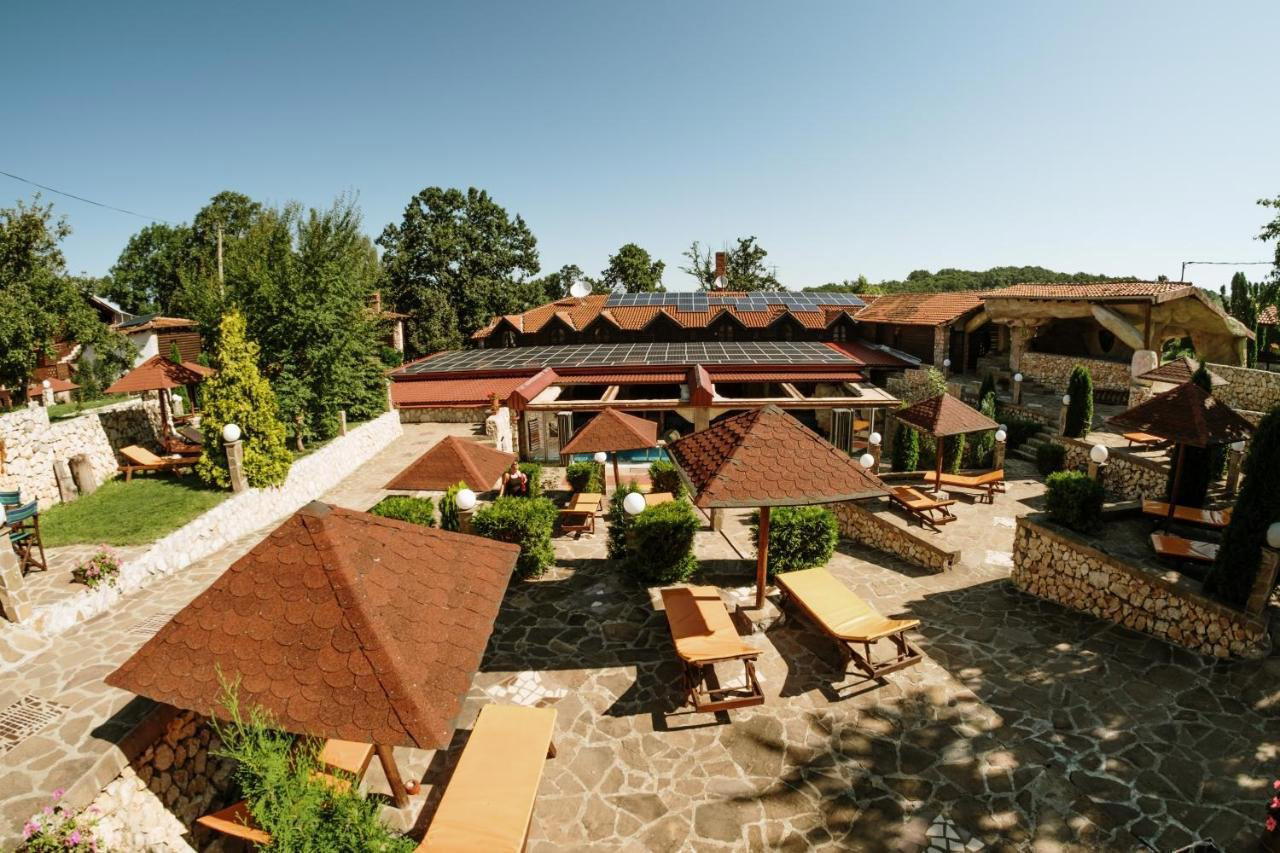
Eating at the Foot of Rtanj: What the Mountain Brings to the Table
There is a particular quality to dining in the shadow of Rtanj. The mountain — a pyramid-shaped peak in eastern Serbia that locals have long associated with medicinal herbs, clean air, and an almost mythologised sense of isolation — shapes what ends up on plates in Boljevac in ways that urban restaurants simply cannot replicate. The foraging culture here is not a trend imported from Nordic kitchens. It is the default mode. Thyme, wild garlic, St. John's wort, and a dense catalogue of edible plants grow across Rtanj's slopes, and local cooks have worked with them across generations long before herb-forward menus became a selling point in Belgrade's newer restaurants.
The à la carte restaurant at Rudnička 38 sits within this context. The address places it at the edge of Boljevac, where the road toward Rtanj begins to climb and the surrounding terrain starts doing most of the storytelling. Arriving here, you are not entering a destination built for food tourism. You are arriving at a place that exists because the region has always needed somewhere to eat well, and where the menu answers that need through proximity to its ingredients rather than distance from them.
Ingredient Geography: Why Eastern Serbia Eats Differently
Understanding what lands on a plate in this part of Serbia requires a short detour into geography. The Zaječar and Boljevac corridor sits between the Carpathians to the north and the Balkan mountain range to the south, creating microclimates that push pasture quality higher and extend the wild herb season. Lamb raised on these gradients carries a mineral character noticeably different from lowland rearing. Game, primarily wild boar and deer, is hunted through autumn and winter across forests that cover the slopes above 600 metres, and that proximity to the source shortens the supply chain to almost nothing.
This is not a regional coincidence. Eastern Serbian cooking has always organised itself around what the terrain provides, and à la carte formats in this area typically reflect seasonal availability rather than a fixed yearly menu. Compare this to something like RESTORAN FIG in Rakovac, which operates closer to the Fruška Gora wine corridor and pulls from a different set of agricultural traditions, or Lovački dom in Valjevo, where game-focused cooking sits inside a hunting-lodge tradition further west. In Boljevac, the sourcing logic is more compressed: the mountain is visible from the dining room, and much of what it produces arrives without the intermediary of a distribution network.
The Boljevac Dining Context
Boljevac is not a city with a dense restaurant culture. That fact shapes expectations in both directions. But it also means that the standard against which this restaurant is measured is a regional one, set by the quality of produce available and the consistency of execution rather than by Michelin ambition or peer-set anxiety.
Travellers who reach Boljevac are typically doing so with purpose: hiking on Rtanj, visiting the Bor copper basin to the east, or tracing the Via Dinarica trail network through eastern Serbia. That audience tends to arrive hungry and with less patience for concepts than for portions. À la carte formats in this context function as both a practical convenience and a small concession to choice in a part of the country where set menus and kafana traditions dominate. For a broader picture of what the local eating scene looks like, our full Boljevac restaurants guide provides useful orientation.
Placing This Address in a Wider Serbian Picture
Serbia's restaurant range runs from ambitious modern cooking in Belgrade, Langouste in Belgrade operates at the upper end of the capital's contemporary scene, to deeply traditional kafana formats that have changed little across decades. The middle ground, particularly outside the major cities, is where places like this one operate: competent, ingredient-led, and rooted in regional rather than national or international reference points.
That positioning is not a limitation. In a country where the distance between a field and a kitchen is still measured in kilometres rather than continents, ingredient-led cooking in the regions often outperforms its urban counterpart on raw material quality, even when it falls behind on technical refinement. The same logic applies to comparable addresses in other Serbian towns: Kod Brana in Cacak draws from the Morava valley's agricultural base, while Restoran Groš in Leskovac taps into the pepper-forward cooking traditions of the south. Each reflects its terrain. The à la carte restaurant in Boljevac reflects Rtanj.
For travellers accustomed to European fine dining at the level of Le Bernardin in New York City or the communal tasting format of Lazy Bear in San Francisco, the register here is substantially different. This is not a destination for technique or formality. It is a destination for understanding what eastern Serbia grows, raises, and puts on a plate when it is cooking for itself rather than for export.
Planning a Visit
Boljevac sits roughly 240 kilometres southeast of Belgrade, accessible by road through Paraćin and Zaječar, with the Rtanj area typically reached in three to four hours depending on route. The restaurant's address on Rudnička 38 places it on the main approach road, making it practical as a stopping point on routes toward the mountain or continuing east toward Bor.
For travellers building a broader eastern Serbian itinerary, pairing this stop with visits to KAFANA DUKAT in Pirot to the south or Restoran Dinčić in Veliko Gradiste to the northeast creates a reasonable circuit through the region's distinct culinary micro-traditions. Other regional comparisons worth considering include Etno Kuća Dinar in Vrsac and Кафана Курта in Bajina Basta, both of which reflect how traditional formats persist across Serbia's secondary towns. Those interested in wine-forward dining might also consider PROJECT 72 WINE&DELI; in Novi Sad as a contrast point within the country's dining range. Additional references for planning include Aleksandar Gold in Uzice, Windmill in Pancevo, PIZZA ART in Sombor, Kod poštara in Aran Elovac, and Grand **** in Kopaonik for a fuller picture of how Serbia's regional dining operates across different terrains and price points.
At a Glance
- Scenic
- Cozy
- Rustic
- Family
- Casual Hangout
- Terrace
- Hotel Restaurant
- Extensive Wine List
- Local Sourcing
- Organic
- Mountain
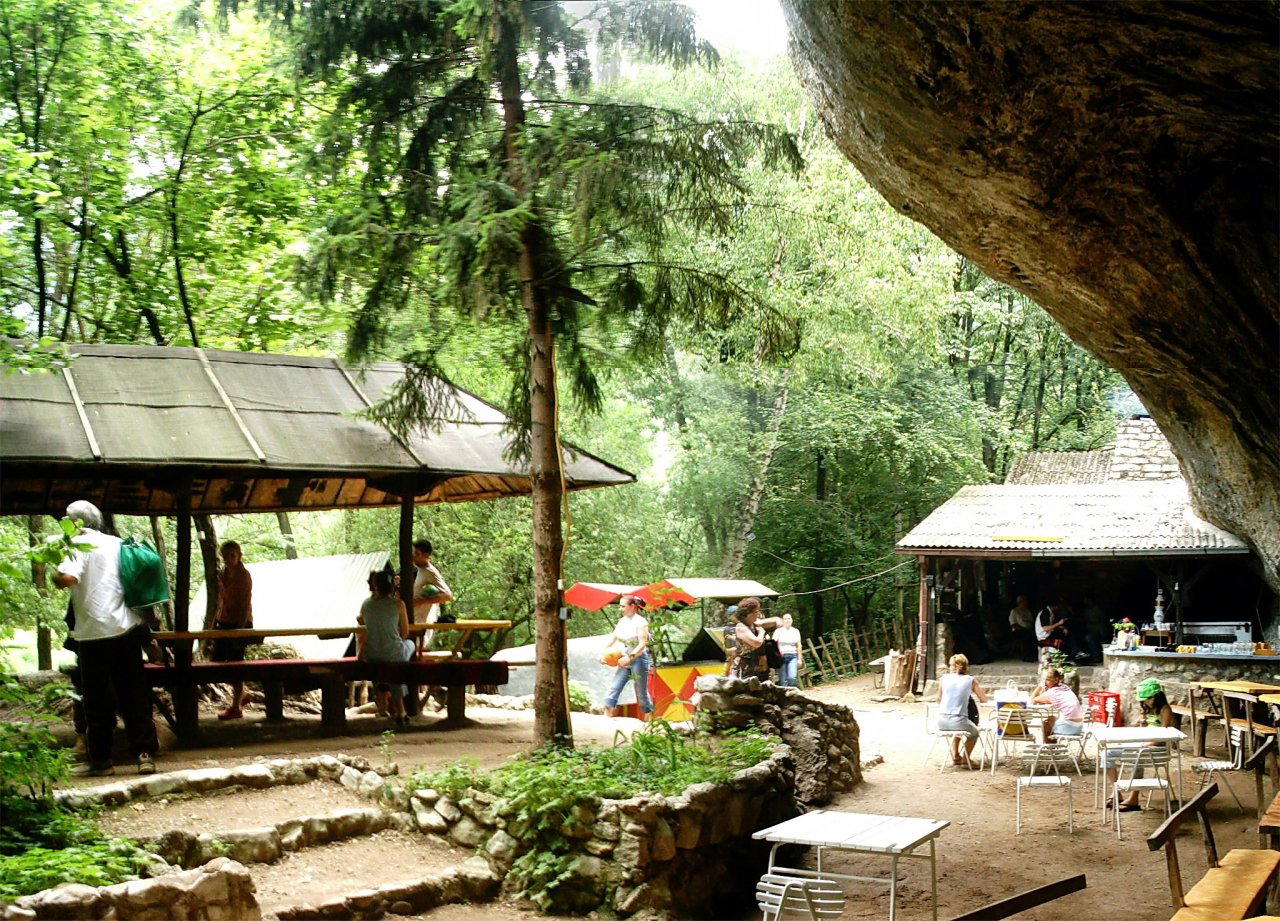
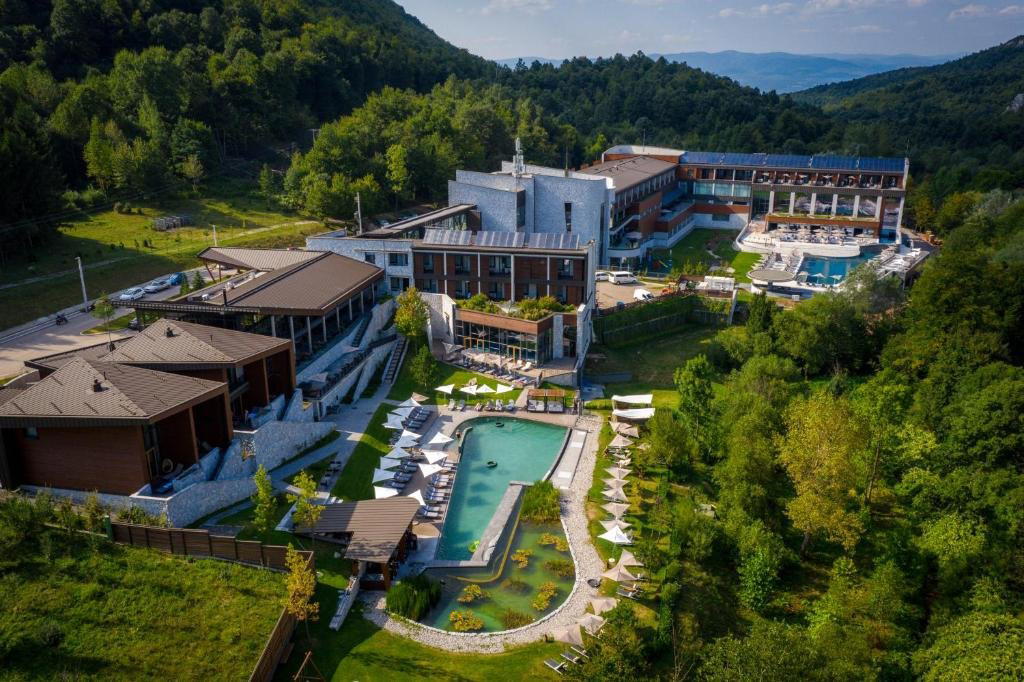
Pleasant ambiance with spacious, sunny terrace offering mountain views and a relaxed, nature-inspired atmosphere.