Located in Ginza 8-chome, 秋里川端 occupies a tight address on one of Tokyo's most competitive dining corridors. The restaurant sits within a neighbourhood where reservation depth and peer-set credentials define the conversation, placing it alongside counters that price and programme against the upper tier of the city's dining scene. Sparse public data makes independent verification difficult, but the Ginza postcode alone signals a specific competitive bracket.
 Discover on Pearl
Pearl is the En Primeur Club membership app — saves, bookings, and concierge access live there. Same editors, same standards.
- Address
- Japan, 〒104-0061 Tokyo, Chuo City, Ginza, 8 Chome−8−7 2階
- Phone
- +815054845084
- Website
- g025200.gorp.jp
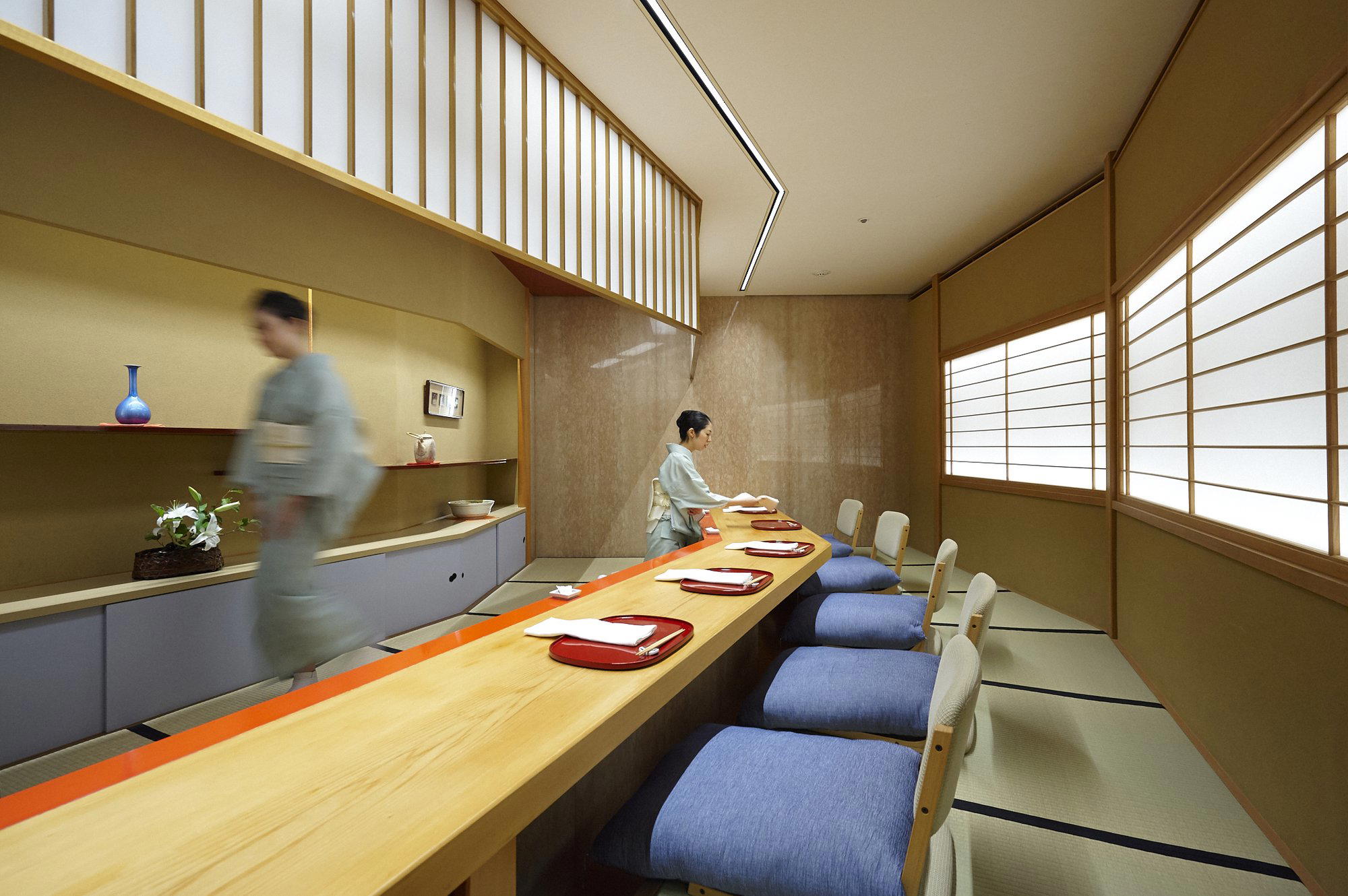
Ginza's Upper Tier: What the Address Tells You Before You Arrive
The stretch of Ginza between 7-chome and 9-chome functions as a kind of proof-of-concept for Tokyo's premium dining culture. Rents are among the highest in the city for food-and-beverage operations, which means that survival in this corridor over any meaningful period is itself a form of credentialing. 秋里川端, a restaurant in Tokyo's Ginza district at Ginza 8-chome 8-7, sits inside that envelope. The address does not guarantee what you will find at the table, but it does narrow the competitive set considerably: venues at this postcode tend to price against other top-tier operations and programme their service accordingly, whether through omakase sequencing, counter-only formats, or seasonal menus that shift with the market at Tsukiji and Toyosu.
Ginza's dining concentration means the reader needs a useful frame of reference. Across the corridor, Harutaka operates at the ¥¥¥¥ tier with a sushi counter that books well ahead, while RyuGin anchors the kaiseki end of the premium conversation. Sézanne and L'Effervescence represent how French-influenced formats have embedded themselves in Tokyo's leading bracket alongside wholly Japanese traditions.
The Lunch and Dinner Question in a Ginza Context
In Tokyo's premium dining tier, the gap between lunch and dinner service is more than a pricing differential, it is often a structural one. Dinner at upper-bracket Ginza counters typically runs longer, involves more courses, and carries a significantly higher per-person spend. Lunch, where it is offered at all, tends to compress the sequence: fewer courses, a tighter time window, and a price point that can represent the clearest entry into a kitchen's logic without the full evening commitment.
This dynamic plays out across the neighbourhood. At kaiseki houses, a lunch service might run three to four hours against an evening's five or six. At French-influenced counters, the daytime menu often strips back to a focused set of two or three courses that still reflect the kitchen's sourcing and technique. For visitors, daytime and evening service can differ significantly across Ginza's premium rooms, so checking in advance is sensible.
For visitors building a multi-day Tokyo itinerary, the lunch-versus-dinner divide also affects what else fits in the day. An evening counter that runs to midnight leaves little room for a second sitting elsewhere, while a focused lunch allows the kind of afternoon exploration, galleries, department stores, the covered arcades of nearby streets, that Ginza's neighbourhood character rewards. The practical dimension of dining format is rarely discussed in venue terms but shapes the visit materially.
Tokyo's Broader Fine Dining Map
Placing 秋里川端 in a wider Japan context requires acknowledging how Tokyo's premium scene compares to other cities. Outside the capital, HAJIME in Osaka and Gion Sasaki in Kyoto represent how regional cities have built credentialed alternatives to Tokyo's concentration of top-tier seats. Goh in Fukuoka and akordu in Nara extend the geography further, demonstrating that the conversation about Japan's finest dining is no longer exclusively a Tokyo discussion.
Within Tokyo itself, the competition for attention from internationally aware diners is dense. Crony represents the innovative French end of the market, while further afield in Japan, addresses from affetto akita in Akita to aki nagao in Sapporo show how regional ambition has shifted the frame. For readers who have already worked through Tokyo's most documented counters and are looking at next-tier discoveries, venues like Aji Arai in Oita, Ajidocoro in Yubari District, Akakichi in Imabari, and Abon in Ashiya deserve attention alongside any Tokyo-specific shortlist.
For context on how Tokyo compares internationally, the tasting-menu format as a serious gastronomic proposition is also well represented in other cities: Le Bernardin in New York City and Lazy Bear in San Francisco both operate in the same global conversation about what a premium counter or set-menu experience should deliver. What Tokyo adds to that conversation is density: nowhere else concentrates as many credentialed formats within walkable distance of one another. See our full Tokyo restaurants guide for a mapped view of how the city's dining neighbourhoods organise themselves.
Approaching an Address with Sparse Public Data
Not every address in Ginza generates the volume of press coverage that its location might suggest. Some of the neighbourhood's most consistently booked counters operate with minimal online presence, no published tasting notes, and contact only through phone or a third-party reservation system. This is not a sign of quality in either direction; it is a structural feature of a city where word-of-mouth and reservation-list depth have historically mattered more than digital marketing reach.
For 秋里川端 specifically, confirmed public details are limited.
The Ginza 8-chome postcode does carry its own form of contextual weight, and that context is real. But weight of address is not a substitute for confirmed detail, and EP Club's editorial position is that readers are better served by transparent data gaps than by confident-sounding prose built on inference.
Know Before You Go
Comparable Spots
Comparable venues nearby, for context on price, style, and recognition.
| Venue | Cuisine | Price |
|---|---|---|
| æç³å·ç«¯This venue — the venue you are viewing | ||
| Harutaka | Sushi | ¥¥¥¥ |
| L'Effervescence | French | ¥¥¥¥ |
| RyuGin | Kaiseki, Japanese | ¥¥¥¥ |
| Crony | Innovative, French | ¥¥¥¥ |
| Den | Innovative, Japanese | ¥¥¥ |

At a Glance
:null