
Tabelog 100 #30
Our verdict
Kyoto’s standing-bar culture rewards precision over ceremony, and 3TOKU6MI Shijo karasuma ten fits that compact, sake-led register. The appeal is not luxury theatre but a tight tachinomi format: fish-focused cooking, oden, counter energy, and a 2025 Tabelog 100 Tachinomi selection that places it within Japan’s serious casual-drinking canon.

Pearl is the En Primeur Club membership app, where members save venues, book tables and use the concierge.
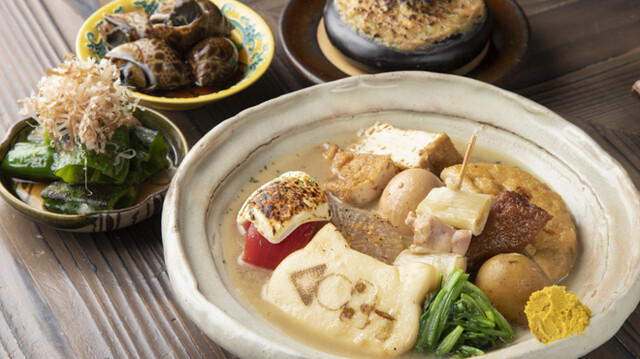
Approaching the machiya frontage off Shijo-Karasuma, the cue is scale, not spectacle: a narrow Kyoto house adapted to standing-room drinking, with the counter doing the social work. Tachinomi in Japan is often misread as a budget category, but its stronger examples are compressed izakaya craft. The room asks diners to stay alert, order with intent, and let sake and small plates set the pace.
That frames 3TOKU6MI Shijo karasuma ten. Its 2025 selection for Tabelog 100 Tachinomi matters because the category is not chasing formal polish; it rewards the tougher discipline of casual service, fast turnover, and food that holds beside nihonshu. Kyoto has many ways to eat well, from sushi counters such as [ki:] and Kiu to Japanese cooking at Washoku Haru, but this format occupies another lane: less seated progression, more immediate calibration between appetite, drink, and counter space.
Fish, oden and sake make the standing format serious
The sourcing signal is direct: the kitchen is described as particular about fish, and the drinks program is built around sake. In tachinomi, that combination raises the stakes. Fish needs freshness, clean handling, and seasoning that will not flatten beside rice-driven acidity or umami; oden gives warmth and broth-based depth without turning the meal into formal courses. The result is a Kyoto drinking format where ingredients carry authority usually associated with more expensive rooms.
Kyoto’s dining identity often gets reduced to kaiseki etiquette, but its everyday sophistication is just as visible in how it drinks. Sake bars and izakaya counters depend on restraint: salt, stock, temperature, and portion size must work quickly because the guest is standing, ordering incrementally, and moving through the night without a long table commitment. Compared with a French meal at DEUX FILLES or the higher-spend contemporary bracket represented by Kuchibashi Modern, tachinomi compresses decision-making. The diner is not buying ceremony; the diner is buying tempo and ingredient confidence.
Oden matters in Kyoto because it sits between comfort food and drinking food. It can be humble, but in a sake-led bar it tests balance: broth, simmered ingredients, and pacing must invite another glass rather than end the evening. Fish-focused plates add contrast, keeping the meal from becoming only soft textures and warmth. This is why a standing bar can read as serious without adopting fine-dining vocabulary.
Shijo-Karasuma suits the compressed Kyoto night
Shijo-Karasuma is practical Kyoto rather than postcard Kyoto, and that is the point. Office workers, shoppers, hotel guests, and train traffic create a dining pattern favoring compact meals over long detours. A 24-seat standing room fits that ecology: small enough to feel intentional, large enough to function nightly. It also explains why solo dining and date-night use coexist. Standing bars remove some formality that makes a two-person meal feel staged, while the counter gives solo diners a natural place.
The house-restaurant setting gives the format a Kyoto accent. A machiya conversion is not merely decorative; it reins in scale and keeps the experience closer to neighborhood drinking than destination dining. That helps visitors building an evening around central Kyoto. A meal might start with snack culture at 551蓬莱, take a formal turn at Aca 1° (Japanese Kaiseki), or stay casual with a standing-bar stop prioritizing sake and fish over a long reservation arc. For sweets and old Kyoto food rituals, Aburi Mochi Honke Nemoto Kazariya occupies another tradition entirely.
The comparison clarifies price logic. Kyoto has affordable sushi counters such as Izugen, mid-range Japanese rooms, French bistros, and high-design tasting formats; tachinomi sits apart because value is measured through frequency and fluency rather than table linen. A Tabelog score of 3.54 and inclusion in the 2025 Tachinomi list indicate credibility inside that arena, not a claim to compete with kaiseki temples or luxury hotel dining rooms.
How to place it in a Kyoto itinerary
Use this venue as a night-shaping stop rather than the sole expression of Kyoto dining. It makes sense before or after a structured meal, or on an evening when sake, fish, and oden are the brief. The no-minors policy and standing-only setup suit adults comfortable with counter rhythm and short-order pacing. Cash-only payment keeps the experience closer to old-school Japan than internationalized hospitality.
For travelers mapping the city with range, this is one piece of a broader Kyoto plan. Abbesses shows how French cooking fits into the city’s dining mix, while the broader restaurant field is easier to compare through Our full Kyoto restaurants guide. Sleep strategy changes the evening, too: central stays reduce friction for late eating, where Our full Kyoto hotels guide becomes useful. Drinkers can widen the after-dinner map through Our full Kyoto bars guide, while sake-minded readers may also want Our full Kyoto wineries guide and Our full Kyoto experiences guide for context beyond restaurants.
Japan’s casual-dining spectrum is broad, and useful comparisons often sit outside the expected Kyoto frame. Beef-focused comfort at -Grilled beef Sukiyaki- KAMAKURA TANUKIAN 鎌倉 たぬき庵 in Kamakura, charcoal-and-tuna drinking food at. 鮪と炭火焼き うお炭 秋葉原店 in Tokyo, café culture at.cafe in Osaka, and regional modern cooking at.know in Kumamoto all show how format shapes expectation. Beyond Japan, the sake-bar grammar travels: Jōdo Saké Bar in Los Angeles and Onigiri Time in Pasadena underline how Japanese drinking and snack formats can be translated, while (Shoku) Vietnam in Kawasaki and [Curry Senmon Ten] Maruyama Kyoju. in Sapporo point to the wider casual field. Against that map, 3TOKU6MI Shijo karasuma ten is compelling because it keeps the frame tight: Kyoto machiya, standing counter, fish, oden, and sake doing exactly what the format requires.
Frequently asked questions
What days is 3TOKU6MI Shijo karasuma ten closed?
Hours at 3TOKU6MI Shijo karasuma ten: Mon: 6 PM–12 AM; Tue: 6 PM–12 AM; Wed: 6 PM–12 AM; Thu: 6 PM–12 AM; Fri: 6 PM–12 AM; Sat: 5 PM–12 AM; Sun: 5 PM–12 AM.
What does dinner at 3TOKU6MI Shijo karasuma ten typically cost?
Pricing at 3TOKU6MI Shijo karasuma ten is listed as JPY 3,000 - JPY 3,999.
Where is 3TOKU6MI Shijo karasuma ten in Kyoto?
3TOKU6MI Shijo karasuma ten is located in Kyoto.
What is 3TOKU6MI Shijo karasuma ten known for?
3TOKU6MI Shijo karasuma ten is primarily known for its core concept and execution in Kyoto.
Comparable Spots, Quickly
Comparable venues by price and recognition.
| Venue | Cuisine | Price | Awards | Notes |
|---|---|---|---|---|
| 3TOKU6MI Shijo karasuma tenThis venue (the venue you are viewing) | Japanese Izakaya & Oden Standing Bar | $30–50 | Tabelog 100 #30 | Not listed |
| Takatsuji Kasui | Seasonal Kyoto Izakaya | $50–100 | Tabelog 100 #32 | Shimogyō |
| Kissa Ashijima | Specialty Coffee & Japanese Sweets Kissaten | $10–20 | Tabelog 100 | Nakagyō |
| Teppan Tavern Tenamonya | Teppanyaki with A5 Wagyu | $30–50 | Not listed | Higashiyama |
| ç¾é¦å± | Traditional Kaiseki | Not listed | Not listed | Higashiyama |
| Tasuki Pass The Baton | Traditional Japanese Tea Room & Kakigori | $10–20 | Not listed | Gion |
Recognition history
Dated appearances from independent guides and award organizations, with the underlying list record or original source where available.
Tabelog 100 #30 · No. 30
Tabelog · Tabelog 100 - Tachinomi - 2025
Continue exploring
More in Kyoto
Restaurants in Kyoto
All restaurants in Kyoto →
Bars in Kyoto
All bars in Kyoto →
Hotels in Kyoto
All hotels in Kyoto →
Wineries in Kyoto
Browse all →
Details
- Cozy
- Rustic
- Intimate
- Trendy
- Casual Hangout
- After Work
- Late Night
- Historic Building
- Standalone
- Sake Program
- Small Plates
- A La Carte
- Counter Dining
- Sake
Current opening hours
- Monday
- 6 PM–12 AM
- Tuesday
- 6 PM–12 AM
- Wednesday
- 6 PM–12 AM
- Thursday
- 6 PM–12 AM
- Friday
- 6 PM–12 AM
- Saturday
- 5 PM–12 AM
- Sunday
- 5 PM–12 AM
Hours can change for holidays and private events. Hours as of .
Relaxing space in a historic machiya with a casual standing bar atmosphere.