御料理 忠馬 occupies a quiet third-floor address in Nihonbashi Ningyocho, a district that has long supported serious, neighbourhood-scale Japanese dining away from Ginza's spotlight. The restaurant operates in a format where the progression of courses carries the full weight of the meal, placing it alongside Tokyo's more considered kaiseki-adjacent counters rather than its high-volume tasting rooms.
Pearl is the En Primeur Club membership app — saves, bookings, and concierge access live there. Same editors, same standards.
- Address
- Japan, 〒103-0013 Tokyo, Chuo City, Nihonbashiningyocho, 2 Chome−10−11 KYOE PLAZA 3階
- Phone
- +818043203002
- Website
- kokoroba2022.com
 Saves & bookings on Pearl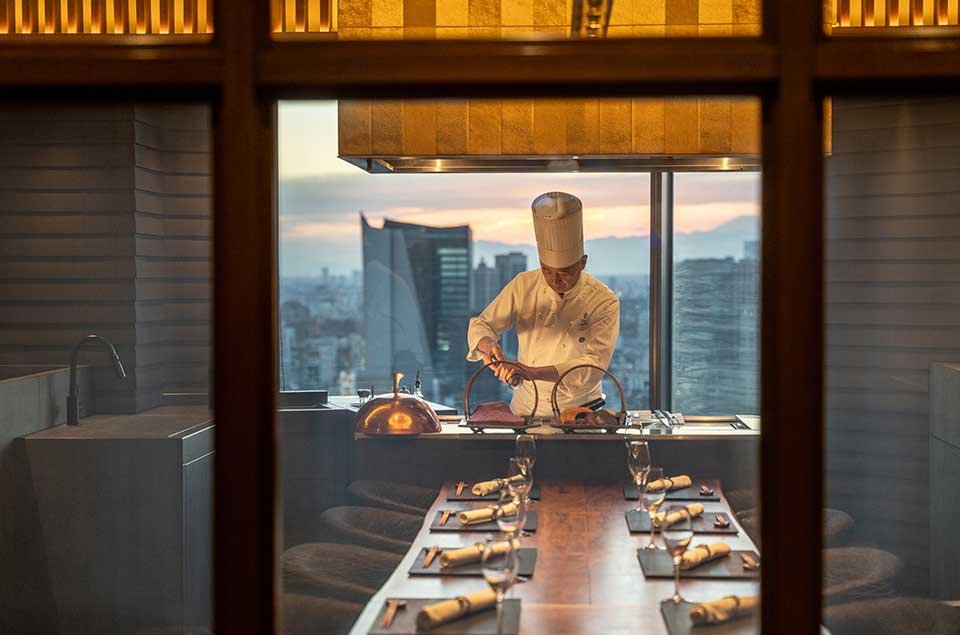
Nihonbashi Ningyocho and the Case for Dining Off-Axis
Tokyo's most-discussed fine dining addresses cluster predictably in Ginza, Minami-Aoyama, and Nishi-Azabu. Nihonbashi Ningyocho operates on a different logic. The neighbourhood carries centuries of merchant and artisan history, and its restaurant culture reflects that: quieter, more residential in rhythm, oriented toward regulars rather than the international reservation circuit. 御料理 心馬 sits on the third floor of KYOE PLAZA at 2-10-11 Nihonbashiningyocho, Chuo City, an address that filters its own audience before a guest even arrives. Visitors who find it tend to be there with intention.
That filtering effect matters when thinking about where this kind of restaurant sits in Tokyo's broader dining structure. The city has two parallel tracks for serious Japanese cooking: the highly visible, heavily awarded counters that generate international press, and the smaller, district-embedded rooms that sustain themselves on local loyalty and word-of-mouth. 御料理 心馬 belongs to the second category, and that positioning shapes everything about how a meal there unfolds.
The Architecture of the Meal: Progression as the Subject
In the tradition of kaiseki-adjacent Japanese dining, the progression of courses is not incidental, it is the medium. The meal is structured to move through temperatures, textures, and intensities in a sequence that has a beginning, a middle, and a resolution. At counters of this type in Tokyo, that arc is often more telling than any individual dish: the way a soup course resets the palate before something richer, the deliberate placement of something astringent or acidic to sharpen attention mid-meal, the final rice course as a kind of settling, a return to the foundational.
This format places 御料理 心馬 in a different competitive frame than, say, Harutaka, where the sushi counter's arc is built around ingredient quality and the linear revelation of fish at its seasonal peak, or RyuGin, where the kaiseki sequence is refracted through a more technically ambitious lens. At the neighbourhood-scale Japanese dining room, the ambition is quieter but no less purposeful: to make the meal feel inevitable in retrospect, as though each course arrived at the only logical moment.
French-influenced tasting rooms in the city, L'Effervescence, Sézanne, and Crony, apply similar sequencing logic but from a European framework. The distinction at a room like 御料理 心馬 is that the sequencing draws from a Japanese seasonal calendar and an older set of hospitality conventions, where restraint and timing carry as much weight as technique.
The Ningyocho Setting: What the Room Asks of You
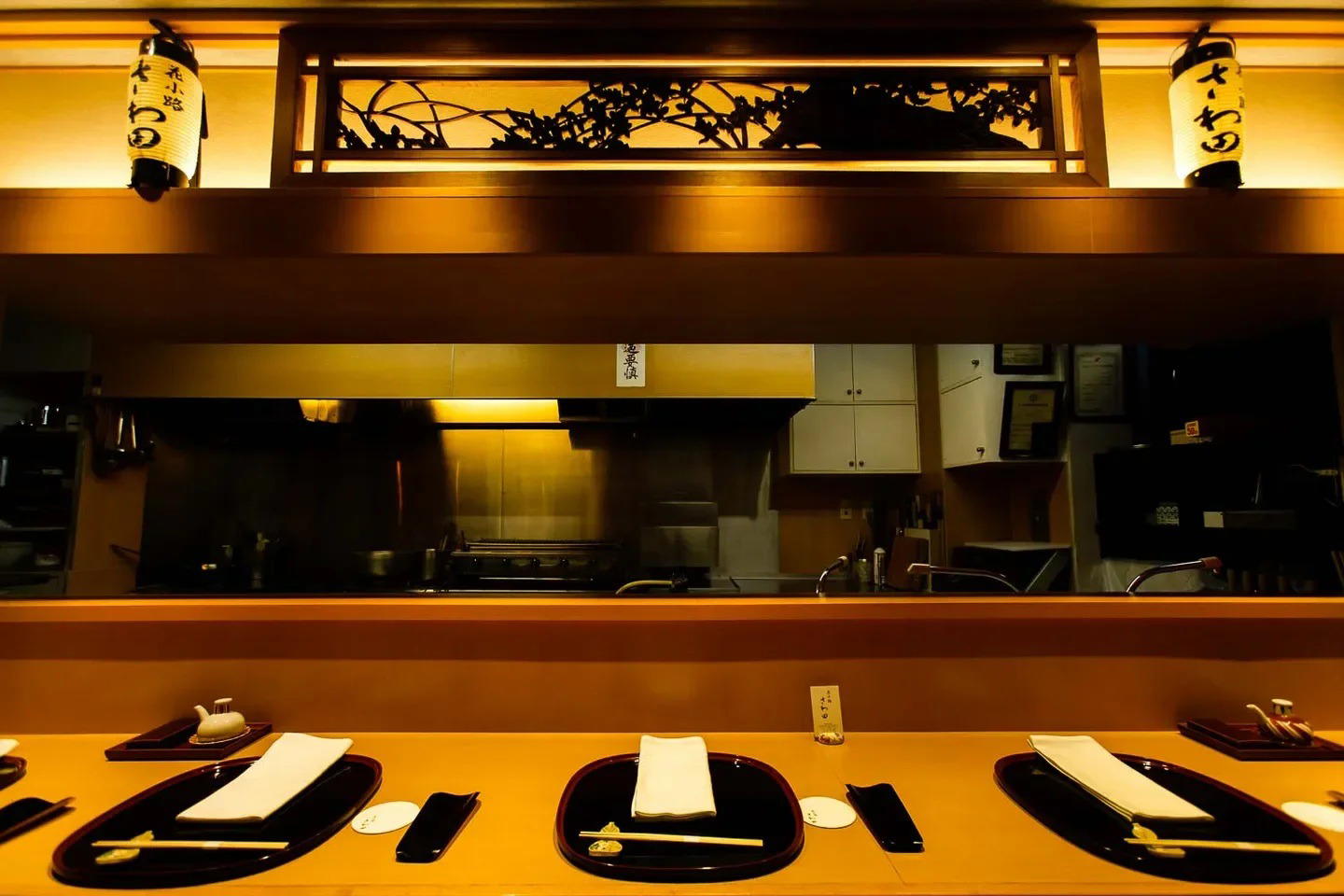
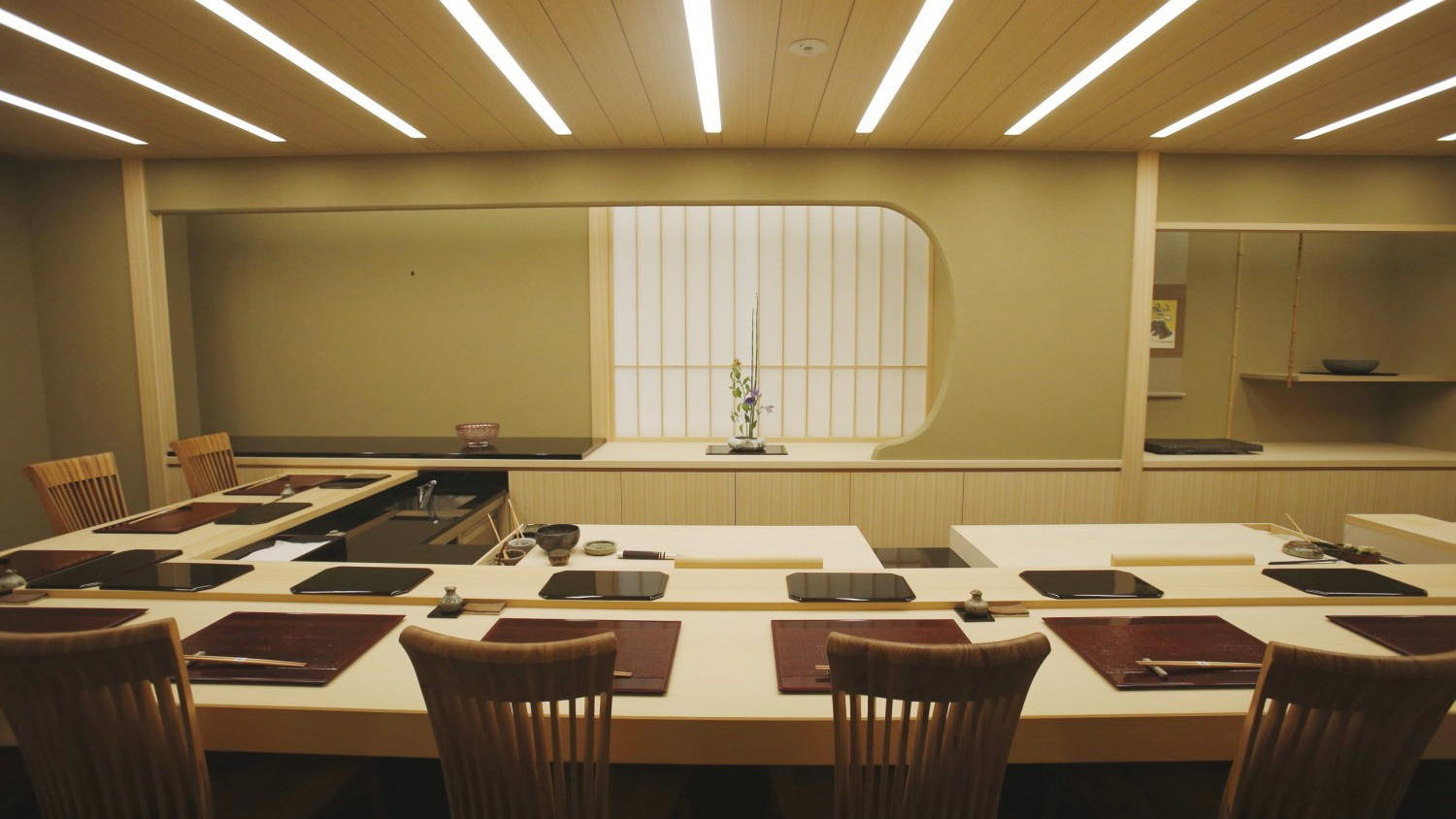
Third-floor dining rooms in Tokyo's older commercial districts occupy a specific register. They are neither the ground-floor accessibility of a casual counter nor the designed arrival experience of a destination restaurant. The climb, literal in this case, marks a transition, a small act of commitment that separates the meal from the street below. In Nihonbashi Ningyocho, where the pace is noticeably slower than in the city's more touristic dining corridors, that transition carries additional weight.
The neighbourhood itself rewards the visitor who arrives early. Ningyocho's covered shopping street, the preserved Showa-era storefronts along Amazake Yokocho, and the Suiten-gu shrine a short walk away give the area a texture that is genuinely distinct from the polished anonymity of Ginza or Roppongi. Restaurants that choose this address are, in a sense, making an editorial statement: they are embedding themselves in a place with its own character rather than borrowing the prestige of a better-known district.
Positioning Among Japan's Broader Fine Dining Circuit
For visitors building a multi-city itinerary through Japan's serious dining rooms, 御料理 心馬 in Ningyocho occupies a specific and useful slot. It is the Tokyo counterpart to the kind of considered, neighbourhood-embedded Japanese cooking found at Gion Sasaki in Kyoto, where seasonal precision and a low-profile setting coexist, or Goh in Fukuoka, which applies a similarly focused approach outside the major culinary capitals.
Further afield, the pattern repeats: HAJIME in Osaka takes the multi-course Japanese meal in a more conceptual direction, while akordu in Nara brings a European framework to Japanese ingredients in a setting that similarly distances itself from urban noise. The common thread across these addresses is a preference for depth over visibility, a quality that, in the long run, tends to sustain restaurants more reliably than critical attention alone.
Japan's wider restaurant geography also includes rooms that operate well outside the major cities: 一本木 石川製 in Nanao, 夕仙山乃 in Sapporo, 湖畔廊 in Takashima, and 庄羽屋 in Nishikawa Machi. Against that spread, Ningyocho is still metropolitan, still connected to Tokyo's ingredient supply chains and professional networks, but positioned at a remove from the city's most competitive dining corridors.
For comparison across formats, Birdland in Sakai and Bistro Ange in Toyohashi represent the kind of regional Japanese dining that operates entirely outside the awards conversation but sustains loyal audiences. Internationally, the sequenced multi-course format finds its closest French-American analogues at Le Bernardin in New York City and Atomix, which applies Korean culinary logic to a similarly structured progression.
Planning a Visit: What to Know Before You Go
御料理 忠馬's Ningyocho address is leading approached via the Hibiya Line or Asakusa Line, both of which serve Ningyocho Station directly. The walk from the station to KYOE PLAZA is short and direct. As with most serious Japanese dining rooms in Tokyo operating at this level, advance reservation is the expected mode of booking, walk-in availability is not something to assume. The restaurant does not list a public website or phone number in current directories, which suggests that reservations are handled through established channels: direct contact via the venue, or through a hotel concierge for guests staying at properties with strong local connections. See our full Tokyo restaurants guide for broader context on navigating the city's booking conventions.
Dress expectations at this type of room in Tokyo are casual. The third-floor setting is compact by design, and the meal format rewards unhurried attention. An evening here is calibrated for guests who are willing to let the kitchen set the pace.
The Short List
Comparable venues nearby, for context on price, style, and recognition.
| Venue | Cuisine | Price | Notes |
|---|---|---|---|
| 御料理 心馬This venue — the venue you are viewing | Chūō, Japanese Asian Restaurant | $ | Not listed |
| Echigoya Wakasa | Sumida, Traditional Japanese Sweets | $ | Not listed |
| Minna no Pan'ya | Chiyoda, Traditional Japanese bakery | $ | Not listed |
| Coffee Senmon Ten Tomii | Not listed | $ | Sumida, Traditional Japanese kissaten & pancake café |
| Tenchaya Nanakura | Not listed | $ | Minato, Inaniwa udon & creative lunch sets |
| Karinto Kozakura | Not listed | $ | Taitō, Traditional Japanese karinto & wagashi shop |







At a Glance
- Family
- Group Dining
- Beer Program
Welcoming and lively atmosphere suitable for groups and families.