
Karinto Kozakura places Tokyo’s wagashi culture in Asakusa rather than Ginza or Aoyama, with a take-out format that suits the district’s older rhythm of shrine visits, shopping streets, and edible gifts. Its Tabelog 100 selection for Tokyo Japanese traditional sweets in 2023 and sub-¥999 listed price put it in a precise category: serious craft, low ceremony, local scale.
Pearl is the En Primeur Club membership app — saves, bookings, and concierge access live there. Same editors, same standards.
- Address
- 4 Chome-14-10 Asakusa, Taito City, Tokyo 111-0032, Japan
- Phone
- +81 3-5603-5390
- Website
- kozakura.shop-pro.jp
 Saves & bookings on Pearl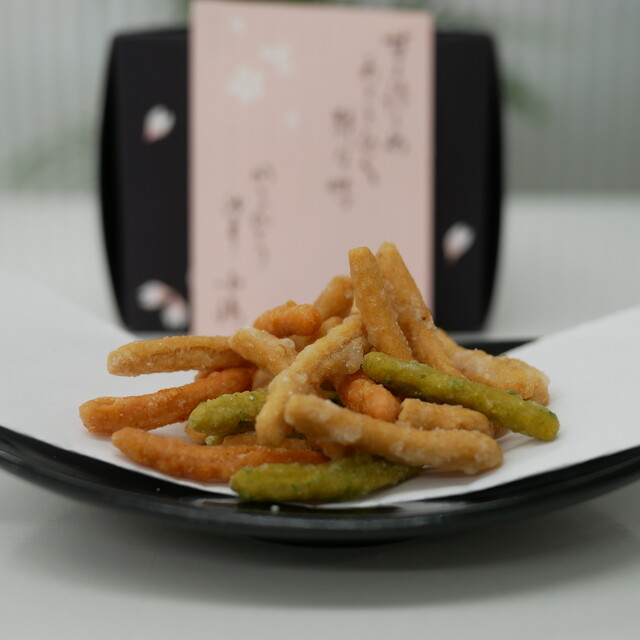
Asakusa changes pace street by street. Temple-side crowds gather around Nakamise and Sensō-ji camera angles; a few blocks away, Taito’s older commercial grid turns practical, local, and better suited to wagashi carried in a paper bag than served on lacquer. Karinto Kozakura belongs to this second Asakusa: a take-out sweets address built around the older Tokyo habit of buying something crisp, portable, and properly made for later.
That matters because Tokyo’s Japanese sweets culture works in several registers: formal tea-room confections shaped by seasonality and ceremony, department-store counters built for gifting, and neighbourhood specialists sustained by repetition and narrow focus. Karinto, the deep-fried sweet associated with brown sugar and wheat, sits near the everyday end of that spectrum, but serious versions still require control of texture, oil, sweetness, and shelf life. Karinto Kozakura’s inclusion in the Tabelog 100 for Tokyo Japanese traditional sweets and Japanese sweets cafés in 2023 places it in that specialist bracket, not among casual souvenir stops.
Asakusa rewards sweets that can leave the shop
Asakusa is not built around long tasting menus. It is a walking district of shrine approaches, kitchenware runs toward Kappabashi, theatre history, rickshaw routes, and small purchases between appointments. Take-out is therefore more than a service detail: it is the format that fits the area, where a sweet shop competes with time, foot traffic, and the expectation that edible gifts should cross the city easily.
Karinto Kozakura is listed as take-out only, giving it a different role from Tokyo’s counter restaurants and dining rooms. The comparison helps. A sushi address such as Isshin belongs to the city’s reservation-led counter culture, while HOMMAGE and noura sit in Tokyo’s French and modern dining conversation. An Asakusa wagashi specialist works by another logic: short transaction, concentrated product, no extended performance. The craft has to register before the customer reaches the next station.
The listed spend, under JPY 999, also defines the category. Tokyo can make sweets into luxury objects, especially when packaging and seasonal scarcity add value. Here the price signal is smaller and more democratic, closer to the daily-gift economy that keeps old confectionery districts alive. That makes the Tabelog recognition more meaningful: the shop is assessed not as a luxury room, but as a focused traditional sweets specialist in a deeply competitive city.
The appeal is craft without dining-room theatre
Karinto has an unglamorous advantage: it exposes shortcuts. Too much sweetness dulls it; poor frying leaves heaviness; careless storage flattens texture. The genre is modest, not forgiving. In Tokyo, where seriousness is often associated with counters, courses, and reservations, traditional sweets shops offer parallel discipline. The repetition happens away from the table, and the result is judged in a smaller window: a purchase, a box, a shared snack later.
The restaurant’s Tabelog score of 3.70 and 2023 Hyakumeiten selection are its clearest public trust signals. Tabelog’s Japanese sweets lists tend to favour specialists with strong category identity, important in Asakusa, where tourist-facing confectionery can blur into general souvenir retail. This address reads narrower and more purposeful: Japanese traditional sweets, take-out service, non-smoking, no private rooms, no private-use format. Those details describe a shop, not a meal venue.
For travellers building a Tokyo food day, use it tactically. Put it near an Asakusa morning or early afternoon rather than forcing it into dinner. It pairs naturally with an east-side route: old Tokyo sweets, then another register of eating in Akihabara or central Tokyo. Readers comparing formats can cross-reference . 鮪と炭火焼き うお炭 秋葉原店, 3 Chome no Curry Ya San, or 124. KAGURAZAKA (Yakitori) to see how Tokyo’s lower-ceremony food stops differ from reservation-led dining. For a wider city scan, use Our full Tokyo restaurants guide.
How to place it in a Tokyo itinerary
Treat the restaurant as part of Asakusa’s edible retail culture, not a lunch substitute. It suits travellers who value regional food habits and want something more specific than a generic sweet counter. It also suits families: the format is brief, the price category low, and the purchase portable rather than table-bound. School-age children are explicitly welcomed, matching the shop’s practical, low-friction structure.
Asakusa Station access varies by line, and the Tsukuba Express side is closer than several other Asakusa exits. That matters on a humid Tokyo afternoon or when combining the stop with Kappabashi, Ueno, or Akihabara. Sundays are not the day to plan around it, and late-day visits leave less margin than mornings. Credit cards are accepted for Visa and Master; electronic money and QR code payments are not part of the listed payment setup.
For a fuller Tokyo trip, this is one narrow, useful tile in a city that rewards category switching. A day can move from wagashi in Asakusa to café culture at 2D Cafe, a Shinjuku meal at 12/10 Shinjuku ten, or a more formal Japanese comparison such as Shokudo Uyuki. Beyond restaurants, EP Club’s city pages help separate where to sleep, drink, and plan around food: Our full Tokyo hotels guide, Our full Tokyo bars guide, Our full Tokyo wineries guide, and Our full Tokyo experiences guide.
Across Japan and beyond, the same editorial question applies: is the format doing real work, or merely decorating the purchase? Compare this Asakusa sweets stop with -Grilled beef Sukiyaki- KAMAKURA TANUKIAN 鎌倉 たぬき庵 in Kamakura.cafe in Osaka.know in Kumamoto, (Shoku) Vietnam in Kawasaki, [Curry Senmon Ten] Maruyama Kyoju. in Sapporo, [ki:] in Kyoto, Jōdo Saké Bar in Los Angeles, and Onigiri Time in Pasadena. The thread is not cuisine type, but clarity of purpose. The restaurant is strongest when read that way: a compact Asakusa specialist with public recognition, modest pricing, and a format that belongs to the neighbourhood.
- Yumeji (thin karinto)
- Omoide (white sugar karinto)
- Furusato (brown sugar karinto)
- Kaede (maple karinto)
- Kinako (black sugar kinako)
- Sakura (salted cherry blossom karinto)
- Shouga (ginger karinto)
- Yuzu (yuzu & wasanbon karinto)
A Minimal
Comparable venues to place this listing in its category.
| Venue | Cuisine | Price | Notes |
|---|---|---|---|
| Karinto KozakuraThis venue — the venue you are viewing | Not listed | $ | Not listed |
| Teuchi Soba Kiri Takumi | Chiyoda, Traditional Handmade Soba | $ | Not listed |
| Nanba Sennichimae Kamatake Udon Yaesu kitaguchi ten | Not listed | $ | Chiyoda, Osaka-style Sanuki udon & curry udon |
| Masurao | Kōtō, Standing Japanese izakaya bar | $ | Not listed |
| Akasaka Aono Honten | Not listed | $ | Minato, Traditional Japanese Wagashi Shop |
| Asakusa Naniwaya | Not listed | $ | Taitō, Traditional Japanese taiyaki & kakigori café |
Recognition history
Dated appearances from independent guides and award organizations, with the underlying list record or original source where available.
Tabelog 100 #57 · No. 57
Tabelog · Tabelog 100 - Japanese traditional sweets / Japanese sweets cafe - TOKYO - 2023







At a Glance
- Classic
- Well Known
- Cozy
- Solo
- Family
- Casual Hangout
- After Work
- Historic Building
- Standalone
- Design Destination
- Local Sourcing
- Street Scene
Current opening hours
- Monday
- 10 AM–5:30 PM
- Tuesday
- 10 AM–5:30 PM
- Wednesday
- 10 AM–5:30 PM
- Thursday
- 10 AM–5:30 PM
- Friday
- 10 AM–5:30 PM
- Saturday
- 10 AM–5:30 PM
- Sunday
- Closed
Hours can change for holidays and private events. Last verified .