12 Apostel Berlin occupies a converted railway arch on Bleibtreustraße in Charlottenburg, where the setting does more than the signage to set expectations. The address places it in one of Berlin's more settled, residential-commercial quarters, distinct from the louder dining scenes further east. For travellers orienting around the city's serious restaurant tier, it reads as a neighbourhood anchor rather than a destination address.
Pearl is the En Primeur Club membership app — saves, bookings, and concierge access live there. Same editors, same standards.
- Address
- Bleibtreustraße 49, 10623 Berlin, Germany
- Phone
- +493081819160
- Website
- 12-apostoli.de
- Directions
- Get directions
 Saves & bookings on Pearl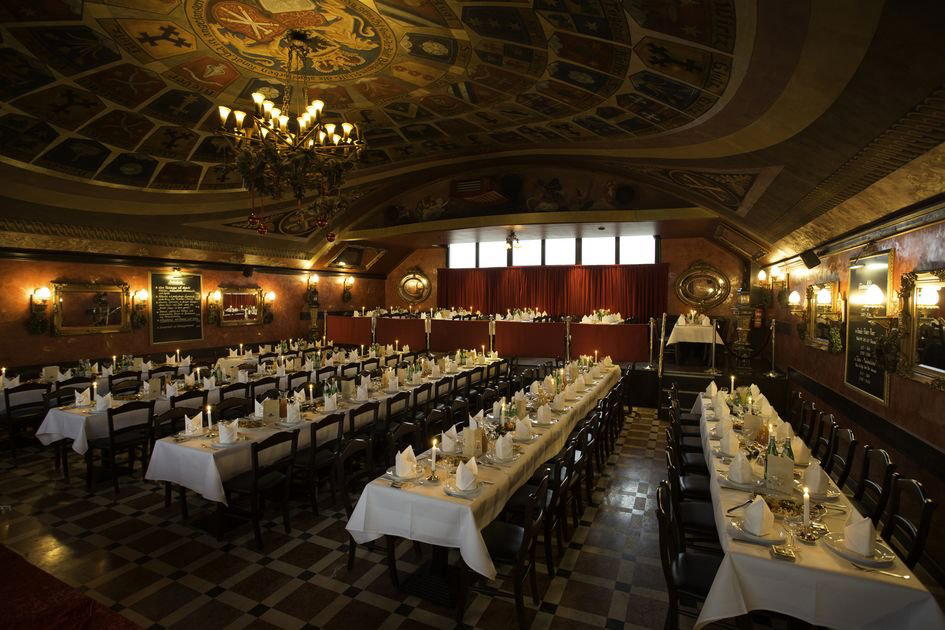
A Railway Arch, a Quiet Street, and What Berlin's Mid-Tier Dining Scene Actually Looks Like
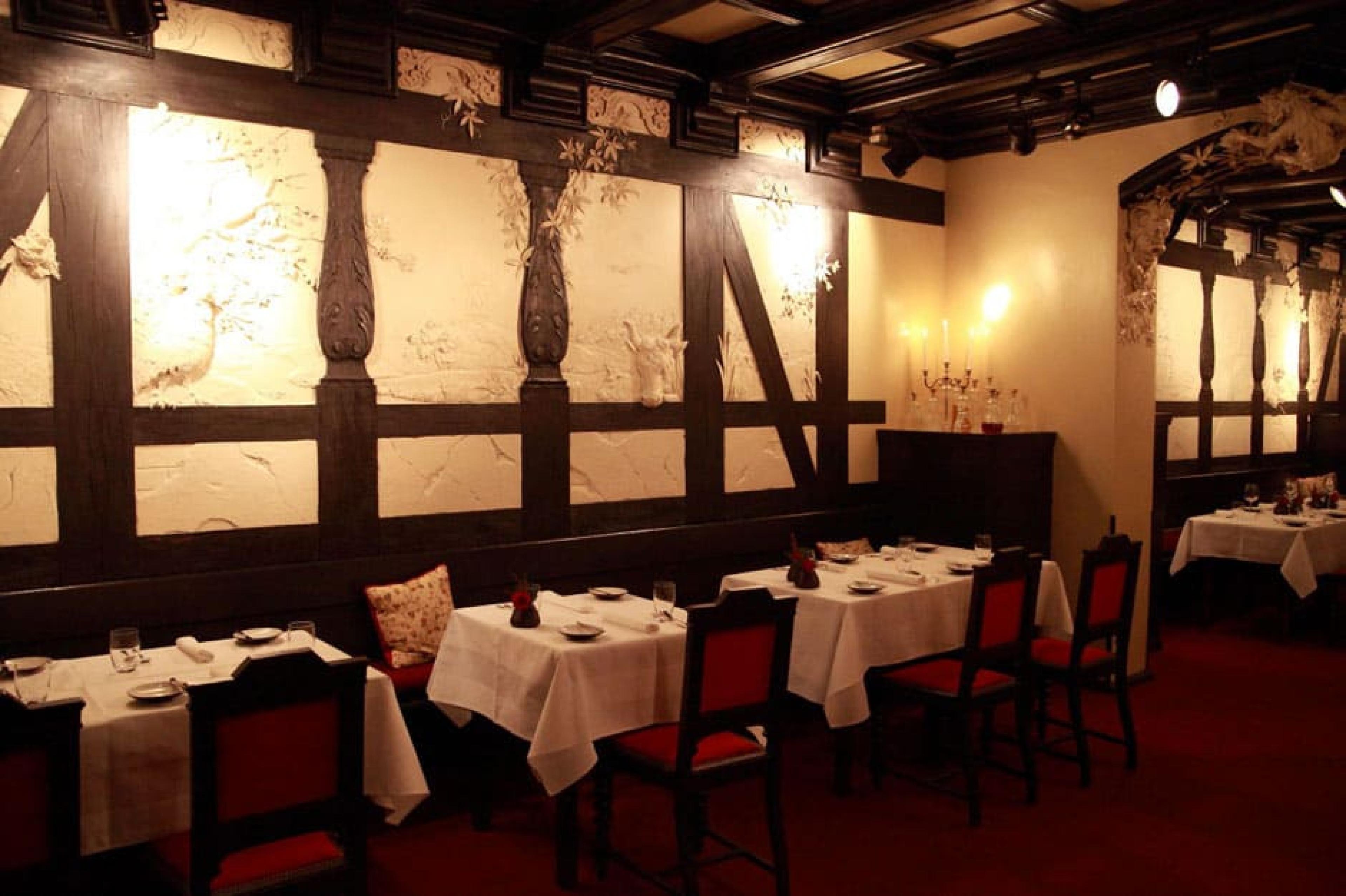
12 Apostel Berlin is a traditional Italian pizzeria in Charlottenburg, Berlin, with casual dress and a recommended-reservation policy. Bleibtreustraße in Charlottenburg is the kind of street that doesn't perform. It runs through a neighbourhood built for residents rather than visitors, where the restaurants exist because people live nearby and eat out regularly, not because a travel article sent them. 12 Apostel Berlin occupies a converted railway arch along this stretch, and the physical setting communicates something before any menu arrives: the vaulted brick ceiling, the depth of the room pulling back from the street, the particular acoustic quality that arched masonry produces. These are not designed effects in the contemporary sense. They are inherited from a structure built for another purpose, and that inheritance shapes the atmosphere more than any interior scheme could.
This matters because Berlin's dining scene has always had a complicated relationship with deliberate atmosphere. The city's most discussed restaurants in recent years, places like Nobelhart & Schmutzig with its strict locavore brief, or CODA Dessert Dining with its counter-format dessert-led tasting menu, tend to wear their concepts visibly. The atmosphere is part of the argument. A venue in a railway arch on a residential street in the west of the city is making a different kind of argument, one about continuity and neighbourhood function rather than conceptual rupture.
Where Charlottenburg Sits in Berlin's Restaurant Geography
Berlin's restaurant geography has shifted significantly over the past two decades. The concentration of critical attention and Michelin recognition has moved eastward and southward, toward Mitte, Kreuzberg, and the areas around the canal. FACIL, operating inside the Mandala Hotel in Potsdamer Platz, and Rutz in Mitte represent the kind of contemporary European fine dining that now clusters in those zones. Restaurant Tim Raue, near Checkpoint Charlie, has built an international profile that pulls diners specifically to its Kreuzberg address.
Charlottenburg predates all of that as a dining district. It was the prosperous western heart of the divided city, where restaurants served an established bourgeois clientele rather than the post-reunification creative influx that energised the east. That history is still present in the neighbourhood's texture: wider pavements, older buildings in better repair, a pace that doesn't accelerate in the evenings the way Mitte does. A venue like 12 Apostel fits that texture. It is not positioned against the high-concept east-side tier. It belongs to a different, older pattern of Berlin eating out.
The Sustainability Question in Mid-Market European Dining
The conversation about ethical sourcing and environmental responsibility in European restaurants has largely played out at the summit of the market, where the economics allow for direct producer relationships and waste-reduction infrastructure. The more interesting question is how those principles translate into mid-market and neighbourhood dining, where margins are tighter and the customer base is local rather than international.
Berlin has been a testing ground for this. Nobelhart & Schmutzig built an entire identity around sourcing exclusively from Brandenburg producers, a commitment that functions as both an ethical position and a culinary constraint. That model is well-documented and has influenced how other Berlin kitchens talk about their supply chains. But it operates at a price point and with a level of public attention that is not representative of most Berlin restaurants.
For a neighbourhood restaurant in Charlottenburg, the sustainability question is less visible and more structural. The decision to source regionally, to manage portion sizes in ways that reduce waste, or to maintain a menu that changes with availability rather than imposing year-round consistency on seasonal ingredients: these are operational choices that don't necessarily appear in the marketing but define what the kitchen actually does. German culinary culture has a longer tradition of seasonal, regional eating than the contemporary sustainability discourse sometimes acknowledges. The question for any restaurant at this level is whether those habits are maintained as ambient practice or consciously articulated as policy.
Across Germany's serious dining tier, from Schwarzwaldstube in Baiersbronn to Aqua in Wolfsburg, the sourcing conversation has become more explicit in recent years, with producers named on menus and provenance information provided as standard. That shift has filtered down through the market. The address on Bleibtreustraße places 12 Apostel in a neighbourhood where that kind of transparency is increasingly expected by a well-travelled, well-informed local clientele.
Planning a Visit: What the Address Tells You
Bleibtreustraße 49 is in western Charlottenburg, within walking distance of the Savignyplatz S-Bahn station, which puts it on a direct rail connection to the central city. The street is compact and largely residential, which means the area around the restaurant is quiet in the evenings rather than activated by foot traffic. That suits a certain kind of dining occasion: the deliberate booking rather than the spontaneous walk-in, the meal that is its own destination rather than part of a broader evening circuit.
Travellers building a Berlin itinerary around the city's serious restaurant tier will find that frequently discussed addresses are concentrated elsewhere. Outside Berlin, the German fine-dining circuit includes addresses like JAN in Munich, Vendôme in Bergisch Gladbach, ES:SENZ in Grassau, Victor's Fine Dining by Christian Bau in Perl, Waldhotel Sonnora in Dreis, Restaurant Haerlin in Hamburg, Schanz in Piesport, and Bagatelle in Trier. For international comparison points in the neighbourhood-anchor category, Le Bernardin in New York City and Atomix in New York City represent different but instructive models of how a strong address can define a restaurant's positioning.
What It’s Closest To
Comparable venues nearby, for context on price, style, and recognition.
| Venue | Cuisine | Price | Notes |
|---|---|---|---|
| 12 Apostel BerlinThis venue — the venue you are viewing | Traditional Italian Pizzeria | $$ | Not listed |
| Trattoria Senza | Gluten- & Lactose-Free Italian Trattoria | $$ | Mitte |
| Pasta & Vino | Authentic Italian Pasta & Antipasti | $$ | Prenzlauer Berg |
| Bäckspace Pizza | Sourdough Pizza | $$ | Weissensee |
| CRUST Pizza | Neapolitan Pizza | $$ | Mitte |
| Zola | Neapolitan Pizza | $$ | Kreuzberg |
Continue exploring
More in Berlin
Restaurants in Berlin
Browse all →
Bars in Berlin
Browse all →
Hotels in Berlin
Browse all →

At a Glance
- Classic
- Romantic
- Cozy
- Elegant
- Date Night
- Business Dinner
- Group Dining
- Casual Hangout
- Family
- Open Kitchen
- Terrace
- Historic Building
- Standalone
- Beer Program
Current opening hours
- Monday
- 4–11 PM
- Tuesday
- 4–11 PM
- Wednesday
- 4–11 PM
- Thursday
- 4–11 PM
- Friday
- 4–11 PM
- Saturday
- 4–11 PM
- Sunday
- 4–11 PM
Hours can change for holidays and private events. Last verified .
Warm and inviting with Italian frescoes, marble floors, and a retractable roof conservatory that transforms into a summer terrace; located under historic S-Bahn arches with large dining room and winter garden.