Staudacherhof

1 Michelin Key
A century-old family property in Garmisch-Partenkirchen that has grown well beyond its bed-and-breakfast origins into a 49-room mountain retreat with three distinct room styles, a serious wellness program, and a restaurant that moves between Bavarian classics and Ayurveda-influenced cooking. At around $170 per night, it sits in a mid-luxury bracket that the Alpine lodge format rarely occupies with this much stylistic range.

Pearl is the En Primeur Club membership app — saves, bookings, and concierge access live there. Same editors, same standards.
- Address
- Höllentalstraße 48, 82467 Garmisch-Partenkirchen
- Phone
- +49 8821 9290
- Website
- staudacherhof.de
- Directions
- Get directions
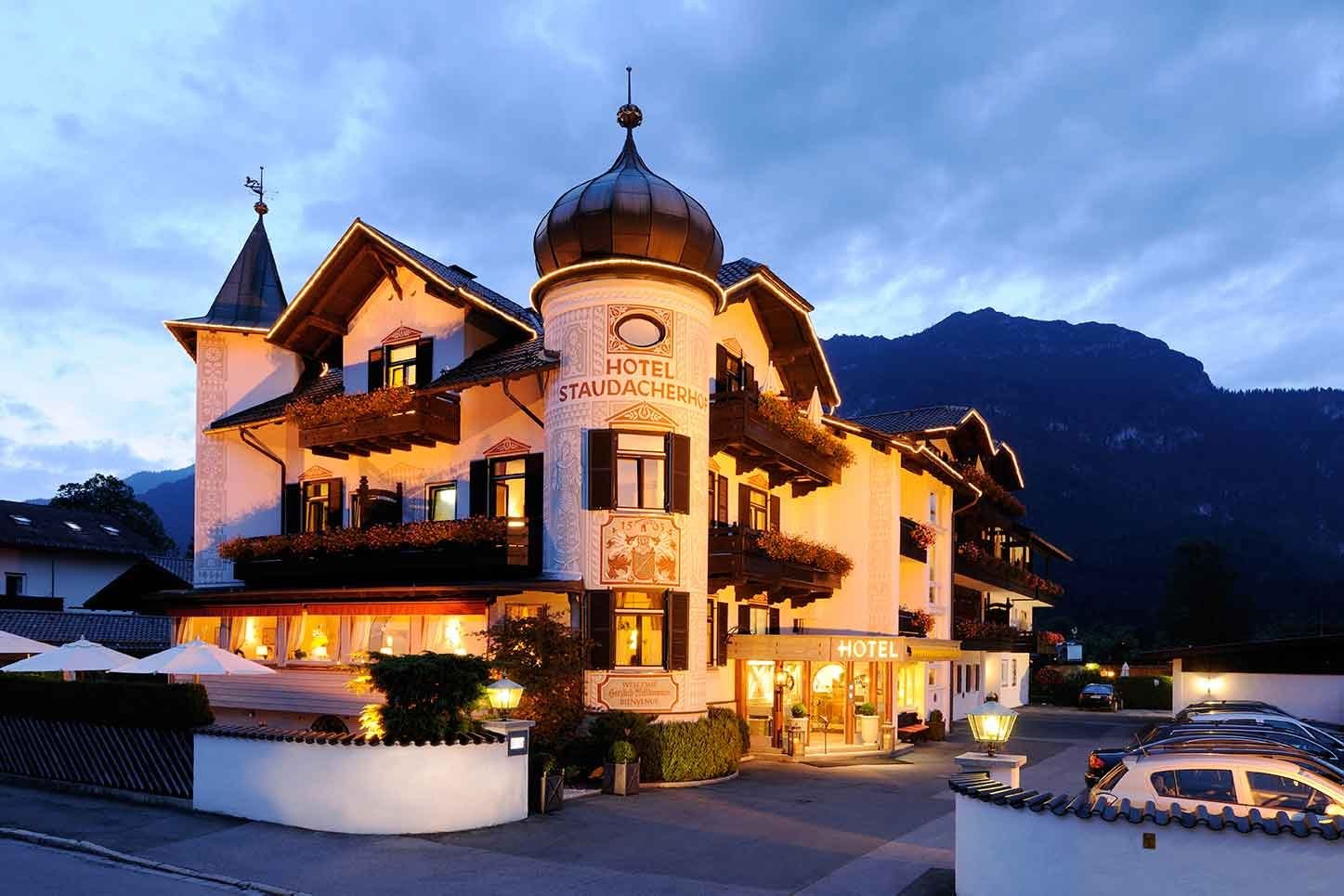
Where the Bavarian Lodge Format Earns Its Credibility
Approach Staudacherhof along Höllentalstraße and the setting does most of the argumentative work. The Zugspitze and its satellite peaks frame the horizon the way they do in old tourist posters, except here the scale is immediate rather than decorative. Garmisch-Partenkirchen has been receiving mountain travelers for generations, and the accumulated infrastructure of that tradition — the trails, the ski lifts, the après-culture — makes it one of the more self-sufficient Alpine destinations in Germany. A property that has operated here for roughly a century is not trading on novelty; it is trading on depth.
The Bavarian mountain lodge as a hospitality category has an image problem in some quarters: heavy timber, heavy food, and a kind of costumed regionalism that can feel preserved rather than lived-in. What makes the better properties in this part of the Alps worth attention is how they have absorbed that tradition and then quietly expanded it. Staudacherhof, which began as a family bed and breakfast around 100 years ago and remains in the same family, is among the cleaner examples of that evolution. The property has not abandoned its origins, but it has not allowed them to calcify either.
Three Room Idioms Under One Roof
Across its 49 rooms and suites, Staudacherhof operates in three stylistic registers simultaneously, which is an unusual decision for a property of this scale and one that repays attention. Some rooms read as delicately traditional, with the kind of craftsmanship and material palette that the region has refined over centuries. Others take a modern-rustic approach, bare knotted wood, structural honesty, a certain deliberate roughness in the finish. A third group moves into something closer to modernism, though the materials used remain anchored in local Alpine practice.
The logic behind this range is guest self-selection rather than indecision. Travelers arriving in Garmisch-Partenkirchen now include a wide spectrum of tastes, from those seeking full immersion in regional aesthetic codes to those who want the mountain context without the decorative weight. For comparable approaches to stylistic range in German mountain hospitality, Das Kranzbach Hotel & Wellness Retreat in Kranzbach and Schloss Elmau Luxury Spa Retreat & Cultural Hideaway in Elmau operate in roughly the same geographic zone with their own distinct takes on the problem. Locally, Das Graseck Mountain Hideaway & Healthcare and Werdenfelserei represent the Garmisch-Partenkirchen alternatives worth weighing before committing.
Regardless of which idiom a room falls into, the consistent thread is space and a hardy kind of comfort. These are not rooms designed for miniaturized urban efficiency; they are scaled for the physical reality of mountain days, when guests return with wet gear and spent legs and need room to recover. At around $170 per night, the property sits at a mid-luxury price point that undercuts the leading bracket occupied by properties like Kempinski Hotel Berchtesgaden while still delivering materially more than budget Alpine accommodation.
A Wellness Program That Goes Beyond the Sauna
German Alpine hospitality has long associated itself with Kur culture, the therapeutic tradition that gave the country its network of spa towns and wellness resorts. What has changed in recent decades is the vocabulary. The expectation is no longer a single sauna and a plunge pool; it is a layered program covering beauty treatments, body work, active programming, and increasingly, systems imported from outside the European tradition altogether.
Staudacherhof's wellness offering reflects that expansion. The program covers spa and beauty treatments, Ayurveda, and a range of active pursuits including hiking, biking, and skiing. The Ayurvedic component places it alongside a broader German wellness movement that has imported South Asian therapeutic traditions into Alpine settings with considerable seriousness, a pattern visible at properties like Luisenhöhe in Horben and, in different form, at Hotel Bareiss in Baiersbronn. The active programming is simply a function of location: Garmisch-Partenkirchen's trail network and ski infrastructure are among the most developed in Germany, and a property that did not connect guests to that infrastructure would be leaving its primary asset unused.
The service philosophy that runs through the wellness offer is anticipatory rather than reactive. Mountain hospitality at its finest operates on the understanding that guests often do not know exactly what they need until they arrive depleted and altitude-adjusted. Properties that staff and program around that reality, offering structured options without pressuring guests into them, tend to generate stronger return rates than those operating on a request-only model.
The Restaurant: Schnitzel and Something Considerably Less Expected
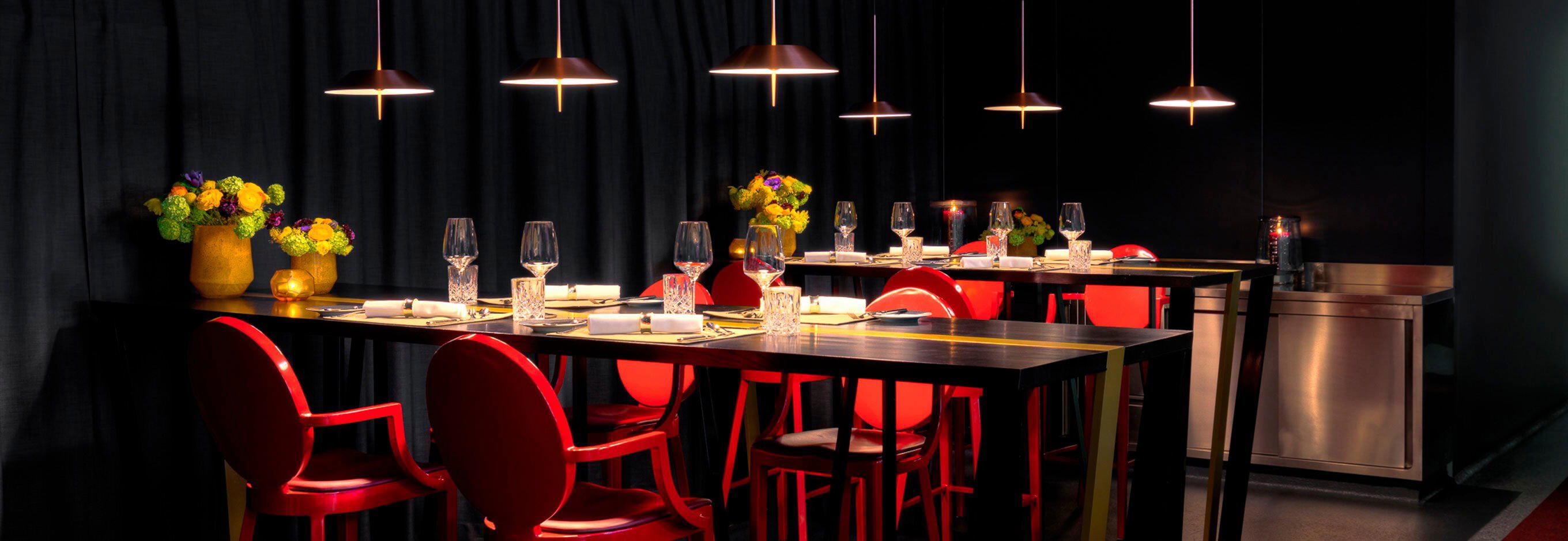
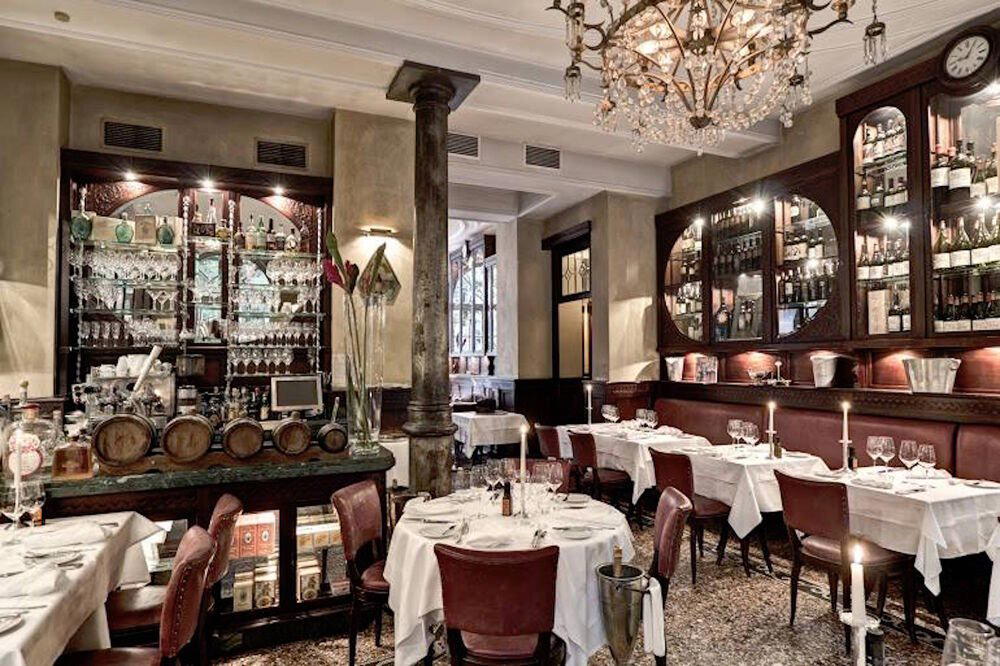
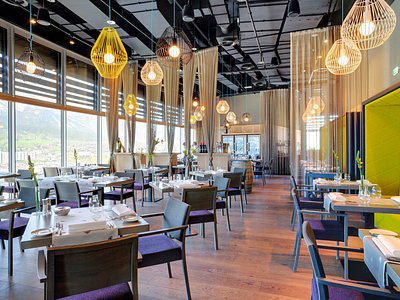
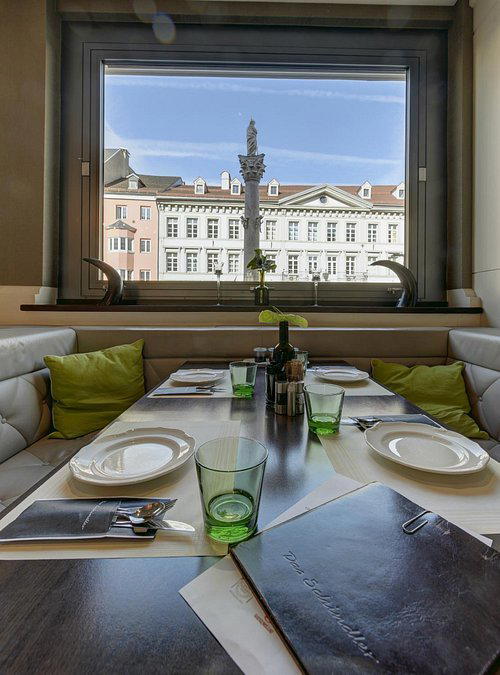
German Alpine restaurant programs have historically been easy to summarize: pork preparations, dumplings, hearty broths, and enough caloric density to support a full day on the mountain. The category has real integrity when executed with good sourcing and craft, and Staudacherhof's kitchen does not abandon it. Schnitzel appears on the menu as a direct acknowledgment of where and what the property is.
What is less expected is the health-conscious, Eastern-influenced cooking the property describes as "Bayurvedic", a portmanteau that signals a genuine attempt at synthesis rather than mere novelty. The term points to dishes that draw on Ayurvedic principles (digestive balance, seasonal ingredients, lighter preparations) while staying grounded in Bavarian produce and context. It is an unusual editorial decision for a property of this type, and it extends the kitchen's reach to guests who might otherwise find Alpine restaurant menus limiting. The pairing of both traditions on the same menu means the restaurant can serve a guest recovering from a ski injury on a prescribed diet alongside a table of locals ordering by muscle memory. That range requires more of a kitchen than a single-idiom menu does.
For a broader survey of where to eat in the area, our full Garmisch-Partenkirchen restaurants guide covers the scene in more detail. Elsewhere in Germany, properties with similarly ambitious food programs include Althoff Seehotel Überfahrt in Rottach-Egern and Der Öschberghof in Donaueschingen.
Planning Your Stay
Garmisch-Partenkirchen is reachable by direct train from Munich in roughly 90 minutes, making it accessible as a short break from the city, a pattern that Mandarin Oriental Munich guests frequently follow. Staudacherhof's address at Höllentalstraße 48 places it within reach of the town center while remaining oriented toward the mountain approaches. At $170 per night across 49 rooms, the property books steadily through ski season (December through March) and the summer hiking peak (July and August), so advance reservation is advisable for both windows. Shoulder months, particularly May and October, offer the property at its quietest and often at its most atmospheric, when the trails are clear and the cable cars running without peak-season queues.
For travelers building a longer German itinerary, the property fits naturally between a city stay in Munich and further Alpine exploration. Other German properties worth considering for an extended route include Gut Steinbach Hotel Chalets Spa in Reit im Winkl, Fairmont Hotel Vier Jahreszeiten in Hamburg, Hotel de Rome in Berlin, Excelsior Hotel Ernst in Cologne, Bülow Palais in Dresden, Breidenbacher Hof Düsseldorf, Esplanade Saarbrücken, LA MAISON in Saarlouis, Hotel Ketschauer Hof in Deidesheim, BUDERSAND Hotel in Hörnum, and Landhaus Stricker in Sylt. For international reference points on what a long-standing family property can achieve at high price brackets, The Fifth Avenue Hotel in New York City, Aman New York, and Aman Venice are useful calibration points.
Where It Fits
Comparable venues nearby, for context on price, style, and recognition.
| Venue | Cuisine | Price | Awards | Notes |
|---|---|---|---|---|
| StaudacherhofThis venue — the venue you are viewing | Family-run wellness residence blending tradition and modern luxury | Not listed | 1 Michelin Key | Not listed |
| Das Graseck Mountain Hideaway & Healthcare | Modern Alpine luxury hideaway | Not listed | 1 Michelin Key | Garmisch-Partenkirchen |
| Werdenfelserei | Modern Bavarian chalet with sustainable solid wood construction | $200–300 | 1 Michelin Key | Garmisch-Partenkirchen |
| Das Rübezahl | Alpine boutique wellness hotel | $200–300 | 1 Michelin Key | Schwangau |
| Hanusel Hof | Modern Alpine on historic farmstead | $200–300 | 1 Michelin Key | Hellengerst |
| Hotel Restaurant Spa Torkel | Modern building with rustic-chic extensions | Not listed | 1 Michelin Key | Nonnenhorn |
Recognition history
Dated appearances from independent guides and award organizations, with the underlying list record or original source where available.
Michelin 1 Key
Michelin
Continue exploring
More in Garmisch-Partenkirchen
Hotels in Garmisch-Partenkirchen
Browse all →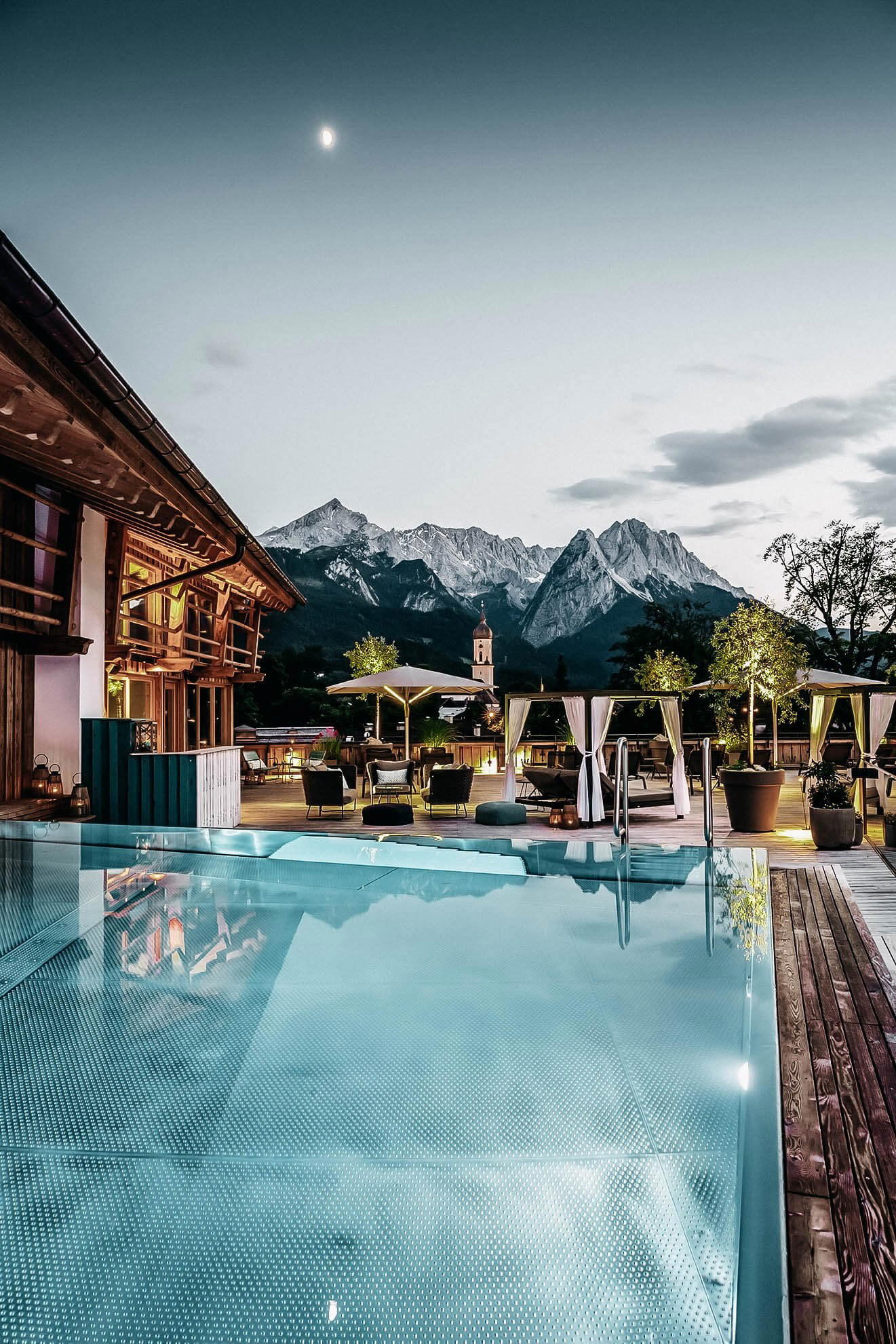
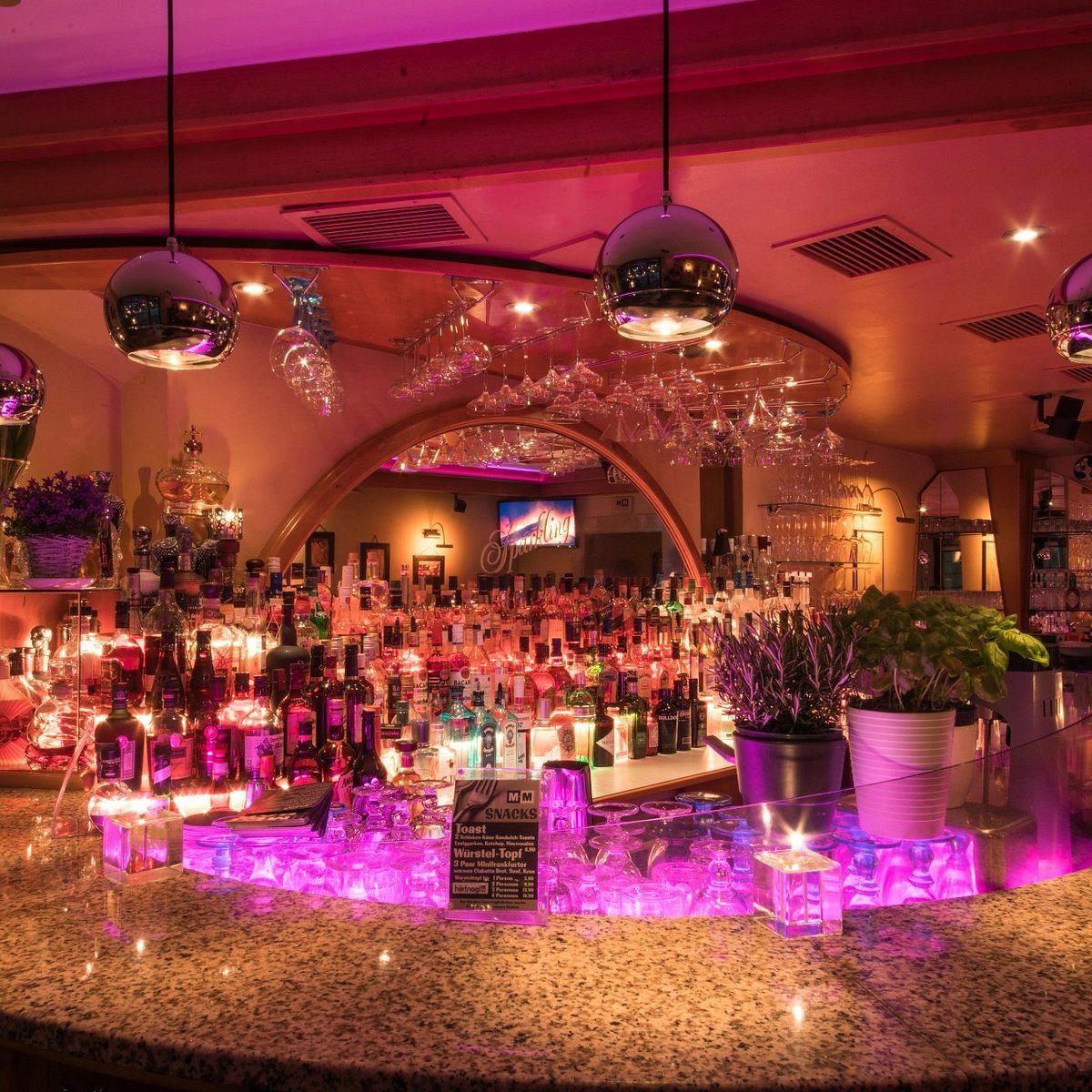
Bars in Garmisch-Partenkirchen
Browse all →
Restaurants in Garmisch-Partenkirchen
Browse all →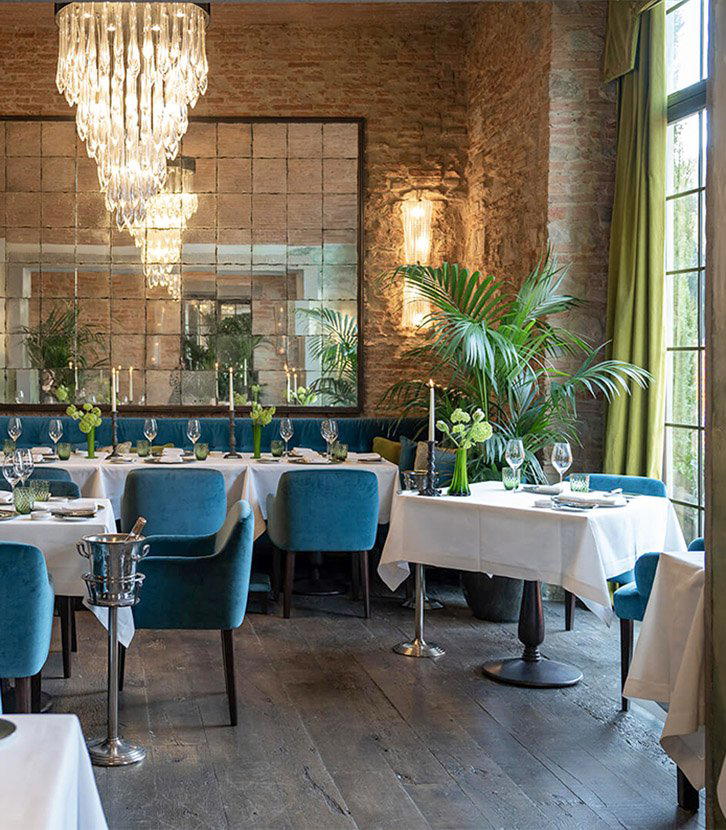
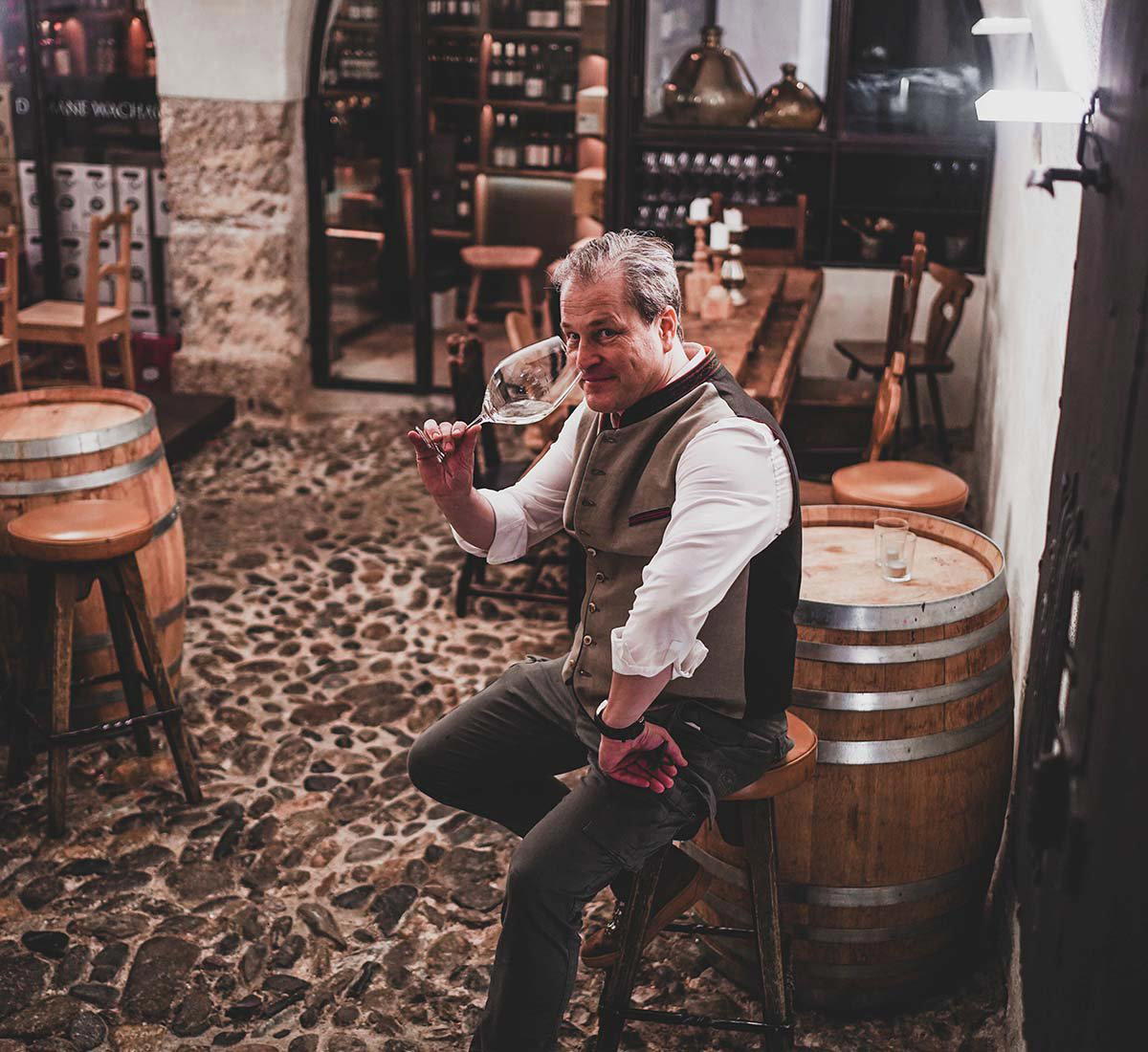
Wineries in Garmisch-Partenkirchen
Browse all →
Details
- Cozy
- Scenic
- Quiet
- Rustic
- Romantic
- Romantic Getaway
- Wellness Retreat
- Weekend Escape
- Panoramic View
- Terrace
- Wi Fi
- Pool
- Spa
- Sauna
- Fitness Center
- Room Service
- Concierge
- Mountain
Warm, welcoming family atmosphere with relaxing spa lighting, cozy bar, and serene mountain surroundings praised for tranquility.