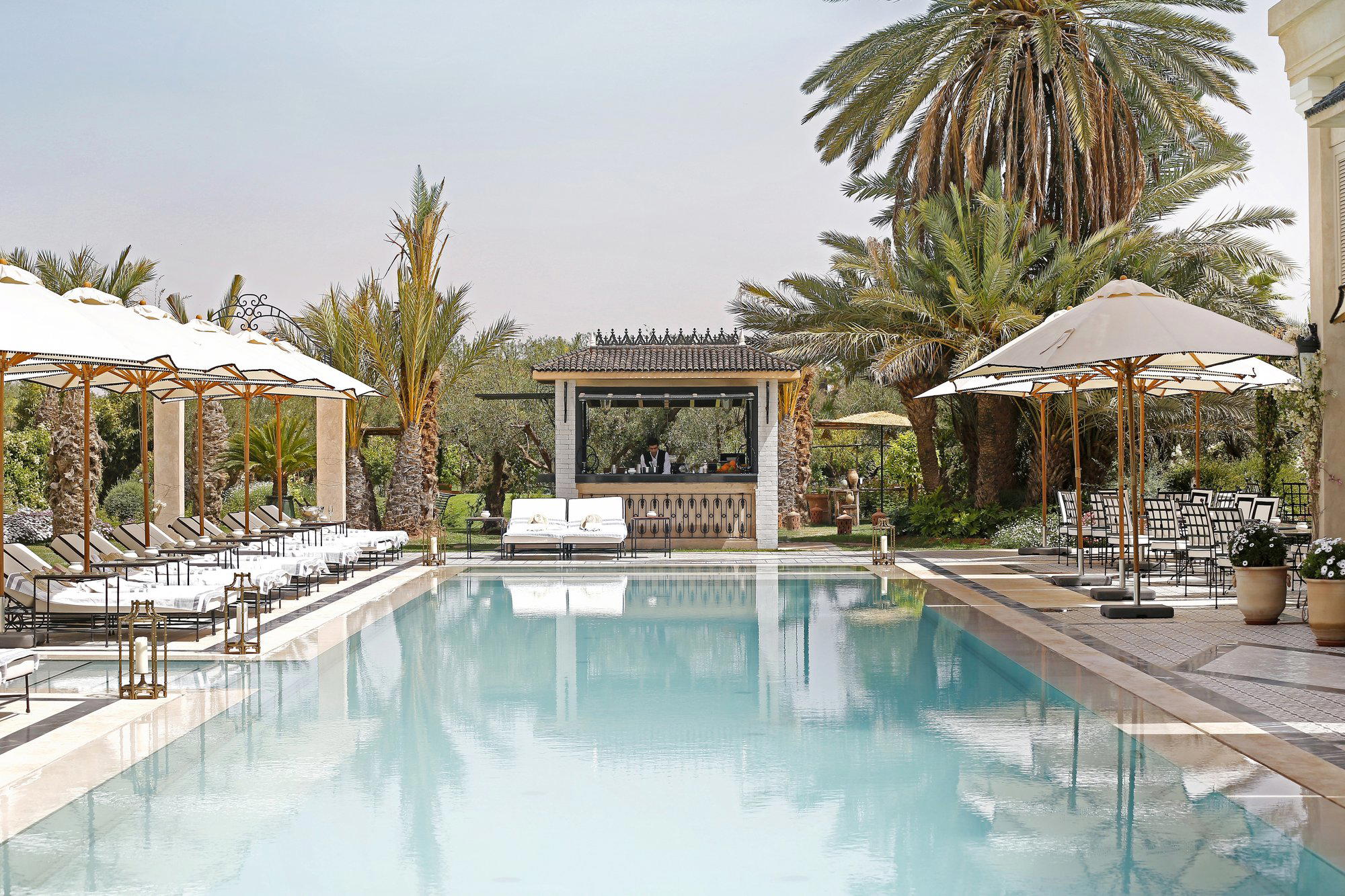
On the southern edge of Marrakech, Palais Namaskar occupies a scale of property rare for the city: a palatial retreat built around water, garden, and deliberate stillness. The architecture draws on Moroccan and Asian influences to frame a spa and wellness offer that positions it well outside the medina's hectic orbit. For travellers whose priority is restoration over immersion in the souks, it represents a distinct option.
Pearl is the En Primeur Club membership app — saves, bookings, and concierge access live there. Same editors, same standards.
- Address
- Route de Bab Atlas, No.88/69, Province Syba، 40000, Morocco
- Phone
- +212 5242 99800
- Website
- palaisnamaskar.com
- Directions
- Get directions
 Saves & bookings on Pearl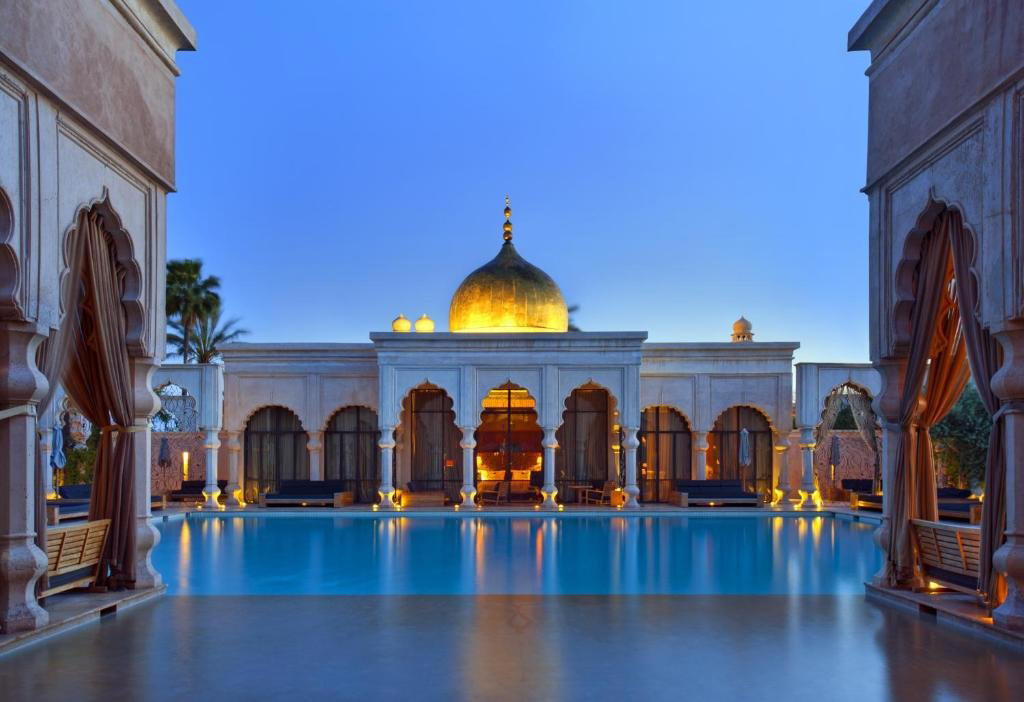
Where Marrakech Ends and the Retreat Begins
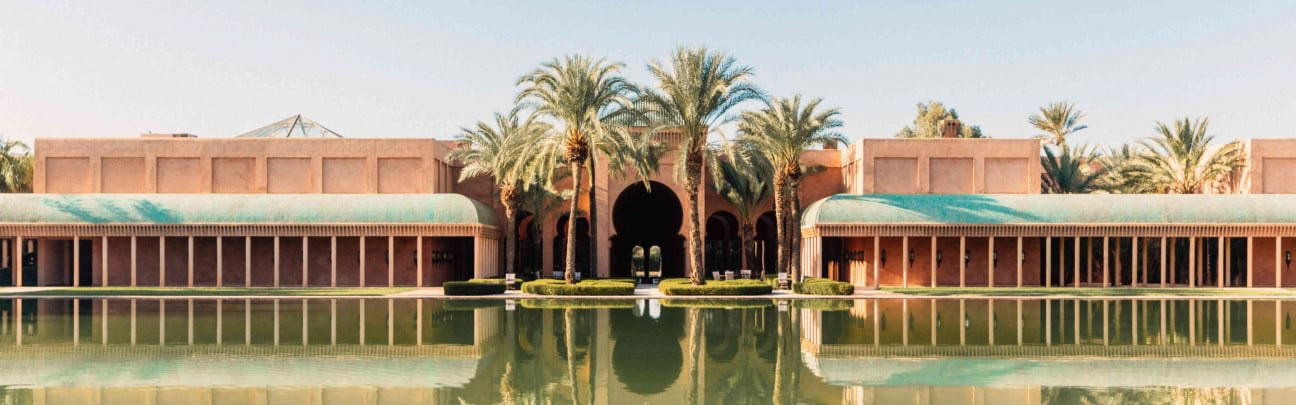
The road south from Marrakech's medina changes character quickly. Jemaa el-Fna's concentrated noise gives way to the Palmeraie fringe, then to quieter agricultural land where the Atlas Mountains claim the horizon. Palais Namaskar sits in this transitional zone, on Route de Bab Atlas, and the address is instructive: the property was conceived at a remove from the city rather than inside it. Arriving, the first register is scale. Long reflective pools, mature palms, and a pavilion architecture drawn from both Moroccan palace tradition and broader South and East Asian design vocabulary announce that the dominant language here is retreat, not medina immersion.
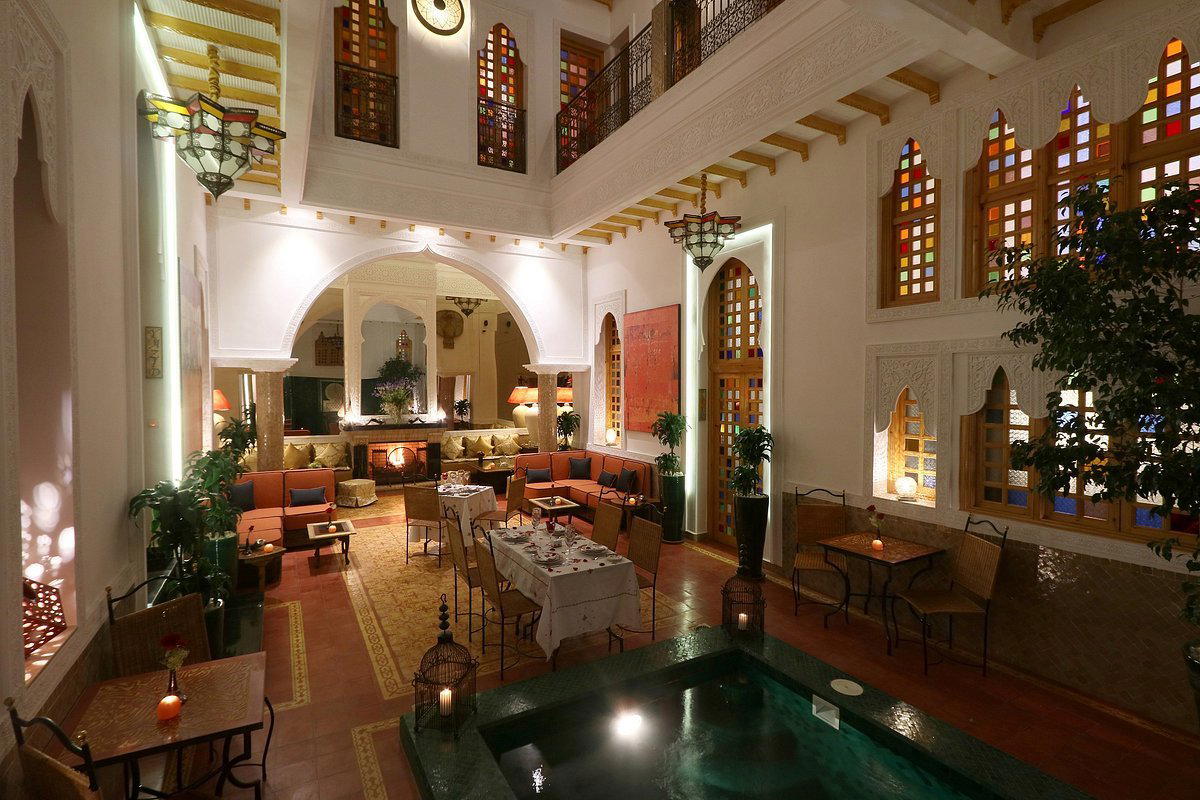
Marrakech has split into two broad hospitality categories over the past decade. One cohort clusters in the medina — riads of eight to fourteen rooms, dense with zellige tilework, sound-carrying courtyards, and immediate proximity to the souks. Properties like AnaYela, Dar Housnia, Dar Les Cigognes, and Dar Rhizlane belong to that category — architecturally intimate, culturally saturated. The other cohort sits beyond the medina walls, trading neighbourhood density for space, silence, and the kind of amenity programming that requires acreage. Palais Namaskar belongs to the second group, and within it, the wellness proposition is its clearest differentiator.
The Spa as Centrepiece
Wellness tourism in Morocco has historically traded on hammam ritual, the kessa scrub, black soap, and steam room sequence that Moroccan culture has maintained for centuries. The better riad properties, including Hotel La Maison Arabe, have long offered this in polished form. Palais Namaskar operates from a different premise: the hammam is present but the programming reaches considerably further, drawing on Asian bodywork traditions alongside North African ritual. This cross-cultural wellness format has become a recognised category in its own right at the higher end of the market, and Palais Namaskar is one of the properties that established it in Marrakech rather than following a trend already set elsewhere.
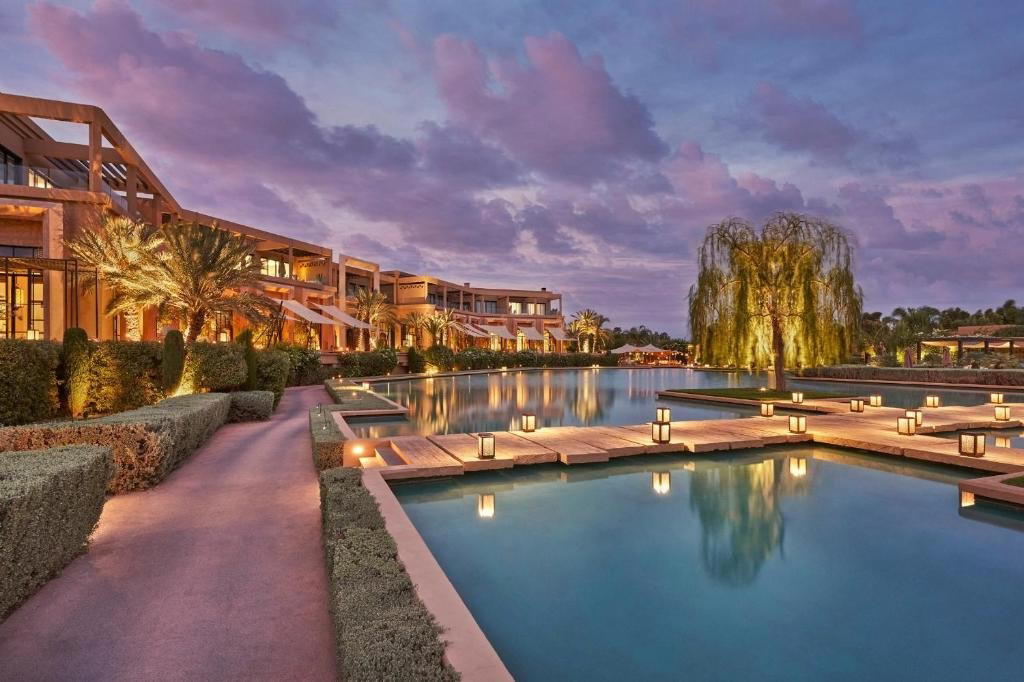
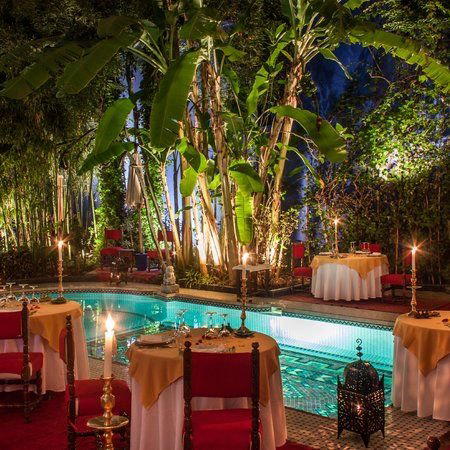
The physical scale of the spa operation is relevant context. Properties with serious wellness ambitions require treatment room depth, dedicated thermal circuits, and outdoor hydrotherapy or pool access that small riad footprints cannot accommodate. Palais Namaskar's garden compound resolves that constraint. The water elements, which include multiple pools integrated across the grounds, function both aesthetically and practically as part of the thermal and relaxation sequence. That integration of landscape and wellness infrastructure is more common in Bali, the Maldives, or the Aman circuit than in Morocco, and it places the property in a peer conversation that extends beyond the city.
For travellers who benchmark against properties like Aman New York or Aman Venice in terms of spa depth and spatial generosity, Palais Namaskar operates in a recognisable register, though it carries a distinct Moroccan material palette throughout.
Architecture, Gardens, and the Logic of Stillness
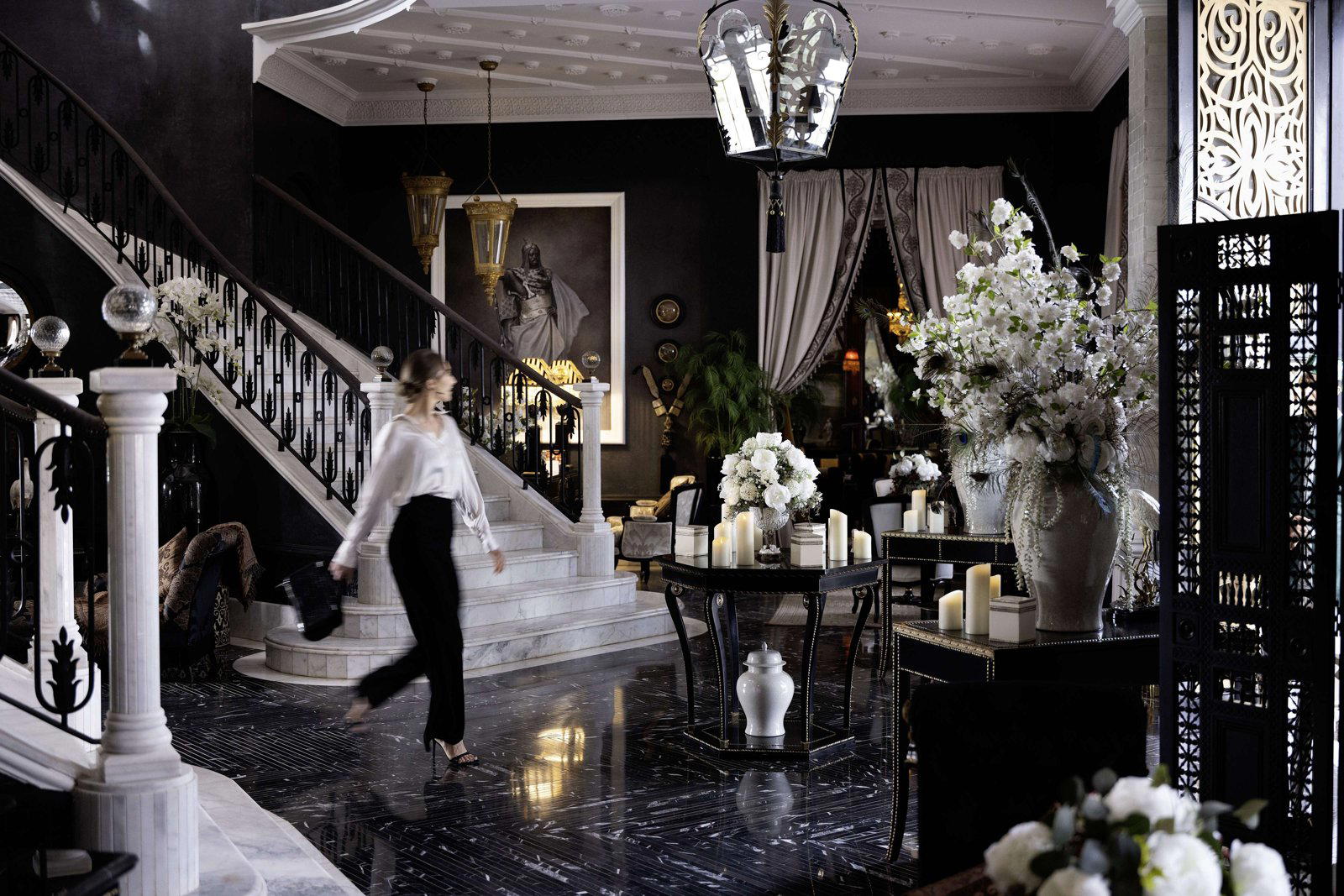
Moroccan palace architecture has a specific grammar: enclosed courtyards that buffer external noise, water features that establish acoustic calm, and a progression of threshold spaces that slow arrival. Palais Namaskar uses these conventions but extends them with a scale of garden that most Marrakech properties cannot match. The grounds function as a buffer, and that buffering is the point. The Atlas Mountain backdrop, visible on clear days, provides the kind of orientating landscape that spa designers in mountain resort contexts spend considerable effort recreating artificially. Here it is structural.
The architectural blend of Moroccan and Asian references is not merely aesthetic. It signals the wellness programming logic: the property operates as a synthesis rather than a strict regional expression. In a city where medina-based properties like Es Saadi Palace offer strong Moroccan identity as the primary draw, Palais Namaskar differentiates through cosmopolitan retreat programming. Both are legitimate editorial positions; they serve different traveller priorities.
Beyond Marrakech: Morocco's Broader Retreat Circuit
Travellers building a wellness-led Moroccan itinerary have a wider circuit to consider. In Fez, Hotel Sahrai and Hotel Sahrai in Fez offer a medina-edge positioning with design credibility. The Atlantic coast brings its own register: Hilton Taghazout Bay Beach Resort and Spa in Taghazout and Banyan Tree Tamouda Bay in Fnideq anchor a coastal wellness tier that pairs ocean setting with branded spa programming. Further south, Dar Ahlam in Ouarzazate and Dar al Hossoun in Taroudant represent the desert-edge retreat format, where isolation is itself the wellness mechanism. Dar Maya in Essaouira adds an Atlantic wind-swept option for those whose restoration comes from cooler, open-sky environments.
Within Marrakech itself, the wilderness-adjacent option is INARA CAMP, which takes a different approach to retreat: minimal structure, outdoor living, and proximity to nature rather than spa infrastructure. The BELDI COUNTRY CLUB occupies a middle position, with garden acreage and artisanal character that attracts a slower, more domestic pace of visitor. Palais Namaskar's particular contribution to this set is the spa-forward, poolside retreat format at palace scale.
Planning Your Stay
The property sits on Route de Bab Atlas, south of the medina, which means medina access requires a vehicle, taxi or hired car. Marrakech Menara Airport is closer to this southern orientation than it is to the medina, making arrival and departure logistics relatively clean for guests who are not planning extensive souk time. The optimal window for spa retreats in Marrakech runs from October through April, when daytime temperatures allow outdoor thermal circuit use comfortably and the city's peak summer heat, which can exceed 40°C in July and August, does not press against the outdoor pool sequence. Spring visits in March and April combine garden bloom, moderate temperature, and pre-summer crowd levels. For broader Marrakech context, dining options, and neighbourhood orientation, the full Marrakech restaurants and hotels guide covers the city's wider hospitality offering. Travellers considering Morocco's northern cities alongside a Marrakech base should note Fairmont Tazi Palace Tangier and Fairmont La Marina Rabat Salé as anchors for a wider circuit, while Hyatt Regency Casablanca covers the commercial capital tier.
Credentials Lens
| Venue | Awards |
|---|---|
| Palais NamaskarThis venue — the venue you are viewing | This venue |
Continue exploring
More in Marrakech
Hotels in Marrakech
Browse all →
Bars in Marrakech
Browse all →
Restaurants in Marrakech
Browse all →
Wineries in Marrakech
Browse all →
At a Glance
- Romantic
- Elegant
- Sophisticated
- Ornate
- Quiet
- Intimate
- Honeymoon
- Romantic Getaway
- Wellness Retreat
- Anniversary
- Infinity Pool
- Private Villa
- Destination Spa
- Garden
- Panoramic View
- Private Dining
- Pool
- Spa
- Wi Fi
- Room Service
- Concierge
- Fitness Center
- Valet Parking
- Kids Club
- Garden
- Pool
- Spa
- Wi Fi
- Room Service
- Concierge
- Fitness Center
- Valet Parking
- Kids Club
Tranquil and majestic with natural light, serene gardens, reflective ponds, and a dreamlike oriental-contemporary fusion.
Know Before You Go
- Getting there
- Route de Bab Atlas, No.88/69, Province Syba، 40000, Morocco