
Nerva Boutique Hotel occupies Via Tor de' Conti in Rome's archaeological core, steps from the Imperial Fora and the Colosseum quarter. The property sits in the smaller, design-attentive tier of Rome's independent hotel market, offering an alternative to the grand-hotel circuit for travellers who want proximity to ancient Rome without the scale of a palace property.
Pearl is the En Primeur Club membership app — saves, bookings, and concierge access live there. Same editors, same standards.
- Address
- Via Tor de' Conti, 3, 00184 Roma RM, Italy
- Phone
- +39 06 678 1835
- Website
- hotelnerva.com
- Directions
- Get directions
 Saves & bookings on Pearl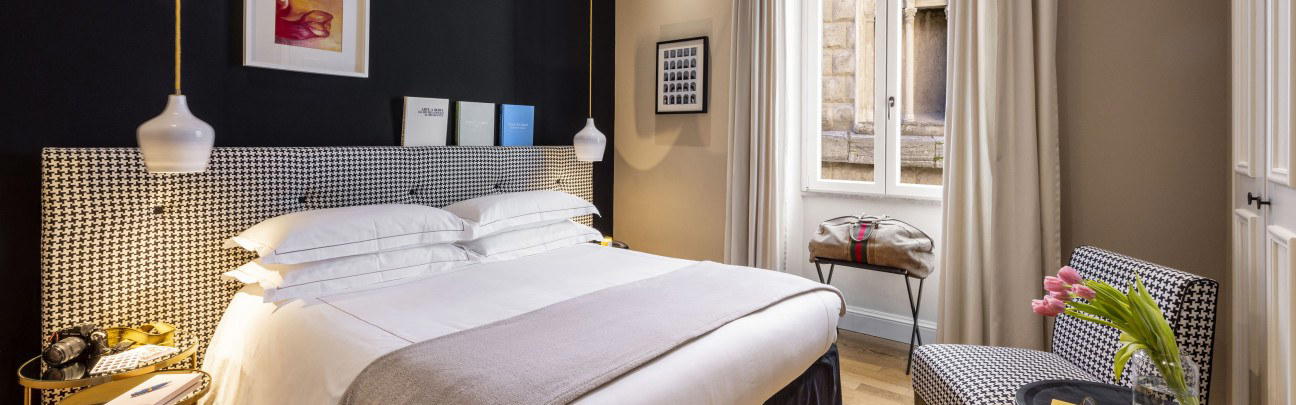
Where Ancient Rome Is the View, Not the Backdrop
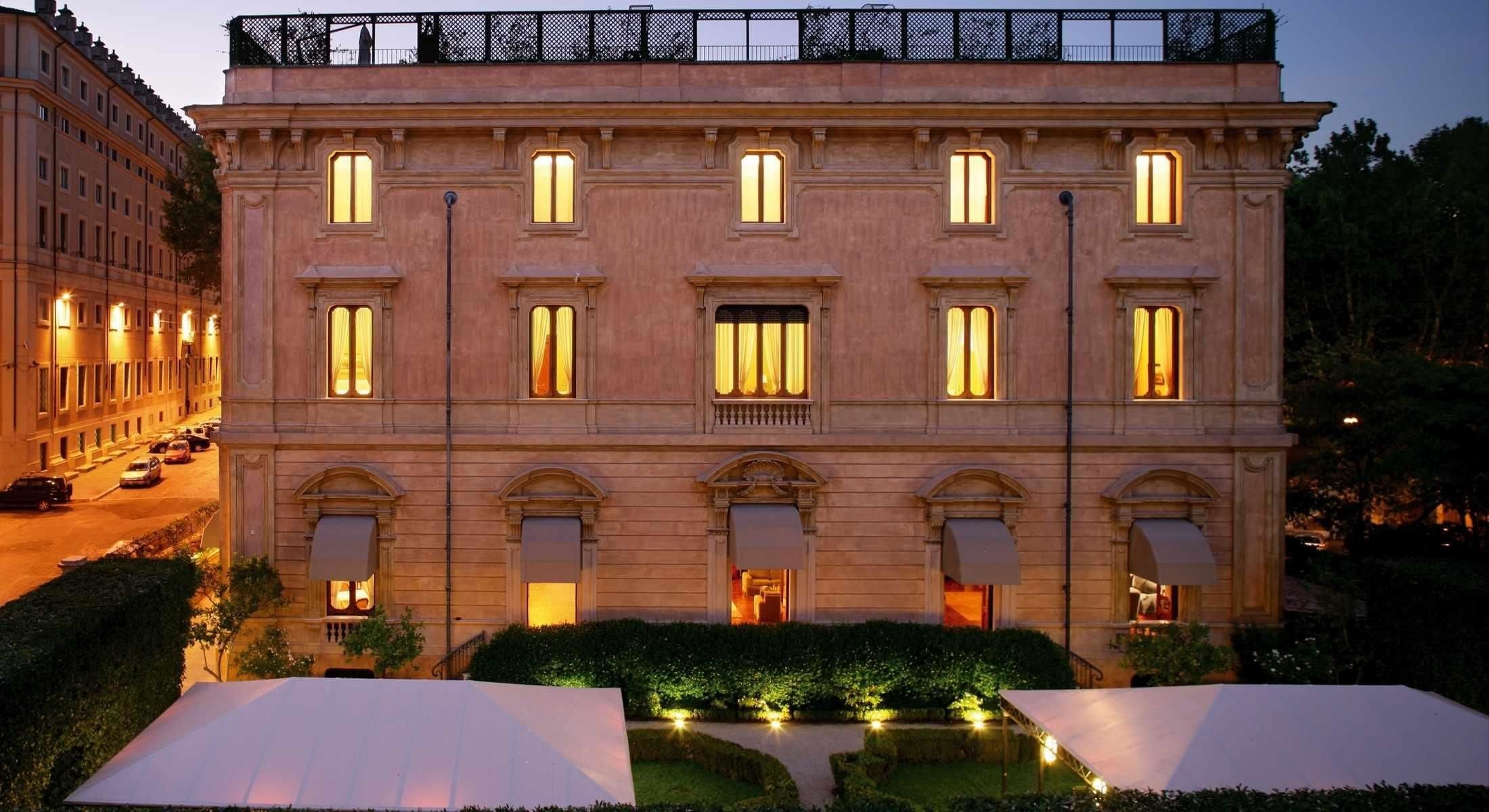
The stretch of Via Tor de' Conti running through Rome's archaeological corridor is one of the city's most quietly loaded addresses. The street takes its name from the medieval tower that still rises above the roofline, and to the south the ruins of Trajan's Market and the Imperial Fora begin their long, open sprawl toward the Colosseum. Hotels in this part of the centro storico occupy a different category from those on Via Veneto or around the Spanish Steps: the trade here is proximity to antiquity itself, and the buildings that house them tend to carry their own layered histories. Nerva Boutique Hotel sits inside that context, positioned at number 3 on a street where the ancient world presses close enough to feel structural rather than decorative. This 3-star hotel has 20 rooms and a nightly rate from USD 195.
The Sensory Geography of the Fora District
Rome's hotel market divides, broadly, into three tiers: the grand palace properties clustered around the historic landmarks and the Pincian Hill (the Hassler Roma, the Hotel Eden), the design-led boutique properties that have multiplied across the centro storico over the past decade (Hotel Vilòn, Maalot Roma, Portrait Roma), and a smaller cohort of independent boutique hotels that operate closer to the archaeological zones. Nerva belongs to that third grouping, where the surrounding urban texture does a significant share of the atmospheric work.
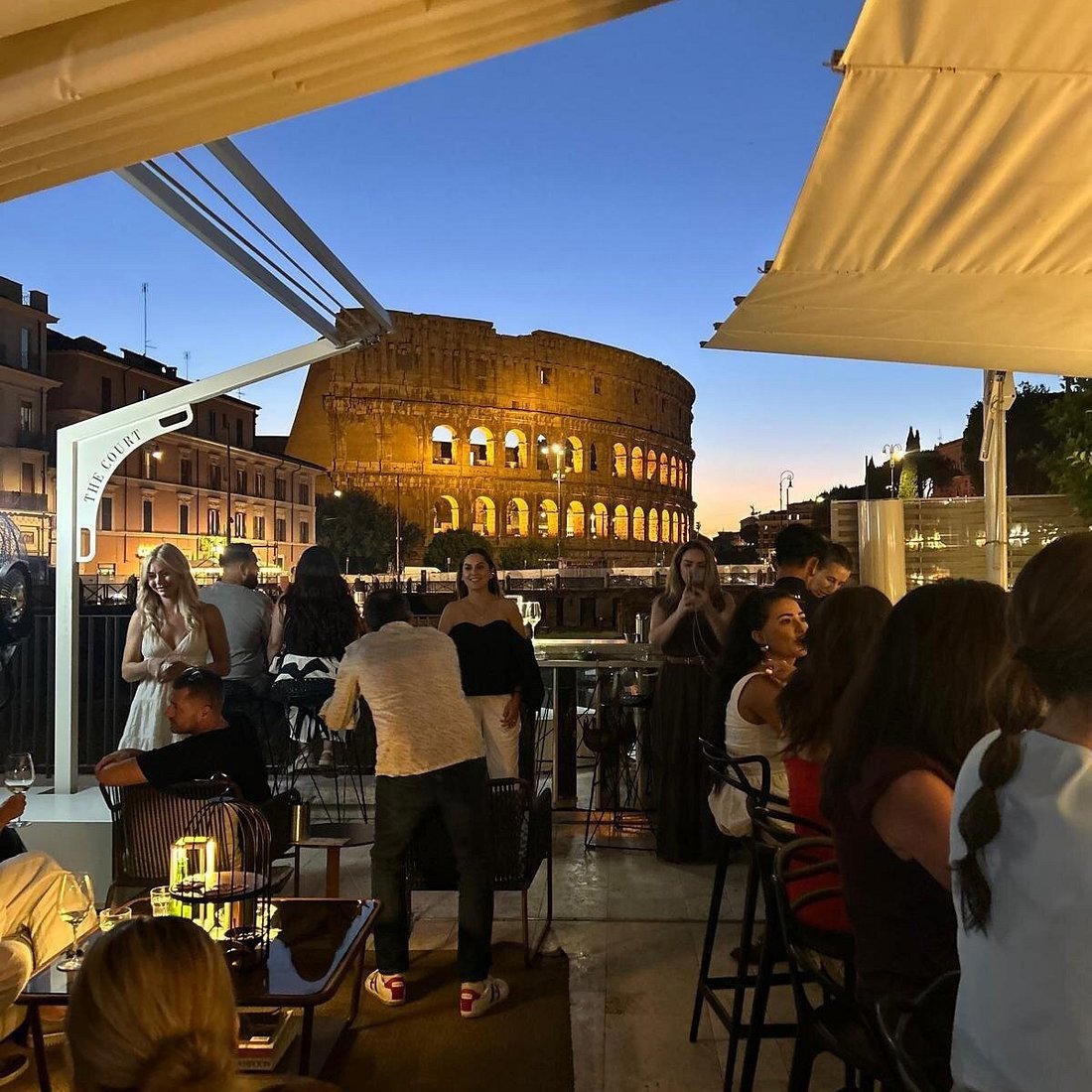
What that means in practice: guests here walk to the Colosseum in minutes, pass beneath the Arch of Titus, and have the Roman Forum on one side and the remains of the Forum of Nerva, the property's namesake, essentially at street level. The sensory character of this neighbourhood is distinct from the Trastevere or Prati hotel experience. Stone, excavated earth, and the particular quality of light that bounces off ancient tufa walls define the approach on foot. In the early morning, before the tour groups converge, the area carries a quiet that feels almost geological. That access to Rome's oldest urban core is the primary reason to position here rather than at a property with a rooftop terrace view of the dome.
What the Boutique Format Means in This Context
Rome's boutique hotel tier has grown substantially since the mid-2010s, with properties like JK Place Roma and Hotel Locarno demonstrating that the city's travellers increasingly want residential scale and specific design identity over the anonymity of larger international brands. The model that has worked leading in this category prioritises a limited room count, a distinct visual language for the interiors, and staff-to-guest ratios that allow for more attentive service than a 200-room operation can deliver. Nerva operates within that format. The building's position in the archaeological zone also means that renovation and construction in this part of Rome face significant oversight from heritage authorities, which tends to produce interiors that reference or at least coexist with the building's existing fabric rather than erasing it.
For comparison, the ultra-luxury end of Rome's independent market, the Bulgari Hotel Roma or the portfolio properties with deep-pocket backing, operates at a different price and service register. Nerva does not compete in that tier. Its comparable set is the character-driven independent, and within that set, location is the differentiating asset.
Rome's Archaeological Zone as a Stay, Not a Day Trip
Travellers who base themselves in the Imperial Fora district tend to approach Rome differently from those staying near the Campo de' Fiori or the Pantheon. The Colosseum and Forum entries are walkable rather than requiring a taxi or metro leg; the Capitoline Museums are close. Monti, Rome's most coherent neighbourhood for evening eating and drinking, sits immediately to the north and west, a short walk uphill through streets that change character rapidly from archaeological site to functioning residential quarter with wine bars, trattorias, and independent shops. This is not a neighbourhood that closes at sunset, and the transition from daytime ruins to early-evening Monti is one of Rome's better sensory sequences.
For those extending a trip across Italy, the broader context is worth noting. A Rome stay in this quartiere pairs logically with properties that offer a comparable emphasis on place and historical fabric: Castello di Reschio in Lisciano Niccone for Umbria, Corte della Maestà in Civita di Bagnoregio for the volcanic tufa towns of northern Lazio, or Rosewood Castiglion Del Bosco in Montalcino for southern Tuscany. Properties like Casa Maria Luigia in Modena and Four Seasons Hotel Firenze in Florence represent the northern end of an Italy itinerary that works well when anchored at this kind of historically embedded southern stop. For coastal contrast, Borgo Santandrea on the Amalfi Coast, Il San Pietro di Positano, and Borgo Egnazia in Savelletri di Fasano offer the clearest counterpoints in climate and setting. Internationally, those who favour the intimate-scale model that Nerva represents will find kindred formats at Aman Venice, Passalacqua in Moltrasio, and JK Place Capri.
Planning Your Stay
The address on Via Tor de' Conti places the hotel within walking distance of Termini (Rome's main rail hub), making it accessible from the airport by Leonardo Express without needing a taxi. The neighbourhood is served by bus lines along Via dei Fori Imperiali, and the Colosseo metro stop on Line B is nearby, connecting directly to Termini. For dining, Monti's cluster of independent restaurants and wine bars begins within a five-minute walk; a wider selection across the centro storico is covered in our full Rome restaurants guide. Spring and autumn remain the strongest seasons for this part of Rome: the ruins are best appreciated in moderate temperatures, and the peak summer heat in the exposed Fora district can be significant. Booking well in advance is advisable for the April-to-June and September-to-October windows, when demand from both leisure and culturally motivated travellers peaks across the city's boutique tier.
Budget Reality Check
Comparable venues nearby, for context on price, style, and recognition.
| Venue | Price | Awards | Notes |
|---|---|---|---|
| Nerva Boutique HotelThis venue — the venue you are viewing | $$$ | 3-Star | Not listed |
| Condominio Monti | $$$ | 3-Star | Monti, Renovated early 1900s apartment building transformed into a modern boutique hotel. |
| Boutique Hotel Anahì | $$$ | 3-Star | Campo Marzio, Art Nouveau boutique in historic building |
| Hotel Viminale | $$$ | 4-Star | Monti, Refined historic hotel blending timeless elegance with contemporary design. |
| Trastevere | $$$ | 4-Star | Borgo, Historic convent transformed into elegant boutique hotel |
| San Pietro Boutiquerooms | $$$ | 3-Star | Prati, Modern boutique guesthouse with vintage elegance in historic building |
Recognition history
Dated appearances from independent guides and award organizations, with the underlying list record or original source where available.
Mr & Mrs Smith Smith Seal of Approval
Mr & Mrs Smith
Michelin Selected
Michelin

At a Glance
- Elegant
- Modern
- Cozy
- Sophisticated
- Romantic Getaway
- Weekend Escape
- Historic Building
- Terrace
- Wi Fi
- Room Service
- Concierge
- Street Scene
- Wi Fi
- Room Service
- Concierge
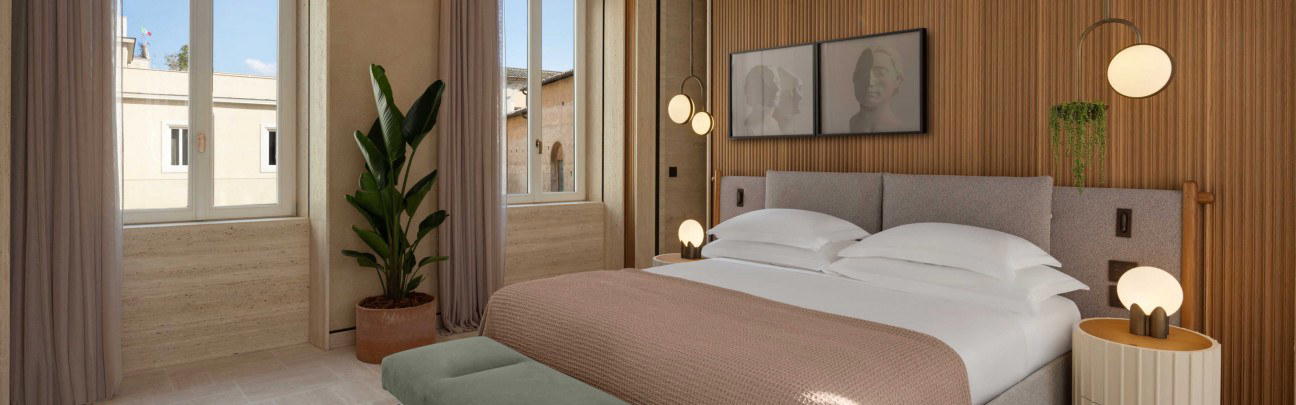
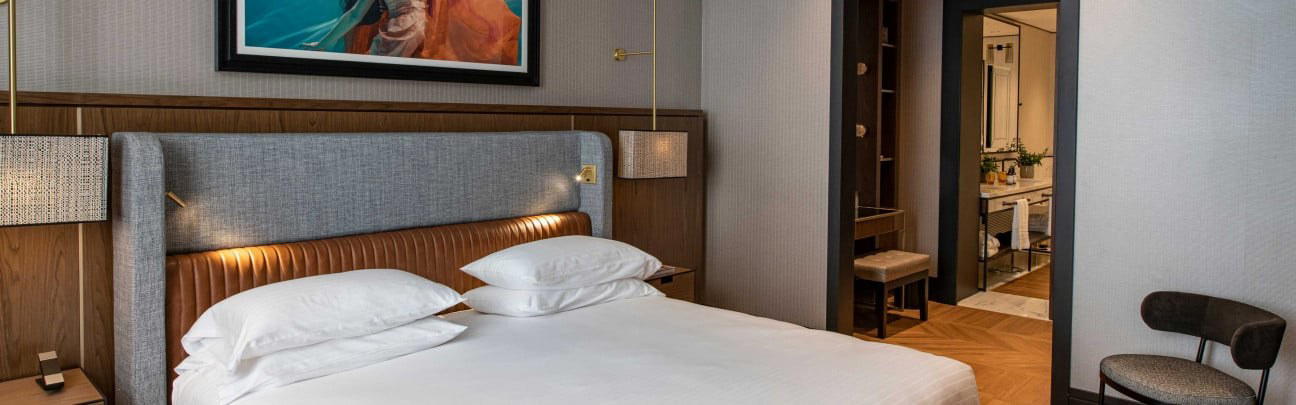
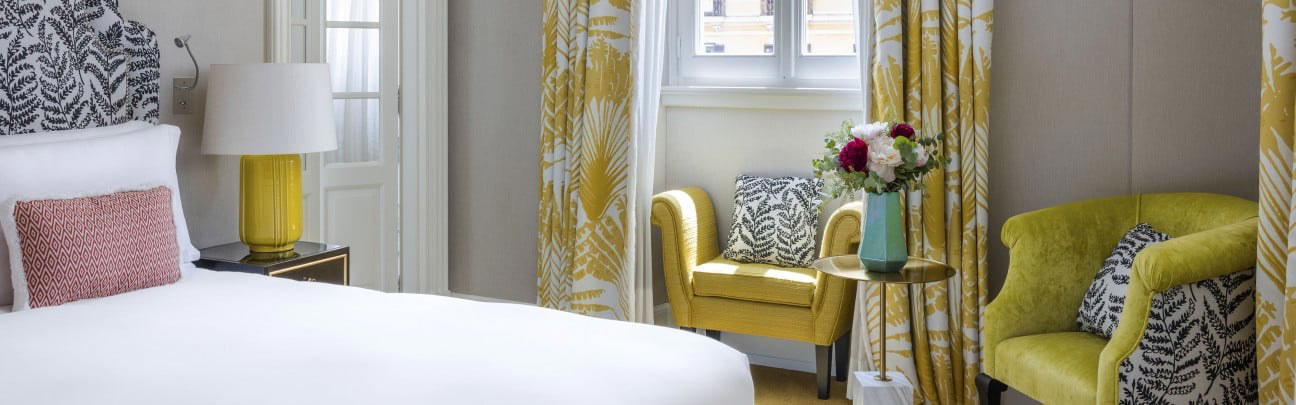
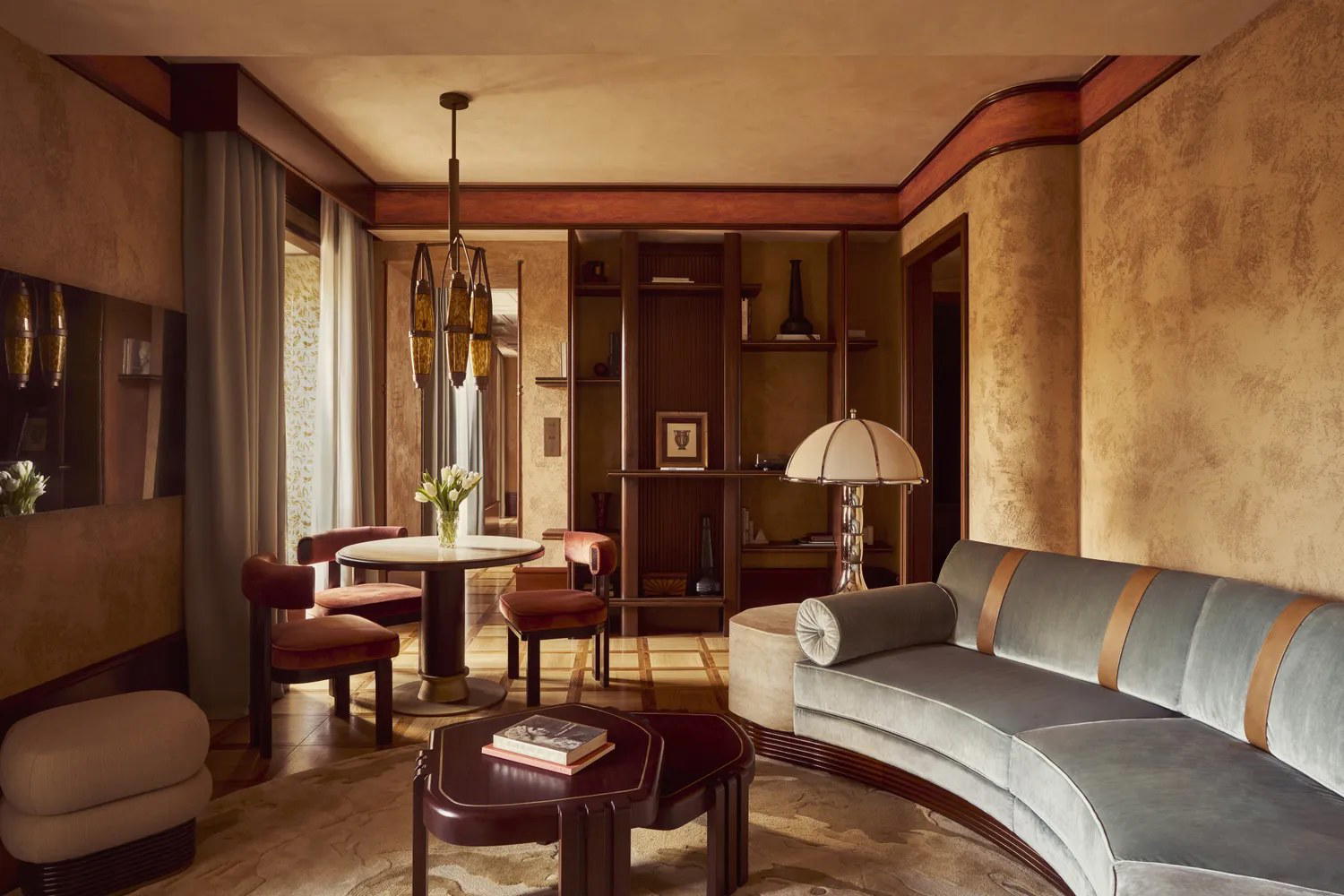
Bright white breakfast room overlooking the quiet street, with chic modern rooms featuring pops of color and comfortable Italian furnishings.