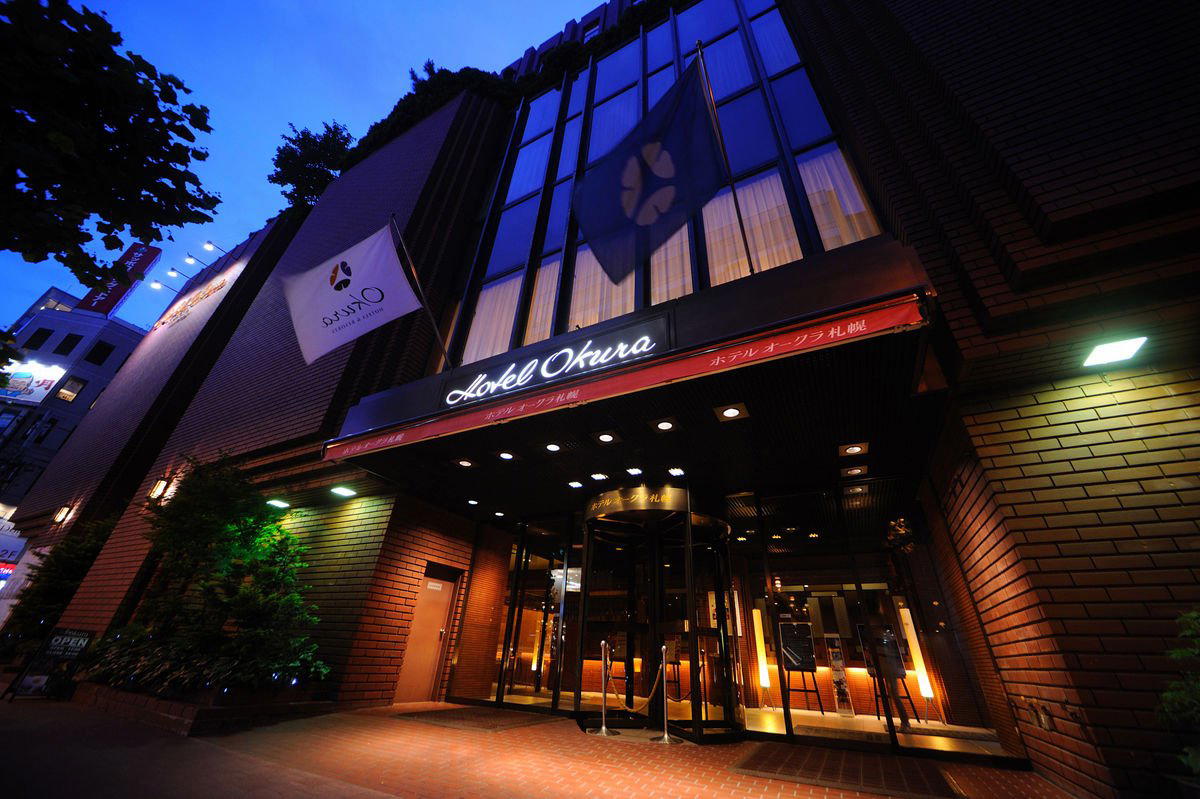
Hotel Okura Sapporo occupies a prominent address in Chuo Ward, placing it within reach of Sapporo's commercial core and the cultural infrastructure that defines Hokkaido's capital. The property belongs to the Okura Hotels group, one of Japan's most established luxury hospitality names, bringing a design sensibility rooted in mid-century Japanese modernism to a city better known for ski resorts and seafood markets.
A Particular Kind of Restraint: The Okura Aesthetic in Sapporo
Japan's luxury hotel conversation has shifted considerably over the past decade. International brands have planted flags in Tokyo and Kyoto, design-led ryokan have drawn global attention to smaller cities, and the gap between heritage Japanese hospitality and imported luxury formats has become a defining tension in the sector. Within that context, the Okura Hotels group occupies a specific and deliberate position: neither the minimalism-as-theatre of Aman properties like Amanemu in Mie, nor the overt European glamour of Bvlgari Hotel Tokyo. The Okura identity is grounded in Japanese modernism as it crystallised in the 1960s and 1970s: warm timber, shoji-influenced geometry, low horizontal proportions, and a formality that reads as considered rather than cold.
Hotel Okura Sapporo, on Minami 1-jo Nishi in Chuo Ward, carries that lineage into a city that rarely appears in the same sentence as Japan's most-discussed hotels. That is partly what makes it worth examining. Sapporo's hotel infrastructure has developed in parallel with its status as the gateway to Hokkaido's ski fields and food culture, but the city has not attracted the same density of design-forward or prestige-brand properties as the main Honshu corridors. Okura's presence here is, in that sense, an institutional statement: a bet that Sapporo deserves and can sustain the kind of property the group deploys in Tokyo and other major centres.
Design Logic and Physical Presence
The Okura Hotels group has consistently worked within a design language that can be traced back to the original Hotel Okura Tokyo, which opened in 1962 and became a reference point for what Japanese hotel modernism could look like: a fusion of traditional spatial principles with contemporary materials and international comfort standards. That building's influence on Okura properties across Japan has been considerable, and it provides a useful framework for reading Hotel Okura Sapporo's physical character.
Where properties like HOTEL THE MITSUI KYOTO draw explicitly on historic architecture and Kyoto's garden tradition, or where Benesse House on Naoshima integrates art and architecture into a single experience, Okura properties tend to work within a more contained vocabulary. The emphasis falls on interior proportion, material quality, and a certain ceremonial approach to threshold and arrival that feels specific to the group's sensibility. In Sapporo, that translates into a hotel that reads as urbane and stable rather than spectacular, which is not a criticism. In a city where the draw is often the surrounding landscape and food culture rather than the hotel itself, a property that offers reliable refinement without competing for attention has a coherent rationale.
For comparison, Zaborin in Kutchan, roughly 90 minutes from Sapporo by road, takes the opposite approach: a deeply site-specific ryokan designed around the natural environment of the Niseko area, with architecture that dissolves into snowfields and forest. Okura Sapporo and Zaborin occupy entirely different positions in the Hokkaido accommodation map, and the choice between them is less about quality than about what kind of experience the traveller is constructing. See our full Sapporo Shi guide for a broader map of the city's accommodation options.
Sapporo's Context: Why the Location Matters
Chuo Ward is Sapporo's functional centre, containing Odori Park, the Susukino entertainment district, and the city's main commercial corridors. The address on Minami 1-jo Nishi places the hotel within walking distance of the park and the underground shopping network that Sapporo residents rely on during winter months, when temperatures can drop significantly and the city's famous snowfall accumulates. That practical geography matters more in Sapporo than in many other Japanese cities, where hotel proximity to transport hubs is often the primary locational variable. Here, the combination of subway access and weather-resilient walkability is a genuine differentiator.
Hokkaido's food culture is among Japan's most cited, built on dairy, seafood from cold northern waters, and agricultural produce from the island's interior plains. Sapporo functions as the distribution and restaurant hub for much of that produce, and the Susukino area in particular carries a density of seafood restaurants, ramen shops, and izakayas that gives the city a specific dining identity. A hotel operating in Chuo Ward is, by definition, operating within reach of that infrastructure, which is relevant context for how the property fits into a Sapporo itinerary.
Travellers considering Hokkaido more broadly will find that Sapporo serves as a practical base for day trips to Otaru, the wine regions of Furano and Yoichi, and the ski areas around Niseko and Rusutsu. Properties like Fufu Kawaguchiko or Gora Kadan in Hakone are built around single-destination immersion; Okura Sapporo functions more as an anchor for a wider regional itinerary.
Japan's luxury hotel sector now spans formats that would have seemed implausible twenty years ago: ultra-small design ryokan like ENOWA Yufu, heritage conversions like Nishimuraya Honkan in Kinosaki-cho, coastal properties like Halekulani Okinawa, and international brand flagships concentrated in the major cities. Within that range, established group-operated city hotels like Okura occupy a middle ground that is sometimes underweighted in editorial coverage precisely because they lack the narrative legibility of a founder-driven concept or a dramatic natural setting. The trade-off is a kind of institutional reliability: consistent service standards, multilingual infrastructure, and the physical and organisational resources that come with operating as part of a recognised hospitality group. For the traveller whose Sapporo visit is tied to business, a conference, or a multi-city Japan itinerary, those characteristics carry real weight. For the traveller optimising for a single immersive experience, the more architecturally specific properties elsewhere in Hokkaido or Japan may be a better fit. Compare, for instance, Araya Totoan in Kaga or Azumi Setoda in Onomichi for what site-specific design hospitality looks like in a different register entirely.
Other notable Japanese properties worth considering in the context of planning a premium Japan trip include Asaba in Izu, Sekitei in Hatsukaichi-shi, Jusandi in Ishigaki, Bettei Otozure in Nagato, Bettei Senjuan in Minakami, Beniya Kofuyuden in Awara, and Atami Izusan Karaku.
Planning Your Stay
Hotel Okura Sapporo sits at 5 Chome Minami 1-jo Nishi, Chuo Ward, placing it in the walkable core of the city and within direct access of both Odori subway station and the city's main arterial streets. Sapporo's subway system connects Chuo Ward to the airport at New Chitose, approximately 40 minutes by express rail, making arrival and departure logistics among the more manageable of any major Japanese city. For travellers arriving from Tokyo, the Hokkaido Shinkansen now reaches Shin-Hakodate-Hokuto, from where limited express rail continues north; the full journey is long but increasingly used by travellers who prefer rail. Winter visitors should account for Sapporo's snow conditions: the city manages its streets effectively and the underground network reduces surface exposure, but itineraries should allow flexibility around weather. Peak demand periods include the Sapporo Snow Festival in early February, when accommodation across Chuo Ward books several months in advance.
Comparable Spots, Quickly
| Venue | Awards |
|---|---|
| Hotel Okura SapporoThis venue (the venue you are viewing) | Not listed |
| Bvlgari Hotel Tokyo | 3 Michelin Keys · World's 50 Best #24 |
| Aman Kyoto | 2 Michelin Keys · World's 50 Best #74 |
| Aman Tokyo | 2 Michelin Keys · World's 50 Best #11 |
| Amanemu | 3 Michelin Keys · La Liste Top Hotels |
| Four Seasons Hotel Tokyo at Otemachi | 3 Michelin Keys · La Liste Top Hotels |
Continue exploring
More in Sapporo
Hotels in Sapporo
All hotels in Sapporo →
Bars in Sapporo
All bars in Sapporo →
Details
- Elegant
- Classic
- Sophisticated
- Business Trip
- Family Vacation
- Historic Building
- Wi Fi
- Restaurant
- Concierge
- Room Service
- Street Scene
Calm and luxurious with Scandinavian designs featuring soft natural colors for a warm atmosphere.