Hotel Granvia Osaka occupies the upper floors of JR Osaka Station's tower, placing guests at one of the city's most consequential transit intersections. The hotel's dining programme spans Japanese and Western formats across multiple outlets, with the station-integrated position making it a reference point for business travellers and visitors moving between Osaka, Kyoto, and Kobe.
Pearl is the En Primeur Club membership app — saves, bookings, and concierge access live there. Same editors, same standards.
- Address
- 北区梅田3-1-1, 大阪市, 大阪府, 530-0001
- Website
- hotelgranviaosaka.jp
- Directions
- Get directions
 Saves & bookings on Pearl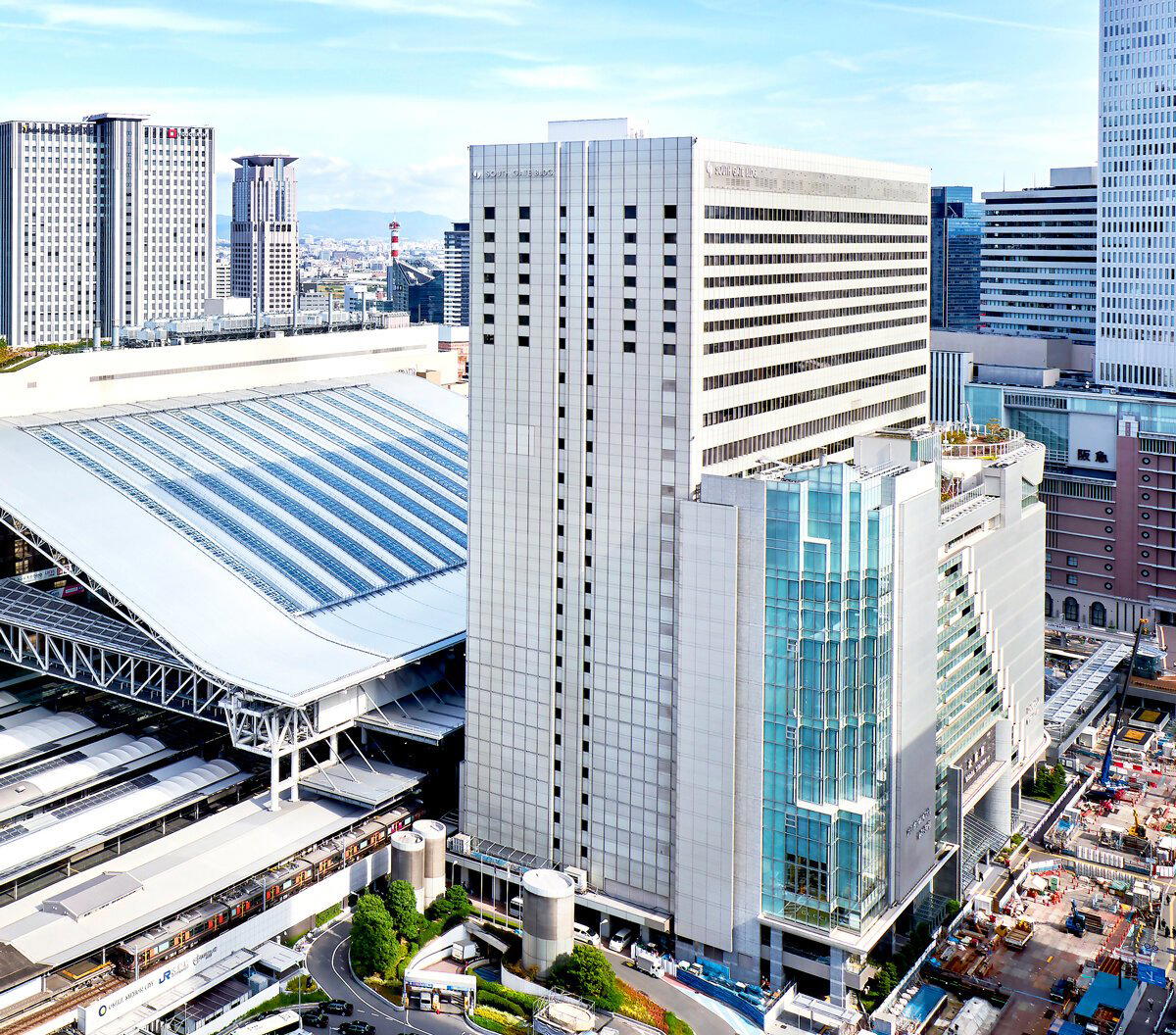
Station-Integrated Hospitality in Umeda
Osaka's hotel market has long divided along a geographic fault line: the southern Namba-Shinsaibashi corridor, where nightlife and street food define the character, and the northern Umeda district, where commerce, rail infrastructure, and upscale retail set the tone. Hotel Granvia Osaka sits firmly in the latter category, positioned within the JR Osaka Station complex at 北区梅田3-1-1, with direct access to one of the busiest rail hubs in western Japan. That address shapes everything from its guest profile to the rhythm of its dining outlets. Travellers moving between Osaka, Kyoto, and Kobe pass through this station daily, and the hotel operates at the intersection of transit convenience and full-service hospitality.
In the Umeda hotel tier, Granvia's comparable set includes properties that prioritise scale and accessibility over boutique restraint. Where Conrad Osaka positions itself around architectural spectacle in the Nakanoshima financial district and The Ritz-Carlton, Osaka occupies a more residential luxury tier near Nishi-Umeda, Granvia's proposition rests on station-level connectivity combined with a multi-outlet dining programme that serves both in-house guests and the broader Osaka workforce. That combination places it in a different conversation from design-led independents like Cuvée J2 Hôtel Osaka by Onko Chishin, which targets a more niche, aesthetics-driven traveller.
The Dining Programme as Anchor
Large Japanese station hotels have historically built their reputations on the breadth and consistency of their in-house restaurants rather than on singular destination dining. Granvia Osaka follows that model, maintaining multiple food and beverage outlets that cover the spectrum from formal Japanese dining to casual Western formats. This structure reflects a broader pattern in Japanese railway-group hotels: JR-affiliated properties, of which Granvia is one, have tended to invest in dining infrastructure that serves both lodging guests and the surrounding office population, creating a revenue model less dependent on room occupancy alone.
The logic is evident in how Osaka's major station hotels are used. Business lunches, after-work gatherings, and weekend family meals draw non-resident diners into these outlets in numbers that purely hotel-facing operations cannot match. For the travelling guest, the benefit is a dining programme with genuine daily footfall, which tends to sharpen consistency across service and kitchen output. This distinguishes the station-hotel dining format from destination restaurants where the pressure of a single high-stakes meal per cover defines the experience.
Within the Osaka dining scene more broadly, the hotel's Japanese restaurant formats operate in a city that holds more Michelin-recognised restaurants than almost any other in the world. Osaka's designation as a food city, anchored by the concept of kuidaore (eating until you drop), means the competitive context for any hotel dining programme is exceptionally demanding. The multi-outlet model at a station hotel like Granvia acknowledges this by offering range rather than attempting to compete at the single-restaurant prestige level occupied by standalone omakase counters or the kind of destination dining found at Four Seasons Hotel Osaka.
Umeda's Position in Osaka's Hotel Geography
Understanding where Granvia sits requires mapping Osaka's hotel geography with some precision. Umeda functions as the city's commercial and transit core, with the JR Osaka Station complex feeding into the Hankyu and Hanshin networks and providing shinkansen connections that reach Kyoto in thirteen minutes and Kobe in eighteen. Hotels in this zone serve a guest profile weighted toward domestic business travellers and inbound tourists using Osaka as a base for the Kansai region. That differs meaningfully from the leisure-dominant guest mix at properties further south, such as Centara Life Namba Hotel Osaka, or the urban-lifestyle profile at W Osaka near Shinsaibashi.
For guests using the Kansai region as a multi-city base, the station location is a practical argument in its own right. Day trips to Kyoto or longer excursions to properties like Amanemu in Mie or Nishimuraya Honkan in Kinosaki-cho become logistically simpler when the hotel sits directly above the rail network. This positions Granvia less as a destination in itself and more as an intelligent operational base for a Japan itinerary that extends beyond the city.
The comparison to Hotel New Otani Osaka is instructive: both properties operate within the large-scale, full-service Japanese hotel tradition, serving a mix of banqueting, corporate, and leisure demand. Neither is attempting the low-key design language of an InterContinental Osaka or the architectural statement of a high-tower luxury property. The category has its own logic, and within it, station adjacency is the primary differentiator.
Planning Your Stay
Hotel Granvia Osaka's address at 北区梅田3-1-1 places it effectively inside JR Osaka Station, making check-in and check-out direct for arrivals by shinkansen or local rail from Kansai-Osaka Airport. Guests using Osaka as a hub for wider Kansai travel will find the rail access genuinely reduces friction compared to properties requiring a taxi transfer. The hotel's scale supports flexible booking, though cherry blossom season in late March and early April and the Golden Week holiday period in late April to early May compress availability across all Osaka properties.
How It Compares Beyond the City
Placed against Japan's hotel range at large, Granvia Osaka represents a specific and well-understood category: the full-service railway-group hotel that prioritises operational reliability and position over intimate luxury or design ambition. Properties like Benesse House in Naoshima, ENOWA Yufu in Yufu, or Halekulani Okinawa are addressing entirely different traveller needs. Even within city-hotel formats, the contrast with Bvlgari Hotel Tokyo illustrates how wide the range has become: brand-driven trophy hotels at one end, transit-anchored full-service properties at the other. Granvia's argument is legibility and access, which for a significant segment of Japan travellers remains a more practical priority than prestige branding. The dining programme, the station position, and the Umeda address form a coherent package for that audience.
Pricing, Compared
Comparable venues nearby, for context on price, style, and recognition.
| Venue | Price | Awards | Notes |
|---|---|---|---|
| Hotel Granvia Osaka (ホテルグランヴィア大阪)This venue — the venue you are viewing | $$$ | 4-Star | Not listed |
| voco Osaka Central | $$ | 4-Star | Kyomachibori, Nishi-ku, Design-oriented IHG sub-brand emphasizing contemporary aesthetics with cultural heritage integration |
| Sugata Hotel Osaka Shinsaibashi | $$ | 3-Star | Shinsaibashi, Boutique hotel preserving independent Japanese identity within Marriott's Series collection. |
| Caption by Hyatt Namba Osaka | $ | 4-Star | Chūō, Modern lifestyle hotel with self-service check-in and do-it-yourself approach; trendy, lower-cost positioning focused on location and local neighborhood integration. |
| Hotel Noum OSAKA | $$ | 4-Star | Kita, Contemporary minimalist boutique hotel emphasizing comfort and authenticity with warm materials and curated local design elements. |
| Zentis Osaka | $$$$ | 5-Star | Kita, Contemporary urban boutique with modular functional spaces |
Continue exploring
More in Osaka
Hotels in Osaka
Browse all →




Bars in Osaka
Browse all →



Restaurants in Osaka
Browse all →




Wineries in Osaka
Browse all →
At a Glance
- Modern
- Sophisticated
- Elegant
- Business Trip
- Family Vacation
- Panoramic View
- Wi Fi
- Room Service
- Concierge
- Fitness Center
- Skyline
- Wi Fi
- Room Service
- Concierge
- Fitness Center
Sophisticated and contemporary atmosphere with stylish decor, natural light, and city skyline views in Granvia rooms.