Hotel Not Hotel
Hotel Not Hotel occupies a converted building on Witte de Withstraat 38 in Amsterdam's Oud-West district, where each room takes the form of a distinct architectural installation, a caravan, a bookcase, a pub, a tree house. The property sits within Amsterdam's growing tier of concept-driven boutique accommodation, where the room itself is the experience rather than a backdrop to it.
Pearl is the En Primeur Club membership app — saves, bookings, and concierge access live there. Same editors, same standards.
- Address
- Witte de Withstraat 38, 1057 XZ Amsterdam, Netherlands
- Phone
- +31 20 820 4538
- Website
- hotelnothotel.com
- Directions
- Get directions
 Saves & bookings on Pearl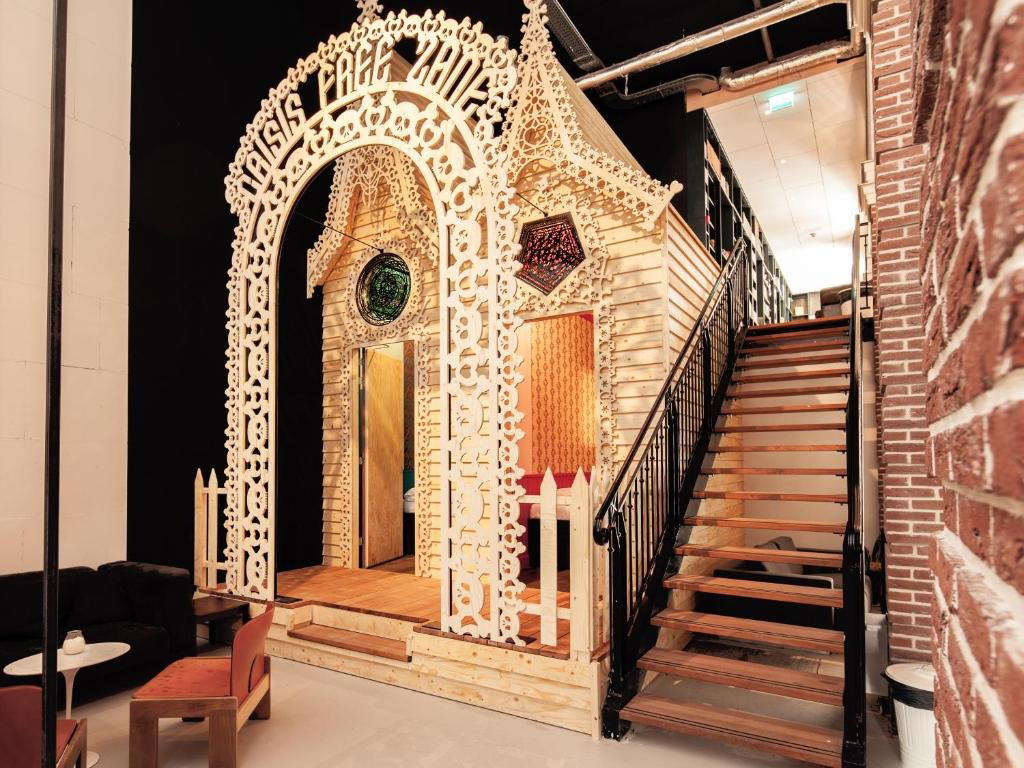
A Concept That Reframes the Amsterdam Stay
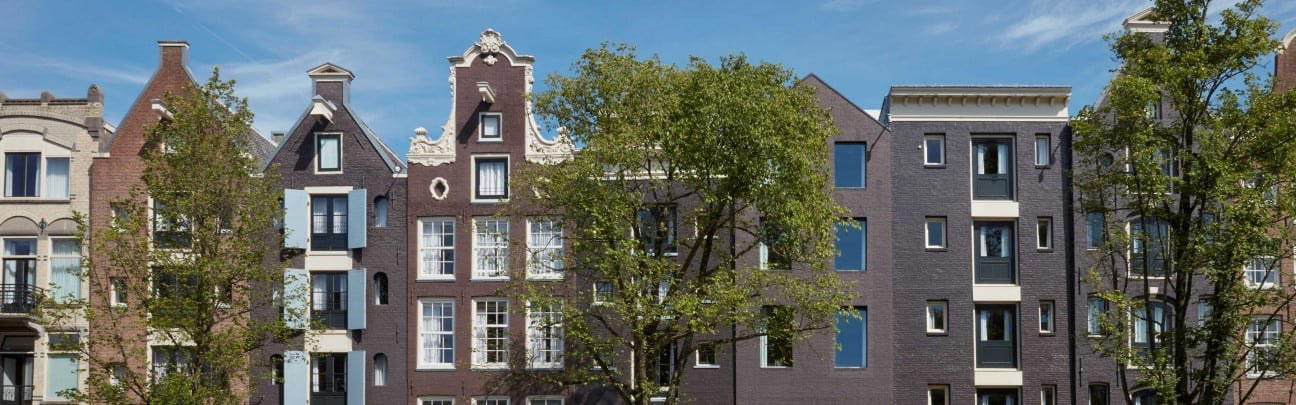
Hotel Not Hotel is a 23-room hotel in Amsterdam, with rooms from about $85 per night, on Witte de Withstraat in Oud-West. The street cuts through the Oud-West district with a particular kind of quiet confidence: independent cafes, artists' studios, and residential facades that have not been smoothed into tourist infrastructure. It is precisely this context that makes Hotel Not Hotel's address at number 38 legible as a deliberate statement. The property sits within a neighbourhood where accommodation was never the default industry, which frames the entire stay differently before a guest has crossed the threshold.
Amsterdam's hotel market has separated, broadly, into two camps over the past decade. The canal-front tier, represented by properties such as Andaz Amsterdam Prinsengracht, Canal House, and De L'Europe Amsterdam, trades on heritage architecture and water-facing rooms. A second camp, smaller and more scattered across the city's residential zones, pursues format experimentation and design specificity as its competitive logic. Hotel Not Hotel belongs firmly to this second group, and it has done so with a consistency that separates it from properties that pursue novelty for a single news cycle.
What the Format Actually Means for How You Stay
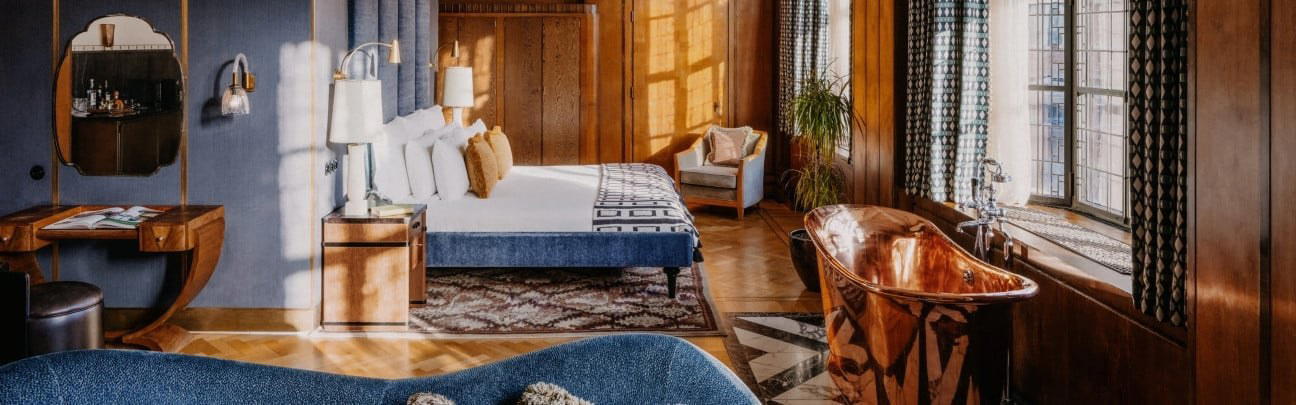
The central idea at the hotel is that each room operates as a distinct architectural environment rather than a variation on a standard template. Some guests sleep in spaces that reference trams, library reading rooms, or small urban cabins embedded within the larger building structure. This is not theming in the resort sense, where a pirate or safari motif is applied to generic bones. The interventions here are structural: walls repositioned, volumes compressed or expanded, materials chosen to serve a specific spatial mood rather than a brand palette.
For travellers whose relationship with accommodation is primarily functional, this format delivers less obvious value than a loyalty program or a Michelin-adjacent restaurant. For those who treat the room itself as part of the experience, it delivers something that a standardised property categorically cannot. The logic is similar to that which separates Breitner House or Décor Canal House from the broader Amsterdam market: design singularity as the primary credential.
Retreat Mindset in a City Context
Amsterdam is not a spa destination in the conventional sense. Unlike coastal or forest retreats, it does not sell landscape-assisted recovery. What the city does offer, particularly in its quieter residential districts, is a rhythm that permits genuine decompression between activities. Witte de Withstraat sits far enough from the Leidseplein and Museumplein pressure zones that the ambient noise level drops measurably. The street has bakeries that open early and close reasonably, a cycle infrastructure that removes car anxiety, and a pedestrian density that feels inhabited rather than managed.
This matters for the retreat-minded traveller because the quality of rest at a city hotel is partly a function of its immediate surroundings. Properties in the canal ring, however well-designed, absorb foot traffic and tourist-sector noise through much of the year. Oud-West does not generate the same footfall. A guest whose recovery priority is genuine sleep, unhurried mornings, and the mental space to read, write, or simply be present will find the neighbourhood more permissive than the historic centre.
This positions the hotel within a category of Amsterdam stays that function as bases for intentional urban retreating, rather than launch pads for high-volume sightseeing. Comparable in spirit, though different in format, are properties like De Pijp Boutique Hotel and Conscious Hotel Amsterdam City (The Tire Station), which similarly situate themselves in neighbourhood contexts that reward slower engagement with the city.
Placing Hotel Not Hotel in the Netherlands Context
Across the Netherlands, the accommodation market has produced a range of format experiments beyond the Amsterdam canon. Inntel Hotels Amsterdam Zaandam stacks traditional Zaan-house forms into a single building as an architectural statement. Landgoed Hotel Het Roode Koper in Leuvenum uses a forested estate as its spatial logic. Château St. Gerlach in Valkenburg aan de Geul anchors its offer in centuries of built heritage. The hotel's approach is distinct from all of these: it takes a single urban building and makes variety the product, rather than sourcing its distinctiveness from landscape, history, or scale.
For travellers building a multi-city Netherlands itinerary, the contrast is useful. A stay in Amsterdam at the hotel pairs logically with nights at citizenM Rotterdam for a design-forward Rotterdam comparison, or with 2L de Blend Hotel in Utrecht for a mid-country stop. Those extending to the southern provinces might consider Château Neercanne in Maastricht or De Plesman Hotel The Hague for format contrast. Travellers connecting through citizenM Schiphol Airport before or after an international flight will find the compressed, design-efficient rooms there a useful airport-adjacent counterpart to the more elaborate spatial experiment of the hotel.
Internationally, the comparison set for this format logic includes properties like Aman Venice, which converts palazzo architecture into a limited-key property with strong spatial identity, or The Fifth Avenue Hotel in New York, which commits to a single design vocabulary with consistency. The operating principle across all of these is that spatial intentionality replaces amenity breadth as the primary value proposition.
Planning Your Stay
Witte de Withstraat 38 is reachable from Amsterdam Centraal by tram in approximately fifteen minutes, with the Vondelpark and the major museum cluster within cycling distance. The neighbourhood rewards self-directed exploration more than guided itineraries: the density of independent food and drink operators on and around the street means that most of what a guest needs for a contained, low-friction day is within a ten-minute walk. Those whose travel extends to smaller towns and countryside properties nearby might find Posthoorn in Monnickendam or Bij Jef in Den Hoorn useful complements for a day trip or overnight extension.
Comparable Venues
Comparable venues nearby, for context on price, style, and recognition.
| Venue | Cuisine | Price | Notes |
|---|---|---|---|
| Hotel Not HotelThis venue — the venue you are viewing | quirky art concept hotel | $$ | Not listed |
| Generator Amsterdam | Historic brick building restored with contemporary design twists | $ | Oosterpark |
| Zoku Amsterdam | Hybrid hotel-apartment for extended stays targeting traveling professionals. | $$ | Weesperbuurt |
| Sofitel Legend The Grand Amsterdam | Hotel | Not listed | BG-terrein e.o. |
| Hotel Dwars Amsterdam | Small boutique hotel in a historic Amsterdam canal house | $$ | Utrechtsebuurt Zuid |
| Volkshotel | Creative urban resort in repurposed newspaper building | $$ | Weesperzijde Midden/Zuid |
Continue exploring
More in Amsterdam
Hotels in Amsterdam
Browse all →
Bars in Amsterdam
Browse all →
Restaurants in Amsterdam
Browse all →
Wineries in Amsterdam
Browse all →
At a Glance
- Whimsical
- Trendy
- Modern
- Cozy
- Weekend Escape
- Design Destination
- Wi Fi
- Bar
- Luggage Storage
- 24 Hour Front Desk
- Wi Fi
- Bar
- Luggage Storage
- 24 Hour Front Desk
Art-filled exhibition-like living room with cozy seating areas and a relaxed, social hostel vibe.