
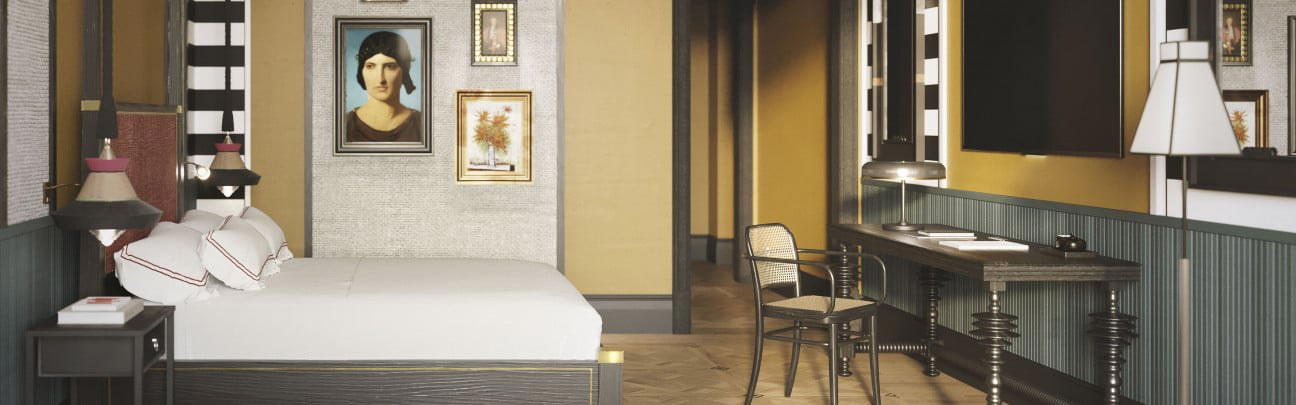
Lacking anything analogous to Uptown vs. Downtown, or a Right or Left Bank, Roman hotels are forced to describe their locations in slightly more granular detail. In the case of Casa de’Coronari, a medieval building converted into a modern six-suite hotel, it’s “close to the Pantheon,” or “a two-minute walk from Piazza Navona.” Within walking distance of quite a lot of what’s worth seeing, in other words. And on a charming cobblestoned street, to boot: far better than being on the busy plaza itself. And Via dei Coronari isn’t just any street. Lined with palaces, it was a beacon of city planning in the 15th-century era of Pope Sixtus IV della Rovere, the first straight street to run through the congested labyrinth of alleys that once characterized Rome. In the hotel’s lobby and public spaces, the architectural details date back nearly as far: dramatic vaults and archways, wood-beamed ceilings, terracotta floors. Upstairs, there’s a sleek sixties-style feel, the guest rooms done up in cool white and slate gray. Suites come with Italian-friendly amenities from Nespresso cappuccino machines to the Smeg fridge, a throwback to the era of La Dolce Vita, plus vintage-inspired headboards and molded chairs. The ingredients for a light Roman-style colazione are provided. If you’d rather have the experts prepare your caffè macchiato, they’ll deliver it to your suite. And that’s just the idea here. You didn’t come to the Eternal City to hang around the hotel bar, did you? Casa de’Coronari offers everything you need to feel at home in Rome, and none of the add-ons that you don’t. You’re just steps away from Piazza Navona, remember? Read: the whole city, including countless memorable trattorie and candlelit pizzerie, are waiting outside. Go for gelato afterwards, and a leisurely stroll down the famous street. When in Rome, as they say. Please note: Suites and Junior Suites are located in a separate building at Vicolo della Palomba, 16, two minutes' walk from the main building.
Pearl is the En Primeur Club membership app — saves, bookings, and concierge access live there. Same editors, same standards.
- Address
- Vicolo della Palomba, 16, 00186 Roma RM, Italy
- Phone
- +39 338 585 5279
- Website
- mobile.casadecoronari.com
- Directions
- Get directions
 Saves & bookings on Pearl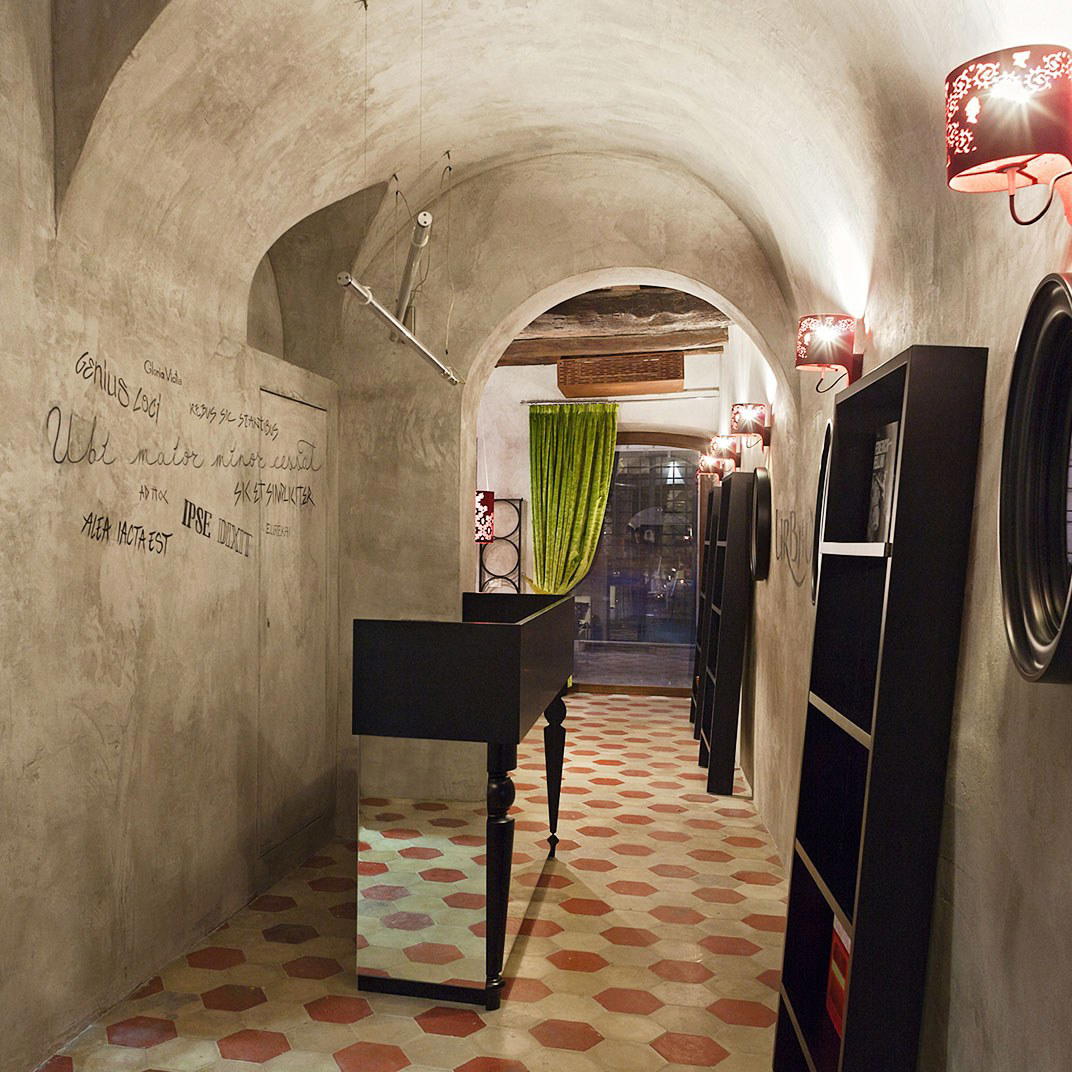
Via dei Coronari and What an Address Actually Delivers
There is a version of Rome that exists behind the grand hotel lobbies near the Trevi Fountain and the Borghese gallery corridors, one that most visitors sense but rarely land inside. Via dei Coronari is that version made physical. The street runs northwest from Piazza Navona toward the Tiber, lined with antique dealers and Renaissance facades that have changed little in four centuries. Casa de'Coronari sits at Vicolo della Palomba, 16, which places it a short walk from Piazza Navona and the centre storico.
Premium small hotels in European capitals tend to split along two axes. The first is position within the luxury district, close to flagship retail and international transit. The second is position within the city's historic grain, where proximity to cultural infrastructure replaces proximity to commercial infrastructure. Casa de'Coronari belongs firmly to the second category, and its 2025 Michelin Selected distinction is partly a recognition that this is a deliberate choice, not a compromise. Michelin's hotel selection programme evaluates comfort and service quality, and a property on Via dei Coronari is making a specific argument about what coherence looks like in Rome.
The Street as Context
Via dei Coronari takes its name from the vendors of devotional crowns who operated here during the medieval period, supplying pilgrims moving toward St Peter's along what was then a principal route. That history is not decorative; it explains why the street's building stock is unusually intact and why the scale remains human. A hotel on this stretch inherits a pedestrian logic that larger properties on busier arteries cannot replicate. You arrive without car noise. The proportions of the facades across the street are the proportions of the 15th and 16th centuries. That context is what the address provides before a guest crosses the threshold.
For travellers comparing Rome's smaller design-led properties, the neighbourhood positioning places Casa de'Coronari in a different comparable set from hotels near the Spanish Steps or along Via Veneto. Those addresses offer their own advantages, but the centro storico density around Navona operates differently: it is walkable to the major archaeological and Renaissance sites without the tourist-corridor congestion of the Trevi or Colosseum surrounds, and it retains a residential character after dark that some of Rome's more commercial hotel zones do not. Properties like Hotel Vilòn and Maalot Roma occupy a comparable niche of boutique-scaled, historically embedded Rome accommodation, each staking a claim to a specific neighbourhood logic rather than a generic luxury positioning.
Michelin Selection and What It Signals
The Michelin Selected designation in the 2025 hotel guide is a trust signal worth reading carefully. It does not carry the star tiering of the restaurant guide, but it represents active editorial choice within a programme that covers thousands of European properties. For small Roman hotels, appearing in the Michelin hotel selection functions as a credentialing mechanism within a crowded market, confirmation that the property meets a quality threshold across comfort, service, and environmental quality that merits inclusion. It also places the hotel in a competitive set that includes some of Rome's most discussed addresses.
Rome's Michelin-recognised hotel field includes large-format flagships such as Bulgari Hotel Roma and Hotel Eden, both of which operate at a different scale and price point. It also includes smaller properties where the argument is built on architecture, neighbourhood specificity, and intimacy rather than breadth of amenity. The hotel reads as part of the latter group. Travellers who have stayed at JK Place Roma or Portrait Roma and are looking for something with a tighter footprint and a less internationally branded feel will find the comparison relevant.
Planning a Stay
Because room count and booking method are not published in the available record, the practical recommendation is to approach the property directly or through a concierge channel. Boutique properties on Via dei Coronari with Michelin recognition tend to carry limited availability during Rome's peak periods, specifically the Easter week, late April through May, and the September and October shoulder season when temperatures drop and the city returns to a more manageable pace. Summer in Rome concentrates visitors but also empties the city of many Romans, which shifts the street-level character of the centro storico considerably. For guests whose priority is authentic neighbourhood texture alongside their stay, late spring and autumn deliver that most reliably.
Via dei Coronari 234 is within reasonable walking distance of several transport nodes, though Rome's centro storico is not served by Metro directly at this point. The nearest Metro access is Spagna or Barberini on Line A, each about 20 to 25 minutes on foot, or a short taxi from the property. The practical effect is that the neighbourhood rewards guests who intend to walk, and Via dei Coronari is particularly well configured for that: Piazza del Popolo, the Pantheon, and the main antique market circuit are all reachable on foot without crossing major arterial roads. For those arriving by car, the centro storico's ZTL (restricted traffic zone) applies, and coordination with the property on access is advisable before arrival.
Travellers planning a broader Italian itinerary alongside Rome have a range of reference points within the EP Club portfolio. Aman Venice in Venice, Four Seasons Hotel Firenze in Florence, and Casa Maria Luigia in Modena each occupy different positions within Italy's premium accommodation spectrum, while Borgo Santandrea on the Amalfi Coast and Il San Pietro di Positano serve travellers extending south. Further afield, Rosewood Castiglion Del Bosco in Montalcino and Castello di Reschio in Lisciano Niccone represent the Tuscan and Umbrian alternatives for guests pairing Rome with the countryside. The full range of Rome options, including Hassler Roma and Hotel Locarno, is covered in our Rome guide.
For those whose itinerary extends beyond Italy, the EP Club portfolio includes Passalacqua in Moltrasio on Lake Como, Il Pellicano in Porto Ercole, and, internationally, Hôtel de Paris Monte-Carlo, Badrutt's Palace Hotel in St. Moritz, and The Fifth Avenue Hotel in New York City.
A Minimal comparable set
Comparable venues nearby, for context on price, style, and recognition.
| Venue | Price | Notes |
|---|---|---|
| Casa de'CoronariThis venue — the venue you are viewing | $$$ | Not listed |
| citizenM Roma Isola Tiberina | $$$ | Isola Tiberina, affordable design hotel in historic mid-century building |
| Hotel Pulitzer Roma | $$$ | Ostiense, Contemporary design hotel with classic Italian influences positioned as ideal for business travelers and families. |
| Room Mate Collection Mia, Rome Colosseum | $$$ | Celio, Contemporary boutique hotel reinterpreting luxury through calm, light, and comfort. |
| G-Rough | $$$$ | Parione, Unconventional luxury suites in historic 17th-century palazzo with designer furnishings. |
| Babuino 181 | $$$$ | Campo Marzio, Contemporary Italian luxury boutique hotel in a renovated 19th-century palazzo with minimalist lobby and refined elegance. |
Recognition history
Dated appearances from independent guides and award organizations, with the underlying list record or original source where available.
Michelin Selected
Michelin
Continue exploring
More in Rome
Hotels in Rome
Browse all →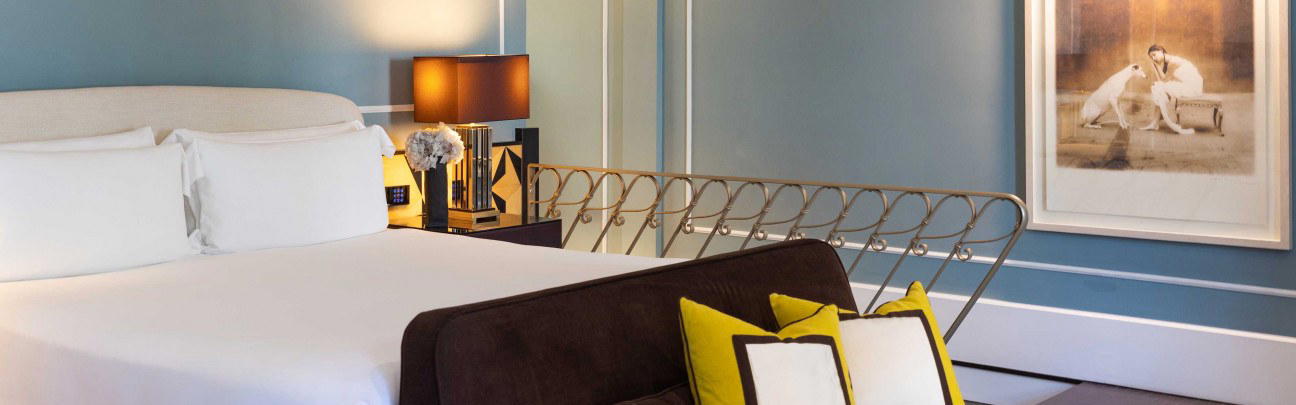
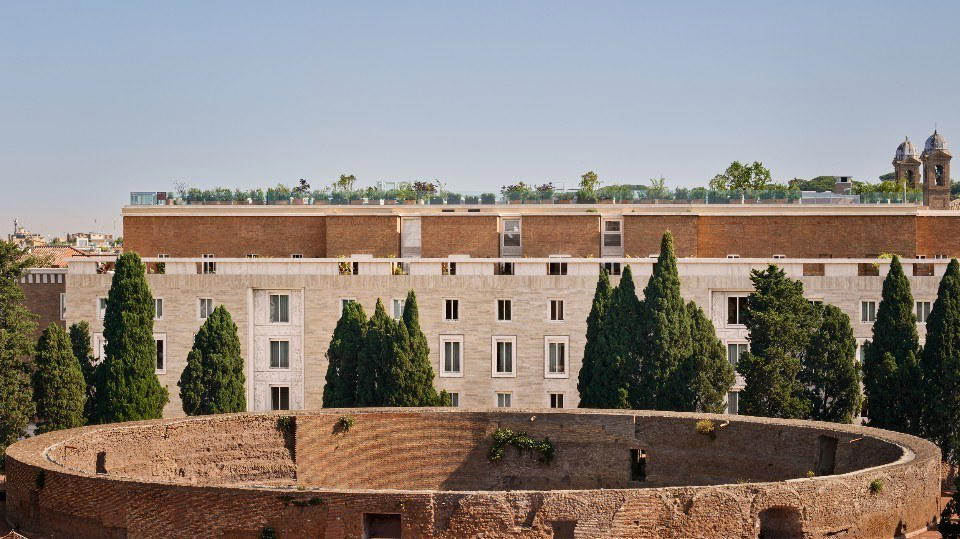
Bars in Rome
Browse all →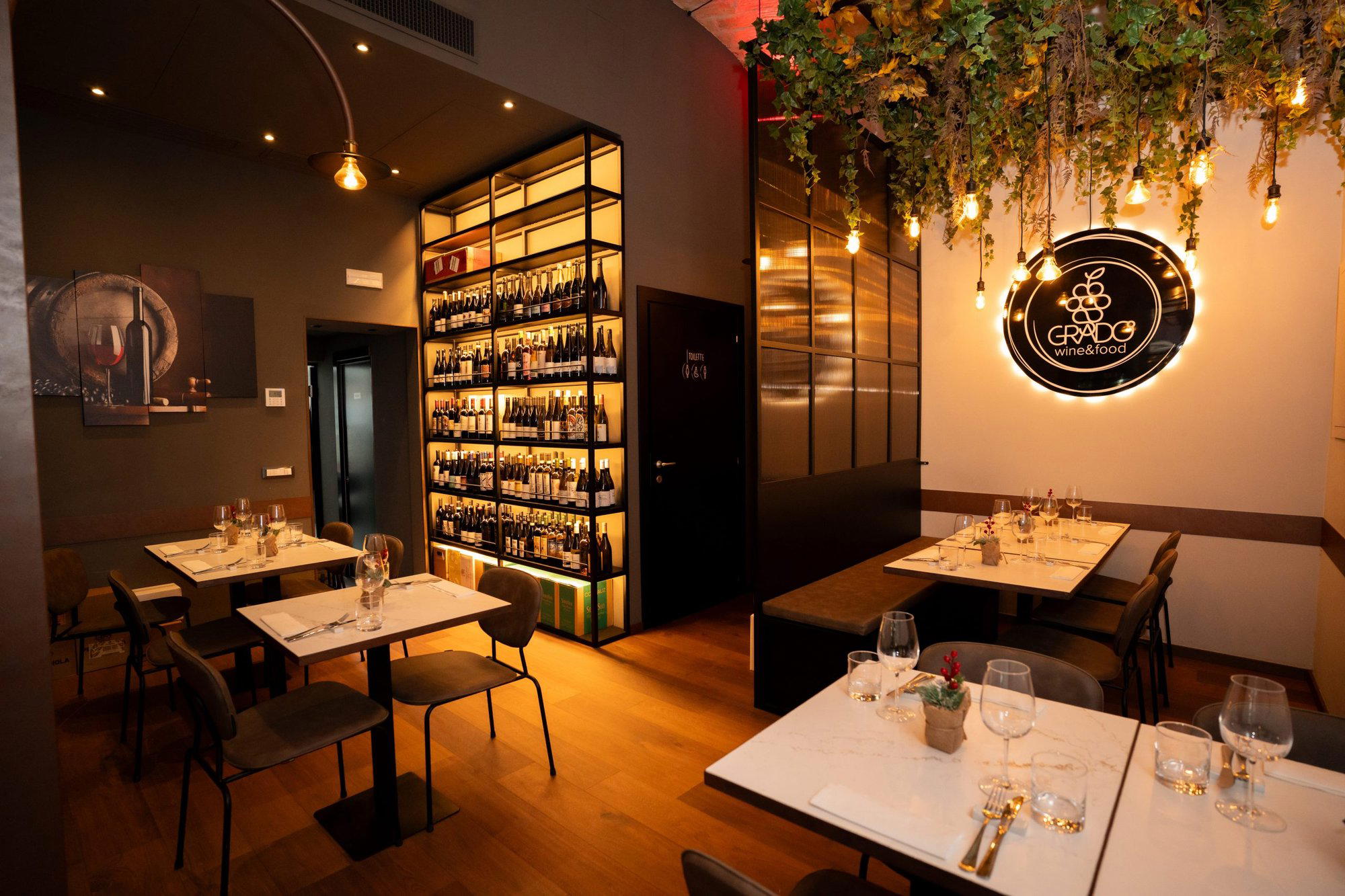
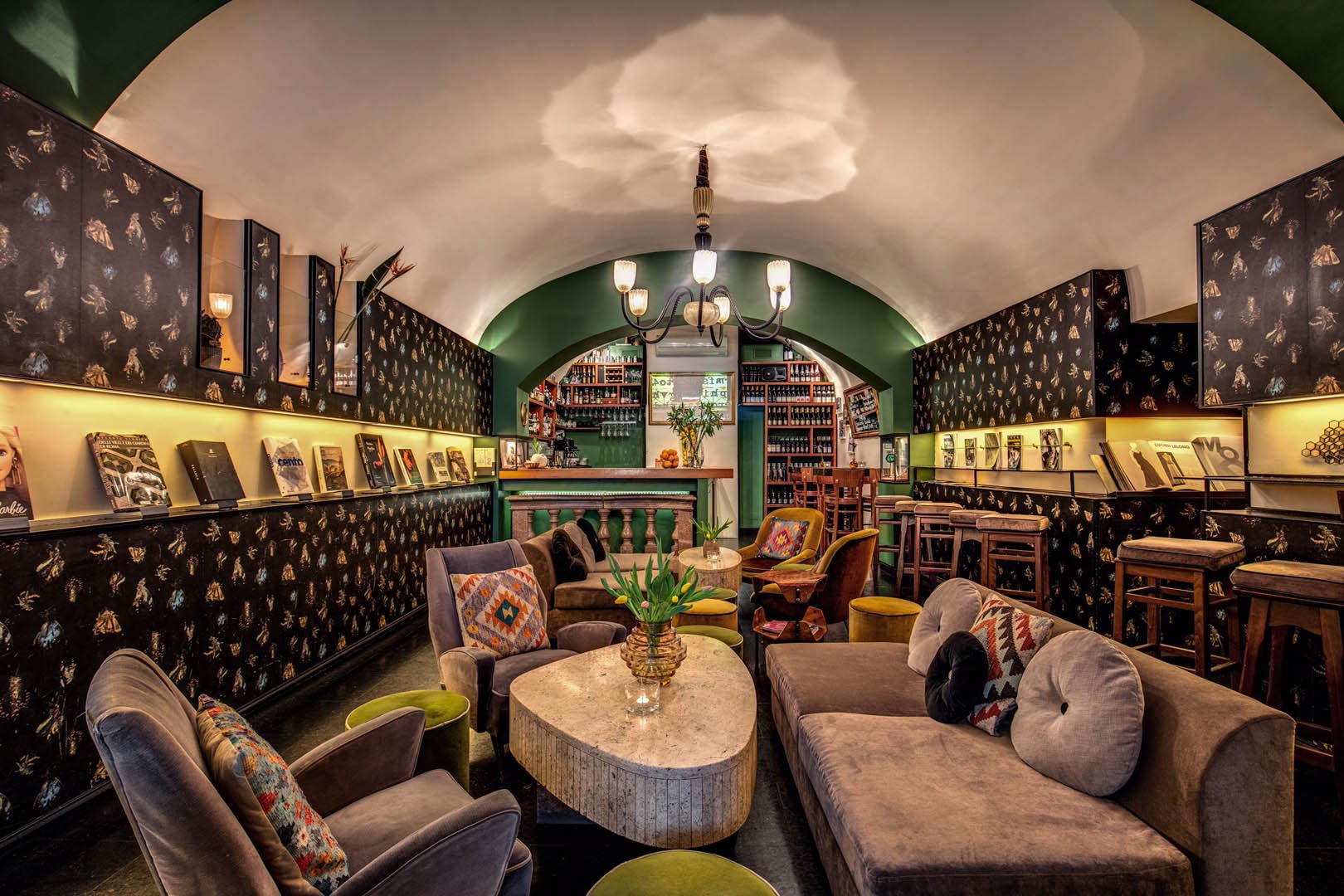
Restaurants in Rome
Browse all →
Wineries in Rome
Browse all →
At a Glance
- Romantic
- Elegant
- Cozy
- Trendy
- Intimate
- Sophisticated
- Romantic Getaway
- Anniversary
- Weekend Escape
- Historic Building
- Terrace
- Wi Fi
- Room Service
- Concierge
- Airport Transfer
- Laundry Service
- Street Scene
- Wi Fi
- Room Service
- Concierge
- Airport Transfer
- Laundry Service
Cozy and refined atmosphere with wood-beamed ceilings in shared areas and elegant, bright modern rooms.