U Retreat

Michelin Selected
Selected by the Michelin Guide Hotels 2025, U Retreat sits in the forested hills of Hongcheon-gun, Gangwon Province — a region that has drawn Seoul's design-conscious travellers seeking mountain immersion without resort-scale infrastructure. The property operates in the quieter, specialist tier of Korean retreats, where architectural intention and natural setting carry more weight than amenity volume.

Pearl is the En Primeur Club membership app — saves, bookings, and concierge access live there. Same editors, same standards.
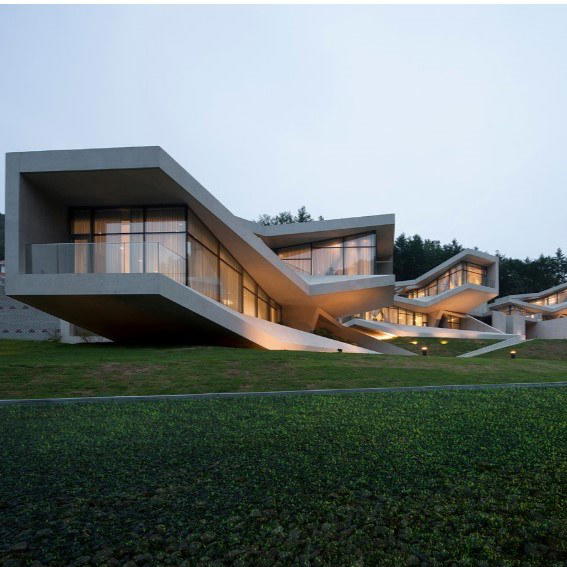
Where the Forest Sets the Terms
Gangwon Province's interior has been accumulating a specific kind of property over the past decade: small-scale retreats where the surrounding landscape — forested ridgelines, river corridors, clean upland air — defines the guest experience more than any branded amenity program. Hongcheon-gun sits near the centre of that shift. Positioned roughly two hours from Seoul by expressway, the county sits between the ski infrastructure of Pyeongchang-gun to the northeast and the coastal resort corridor near Gangwon-do's eastern edge. That middle position has given it something those areas lack: relative quietness, intact forest cover, and a guest profile that skews toward Seoulites looking for recuperative distance rather than activity volume.
U Retreat occupies that positioning deliberately. The address, 1468-55 Hanseo-ro, Seo-myeon, places it deep inside the county's rural fabric, away from the commercial strips that collect near Hongcheon town. Arriving here is less a hotel check-in and more an act of spatial decompression, the kind that begins before you reach the entrance.
The Architecture of Stillness
Korean retreat architecture has split into two legible camps. One draws from the hanok tradition: low rooflines, courtyard orientation, material warmth through timber and stone. The other reaches toward a more contemporary idiom, concrete, glass, and the kind of planar geometry that frames the natural world as deliberate composition rather than backdrop. Properties at the premium end of the Gangwon retreat market often occupy one of these positions clearly, and the strongest among them use architectural language to extend the feeling of the surrounding terrain into the built space.
U Retreat's Michelin Guide Hotels 2025 selection signals that it has achieved the kind of coherence that separates considered design from generic countryside accommodation. The Michelin hotel program, which evaluates properties on quality of stay rather than restaurant stars, has been progressively tighter in its Korean selections, making its inclusions meaningful as a filter. Alongside properties like The Ananti Namhae and South Cape Owners Club on Korea's southern coast, U Retreat belongs to a cohort of domestic retreat properties that have earned recognition outside the major urban hotel circuits.
What distinguishes this tier architecturally is the relationship between enclosure and openness. The retreat properties that perform leading in Gangwon are those where interior spaces feel connected to the specific light and atmosphere of the valley or hillside they occupy, not generic luxury finishes transplanted from a city hotel, but a material and spatial vocabulary that could only make sense in that landscape.
Understanding where U Retreat sits requires mapping the broader Korean getaway market. Seoul's five-star hotel block, JW Marriott Seoul, Four Seasons, Park Hyatt, operates on an entirely different logic: urban convenience, corporate infrastructure, F&B; programs that anchor the social calendar. A property like U Retreat is not competing within that frame.
Within Gangwon Province specifically, the competitive range is wide. At one end sit the large integrated resort complexes, which offer ski lifts, multiple restaurants, and the kind of volume operations that define destination tourism. At the other end are smaller, design-forward properties, places like Camptong Forest in Gapyeong and Gangwon-do in Hongcheon, where the proposition is immersion over programming. U Retreat occupies this latter category, distinguished within it by Michelin recognition that its immediate neighbours in the countryside do not carry.
For travellers arriving from the coast, the contrast with properties like Kensington Hotel Seorak in Sokcho-si or Oakwood Lagoon Town Gangneung is instructive. Those properties are structured around public amenities and broader market appeal. The retreat model in Hongcheon-gun prioritises a different ratio: more quietness, more spatial privacy, less infrastructure noise.
Getting There and Planning Your Stay
Hongcheon-gun is most efficiently reached by car from Seoul, with the Jungbu Naeryuk Expressway cutting the journey to under two hours in normal traffic conditions. Public transport options exist, intercity buses from Seoul's Dong Seoul Terminal serve the Hongcheon area, but the property's rural address on Hanseo-ro makes a rental car or private transfer the more practical approach for luggage-carrying travellers. Spring and autumn are the peak seasons for Gangwon retreats: late April through May brings fresh green cover to the hills, while October delivers the foliage colour that draws Seoulites in considerable numbers. Midsummer can be humid at lower valley elevations, while winter offers a quieter off-peak window for those who don't require the snow sports infrastructure further north.
For travellers building a broader Korean itinerary that moves between mountain and city, the gap between U Retreat and urban properties like Hotel Onoma Daejeon or Gravity Seoul Pangyo is useful: each occupies a different register, and sequencing them provides genuine contrast rather than repetition.
The Broader Picture
Korea's retreat market is maturing in a way that mirrors patterns visible in Japan's ryokan circuit or Bali's villa sector: a consolidation of quality at the leading, a clearer separation between properties with genuine design and environmental intention and those simply capitalising on rural scenery. Michelin's hotel selections in Korea reflect that consolidation. Properties earning a place in the 2025 list, whether urban flagships like Park Hyatt Busan or island resorts like Grand Hyatt Jeju, have passed a threshold that many similarly positioned properties have not.
U Retreat's inclusion in that list, as a rural Gangwon property rather than a major city hotel or coastal resort, is the clearest signal available that its design and hospitality coherence places it above the general noise of the domestic weekend-escape market. For travellers whose criteria run toward architectural seriousness and environmental integration rather than branded F&B; and concierge programming, that signal is the relevant one. See our full Hongcheon Gun guide for more context on the area's hospitality options.
Side-by-Side Snapshot
Comparable venues nearby, for context on price, style, and recognition.
| Venue | Cuisine | Price | Awards | Notes |
|---|---|---|---|---|
| U RetreatThis venue — the venue you are viewing | Ultra-modern luxury boutique resort with futuristic concrete and glass architecture integrated into natural landscape, featuring minimalist white interiors and multi-level open floor plans. | Not listed | Michelin Selected | Not listed |
| L'Escape Hotel Seoul | Luxury boutique hotel inspired by Belle Époque Paris. | $200–300 | Michelin Selected · Forbes Recommended | 소공동 |
| Aman Seoul Cheongdam | ultra-luxury urban tower hotel | Not listed | Not listed | Cheongdam-dong |
| Parnas Hotel Jeju | Luxury beachside resort blending history and modern luxury. | $200–300 | Michelin Selected · World Luxury Hotel Awards WLHA Country Winner | Jungmun |
| LOTTE HOTEL WORLD | Luxury urban resort-style hotel connected to a major theme park | Not listed | La Liste Top Hotels | Jamsil-dong |
| voco Seoul Gangnam | Lifestyle boutique hotel blending urban energy with cozy comforts. | Not listed | Michelin Selected | Gangnam |
Recognition history
Dated appearances from independent guides and award organizations, with the underlying list record or original source where available.
Michelin Selected
Michelin
Continue exploring
More in Hongcheon Gun
Hotels in Hongcheon Gun
All hotels in Hongcheon Gun →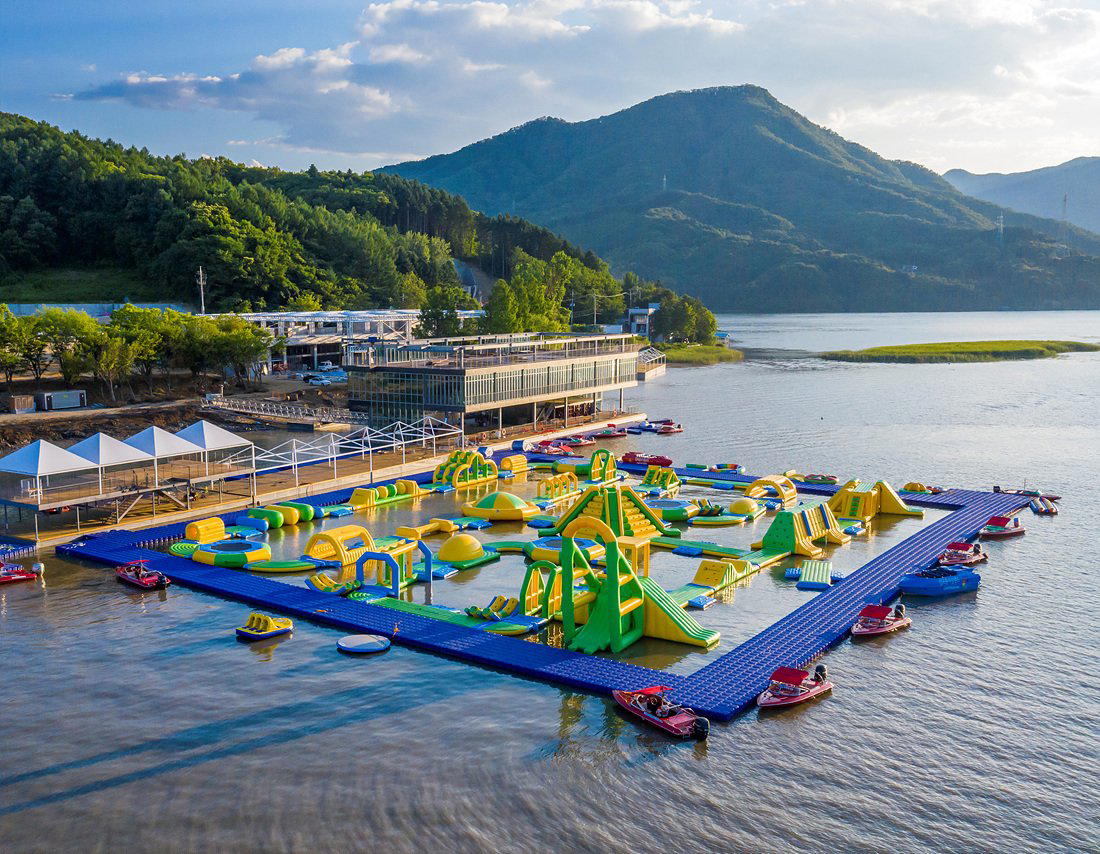
Restaurants in Hongcheon Gun
Browse all →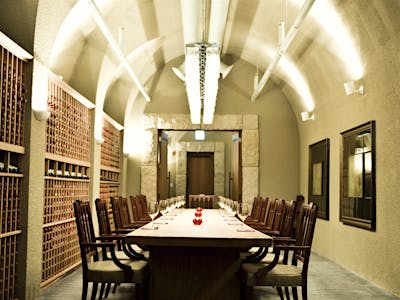
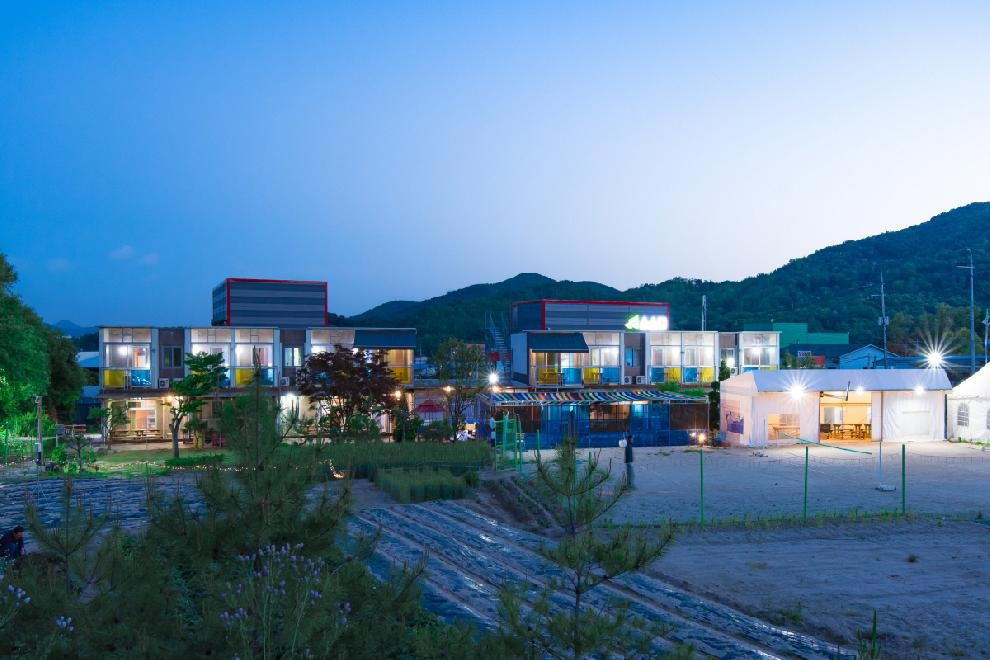
Details
- Modern
- Quiet
- Minimalist
- Scenic
- Intimate
- Wellness Retreat
- Romantic Getaway
- Weekend Escape
- Private Villa
- Infinity Pool
- Destination Spa
- Panoramic View
- Garden
- Private Dining
- Wi Fi
- Pool
- Spa
- Air Conditioning
- Parking
- Garden
- Mountain
- Garden
Serene and minimalist with predominantly white interiors, natural light through expansive windows, and seamless integration with dramatic mountain views and forest surroundings.