


Set within Ise-Shima National Park in Mie Prefecture, Amanemu is the Aman group's interpretation of the traditional Japanese ryokan at its most architecturally considered. Kerry Hill's design places 32 suites and villas against the waters of Ago Bay, each with a private onsen. La Liste awarded the property 92.5 points in 2026, and Michelin granted it 3 Keys in 2024.
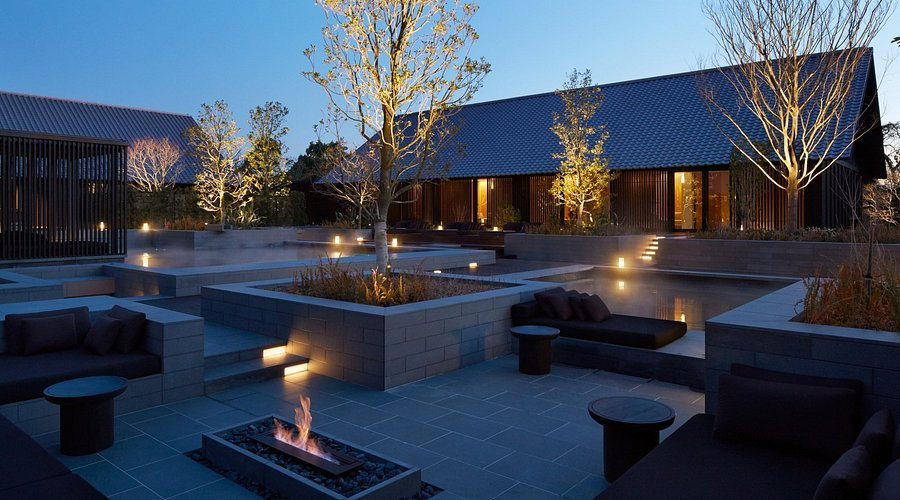
Where Ryokan Tradition Meets Contemporary Architecture
Japan's luxury rural accommodation has long operated along a recognisable axis: the ryokan, with its tatami rooms, communal onsen, and multi-course kaiseki service, represents one of the world's most codified hospitality traditions. What has changed in recent decades is the arrival of a small cohort of properties that retain the formal logic of the ryokan — thermal bathing, seasonal cuisine, unhurried pace — while reframing every physical element through contemporary architectural practice. Amanemu, in Mie Prefecture's Ise-Shima National Park, sits at the leading edge of that cohort. It earned 3 Michelin Keys in 2024 and 92.5 points from La Liste's Leading Hotels ranking in 2026, placing it among a very small group of Japanese rural properties recognised across both French critical and international hospitality frameworks.
The comparison that positions Amanemu most clearly is with Aman New York and Aman Venice within the Aman portfolio itself: each property translates the brand's defining principles , low key count, extreme spatial generosity, site-specific design , into a radically different context. Where the urban Aman properties absorb the energy of their cities, Amanemu draws its identity entirely from the landscape surrounding it. The national park setting, Ago Bay views, and thermal spring access are not amenities added to a hotel; they are the structural argument of the property.
Kerry Hill's Architecture: Contemporary Form, Japanese Logic
The late Kerry Hill, whose practice shaped some of the most considered hospitality architecture in Asia over four decades, designed Amanemu to operate simultaneously as a contemporary building and a deeply Japanese one. That tension , between rigorous modernism and spatial traditions rooted in Shinto principles of nature, enclosure, and threshold , defines how the property feels before any individual room is examined. The approach is not decorative Japanism, the application of shoji screens and stone lanterns to an otherwise generic luxury shell. Instead, Hill's architecture works at the level of proportion, materiality, and the relationship between interior and exterior space, so that the experience of moving through the property carries the same spatial grammar as moving through a well-made traditional structure.
This matters because it places Amanemu in a specific design lineage within Japanese luxury hospitality, one that runs alongside , rather than from , the ryokan tradition. Properties like Gora Kadan in Hakone and Asaba in Izu carry their aesthetic identity through the accumulated weight of historical buildings and objects. Amanemu builds its authority differently: through precision of construction, spatial sequence, and the insistence that nothing in the building feel provisional or hurried. For guests with an interest in hospitality design as a discipline, this makes Amanemu a reference point in a way that even excellent traditional ryokans are not. For broader comparison within the contemporary architecture-led Japanese property set, Benesse House in Naoshima and Zaborin in Kutchan occupy adjacent positions, each using a single architect's rigour as the organising principle of the guest experience.
The Suites, the Onsen, and the Scale of Things
Amanemu operates across 32 keys: 24 suites and a smaller number of villas. The suites are large by any measure, each with a private onsen bath , a detail that shifts the property's relationship to the thermal-bathing tradition from communal ritual to something more intimate and self-directed. The villas accommodate up to six guests and span close to 4,000 square feet, a scale that positions them not just as accommodation but as temporary residences, suitable for multi-generational travel or extended stays.
The significance of the private onsen in each suite is worth pausing on. In the classic ryokan model, the communal bath is a social and almost ceremonial space, with its own protocols and rhythms. Amanemu preserves the thermal bathing experience while making it entirely private, which changes both the pacing of a stay and the guest's relationship to the ritual. Whether that is a gain or a loss depends on what the traveller is seeking; what it does is signal clearly that Amanemu is oriented toward privacy and solitude rather than the communal character of traditional inn culture. Guests who want the full shared-bath experience alongside contemporary design might look also at Nishimuraya Honkan in Kinosaki-cho, where the traditional town-onsen format remains central.
The spa at Amanemu combines four treatment rooms and a yoga and fitness studio with its own interpretation of the Japanese thermal-spring experience. Within the Aman brand, spas consistently rank among the most substantive offerings at any property, and the Ise-Shima setting , with its access to genuine geothermal water , gives the wellness program here a grounding in place that urban Aman spas, however accomplished, cannot replicate.
Kaiseki at Amanemu and What It Signals
Dining program at Amanemu is structured around a modern interpretation of kaiseki, the multi-course Japanese cuisine that has its deepest roots in Kyoto ceremony but has spread, in adapted forms, to premium hospitality properties across the country. Kaiseki at a property like this is not incidental: it is the culinary equivalent of the architectural argument, a demonstration that contemporary luxury and traditional Japanese form can be held in the same frame without either compromising the other.
Mie Prefecture itself provides an unusually strong larder for this kind of cooking. The prefecture is one of Japan's most important sources of seafood, with Ise-Shima known specifically for its lobster (Ise ebi), abalone, and the work of ama divers, the free-diving women who have harvested shellfish from these waters for centuries. A kaiseki dinner in this context draws on ingredients with a specific regional identity, which separates it from the more standardised premium kaiseki found in Kyoto or Tokyo hotel dining rooms. For those who want to explore the broader dining and drinking scene in the prefecture, our full Mie restaurants guide, Mie bars guide, and Mie experiences guide cover the wider region.
Amanemu in the Context of Japanese Country Luxury
Japan's premium rural accommodation market has expanded significantly over the past decade, with new entrants across multiple price tiers and design approaches. Properties like ENOWA Yufu in Yufu, Fufu Kawaguchiko, Fufu Nikko, and Araya Totoan in Kaga each represent distinct positions in this expanding field. Amanemu sits above most of them on price, with La Liste recording rates from approximately $2,297 per night, and competes in a peer set that includes a handful of Japan's most decorated rural properties rather than the broader luxury ryokan market.
Within the Aman portfolio's own Japanese footprint, the comparison with HOTEL THE MITSUI KYOTO and the various high-end Kyoto ryokans is instructive: Kyoto luxury tends toward cultural density and historical layering, while Ise-Shima offers natural landscape and maritime identity. Both are valid arguments for a Japanese luxury stay; they are simply different ones. Guests who want the full urban-to-rural arc across a Japan itinerary might pair Amanemu with Bvlgari Hotel Tokyo or the ANA InterContinental Beppu Resort and Spa at a different point in the journey.
Planning a Stay
Amanemu's 32-key scale means availability is genuinely limited, and at rates from $2,297 per night the property attracts guests who plan itineraries well in advance. Booking three to four months ahead is advisable for peak seasons, particularly autumn (October and November, when the national park and bay views are at their clearest) and the spring shoulder season. The address , Hamajima-cho, 2165 Hamajimachō Hazako, Shima, Mie 517-0403 , places the property within Ise-Shima National Park, roughly accessible via Kashikojima Station on the Kintetsu line from Nagoya, though most guests at this price point arrange private transfers. For anyone building a broader picture of accommodation options in the prefecture before committing, our full Mie hotels guide maps the competitive field, including properties at lower price points and different design orientations. The Mie wineries guide rounds out the picture for guests interested in the region's drinks culture alongside its food and hospitality offerings.
Frequently Asked Questions
What's the atmosphere like at Amanemu?
Amanemu is built around quiet and spatial generosity rather than programmatic activity. Kerry Hill's architecture creates a strong sense of threshold and enclosure, so the property feels set apart from its surroundings even as it frames them constantly through glass and open structure. Given its La Liste score of 92.5 and Michelin 3 Keys recognition, guests arrive with calibrated expectations; the property tends to reward those who want stillness and landscape engagement over those seeking social or event-driven programming. If you are arriving from Tokyo and want to compare the urban register of the Aman brand, ANA InterContinental Appi Kogen Resort offers a useful point of contrast in a similarly landscape-driven setting.
Which room category should I book at Amanemu?
At $2,297 per night as the entry point, the 24 suites represent the standard Amanemu experience: large rooms, private onsen bath, and Ago Bay or garden views. The villas, sleeping up to six across nearly 4,000 square feet, make most sense for families or groups who want to share a property at this level without sacrificing privacy. For a solo traveller or couple, the suites are sufficient to experience everything architecturally and spatially distinctive about the property. The private onsen is present in both categories, so the thermal bathing program is not reserved for the higher tier.
What's the standout thing about Amanemu?
The architectural coherence of the property, recognised by both Michelin (3 Keys, 2024) and La Liste (92.5 points, 2026), is what separates Amanemu from the broader Japanese luxury rural field. Most premium ryokans derive their authority from historical fabric or accumulated craft; Amanemu makes its case through contemporary architectural precision and site specificity in Ise-Shima National Park. The private onsen in every suite and the kaiseki dining program grounded in Mie's exceptional seafood larder reinforce that argument practically. For context on what else the region offers, see our Mie experiences guide.
How far ahead should I plan for Amanemu?
With only 32 keys and rates from $2,297 per night, Amanemu operates in a demand tier where availability compresses quickly around Japan's peak travel windows. Autumn foliage season (October to November) and the April-May Golden Week period book earliest. A three-to-four month lead time is a reasonable baseline for most stays; for specific dates during those peak windows, six months is more prudent. The property is managed by Aman Resorts, and bookings are handled through the Aman central reservations system. Guests combining Amanemu with other Japanese properties , such as Jusandi in Ishigaki or Halekulani Okinawa , should plan the full itinerary simultaneously rather than booking each leg separately, as availability at properties in this tier rarely waits for the other bookings to fall into place. Also see our Sekitei and Atami Izusan Karaku listings if your itinerary includes western Honshu or the Izu coast.
Peer Set Snapshot
These are the closest comparables we have in our database for quick context.
| Venue | Cuisine | Price | Awards | Notes |
|---|---|---|---|---|
| Amanemu | (2026) La Liste Top Hotels: 92.5pts; Price: $2,297 Rooms: 32 Rooms If Aman Tokyo is the urban high-rise luxury hotel par excellence — and trust us, it definitely is — then Amanemu, in Ise-Shima National Park, is the Japanese country inn to end them all. Of course, to call an Aman hotel a country inn is to understate matters rather severely. For although the basic idea of a luxurious rural escape, complete with thermal baths and extravagant multi-course dinners, is familiar to any ryokan aficionado, Amanemu is a thoroughly modern interpretation of these timeless Japanese pleasures. The architecture, by Kerry Hill, one of the modern masters of high-end hospitality design, is at once utterly contemporary and totally Japanese, and it sets a tone of pure tranquility. The nature reserve where it makes its home offers extraordinary beauty in every direction, and the suites and villas frame glorious views of the gardens and the waters of Ago Bay. Each of the 24 suites is enormous, and comes complete with a private onsen bath; the villas sleep up to six, and span nearly 4,000 square feet. In terms of comfort, “faultless” is the only word that will do. Aman cuts no corners, and obsesses over details most guests won’t even notice. And while their spas are always a highlight, it’s worth visiting Amanemu just to see how they combine four treatment rooms and a yoga and fitness studio with their take on the traditional Japanese thermal-spring experience — and, while you’re there, to experience their modern version of a traditional kaiseki dinner. As always, the only reason to hesitate is the fact that, once you’ve been, you’ll never want to settle for less....; (2024) Michelin 3 Keys | This venue | ||
| Bvlgari Hotel Tokyo | Michelin 3 Key, World's 50 Best | Michelin 3 Keys | ||
| Aman Kyoto | Michelin 2 Key, World's 50 Best | Michelin 2 Keys | ||
| Aman Tokyo | Michelin 2 Key, World's 50 Best | Michelin 2 Keys | ||
| Four Seasons Hotel Tokyo at Otemachi | Michelin 3 Key | Michelin 3 Keys | ||
| Palace Hotel Tokyo | Michelin 3 Key | Michelin 3 Keys |
Preferential Rates?
Our members enjoy concierge-led booking support and priority upgrades at the world's finest hotels.
Access the Concierge