One of Turin's most enduring addresses on Corso Vittorio Emanuele II, Caffè Platti occupies a position in the city's historic café culture that places it alongside institutions like Caffè Al Bicerin rather than the newer aperitivo bars reshaping the scene. The counter format, the ritual of the morning coffee or afternoon vermouth, and the classical interior situate it firmly in the Torinese tradition of the gran caffè.
 Discover on Pearl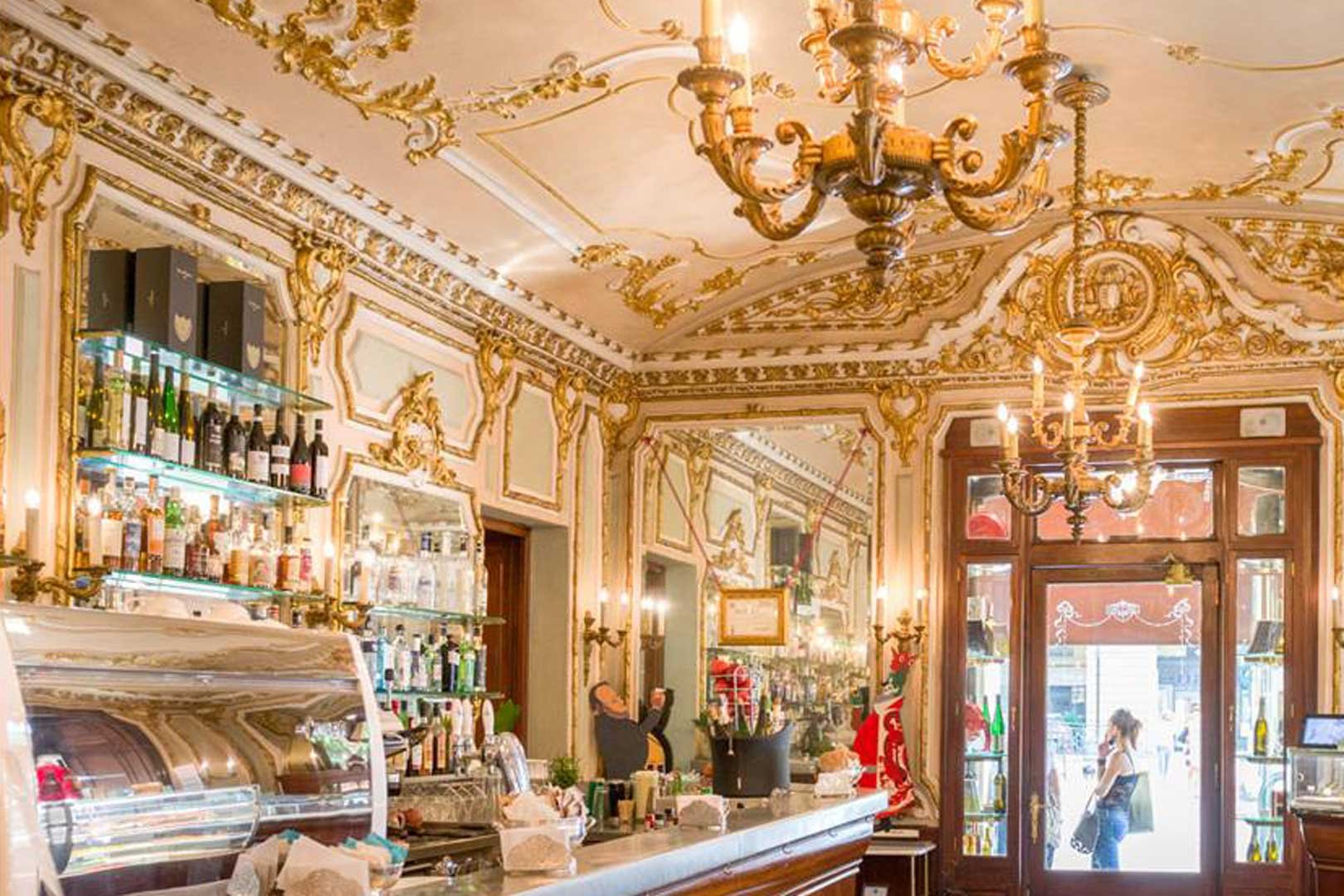
The Gran Caffè Tradition, Still Standing on Corso Vittorio Emanuele II
Turin built its civic identity around the gran caffè in a way that few Italian cities matched. From the nineteenth century onward, the covered arcades of the city centre sheltered a particular kind of institution: part coffee bar, part salon, part neighbourhood anchor. These were not places designed for quick consumption. The marble counters, the mirrored backbars, the aproned staff moving with practiced economy — all of it was built to slow the city down. Caffè Platti, at Corso Vittorio Emanuele II 72, belongs to that lineage. The address alone signals as much. The corso is one of Turin's principal arteries, wide and arcaded in the manner that defines the city's walkable centre, and a café holding ground here has been doing so across generations of change in how Italians drink and gather.
The context matters when reading a place like this. Turin's café scene has evolved in two distinct directions over the past decade. One branch runs toward the specialist: single-origin coffee programs, natural wine bars, fermentation-forward aperitivo counters. Bistrot Torrefazione Samambaia Torino and Banco Vini e Alimenti represent that current. The other branch holds to the classical format, the gran caffè model where the range is broad, the hours long, and the ritual more important than the provenance story. Caffè Platti operates in the second tradition, and the distinction shapes everything from the pace of service to the physical arrangement of the room.
What the Counter Tells You
In the gran caffè format, the bartender's role is less about invention and more about execution and consistency at volume. The person behind the bar at an institution like this is managing a different set of demands than a cocktail specialist at a low-capacity bar. The Torinese vermouth culture that built this city's drinking reputation was always a culture of reliable repetition: the same Campari spritz or Punt e Mes poured at the same hour each day, the espresso pulled to the same standard regardless of the morning rush. That consistency, maintained across shifts and seasons, is its own form of craft — one that receives less editorial attention than the single-bottle curiosity bars but represents a harder operational discipline over time.
Turin's particular contribution to Italian bar culture is the ritual of the afternoon aperitivo, which predates the Milan-exported spritz phenomenon by well over a century. The city's vermouth producers, many of whom established themselves in the Piedmont region during the 1800s, found their natural retail outlet in exactly this kind of café-bar. A gran caffè on a major corso was, in effect, the original vermouth venue, and that heritage remains embedded in how these spaces are used. Visiting one now is not an act of nostalgia so much as participation in a format that survived because it continued to serve a genuine social function. For comparison, the bar culture in cities like Milan , see Camparino in Galleria , maintains comparable institutions with similar longevity arguments, though Turin's claim to the vermouth origin story gives its historic cafés a different kind of authority.
Platti in the Turin Café Hierarchy
Turin's most-cited historic café is almost certainly Caffè Al Bicerin, which draws visitors specifically for the bicerin, the layered coffee-chocolate-cream drink that dates to the eighteenth century and is protected by its own geographical indication. Platti sits in a different register: broader in offering, less defined by a single signature drink, more oriented toward the regular customer than the destination visitor. That positioning is not a criticism. The gran caffè that serves the neighbourhood across morning coffee, midday aperitivo, and afternoon pastry occupies a different and arguably more demanding brief than a specialist institution built around one famous drink. Dora In Poi represents yet another variant of the Turin bar format, demonstrating how layered and internally differentiated the city's café culture has become.
For those mapping Turin's bar scene against Italian comparators elsewhere, the city's classical café culture has more in common with Rome's bar heritage , venues like Boeme operate in a similarly historically freighted city context , than with the cocktail-forward programs emerging from cities as different as Nicosia or Honolulu. The Naples variant, exemplified by L'Antiquario, skews toward the cocktail bar format despite the city's equally deep café roots. Florence's heritage venues, such as Gucci Giardino, now operate under luxury fashion branding that shifts their positioning considerably. Turin's gran caffè model, by contrast, has largely resisted that kind of repositioning and continues to operate on the original commercial logic: high footfall, broad offering, address permanence.
Planning a Visit
Caffè Platti sits at Corso Vittorio Emanuele II 72, easily reachable on foot from the city's central grid and from the main train station at Porta Nuova, which is approximately ten minutes' walk along the corso. The gran caffè format means no reservation is required for counter or table visits, and the hours typically span from morning coffee service through evening, making it suitable as a first stop of the day or an afternoon pause between the city's museum cluster around Via Po and the shopping streets of the Quadrilatero Romano. The practical rhythm of a visit is determined by the Torinese convention: espresso at the counter in the morning, a vermouth or Campari-based aperitivo from late afternoon onward. Pricing in venues of this type generally reflects the seated-versus-standing distinction that applies across Italian bar culture, with counter consumption typically less expensive than table service. For a fuller picture of where Platti sits among Turin's current bar and restaurant offerings, our full Turin restaurants guide maps the city's options by neighbourhood and format. Those specifically tracking the rooftop and design-led bar tier active in the broader Italian scene can cross-reference with venues like Alto Rooftop in Cervia to see how different the formats have become at either end of the spectrum.
Frequently Asked Questions
Just the Basics
A small comparison set for context, based on the venues we track.
Need a Table?
Our members enjoy priority alerts and concierge-led booking support for the world's most difficult bars and lounges.
Get Exclusive Access