Our verdict
Zum Goldenen Würstel II occupies a singular position in Vienna's First District, where the Würstelstand tradition meets the city's growing appetite for conscientious sourcing. Sitting apart from the €€€€ fine-dining tier dominated by venues like Steirereck im Stadtpark and Konstantin Filippou, it addresses a different but equally serious question: what does honest Viennese street food look like when ingredient provenance matters?

Pearl is the En Primeur Club membership app, where members save venues, book tables and use the concierge.

The Würstelstand in Context: Vienna's Most Argued-Over Food Institution
Few cities have refined a single street-food format to the level of cultural debate the way Vienna has with the Würstelstand. The sausage stand is not incidental to Viennese public life; it is woven into the rhythm of the city across income levels, neighbourhoods, and times of day. What has changed in the past decade is the degree to which operators and customers have begun asking where the sausage comes from, how the animal was raised, and whether a format this embedded in daily life carries any obligation to the supply chains that sustain it. Zum Goldenen Würstel II, at Kupferschmiedgasse 1a in the 1010 district, sits at the point where that debate becomes concrete.
Vienna's premium dining tier, anchored by addresses like Steirereck im Stadtpark and Amador, has spent years building sourcing narratives around Austrian regional producers. The story at the Würstelstand level has been slower to develop, which is precisely what makes the positioning of Zum Goldenen Würstel II worth examining. The venue is not competing with Konstantin Filippou or Mraz & Sohn for tasting-menu customers; it is asking whether the democratic, everyday format of the sausage stand can carry the same sourcing seriousness as those rooms do.
Sustainability as Format, Not Footnote
The sustainability conversation in Austrian gastronomy has largely been conducted at the top of the price range. Kitchens charging €€€€ per head have the margin to absorb the cost of certified regional meat, short supply chains, and reduced waste protocols. The challenge for a street-food operator is structural: lower ticket prices, higher volume, and customers who historically have not expected to pay more for traceable pork. The Würstelstand category is thus an interesting test case for whether ethical sourcing can exist outside the fine-dining bracket.
Across Austria, a small group of producers and operators have started to work on exactly this problem. The model emerging in several cities involves tighter relationships between sausage makers and specific farm suppliers, shorter cold chains, and a willingness to offer a smaller, more deliberate product range rather than the sprawling menus that characterise most Würstelstände. Venues like Döllerer in Golling an der Salzach have demonstrated at the restaurant level that Austrian terroir can anchor an entire sourcing philosophy; the question is whether that logic scales down to a street stand in the First District. Zum Goldenen Würstel II operates in that space, where the ambition is proportionate to the format rather than imported wholesale from fine dining.
The location in the 1010 district matters here. The First District draws international visitors, diplomatic traffic, and a local professional population that has been exposed to the sourcing conversations happening in higher-end rooms. That audience is more likely to register the difference between a generic industrially-produced Käsekrainer and one made with traceable Austrian pork, and more likely to pay a modest premium for it. The neighbourhood context creates conditions that would be harder to sustain in a higher-volume tourist corridor.
Where This Venue Sits Against the Vienna Scene
Vienna's restaurant scene in 2024 runs a wide tier range. At the leading, Doubek and the broader creative Austrian cohort have established that Austrian ingredients can anchor menus of genuine complexity. Below that, a middle tier of bistros and Gasthäuser handles daily trade with varying degrees of sourcing attention. The Würstelstand sits outside the formal restaurant category entirely, which has historically meant it was exempt from the sourcing scrutiny applied to seated venues. That exemption is starting to erode, particularly in city centres where customers arrive with higher baseline expectations.
The comparison set for Zum Goldenen Würstel II is therefore not Ikarus in Salzburg or Obauer in Werfen. The relevant peer group is the small number of Viennese Würstelstände that have made deliberate choices about product quality and sourcing, and that operate in locations where those choices are legible to the customer.
For readers planning a broader Austrian itinerary, the sourcing-conscious restaurant scene extends well beyond Vienna. Kräuterreich by Vitus Winkler in Sankt Veit im Pongau and Gourmetrestaurant Tannenhof in Sankt Anton am Arlberg both demonstrate how seriously Austrian producers and chefs take regional terroir at the higher end. Landhaus Bacher in Mautern an der Donau and Ois in Neufelden operate with similar intent at a slightly different register. The point is that the sourcing consciousness visible at Zum Goldenen Würstel II at street level has deep roots in Austrian culinary culture at every price point.
The First District Setting
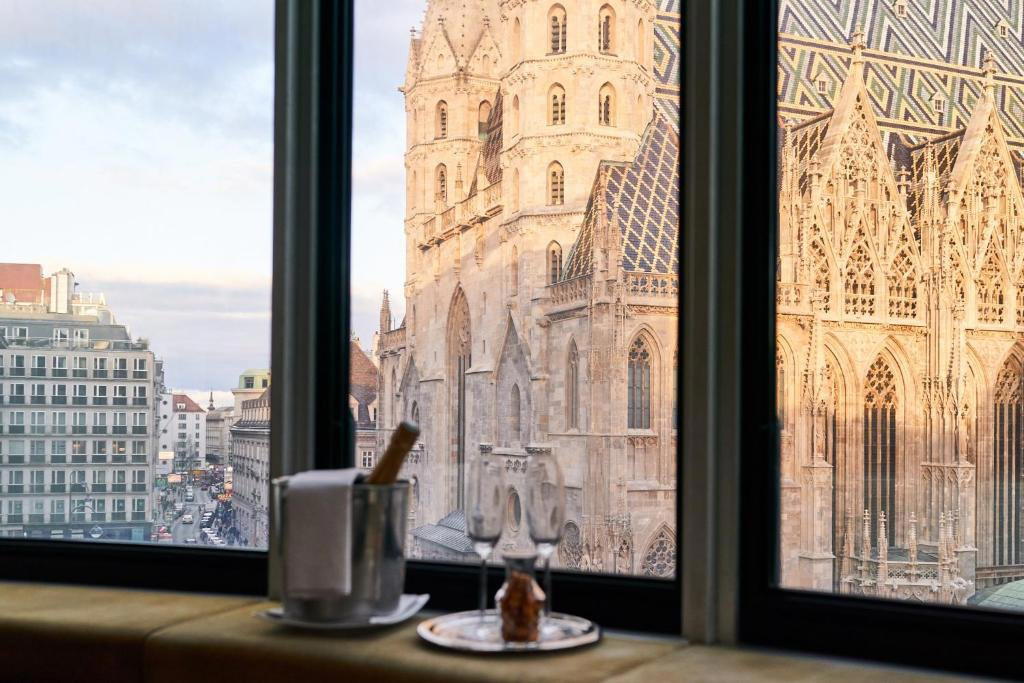
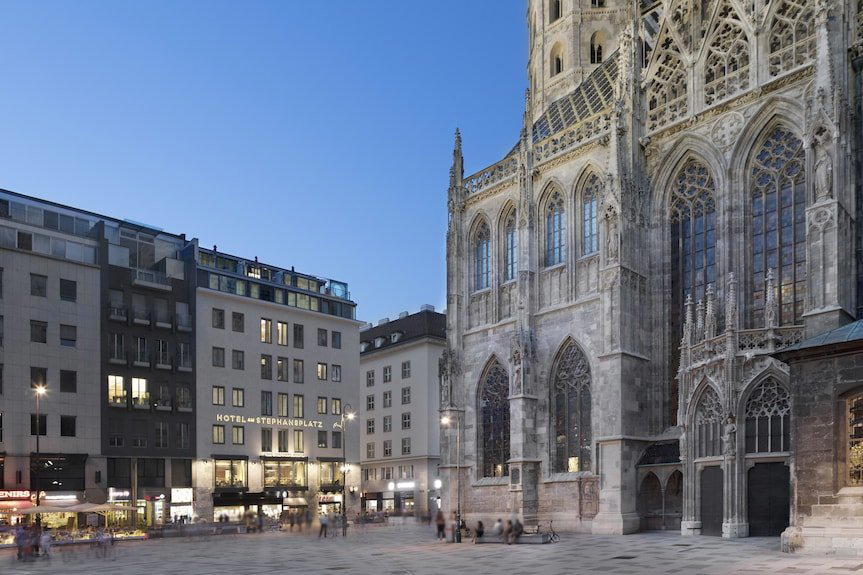
Kupferschmiedgasse 1a places the venue within walking distance of the Stephansdom and the dense concentration of cultural institutions that define the 1010. This is not a neighbourhood where a food operator blends into the background. The First District has high rents, high footfall, and customers who are often comparing what they encounter in Vienna against what they know from other European capitals. A Würstelstand in this postcode is making a statement simply by existing, and the name Zum Goldenen Würstel II, with its implied lineage, adds a layer of historical grounding that newer concepts cannot replicate quickly.
For international visitors who have already allocated time to Vienna's seated dining options, the Würstelstand visit is often treated as a cultural checkpoint rather than a serious food decision. The more interesting question is whether Zum Goldenen Würstel II can shift that framing, positioning the format as a legitimate expression of Austrian food culture with the same sourcing attention that diners expect from the rooms covered in our full Vienna restaurants guide.
Internationally, the pressure on street-food operators to address sourcing is not unique to Vienna. The same conversation is happening at different scales in New York, where venues like Le Bernardin have set sourcing standards that have gradually influenced the broader market, and in the fine-dining tier represented by places like Atomix, where supply chain transparency is treated as a core credential. Vienna's Würstelstand scene is engaging with that same pressure, at its own pace and on its own terms.
Planning Your Visit
The venue is located at Kupferschmiedgasse 1a, 1010 Wien, in Vienna's First District, within the historic centre and accessible from multiple U-Bahn lines. Reservations: Not applicable for a Würstelstand format; visit during off-peak hours to avoid First District foot traffic. Dress: No code; street-casual is the norm across the Würstelstand category. Budget: The Würstelstand price tier sits well below Vienna's €€€€ fine-dining rooms; expect to pay the modest premium that traceable sourcing typically adds over standard operators. Contact: No phone or website is currently listed; the address at Kupferschmiedgasse 1a is the reliable locating detail. For broader planning across Vienna's eating scene, including the full spectrum from regional Austrian destinations to mountain-setting venues and creative tasting menus, our full city guide covers the range in detail.
Frequently asked questions
What's the address for Zum Goldenen Würstel II?
Zum Goldenen Würstel II is located at Kupferschmiedgasse 1a, 1010 Wien, Austria, Vienna.
How does Zum Goldenen Würstel II compare to other Würstelstände in Vienna's First District?
The First District has a small number of operating Würstelstände given the density of competing food options and the high commercial rents that pressure street-food formats out of the historic centre. A stand at Kupferschmiedgasse 1a occupies genuinely scarce positioning for the format in Vienna's most visited neighbourhood. Whether the sourcing approach or product range differentiates it from peers at Hoher Markt or along the Ring is a question best answered in person rather than on paper.
What's the must-try dish at Zum Goldenen Würstel II?
The Würstelstand format centres on sausage in its various Austrian expressions, Käsekrainer, Bratwurst, Debreziner, and that core remains the reason to visit Kupferschmiedgasse 1a. The format rewards the regular over the researcher.
How hard is it to get a table at Zum Goldenen Würstel II?
The Würstelstand operates without reservations, which is both its defining accessibility and its occasional friction point. The Kupferschmiedgasse 1a address puts the stand within the highest-traffic corridor of Vienna's First District, close to the Stephansdom, so peak tourist hours will mean a queue. Off-peak timing, late morning or mid-afternoon, generally means faster service.
What do critics highlight about Zum Goldenen Würstel II?
Within the broader Vienna Würstelstand conversation, the stands that attract editorial attention tend to be those with a stated sourcing position, provenance-conscious suppliers, regional breed specificity, and Zum Goldenen Würstel II's positioning in that segment is the context worth watching.
Can Zum Goldenen Würstel II adjust for dietary needs?
The Würstelstand format is anchored in meat-based product, which limits its range by design rather than by oversight. Anyone with specific dietary requirements should check the venue's official channels before visiting Kupferschmiedgasse 1a.
Is a meal at Zum Goldenen Würstel II worth the investment?
The Würstelstand sits at the accessible end of Vienna's food price spectrum, where the question of value is less financial and more about what the format delivers: speed, directness, and a format with over a century of documented presence in Viennese daily life. At Kupferschmiedgasse 1a in the First District, the location alone, steps from the Stephansdom, gives the experience a density of context that a restaurant meal in the same postcode would charge considerably more to provide.
At a Glance
Comparable venues nearby, for context on price, style, and recognition.
| Venue | Cuisine | Price | Notes |
|---|---|---|---|
| Zum Goldenen Würstel IIThis venue (the venue you are viewing) | Viennese Sausage Stand | $10–20 | Not listed |
| Würstelstand am Schottentor | Viennese Sausage Stand | $1–10 | Inner City, Viennese Sausage Stand |
| Fladerei Otto Bauer Gasse | Austrian Flatbread (Fladenbrot) | $10–20 | Mariahilf, Austrian Flatbread (Fladenbrot) |
| Leberkas-Pepi | Traditional Austrian Leberkäse | $10–20 | Favoriten, Traditional Austrian Leberkäse |
| Claudias Imbiss zum Alserspitz | Austrian Street Food | $1–10 | Josefstadt, Austrian Street Food |
| Würstlstand Burgring | Traditional Viennese Sausage Stand | $1–10 | Hofburg, Traditional Viennese Sausage Stand |
Continue exploring
More in Vienna
Restaurants in Vienna
All restaurants in Vienna →
Bars in Vienna
All bars in Vienna →
Details
- Lively
- Well Known
- Classic
- Casual Hangout
- Late Night
- Standalone
- Historic Building
- Beer Program
- Local Sourcing
- Street Scene
- A La Carte
- Beer
Current opening hours
- Monday
- 9 AM–2 AM
- Tuesday
- 9 AM–2 AM
- Wednesday
- 9 AM–2 AM
- Thursday
- 9 AM–2 AM
- Friday
- 9 AM–4 AM
- Saturday
- 9 AM–4 AM
- Sunday
- 9 AM–2 AM
Hours can change for holidays and private events. Hours as of .
Casual street food atmosphere with standing tabletops only, no indoor seating, busy with late-night energy in Vienna's historic center.