Our verdict
At Vienna's Hauptbahnhof, Leberkas-Pepi represents the working end of Austrian sausage culture: a counter-service institution where the Leberkäse loaf is carved fresh and the queue moves fast. It occupies the practical tier of the city's eating spectrum, positioned far from the tasting-menu circuit but central to how Viennese actually eat on the move.

Pearl is the En Primeur Club membership app, where members save venues, book tables and use the concierge.

Counter Culture at the Hauptbahnhof
Vienna's Hauptbahnhof is one of Central Europe's more functional transport hubs, rebuilt and opened in 2015 to consolidate long-distance rail traffic that had previously split across the city. The food offer inside any major terminus tends toward the transactional, but Austria has a counter-service tradition that sits a register above the average station sandwich. Leberkas-Pepi, positioned at Am Hbf 1, operates within that tradition: a specialist in Leberkäse, the pressed, oven-baked meat loaf that occupies a specific and serious place in Viennese street food culture.
Approaching the counter, the format is immediately legible. The Leberkäse loaf sits under heat, sliced to order, and served in a bread roll with mustard. This is not an evolved or reimagined version of the dish. It is the dish as it has existed for generations in butcher shops and market stalls across Vienna and Bavaria, unchanged because there is no credible argument for changing it. The Hauptbahnhof location places it within reach of commuters, travellers, and the lunchtime office circuit in the surrounding 10th district.
Where Leberkas-Pepi Sits in Vienna's Eating Hierarchy
Vienna's restaurant scene operates across a wide price and format range. At the leading, the city's creative fine-dining addresses, including Steirereck im Stadtpark, Amador, and Konstantin Filippou, work at the €€€€ tier with tasting menus and serious wine programs. Operations like Mraz & Sohn and Doubek occupy a creative middle ground. Leberkas-Pepi occupies a different register entirely: the fast, cash-in-hand, no-booking counter that Viennese food culture has always maintained alongside its more formal dining traditions.
That coexistence is not incidental. Austrian culinary identity has long held the Würstelstand and the Konditorei alongside its Michelin-starred kitchens. The Leberkäse roll at a good counter is not a lesser version of a restaurant meal; it is a different category of eating with its own set of quality markers, primarily the freshness of the loaf, the ratio of meat to fat, and the crust-to-interior texture. Leberkas-Pepi's focus on this single product category places it in a specialist cohort rather than a general fast-food one.
The Product: What Austrian Leberkäse Actually Is
Leberkäse translates loosely as liver cheese, though contemporary versions rarely contain liver and never contain cheese. The name is a historical artefact. The product is a fine-ground mixture of pork, beef, bacon, and onion, packed into a loaf tin and baked until the exterior develops a dark, lacquered crust. It is served hot, carved thick, and placed into a Semmel roll with a line of sharp mustard. The quality differential between a fresh-cut Leberkäse from a specialist counter and the pre-sliced versions found in supermarkets is considerable, and it is exactly this differential that specialist operations like Leberkas-Pepi exist to provide.
Across Austria, the counter-service Leberkäse format has been a stable part of the eating landscape since at least the early twentieth century. The dish connects Vienna to southern Germany, particularly Bavaria, where it appears under nearly identical preparation. In both regions, quality counters distinguish themselves through the sourcing of their meat mix and the timing of their baking schedule, keeping fresh loaves cycling through the oven to avoid the texture degradation that comes with extended holding. For the traveller eating in transit at the Hauptbahnhof, the choice of a specialist counter over a generic food court option reflects an understanding of where Austrian food culture actually concentrates its craft at the everyday level.
The Hauptbahnhof Context and Practical Positioning
Vienna's Hauptbahnhof serves Railjet connections to Budapest, Bratislava, Graz, Salzburg, and beyond. The station's retail and food offer is designed for dwell times that range from five minutes to an hour, and the counter-service format at Leberkas-Pepi fits that rhythm precisely. There is no booking, no table wait, and no extended service interaction. You arrive, you order, you eat. This positions it as a practical option for travellers on regional rail itineraries that might also include stops at restaurants like Döllerer in Golling an der Salzach, Ikarus in Salzburg, or Obauer in Werfen, where the meal register shifts dramatically.
The 10th district surrounding the station is not a traditional dining destination in the way that the 1st or 7th districts are, but it has functional density. The Hauptbahnhof itself contains enough food options to serve a range of price points, with Leberkas-Pepi occupying the low end of the cost range without compromising on product specificity. For those making day trips from Vienna into Styria, Salzburg, or the Tirol region, stopping here before or after a train journey is a logistically sensible choice. Regional Austrian fine dining worth planning around includes Griggeler Stuba in Lech, Schwarzer Adler in Hall in Tirol, Gourmetrestaurant Tannenhof in Sankt Anton am Arlberg, Restaurant 141 by Joachim Jaud in Mieming, Kräuterreich by Vitus Winkler in Sankt Veit im Pongau, Landhaus Bacher in Mautern an der Donau, and Ois in Neufelden.
For a broader orientation to eating across the Austrian capital, our full Vienna restaurants guide maps the city's dining across categories and price tiers. Internationally, those calibrating the everyday-to-fine-dining contrast might also note how cities like New York handle the same spectrum, from the counter-service end through to tasting-menu addresses like Le Bernardin and Atomix.
Planning Your Visit
Leberkas-Pepi at Am Hbf 1 is a walk-in counter with no reservation required. The format is fast-service and designed around transit traffic, making it accessible before or after rail travel through Vienna Hauptbahnhof. No booking infrastructure, dress code, or extended planning is needed. It represents the practical, specialist end of Viennese sausage culture rather than its formal dining tier.
Quick reference: Am Hbf 1, 1100 Wien. Walk-in only. No reservation required.
Frequently asked questions
at Leberkas-Pepi?
The core product is Leberkäse, the baked meat loaf served hot in a bread roll with mustard. At a specialist counter like this, that is the order to place. The quality case for visiting rests entirely on this item: a fresh-baked loaf, cut to order, eaten immediately. Ordering anything peripheral would miss the point of what the operation is built around.
Is Leberkas-Pepi reservation-only?
No. The counter-service format requires no reservation. In Vienna, this style of eating sits at the walk-in end of the spectrum, the opposite pole from the city's tasting-menu restaurants, where forward booking of weeks to months is standard. If you are in the Hauptbahnhof, you can walk up and order directly.
What do critics highlight about Leberkas-Pepi?
What the format itself signals is consistent with the Austrian counter-service tradition: the emphasis is on product specificity and freshness rather than on service theatre or tasting-menu architecture. The Leberkäse specialist format is the critical claim, not any individual award or review.
Can Leberkas-Pepi adjust for dietary needs?
The core product is a pork and beef meat loaf. Vienna's broader dining scene, detailed in our Vienna guide, covers a wider range of dietary formats if the counter-service sausage format does not fit your needs.
Is Leberkas-Pepi good value for money?
Leberkäse counter operations in Vienna sit at the lower end of the city's eating cost range by design. The price-per-calorie ratio at a specialist sausage counter is typically favourable relative to café or restaurant alternatives in the same transport hub.
How does Leberkas-Pepi compare to other Leberkäse specialists in Vienna?
Vienna has a number of dedicated Leberkäse counters, with the format appearing in traditional butcher shops, market halls like the Naschmarkt, and transport-hub locations. The Hauptbahnhof positioning of this branch makes it one of the more accessible for rail travellers passing through the city. What distinguishes specialist counters from generic station food is the baking cycle and meat quality, not the location. Leberkas-Pepi operates as a named specialist in this category, which places it in a different tier from the generic fast-food alternatives sharing the same terminal.
Reputation Context
Comparable venues nearby, for context on price, style, and recognition.
| Venue | Cuisine | Price | Notes |
|---|---|---|---|
| Leberkas-PepiThis venue (the venue you are viewing) | Traditional Austrian Leberkäse | $10–20 | Not listed |
| eh scho wuascht | Traditional Austrian Würstelstand | $10–20 | Kaiserebersdorf |
| Alles Wurscht | Modern Viennese Sausage Stand | $10–20 | Inner City |
| Dani's Imbisstüberl | Austrian Sausage Imbiss | $10–20 | Simmering |
| Leo's Sausage Stand | Traditional Austrian Sausage Stand | $10–20 | Doebling |
| Würstelstand Christian Lange | Austrian Sausage Stand | $10–20 | Rudolfsheim |
Continue exploring
More in Vienna
Restaurants in Vienna
All restaurants in Vienna →
Bars in Vienna
All bars in Vienna →

Details
- Rustic
- Cozy
- Casual Hangout
- Standalone
- Beer Program
- A La Carte
- Beer
- Gluten Free Options
Current opening hours
- Monday
- 9 AM–10 PM
- Tuesday
- 9 AM–10 PM
- Wednesday
- 9 AM–10 PM
- Thursday
- 9 AM–10 PM
- Friday
- 9 AM–10 PM
- Saturday
- 9 AM–10 PM
- Sunday
- 9 AM–10 PM
Hours can change for holidays and private events. Hours as of .
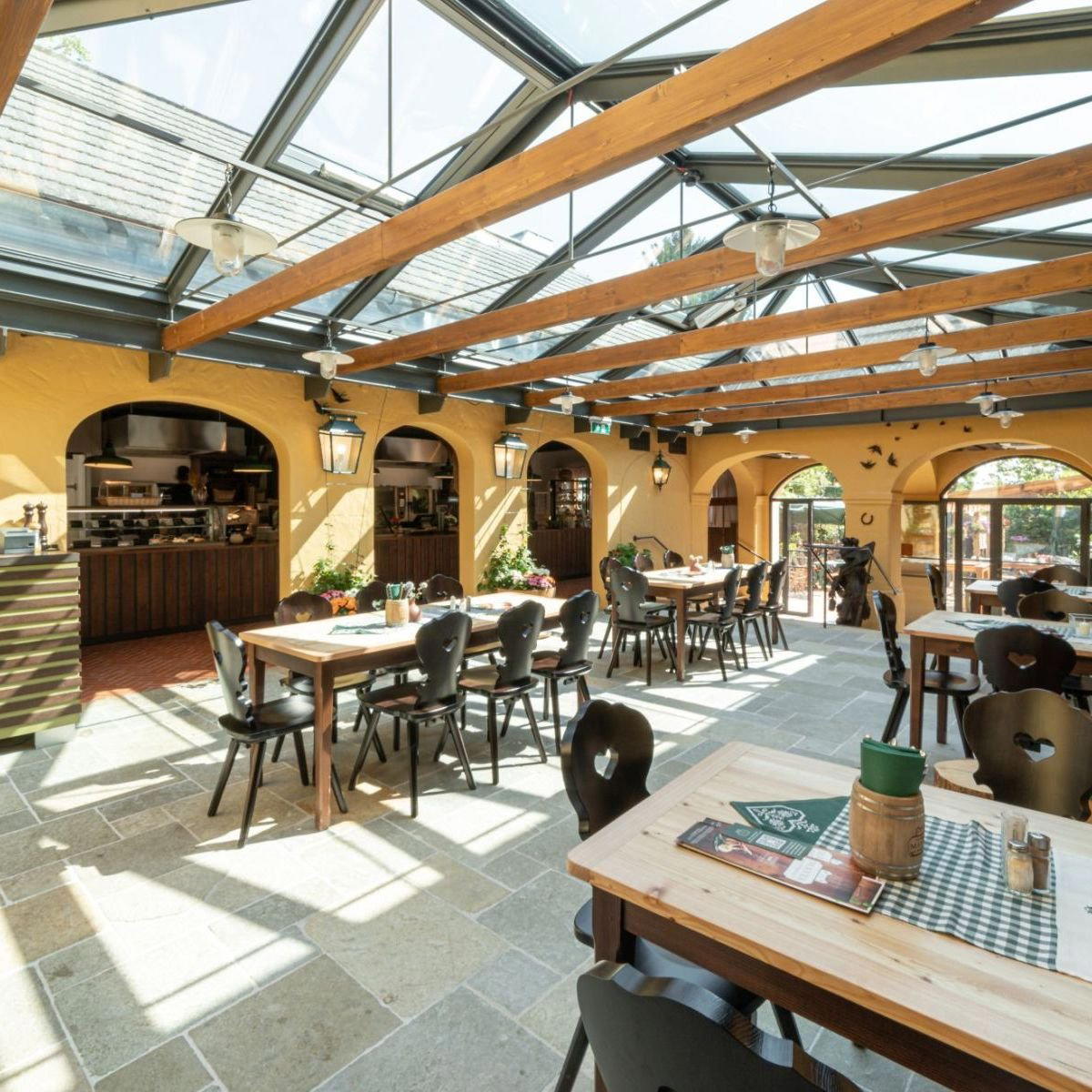
Casual and homely with limited indoor seating, bustling during peak hours, offering a quick and authentic Viennese snack experience.