Our verdict
Fladerei Otto Bauer Gasse occupies a quiet address in Vienna's 6th district, where the city's Fleckerl and Mehlspeisen traditions meet a neighbourhood pace that the tourist-facing Innere Stadt rarely delivers. The format sits in the casual, ingredient-focused tier that has quietly become one of the more interesting corners of Viennese dining. A practical entry point into the local everyday eating culture.

Pearl is the En Primeur Club membership app, where members save venues, book tables and use the concierge.

The menu
What to order
- Vegan Flade
- Bruschetta Flade
- Hawaii Flade
- Sour Cream Flade
Mariahilf's Quieter Register
Vienna's 6th district moves at a different frequency from the Ringstrasse circuit. Otto-Bauer-Gasse runs through a residential and lightly commercial stretch of Mariahilf where the dominant sound is street-level rather than hotel-lobby. The buildings are Gründerzeit, the pace is neighbourhood, and the eating options tend to reflect what local residents actually want on a Tuesday rather than what a concierge would recommend to a first-time visitor. It is in this context that Fladerei Otto Bauer Gasse operates, at address number 26, a slot in the street that requires no ceremony to enter and carries none of the self-conscious staging that defines the city's higher price tiers.
Vienna's dining geography rewards this kind of attention. The city's most-discussed restaurants Steirereck im Stadtpark, Amador, and Konstantin Filippou, occupy a formal, tasting-menu-led tier priced at €€€€ and oriented toward destination dining. Below that, and often more revealing of how a city actually eats, sits a stratum of smaller, format-specific spots where a single category of food or preparation is taken seriously without the surrounding apparatus of luxury service. Fladerei belongs to this stratum, and for visitors who read a city through its everyday formats rather than its award-circuit restaurants, that positioning is the point.
What the Name Carries
The word Fladerei signals category before anything else. In the Central European baking and café tradition, a Fladen refers to a flat, often round bread or dough base, a form with deep roots in the region's grain culture and one that shows up across Austrian, German, and Bohemian cooking in various guises. A venue that foregrounds this term in its name is declaring its focus narrowly and deliberately. The tradition of building a restaurant identity around a single preparation or format has precedents at several levels of the Austrian dining spectrum, from the Mehlspeisen specialists of the old coffee-house culture to the more contemporary approach visible at places like Mraz & Sohn and Doubek, where a distinct product logic shapes the whole offer. At this address, that logic operates at the neighbourhood rather than the fine-dining register.
Internationally, the model of the format-specific restaurant, one product category, executed with concentration, has shown durability at multiple price points. Le Bernardin in New York City applies it at the top of the seafood spectrum; Lazy Bear in San Francisco uses it to compress a tasting format around communal Americana. The discipline works because it forces a clarity of identity that generalist menus can obscure. At Otto-Bauer-Gasse 26, that discipline appears to operate in a quieter, more accessible key.
The Sensory Register of a Neighbourhood Bread Spot
In European cities where bread and flatbread culture has a genuine street-level presence, the atmosphere of a specialist is specific. The smell of dough and oven heat tends to arrive before the interior does. Counter formats, which are common in this category, create a different acoustic environment than table-service restaurants: closer, less formal, with the sounds of preparation as part of the experience rather than something separated behind a kitchen wall. Natural light matters more in spaces where the product is the focus, and the visual texture of a working bakery counter, flour, ceramic, the colour of a baked crust, carries its own sensory weight.
These are the conditions that define the category to which Fladerei Otto Bauer Gasse belongs, across the European cities where this format has established itself most clearly. Vienna has its own version of this tradition through the Bäckerei and Konditorei culture, and the 6th district has enough residential density and neighbourhood foot traffic to support a format that depends on regulars as much as destination visitors. The difference between a venue of this kind and the formal dining rooms of the Vienna restaurant scene is not merely price, it is the entire structure of the encounter, from how you approach the space to how long you remain in it.
Placing This Address in the Austrian Dining Context
Austria's serious dining culture extends well beyond Vienna. The regional restaurant scene includes Döllerer in Golling an der Salzach, Landhaus Bacher in Mautern an der Donau, Obauer in Werfen, and alpine specialists such as Gourmetrestaurant Tannenhof in Sankt Anton am Arlberg, Stüva in Ischgl, and Schwarzer Adler in Hall in Tirol. Further afield, Kräuterreich by Vitus Winkler in Sankt Veit im Pongau, Ois in Neufelden, Restaurant 141 by Joachim Jaud in Mieming, and Taubenkobel in Schützen am Gebirge extend the picture of where Austrian cooking is happening with seriousness and intention. What that broader map demonstrates is that Austrian dining identity is not reducible to Viennese haute cuisine, and that ingredient-led, format-specific approaches have found committed practitioners across multiple regions and price points. Fladerei Otto-Bauer-Gasse connects to this broader current at the neighbourhood end of the spectrum, where the commitment is to a specific product rather than to a complex service architecture.
Planning Your Visit
Fladerei Otto Bauer Gasse is located at Otto-Bauer-Gasse 26, 1060 Wien in Vienna's 6th district, Mariahilf. The area is well served by U-Bahn and tram connections, with the Westbahnhof and Mariahilfer Strasse transit nodes within walking range. Given the neighbourhood format and the category of venue, timing toward mid-morning or lunchtime tends to align with when bread-focused spots of this type operate at peak. The 6th district's density of coffee-house culture and casual eating options makes it a practical base for a broader half-day of eating and walking in inner Vienna.
Frequently asked questions
What's the must-try dish at Fladerei Otto Bauer Gasse?
How hard is it to get a table at Fladerei Otto Bauer Gasse?
Is Fladerei Otto Bauer Gasse suitable for visitors who want to understand everyday Viennese food culture rather than the fine-dining circuit?
Quick Comparison
| Venue | Cuisine | Price | Awards | Notes |
|---|---|---|---|---|
| Fladerei Otto Bauer GasseThis venue (the venue you are viewing) | Austrian Flatbread (Fladenbrot) | $10–20 | Not listed | Not listed |
| Steirereck im Stadtpark | Modern Austrian Fine Dining | $200–300 | 3 Michelin Stars · World's 50 Best #33 | Creative |
| Konstantin Filippou | Modern Fish-Led Fine Dining | $200–300 | 2 Michelin Stars · La Liste Top Restaurants | Modern European, Modern Cuisine |
| Mraz & Sohn | Contemporary Austrian Fusion | $150–200 | 2 Michelin Stars · La Liste Top Restaurants | Modern Austrian, Creative |
| Silvio Nickol Gourmet Restaurant | Modern Austrian Fine Dining | $300–500 | 2 Michelin Stars · La Liste Top Restaurants | Modern Cuisine |
| APRON | Modern Austrian Fine Dining | $150–200 | 1 Michelin Star · Falstaff Restaurant - 95 Falstaff Points | Austrian, Creative |
Continue exploring
More in Vienna
Restaurants in Vienna
All restaurants in Vienna →
Bars in Vienna
All bars in Vienna →
Details
- Casual
- Lively
- Trendy
- Casual Hangout
- After Work
- Group Dining
- Late Night
- Open Kitchen
- Standalone
- Beer Program
- A La Carte
- Beer
- Vegetarian Friendly
- Vegan Options
Current opening hours
- Monday
- 11:30 AM–11 PM
- Tuesday
- 11:30 AM–11 PM
- Wednesday
- 11:30 AM–11 PM
- Thursday
- 11:30 AM–11 PM
- Friday
- 11:30 AM–11 PM
- Saturday
- 11:30 AM–11 PM
- Sunday
- 5–10 PM
Hours can change for holidays and private events. Hours as of .
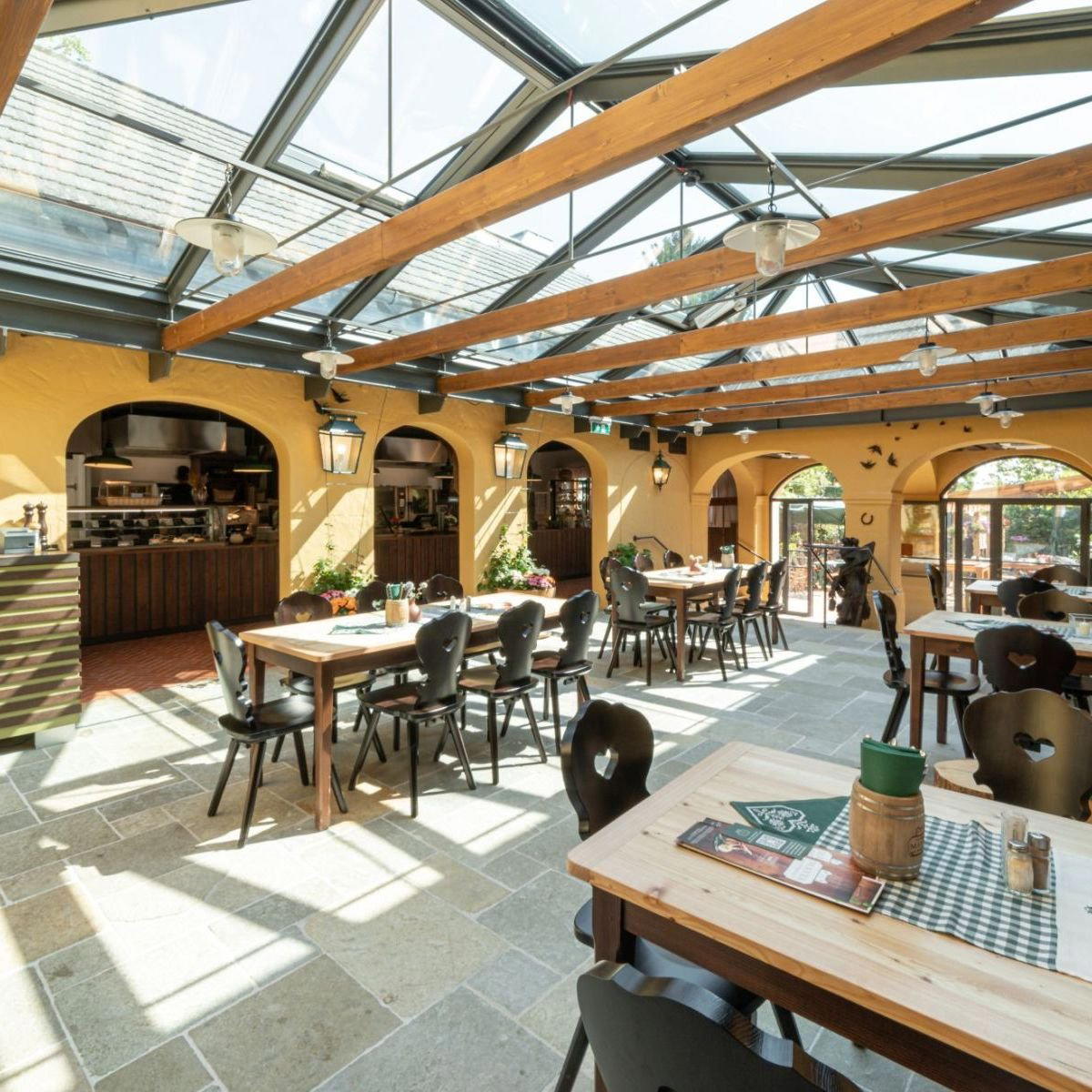
Casual, energetic student-oriented locale with a large beer garden atmosphere; casual and unpretentious.