Our verdict
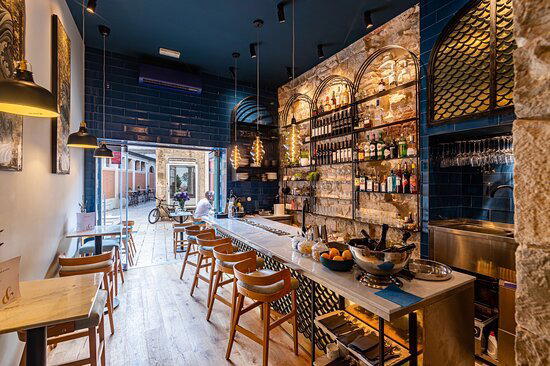
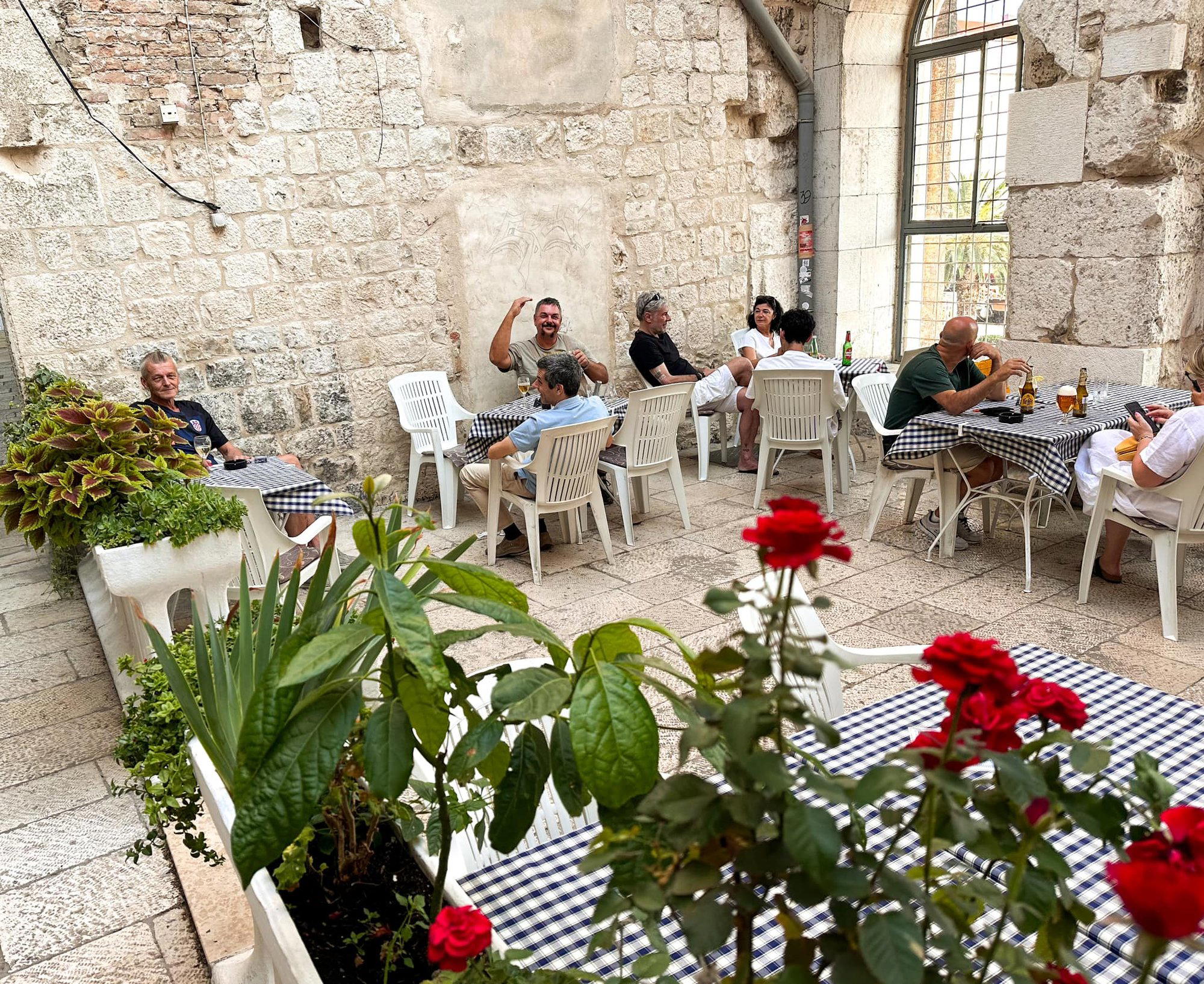
Zora Bila occupies a promenade address at Šetalište Petra Preradovića 2 in Split, positioning it within the city's waterfront dining corridor where the Adriatic sets the sensory register before a dish arrives. The venue sits in a city where the gap between tourist-facing tavernas and serious local dining has narrowed considerably in recent years, making address and atmosphere two of the more reliable first signals to read.

Pearl is the En Primeur Club membership app, where members save venues, book tables and use the concierge.

Where the Promenade Sets the Terms
Split's waterfront promenade does a specific thing to a meal before it begins. The salt in the air, the flat light off the Adriatic in the early evening, the sound of the city moving between the old town walls and the sea: these are conditions that any restaurant on Šetalište Petra Preradovića has to either work with or against. Zora Bila sits at number 2 on that promenade, which means the setting arrives first and the kitchen answers to it. In a city where the leading dining experiences have increasingly learned to treat the Dalmatian coast as a living pantry rather than a backdrop, that relationship between environment and plate matters more than the address alone suggests.
Split has developed a more layered restaurant scene over the past decade. The city spent years operating on a direct split between tourist-facing konobas and a thin tier of more serious kitchens. That gap has compressed. Venues along and near the waterfront now compete on cooking credibility as much as on position, and the promenade corridor specifically has attracted operators who understand that the location raises expectations rather than excusing soft execution. Zora Bila's address places it inside that competitive frame from the moment a guest approaches.
Reading the Room: Atmosphere as Information
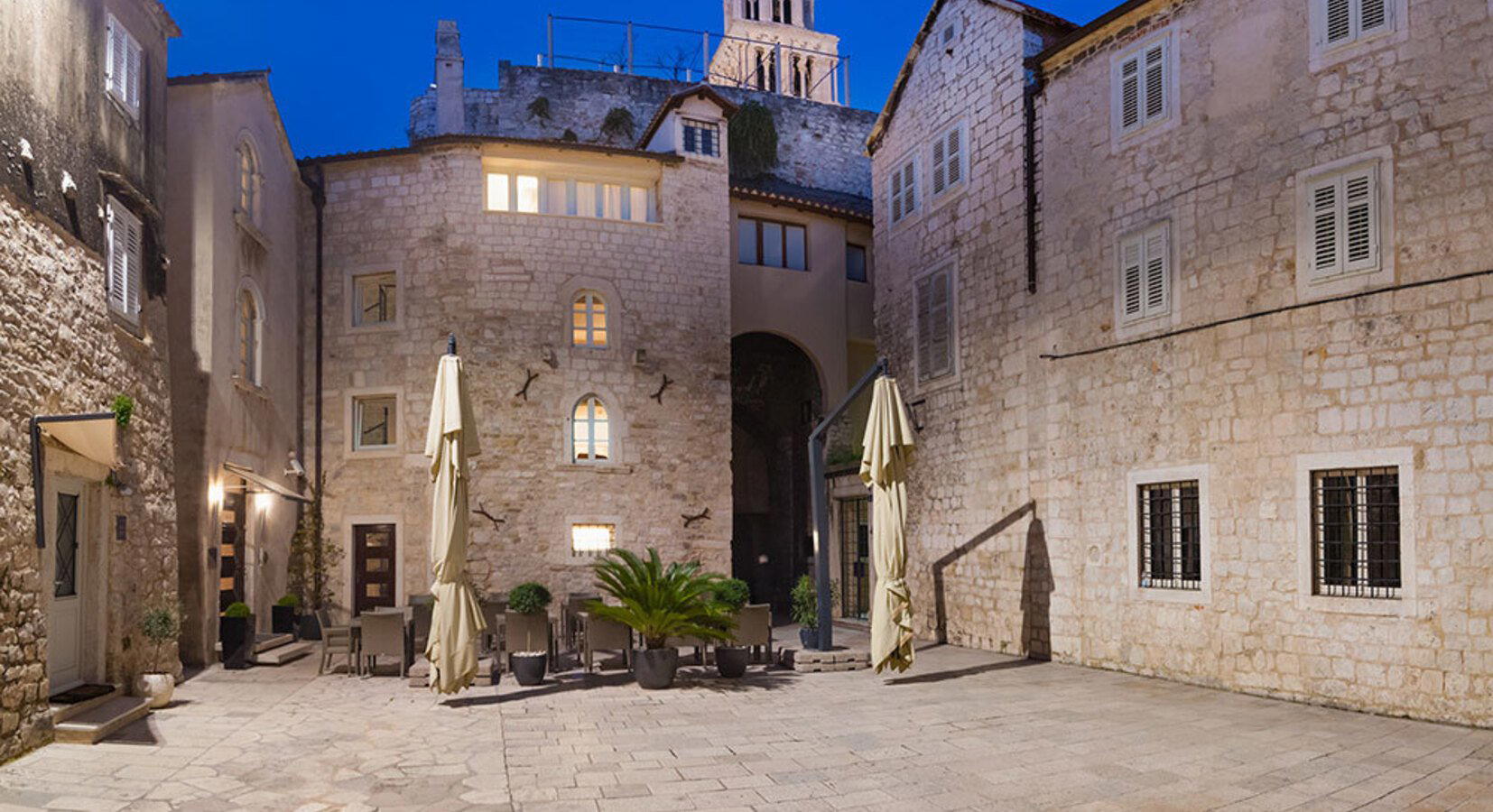
On the Dalmatian coast, the sensory experience of a restaurant often precedes the menu by a meaningful margin. Stone, light, and water define the architectural register of Split in ways that carry into dining rooms directly or indirectly. Promenade venues in particular tend to operate with a visual openness that interior old-town spots cannot offer: sightlines extend across the harbour, the quality of light shifts through a meal, and the ambient sound of the waterfront becomes part of the rhythm of an evening rather than a distraction from it.
This matters because the Adriatic promenade in Split functions differently from equivalent waterfront strips in, say, Dubrovnik or Rovinj. The Riva here is a working public space used by locals as much as visitors, which gives it a texture that purely tourist-facing waterfronts lack. A venue positioned on it operates in that shared social atmosphere rather than in a sealed hospitality bubble. For comparison, Restaurant 360 in Dubrovnik commands its position through dramatic Old City wall views that are largely visitor-oriented; Split's promenade dynamic is more mixed, and venues that read that correctly tend to run at a different register of formality and pace.
Split's Dining Tier in Context
Croatia's serious restaurant scene is distributed across a set of cities and island towns that each carry distinct culinary identities. Pelegrini in Sibenik and Agli Amici Rovinj in Rovinj represent the Michelin-recognised tier of Adriatic dining, where tasting menus engage with local ingredients through technically ambitious frameworks. Boskinac in Novalja and LD Restaurant in Korčula anchor premium dining in island contexts where the relationship between estate, vineyard, and kitchen is a defining structural choice. Nebo by Deni Srdoč in Rijeka positions itself in a city-hotel format with chef-driven ambitions that have drawn national attention. Alfred Keller in Mali Losinj and Dubravkin Put in Zagreb each represent distinct modes of premium Croatian dining away from the Dalmatian coast. Korak in Jastrebarsko takes the estate-winery model inland.
Split itself has its own internal tier structure. Krug (Mediterranean Cuisine) operates at the €€€ level with a Mediterranean framework that positions it toward the city's premium end. Adriatic and Bistro Noir represent different takes on the city's mid-to-upper dining range, while Bajamonti POP and Bokamorra operate with more casual formats that have built strong local followings. Our full Split restaurants guide maps these distinctions in more detail for readers building a multi-day itinerary.
Dalmatian cuisine, at its most considered, works within a Mediterranean grammar that privileges restraint: olive oil, salt, fire, and time do most of the structural work, with the quality of primary ingredients carrying the argument. The fish traditions of this coastline, the lamb from the islands, the dried fig and caper combinations that appear across the region, these are not decorative local touches but functional flavour systems with deep historical roots. Kitchens that understand this tend not to reach for complication when the ingredient speaks clearly enough on its own. It is a standard by which coastal Dalmatian restaurants are quietly but firmly judged by the people who eat in them regularly.
Planning a Visit
Šetalište Petra Preradovića 2 is on Split's waterfront promenade, the Riva, which runs directly in front of Diocletian's Palace. The address is walkable from the old town centre and from most of Split's central accommodation. The promenade is publicly accessible, and the approach to any venue on it is part of the experience: arrive with time to walk the length of the Riva before sitting down.
Split's dining season peaks between June and September, when the city absorbs significant visitor numbers and reservation capacity across the better venues tightens considerably. Visitors planning to eat at waterfront addresses during high summer should approach booking with the same lead time they would apply to island restaurants during peak season, where a week's notice is often insufficient. The shoulder months of May and October offer a materially different experience: lighter crowds, cooler evening temperatures on the promenade, and kitchens that are often operating at a more focused register than during peak-volume summer service.
Venues along the Riva tend to operate with seasonal variation in hours, and confirming current service times before visiting is a practical step that applies across Split's waterfront dining corridor.
For readers extending beyond Split, BioMania Bistro Bol in Bol offers a point of comparison for island dining on Brač, accessible by a short ferry crossing from Split's port.
Frequently asked questions
How do I find Zora Bila?
Zora Bila is located at Šetalište Petra Preradovića 2, 21000, Split, Croatia, Split.
Is Zora Bila a good choice for dinner on Split's Riva with a palace view?
Zora Bila is positioned at Šetalište Petra Preradovića 2, placing it on the Riva directly in front of Diocletian's Palace, one of the best-preserved late-Roman structures in the Mediterranean. Evening sittings on this promenade carry a specific atmosphere that daylight visits do not replicate, as the palace facade and harbour light shift considerably after sunset. For visitors whose priority is combining dinner with that particular visual context in Split, the address itself makes Zora Bila a logical candidate.
What do people recommend at Zora Bila?
Zora Bila's position on Split's Riva promenade is itself a draw that shapes how guests experience the meal. The waterfront setting at Šetalište Petra Preradovića 2 places diners directly in front of Diocletian's Palace, which means the surrounding architecture and Adriatic light are part of what visitors consistently flag as memorable. Specific dish recommendations are best gathered on arrival or via current local sources, as the menu reflects Dalmatian coastal rhythms.
How far ahead should I plan for Zora Bila?
Zora Bila sits on one of Split's most trafficked stretches of waterfront, the Riva, which draws significant footfall during Adriatic high season from June through August. Securing a table in advance during those months is advisable, particularly for evening sittings with a promenade view. Contact details are not currently listed, so checking directly through local concierge services or walk-in enquiry is the practical route.
What's the standout thing about Zora Bila?
The address at Šetalište Petra Preradovića 2 is the clearest answer: few restaurants in Split occupy a more directly positioned spot on the Riva, with Diocletian's Palace as an immediate backdrop and the Adriatic in front. On the Dalmatian coast, a dining room's physical relationship to the sea and stone carries real weight, and Zora Bila's location puts it in a position that most venues in the city centre cannot match on geography alone.
Do they accommodate allergies at Zora Bila?
For guests with dietary requirements, the practical approach is to raise specifics directly with the restaurant before arrival. Dalmatian coastal kitchens typically work with seafood, olive oil, and fresh produce as foundations, so flagging restrictions in advance gives the kitchen the best chance to adjust.
Where the Accolades Land
Comparable venues nearby, for context on price, style, and recognition.
| Venue | Cuisine | Price | Notes |
|---|---|---|---|
| Zora BilaThis venue (the venue you are viewing) | Modern Dalmatian Mediterranean | $50–100 | Not listed |
| FANTAŽIJA kitchen and wine | Modern Dalmatian Mediterranean | $50–100 | Old Town |
| Corto Maltese | Modern Mediterranean Freestyle | $30–50 | old town |
| Konoba Korta | Traditional Dalmatian Seafood | $20–30 | Diocletian's Palace |
| Matoni | Modern Dalmatian Mediterranean | $20–30 | Bacvice |
| Štorija | Modern Dalmatian Fine Dining | $50–100 | Old Town |