Korak


1 Michelin Star · Falstaff Restaurant - 92 Falstaff Points
Our verdict
A Michelin-starred contemporary restaurant in the Plešivica wine country outside Zagreb, Korak has held its star in both 2024 and 2025, placing it among Croatia's most decorated tables outside the Dalmatian coast. Chef Bernard Korak's cooking draws on the agricultural character of the Jastrebarsko region, with a price point at the upper tier of Croatian fine dining.

Pearl is the En Primeur Club membership app, where members save venues, book tables and use the concierge.
Wine Country, Continental Register
Croatia's Michelin map has historically clustered along the Adriatic, with Dubrovnik, Split, and Istria collecting most of the recognition. The continental interior is a different proposition: quieter, more agrarian, and less legible to international visitors who default to the coast. Plešivica, a wine-producing ridge roughly 30 kilometres southwest of Zagreb, sits inside that overlooked zone. The approach from the capital runs through rolling hills planted with Riesling, Graševina, and Pinot Noir, a landscape that signals something closer to central European wine culture than Dalmatian tourism. This is the context in which Korak operates, and it matters for understanding what the restaurant is actually doing.
For a broader picture of where to eat, sleep, and drink in the region, see our full Jastrebarsko restaurants guide, our full Jastrebarsko hotels guide, and our full Jastrebarsko bars guide. Wine-focused visitors will also want to consult our full Jastrebarsko wineries guide and our full Jastrebarsko experiences guide.
The Chef's Formation and What It Produces
Bernard Korak leads the kitchen at a restaurant that carries his family name, and the culinary direction reflects the kind of formation that produces restrained, produce-anchored contemporary cooking. That formation, common among Central European chefs who came of age in the 2000s and 2010s, typically runs through classical French and regional Austrian or German kitchens before returning home with a sharper editorial eye on local ingredients. The result, at its finest, is cooking that reads as contemporary in technique but deeply regional in reference: the terroir of the Plešivica hills expressed through a fine-dining grammar rather than a folk one.
Croatia's contemporary restaurant tier has a peer group worth mapping. On the Adriatic side, Pelegrini in Sibenik and Restaurant 360 in Dubrovnik each hold one Michelin star and price at the same €€€€ tier. Agli Amici Rovinj operates at two stars, setting the ceiling for Croatia's current Michelin ceiling. Korak, with consecutive stars in 2024 and 2025, sits in firm company within that one-star cohort, distinguished primarily by its continental rather than coastal register.
What Two Consecutive Stars Signal
A single Michelin star awarded once can reflect a kitchen in promising form. Two consecutive stars, held across separate annual inspections, signal consistency: the inspectors returned, found the same level of execution, and awarded again. Korak's retention of its star from 2024 into 2025 places it in a category of Croatian restaurants where the quality is not a one-season event. For a country whose fine-dining scene is still establishing its international credibility, that continuity carries weight.
For comparison elsewhere in Croatia, Nebo by Deni Srdoč in Rijeka, Boskinac in Novalja, and Alfred Keller in Mali Lošinj each represent the country's broader push into serious contemporary cooking beyond the established coastal cities. The continental position of Korak is the outlier in this group, and it is that positioning, as much as the star itself, that defines its editorial interest.
The Plešivica Setting
Plešivica 34 is a working address in a wine village, not a converted urban palazzo or a hotel dining room. The Plešivica wine zone has been producing white wines, particularly from Riesling and Graševina, for long enough to have its own AOC-equivalent designation within Croatian wine law. Eating at Korak is therefore not an isolated fine-dining excursion but a visit to a producing wine estate context, where the glass of local wine in your hand and the ingredient sourcing on the plate share the same geographic origin. That integration of table and terroir is more common in Burgundy or the Wachau than it is in Croatian dining, and it gives the experience a different texture from a coastal restaurant where the wine list is curated but the vineyard is elsewhere.
For those whose interests extend to the surrounding wine country, our Jastrebarsko wineries guide maps the Plešivica producers worth visiting before or after a meal. The region's output runs toward aromatic whites and lighter reds, a profile that pairs logically with the continental, produce-led cooking style that Korak represents.
Positioning Within Contemporary Croatian Fine Dining
Croatia's fine-dining tier has developed unevenly. The Adriatic coast, with its high seasonal tourism volumes and established international clientele, attracted Michelin attention earlier and in greater concentration. Zagreb and the interior have followed more slowly. Within that slower development, Korak represents an argument that serious contemporary cooking can anchor itself in agricultural, non-coastal territory and sustain Michelin-level recognition. That argument is not unique to Croatia: comparable cases exist in Slovenia's Vipava Valley, in Moravia, and in the Austrian Wachau, where the wine country has proved a more durable fine-dining address than any urban concentration.
It is not positioned as a regional bargain or a weekend-drive curiosity but as a full-price destination restaurant that happens to be located in wine country rather than a capital city or resort zone.
Internationally, the contemporary fine-dining format that Korak occupies has established precedents in venues like Jungsik in Seoul and César in New York City, where classical technique is applied to a locally rooted ingredient philosophy. The Croatian context is obviously different in scale and culinary tradition, but the structural ambition is comparable.
Planning a Visit
Korak is located at Plešivica 34, 10450 Jastrebarsko, in the Plešivica wine zone southwest of Zagreb. The drive from the Croatian capital takes approximately 30 to 40 minutes depending on the route, making it a viable dinner destination for Zagreb visitors who want to combine a meal with some engagement with the surrounding wine country. Booking at this tier in Croatia should be arranged well in advance, particularly for weekend sittings; the consecutive Michelin recognition in 2024 and 2025 has increased the restaurant's international profile, and demand reflects that. For regional accommodation options, our Jastrebarsko hotels guide covers the available options near Plešivica.
For those building a broader Croatian itinerary that includes coastal fine dining alongside a continental stop, the Adriatic one-star tier, represented by venues including Krug in Split, LD Restaurant in Korčula, Alla Beccaccia in Valbandon, and Badi in Lovrečica, provides the coastal counterpart to what Korak does inland.
Frequently asked questions
What does dinner at Korak typically cost?
Pricing at Korak is listed as €€€€.
What's the address for Korak?
Korak is located at Plešivica 34, 10450, Jastrebarsko, Croatia, Jastrebarsko.
Side-by-Side Snapshot
| Venue | Cuisine | Price | Awards | Notes |
|---|---|---|---|---|
| KorakThis venue (the venue you are viewing) | Contemporary Croatian Farm-to-Table | $200–300 | 1 Michelin Star · Falstaff Restaurant - 92 Falstaff Points | Not listed |
| Pelegrini | Modern Dalmatian Fine Dining | $100–150 | 1 Michelin Star · La Liste Top Restaurants | Mediterranean, Modern Cuisine |
| Restaurant 360 | Modern Mediterranean with Asian and French Influences | $200–300 | 1 Michelin Star · La Liste Top Restaurants | International, Modern Cuisine |
| Foša | Modern Seafood | $50–100 | Michelin Plate | Croatian, Classic Cuisine |
| Nautika | Traditional Mediterranean Seafood | $100–150 | Michelin Plate · Star Wine List | Modern European, Classic Cuisine |
| Agli Amici Rovinj | Modern Mediterranean Fine Dining | $200–300 | 2 Michelin Stars · La Liste Top Restaurants | Italian Contemporary |
Recognition history
Dated appearances from independent guides and award organizations, with the underlying list record or original source where available.
Michelin 1 Star
Michelin
Falstaff Restaurant - 92 Falstaff Points
Falstaff
Full recognition history (4 entries)
Michelin 1 Star
Michelin
Michelin 1 Star
Michelin
Continue exploring
More in Jastrebarsko
Restaurants in Jastrebarsko
All restaurants in Jastrebarsko →
Bars in Jastrebarsko
Browse all →

Hotels in Jastrebarsko
Browse all →
Details
- Elegant
- Scenic
- Cozy
- Sophisticated
- Rustic
- Date Night
- Special Occasion
- Terrace
- Open Kitchen
- Extensive Wine List
- Farm To Table
- Local Sourcing
- Organic
- Vineyard
- Mountain
- Tasting Menu
- Vegetarian Friendly
Current opening hours
- Monday
- Closed
- Tuesday
- Closed
- Wednesday
- 5–11 PM
- Thursday
- 5–11 PM
- Friday
- 5–11 PM
- Saturday
- 12–5 PM, 7–11 PM
- Sunday
- 12–5 PM
Hours can change for holidays and private events. Hours as of .
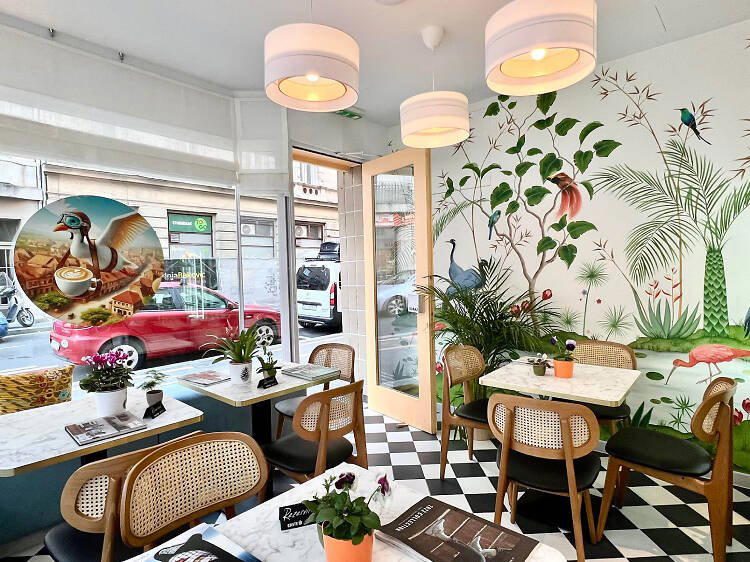
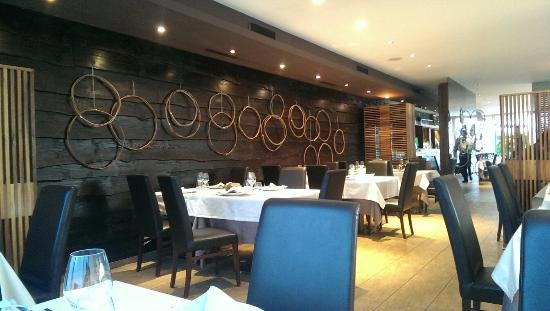
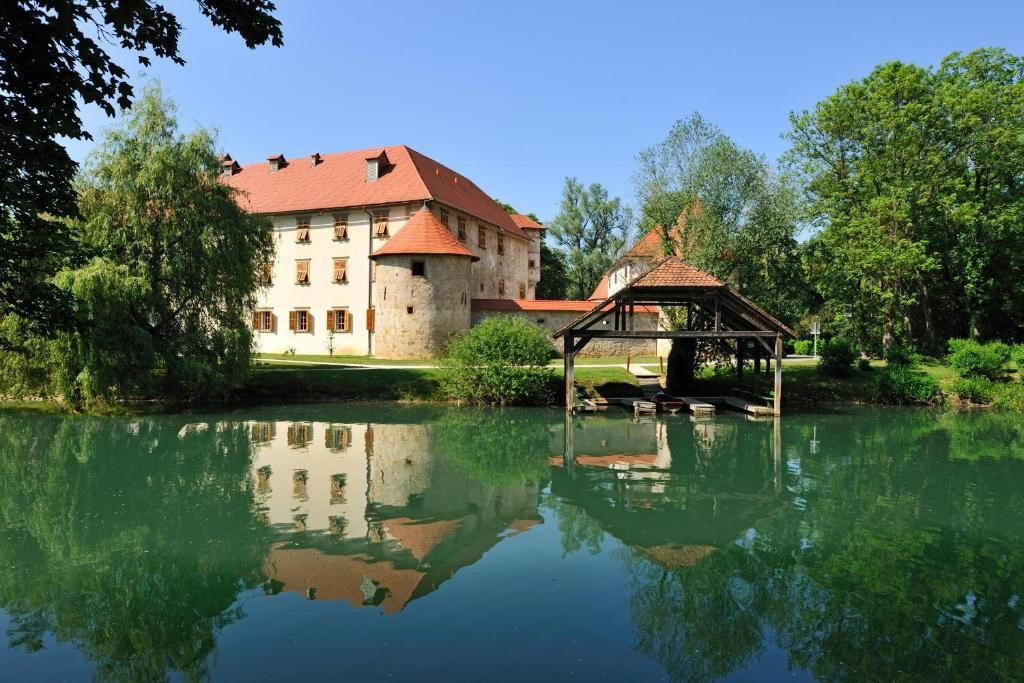
Elegant and modern interior with thoughtful lighting, surrounded by centuries-old linden trees and vineyard views; terrace provides a scenic, cozy backdrop in fine weather.