Konoba Korta occupies a corner of Split's old town near the Grgur Ninski statue, operating within the konoba tradition that defines Dalmatian coastal dining at its most grounded. Set against the stonework and narrow passages of a UNESCO-listed urban fabric, it represents the category of neighbourhood restaurant that serious visitors seek out alongside the city's more formal dining rooms.
Pearl is the En Primeur Club membership app — saves, bookings, and concierge access live there. Same editors, same standards.
- Address
- Poljana Grgura Ninskog 3, 21000, Split, Croatia
- Phone
- +38521277455
- Website
- docs.google.com
- Directions
- Get directions
 Saves & bookings on Pearl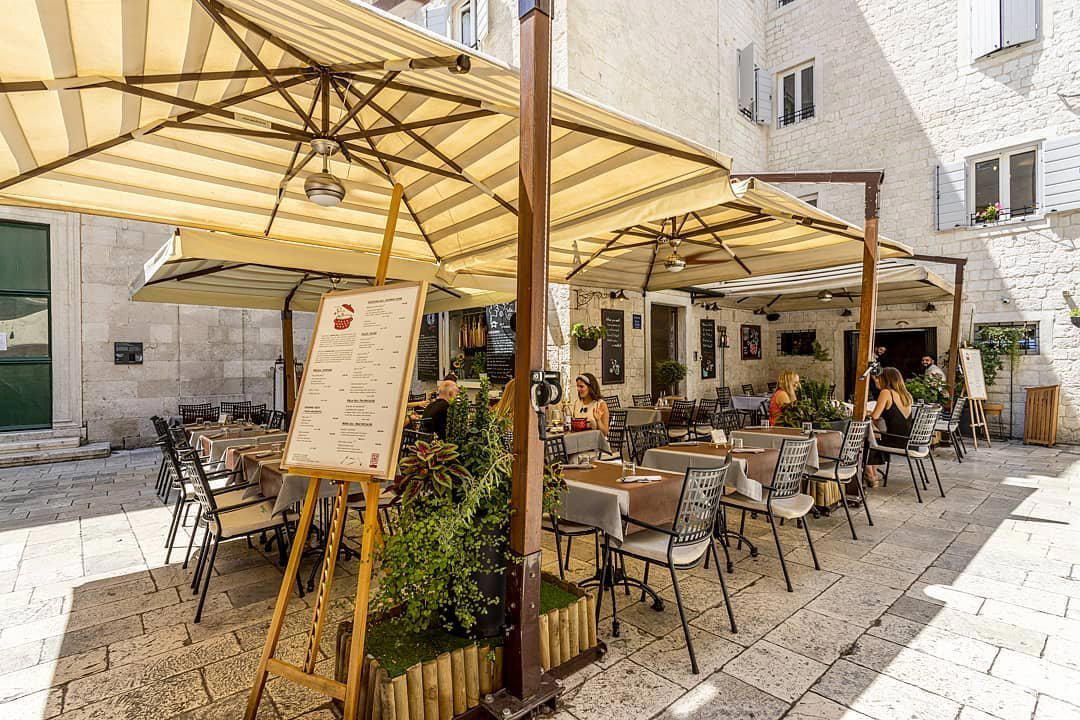
Stone, Salt Air, and the Grammar of a Dalmatian Konoba
Konoba Korta is a casual traditional Dalmatian seafood restaurant at Poljana Grgura Ninskog 3 in Split, Croatia. Approach Konoba Korta from the Peristyle side of Diocletian's Palace and the geometry of Split's old town asserts itself in full: limestone underfoot, walls that date to the fourth century, laundry above, and the particular smell of salt and stone that defines this stretch of the Adriatic coast. The address, Poljana Grgura Ninskog 3, places the restaurant within immediate reach of Ivan Meštrović's bronze statue of Bishop Gregory of Nin, one of the more photographed corners of central Split. That location is not incidental to the dining experience. In a city where the palace district itself is a living residential neighbourhood rather than a roped-off monument, eating within its walls carries a specific quality of immersion that no waterfront terrace can replicate.
The konoba format is worth understanding before arriving. Across Dalmatia, the word describes something between a tavern and a family restaurant, a format that privileges seasonal, local product over composed technique, and atmosphere over theatre. It is a category that runs from humble to accomplished, and the leading examples sit comfortably alongside the region's more formally structured dining rooms without competing on those rooms' terms. Where a restaurant like Krug (Mediterranean Cuisine) operates at the polished end of Split's Mediterranean dining spectrum, and Adriatic represents the city's seafood-forward, sea-view proposition, a konoba occupies different territory: closer to the daily rhythm of the city, less choreographed, and anchored in the Dalmatian cooking logic of good olive oil, fresh catch, and grilled meat over vine cuttings.
What the Neighbourhood Demands and Delivers
Split's old town dining scene has stratified over the past decade in ways that mirror broader Croatian coastal patterns. At one end sit the tasting-menu formats and wine-driven destinations, restaurants that function as destinations in their own right and draw visitors willing to plan ahead. Pelegrini in Sibenik and Restaurant 360 in Dubrovnik represent that tier at the national level. At the other end, you have the tourist-facing approximations of Dalmatian cooking that cluster around particularly photographed gates and squares, where price and quality diverge sharply. The middle ground, occupied by serious konobas and sharper casual rooms like Bistro Noir and Bokamorra, is where genuinely good eating happens for visitors not committed to a full formal evening.
Konoba Korta sits within that middle ground, in a location that filters its clientele naturally. The Poljana Grgura Ninskog square is well-trafficked but not aggressively so, known to residents and to visitors who have moved past the Peristyle and the Golden Gate into the quieter recesses of the palace district. The self-selecting quality of that geography matters. Restaurants positioned this way tend to maintain a higher ratio of purposeful to accidental diners, which in turn supports a more consistent kitchen rhythm.
The Dalmatian Cooking Logic Behind the Format
Dalmatian coastal cooking is not a complex tradition in its construction, but it is exacting in its sourcing requirements. The canonical dishes, peka (slow-cooked meat or seafood under an iron bell buried in embers), grilled fish priced by weight from the daily catch, pašticada (braised beef in a sweet-sour wine sauce), and black risotto made with cuttlefish ink, are all formats where the margin between good and mediocre is almost entirely a function of ingredient quality and patience. There is nowhere to hide behind sauce architecture or plating complexity.
That cooking logic makes the konoba format demanding to execute well, even if it looks informal from the outside. Across Croatia's coast, particularly accomplished examples tend to have supply relationships with local fishers and smallholders that extend over years. Agli Amici Rovinj in Rovinj, Boskinac in Novalja, and LD Restaurant in Korčula each demonstrate, in their own register, how Adriatic product can carry a serious dining proposition when handled with discipline. The konoba tradition at its leading is a variant of the same logic, compressed into a more accessible format.
Within Split itself, the comparison set for a konoba like Korta includes not just the formal rooms but also the more casual options in the surrounding streets. Bajamonti POP offers a different take on accessible eating in the city centre, with a lighter, more contemporary register. The choice between formats depends on what kind of evening the city's particular atmosphere is calling for. There are nights when the old town's stone and candlelight argue for something rooted and unhurried, and that is when the konoba format fits the evening.
Planning the Visit
Split operates as a year-round city to a greater degree than its island neighbours, but dining pressure inside the palace walls peaks hard between June and September, when cruise traffic and the broader Adriatic tourist season combine. During those months, arriving early in the evening, before 19:00, improves the experience considerably at restaurants of this type, where walk-in culture is more common than advance reservation systems. Outside peak season, the city's old town reverts to something closer to its residential character, and a meal in this part of the palace district carries a different quality of quiet.
Croatia's broader dining scene, anchored at the upper end by addresses like Nebo by Deni Srdoč in Rijeka, Dubravkin Put in Zagreb, and Alfred Keller in Mali Lošinj, has developed sufficient depth that visitors can now build itineraries that move between formal and informal registers without sacrificing quality at either end. The restaurant belongs to that informal register within Split, occupying an address that the city's geography and history have made inherently worth walking to. That is, by the standards of the konoba category, a meaningful credential in itself.
Just the Basics
Comparable venues nearby, for context on price, style, and recognition.
| Venue | Cuisine | Price | Notes |
|---|---|---|---|
| Konoba KortaThis venue — the venue you are viewing | Not listed | $$ | Not listed |
| Matoni | Bacvice, Modern Dalmatian Mediterranean | $$ | Not listed |
| Bajamonti POP | Trg Republike, Dalmatian Coastal | $$$ | Not listed |
| Portofino | Not listed | $$$ | Diocletian's Palace, Modern Mediterranean Seafood & Grill |
| Restoran PERIVOJ | Not listed | $$$ | near Diocletian Palace, Modern Mediterranean |
| Sexy Cow | Split center, Street Food Wraps | $$ | Not listed |
Continue exploring
More in Split
Restaurants in Split
Browse all →
Bars in Split
Browse all →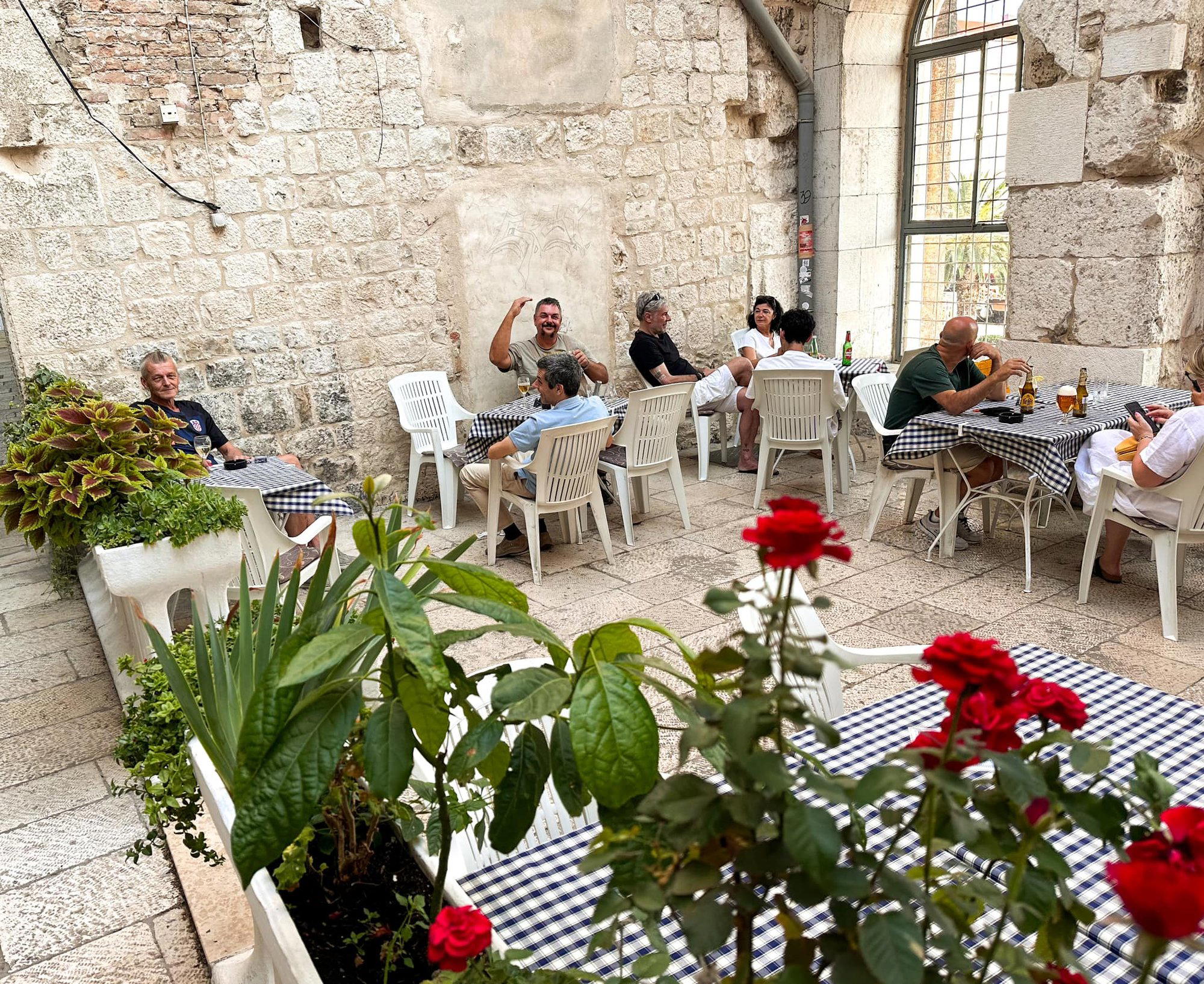
Hotels in Split
Browse all →


At a Glance
- Rustic
- Cozy
- Intimate
- Classic
- Date Night
- Casual Hangout
- Courtyard
- Historic Building
- Extensive Wine List
- Local Sourcing
- Street Scene
Current opening hours
- Monday
- 8 AM–10 PM
- Tuesday
- 8 AM–10 PM
- Wednesday
- 8 AM–10 PM
- Thursday
- 8 AM–10 PM
- Friday
- 8 AM–10 PM
- Saturday
- 8 AM–10 PM
- Sunday
- 8 AM–10 PM
Hours can change for holidays and private events. Last verified .
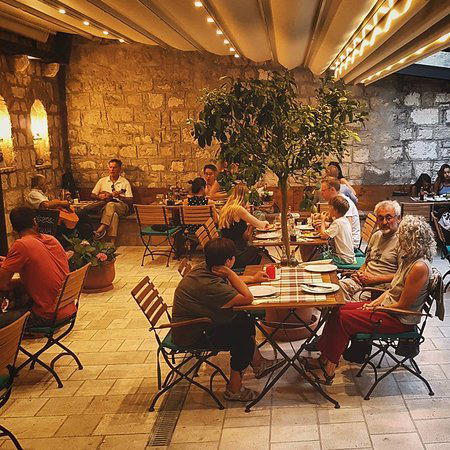
Tranquil and cozy courtyard setting in a quiet square, away from tourist crowds, with a charming retro decor surrounded by ancient Roman walls.