Our verdict
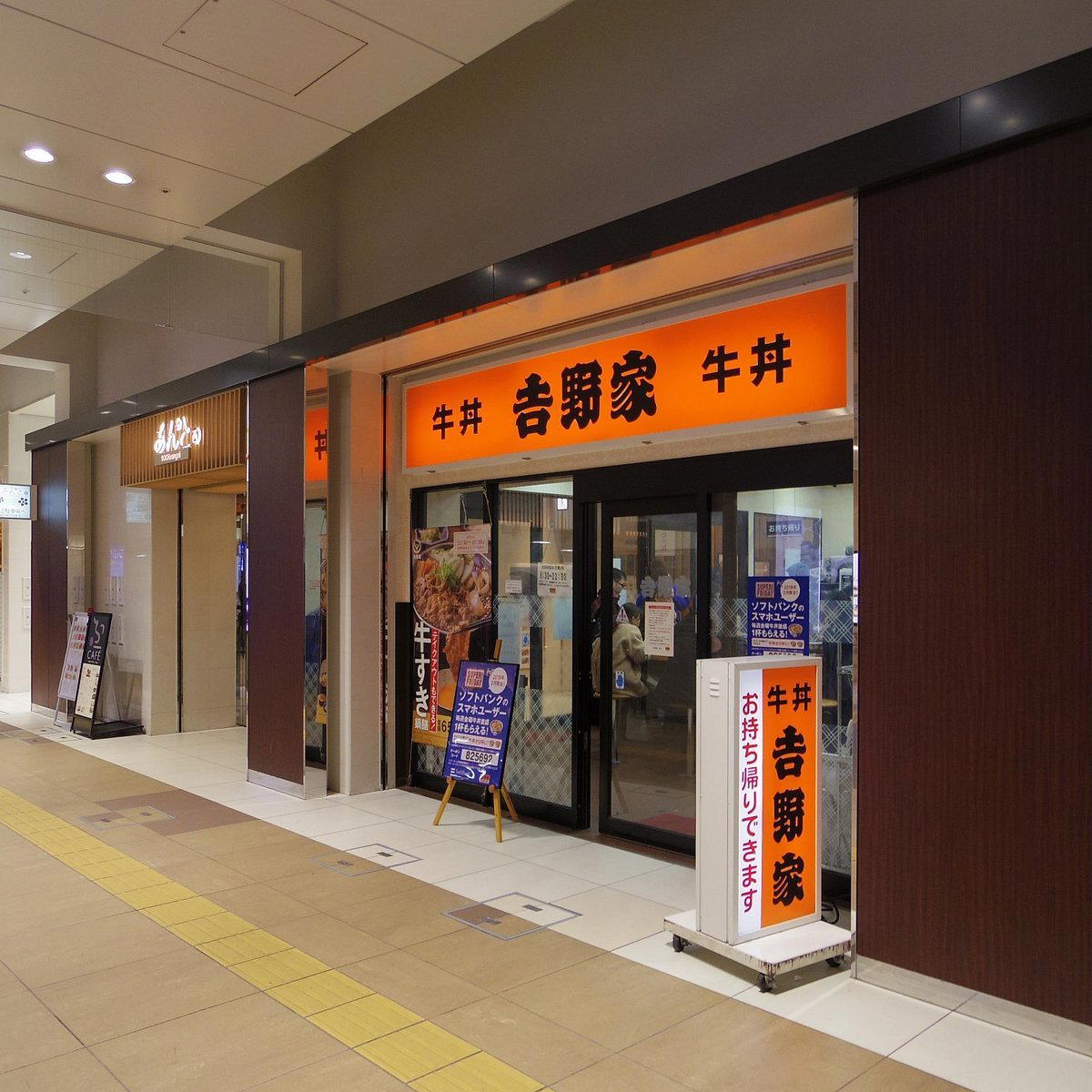
Yoshinoya (吉野家) occupies a counter inside Kanazawa's Hyakuban-gai Anto West food hall at the main station, making it one of the city's most accessible quick-service gyudon stops for arriving and departing travelers. The chain's beef bowl format, fast, consistent, priced for daily use, sits at a different register entirely from Kanazawa's kaiseki-forward dining identity, but draws a loyal crowd of regulars for exactly that reason.

Pearl is the En Primeur Club membership app, where members save venues, book tables and use the concierge.
The menu
What to order
- Gyu-don
- Gyukarubi-don
- Unaju
Station Food Hall Dining and the Case for the Everyday Bowl
Kanazawa positions itself, with good reason, as one of Japan's most serious food cities. The same station that feeds into Hyakuban-gai Anto West, where Yoshinoya (吉野家) occupies a counter on the ground floor of the Hyakuban Kitchen section, also sits within reach of some of the country's most demanding kaiseki traditions. That contrast is part of what makes the station's food hall ecosystem worth understanding. Not every meal a local eats in Kanazawa is a ceremony. Some are functional, fast, and repeated dozens of times a year.
The gyudon format that defines Yoshinoya nationally is, by design, a daily-use proposition. Thinly sliced beef simmered in a sweetened soy and dashi broth, served over rice, is the kind of dish that earns regulars not through novelty but through consistency. For the commuter catching the Thunderbird to Osaka, the traveler arriving from Tokyo on the Hokuriku Shinkansen, or the local heading home from a shift, the appeal is exactly what kaiseki cannot offer: speed, predictability, and a price point that requires no planning.
What Keeps Regulars Coming Back
The most useful lens for understanding a venue like this is not the first-time visitor's experience but the repeat customer's. In fast-service gyudon culture, the unwritten menu is a real phenomenon. Seasoned Yoshinoya customers across Japan tend to order the same variation every time, often customizing broth concentration, the ratio of onion to beef, or topping additions like a raw egg or pickled ginger, without ever consulting a printed menu. The ordering rhythm becomes automatic, the bowl arrives in minutes, and the transaction closes before most restaurants have finished seating guests.
That operational cadence is not incidental; it is the product. Yoshinoya's national presence, the chain operates hundreds of locations across Japan, means the format is as standardized as any QSR anywhere in the world, but the category it belongs to carries genuine culinary lineage. Gyudon as a dish traces back to the Meiji era, when Western-influenced beef consumption began integrating into Japanese working-class food culture. The bowl that arrives at a station counter in Kanazawa today is a compressed version of over a century of adaptation.
Inside Kanazawa's Hyakuban Kitchen food hall, the surrounding stalls offer a cross-section of the city's food identity: local sweets, regional bento, Kaga vegetable preparations. Yoshinoya sits within that mix not as an outlier but as the utility anchor, the option that functions when time is the constraint. That positioning is reflected in who actually uses it. Students, station staff, early-morning travelers, and budget-conscious regulars form the core crowd, not the Michelin-table set that defines the city's international dining reputation.
Kanazawa's Dual Dining Register
Understanding where this fits in Kanazawa's overall food picture requires holding two registers at once. At the upper end, the city's kaiseki tradition, rooted in Kaga cuisine and shaped by centuries of samurai-class patronage, produces meals that run to multiple courses, seasonal precision, and the kind of craft that takes years to develop. Venues like Dokkan and Amanatto Kawamura operate in that tradition, and Kanazawa's reputation nationally and internationally rests largely on that tier.
At the other end, the station food hall functions as a democratic corrective. The logic of a place like Yoshinoya, open during transit hours, requiring no reservation, priced for daily repetition, is that it serves people who live in Kanazawa rather than people who are visiting it as a destination. Those two categories overlap less than dining coverage typically implies. For a comparison of what the middle of Kanazawa's fast-casual register looks like, Go! Go! Curry (ゴーゴーカレー) occupies adjacent territory with its own national chain logic and a local origin story specific to the city.
Across Japan, comparable dynamics play out wherever high-end regional food culture coexists with transit infrastructure. In Osaka, a city with its own intense food identity, the gap between destination dining and station-level fast food is equally wide. HAJIME in Osaka and Goh in Fukuoka represent what serious Japanese regional kitchens produce at their formal register; stations and their surrounding food halls represent something entirely different in intent and audience.
For travelers building a fuller picture of Kanazawa's dining range, venues like Budoonomori Les Tonnelles (French) and Hakuichi occupy the mid-to-upper tiers worth planning around. Harutaka in Tokyo, Gion Sasaki in Kyoto, and akordu in Nara provide regional reference points for what Japan's serious dining tier looks like outside Kanazawa. Our full Kanazawa restaurants guide maps the city's dining range across categories and price points.
Further afield, regional options like 一本杉 川島酒店 in Nanao, 湖暖亭 in Takashima, and 庄羽屋 in Nishikawa Machi represent the broader Hokuriku and Tohoku food context that shapes the culinary character of Kanazawa's region. 古代山乃 in Sapporo, Birdland in Sakai, Le Bernardin in New York City, and Atomix in New York City offer international benchmarks for thinking about what formal and serious dining looks like at a global scale, which only underscores how differently a fast-service gyudon counter operates and why that difference is the point.
Planning a Visit
Yoshinoya in Hyakuban Kitchen sits inside Kanazawa Station's Anto West complex at 木ノ新保町1-1, 金沢市, 石川県, 920-0858. No reservation is required or possible; the format is walk-in, counter service, with turnover measured in minutes rather than hours. Given the station location, the most practical times to visit align with transit rhythms: early morning arrivals, midday layovers, or evening departures. Pricing follows the national gyudon standard, making it one of the lowest price-point options in Kanazawa's station precinct.
Frequently asked questions
What's Yoshinoya (吉野家)'s location?
Yoshinoya (吉野家) is located at 木ノ新保町1-1 (金沢百番街あんと西 1F 百番キッチン), 金沢市, 石川県, 920-0858, Kanazawa.
Is Yoshinoya inside Kanazawa Station worth stopping at as a transit meal?
For travellers passing through on the Hokuriku Shinkansen, the Hyakuban Kitchen location at Anto West, 木ノ新保町1-1, is one of the fastest sit-down options in the building. The counter format means turnover is rapid, and no reservation or pre-planning is needed, which makes it a practical choice between connections in a station that also houses higher-priced regional food stalls.
What should I eat at Yoshinoya (吉野家)?
Gyudon, thinly sliced beef simmered over rice, is the chain's foundation dish and the reason most people sit down here. Yoshinoya has served this format since 1899, and the Kanazawa Station location runs the same core menu as the national chain. Toppings such as raw egg, pickled ginger, and miso soup are the standard accompaniments.
How far ahead should I plan for Yoshinoya (吉野家)?
No planning is required. Yoshinoya in Hyakuban Kitchen at Kanazawa Station accepts no reservations and operates on a walk-in basis. It sits inside the Anto West complex at 木ノ新保町1-1, making it a practical stop before or after catching a train.
What's Yoshinoya (吉野家) best at?
Speed and consistency. Yoshinoya's gyudon is built around a production system that delivers a hot bowl within minutes of ordering, and the Kanazawa Station location, inside a busy transit food hall, is optimised for exactly that. It is not where you go for Kanazawa's kaiseki tradition, it is where you go when a train is leaving in twenty minutes.
How does Yoshinoya (吉野家) handle allergies?
Allergen information for Yoshinoya is managed at the chain level, and Japanese Yoshinoya locations typically display allergen charts in-store or via the national website.
Is Yoshinoya (吉野家) good value for money?
By any measure of yen-per-calorie in a station food hall, yes. Yoshinoya is one of Japan's lowest price-point sit-down dining formats, a standard gyudon bowl typically falls well under ¥1,000. In Kanazawa, where a kaiseki dinner can run ¥15,000 or more, this location represents the opposite end of the city's dining spectrum without any compromise in speed or portion size.
Price and Recognition
| Venue | Cuisine | Price | Awards |
|---|---|---|---|
| Yoshinoya (吉野家)This venue (the venue you are viewing) | Japanese Gyudon | $1–10 | Not listed |
| Kataori | Hyperseasonal Hokuriku Kaiseki Omakase | $200–300 | World's 50 Best #82 · La Liste Top Restaurants |
| Respiracion | Modern Spanish with Kanazawa Ingredients | $200–300 | World's 50 Best #92 · La Liste Top Restaurants |
| Sushi Kibatani | Edomae-Style Hokuriku Omakase | $150–200 | Tabelog Bronze #174 |
| Zeniya | Kaga-Style Kaiseki | $200–300 | La Liste Top Restaurants · Relais Chateaux Award |
| Hamagurizaka Maekawa | Yakitori | $150–200 | Not listed |