Our verdict
YOROKOBI sits in Naha's Makishi district, a neighbourhood where Ryukyuan culinary tradition meets the city's contemporary dining ambitions. Positioned among a small cluster of serious independent restaurants in central Okinawa, it operates at a tier that rewards advance planning. Visitors looking to understand what Naha's dining scene can produce at its more considered end will find it worth tracking down.

Pearl is the En Primeur Club membership app, where members save venues, book tables and use the concierge.
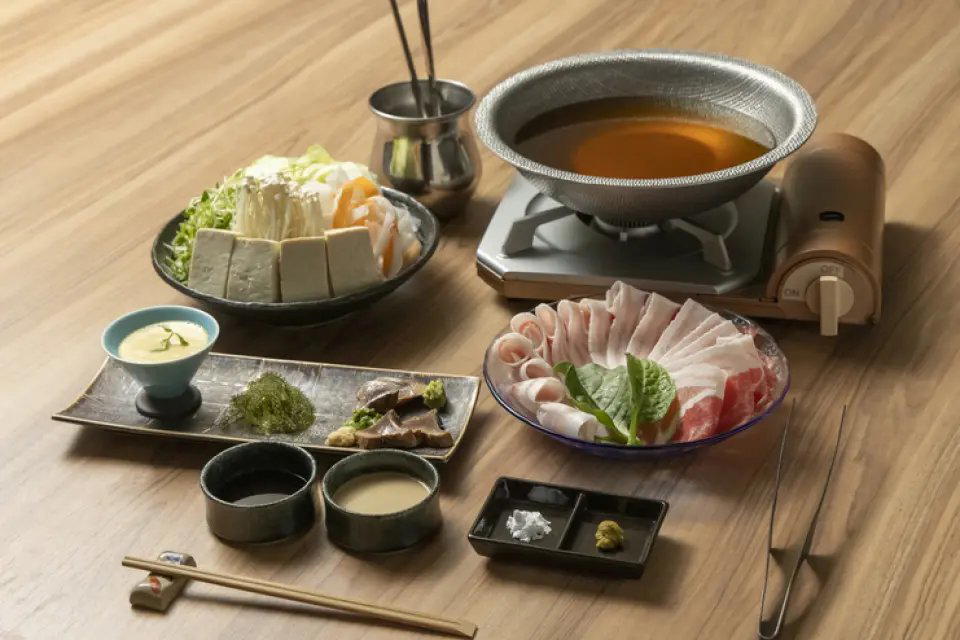
The menu
What to order
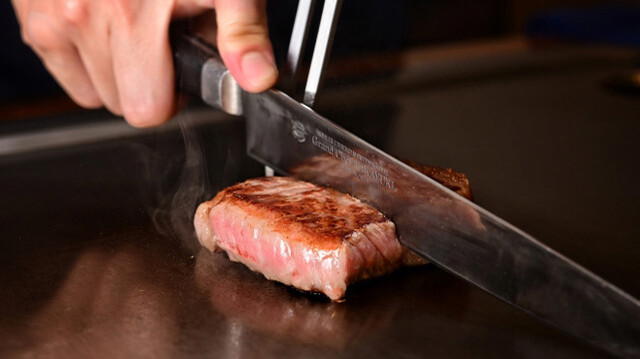
- Agu Pork Shabu-Shabu
- Ishigaki Beef Shabu-Shabu
Makishi and the Shape of Naha's Dining Quarter
Naha's Makishi neighbourhood carries a particular weight in Okinawa's food culture. The area around 2-chome has long held the kind of food-market density that shapes serious restaurant ecosystems: the proximity of Makishi Public Market, with its ground-floor vendors and the rooftop restaurants that cook your own selections, creates a baseline culinary conversation that independent restaurants in the area either participate in or deliberately push against. YOROKOBI, at the TK building on Makishi 2-4-11, sits inside that conversation rather than apart from it, occupying a Naha address that positions it squarely within the city's most gastronomically concentrated zone.
That location matters more than it might first appear. Naha is not a city where fine dining clusters in a single obvious precinct the way Tokyo's Ginza or Kyoto's Gion do. Instead, the more considered independent restaurants are distributed across a handful of walkable central neighbourhoods, with Makishi acting as one of the gravitational points. Finding a venue at this address implies a deliberate orientation toward Naha's core dining public rather than toward the resort corridor to the north or the tourist strip of Kokusai-dori.
Where YOROKOBI Sits in Naha's Independent Restaurant Tier
Naha's independent restaurant scene has developed a modest but coherent upper tier over the past decade, shaped partly by returning chefs who trained on the Japanese mainland or abroad and partly by a growing local appetite for cooking that goes beyond Okinawan comfort staples. The venues that define this tier tend to share a few characteristics: they are small in scale, driven by a clear culinary point of view, and largely dependent on local repeat custom rather than tourist walk-in traffic.
YOROKOBI sits within this grouping alongside other independently operated addresses in central Naha. Izumi and オステリア ドゥエ represent adjacent points on the same map, while Miyazaki Beef Specialty Restaurant Naha Miyachiku and Teppanyaki Matsuo operate in the premium protein tier that Naha has built credibility in. 島cuisine あーすん addresses Ryukyuan island ingredients through its own format. What distinguishes this cluster from the broader Naha market is a shared commitment to intentional cooking rather than volume throughput.
For visitors arriving from Japan's major culinary cities, the comparison points shift. The level of technical ambition at the higher end of Naha's independent scene sits below what you would encounter at a Michelin-starred counter in Osaka, Tokyo, or Kyoto, places like HAJIME in Osaka, Harutaka in Tokyo, or Gion Sasaki in Kyoto. But Naha's strongest independents compensate with something those cities' top-tier counters rarely offer: access to subtropical Okinawan produce, reef fish, and local pork breeds that simply do not feature in mainland Japanese fine dining at any price. That is a genuine differentiation, not a consolation.
Okinawa's Ingredient Context and Why It Shapes the Experience
Understanding what a serious Naha restaurant can do requires understanding what Okinawa's producers and fisheries actually supply. The prefecture sits at a latitude closer to Taiwan than to Tokyo, and its agricultural calendar, marine ecosystems, and livestock breeds reflect that. Goya, mozuku seaweed, shikwasa citrus, and Agu pork are not merely local colour; they are ingredients with specific flavour profiles and textures that mainland Japanese cooking almost never encounters. A restaurant working seriously with this larder is, by definition, doing something that no mainland Japanese kitchen, however decorated, can replicate.
This is the broader context into which YOROKOBI fits. The culinary tradition it operates within is distinct from the kaiseki heritage of Kyoto, the sushi lineage of Tokyo's leading counters, or the French-influenced modernism of venues like akordu in Nara or Goh in Fukuoka. Naha's leading independent kitchens draw from a different supply chain, one that is genuinely subtropical and shaped by a culinary history that reflects Chinese, Japanese, and Southeast Asian influences across several centuries of Ryukyuan kingdom trade.
Planning a Visit: What to Know Before You Go
The Makishi address is accessible on foot from Naha's Makishi monorail station, putting it within easy reach of central accommodation. For visitors based at hotels along the resort coast further north, a dedicated trip into the city is the realistic approach: Naha's independent dining cluster is concentrated enough that it rewards a full evening in the central neighbourhoods rather than a single stop.
Given the venue's position in Naha's more considered dining tier, advance contact is advisable. Smaller independent restaurants in Naha's central zone frequently operate at modest capacity and fill their evenings through regulars and advance bookings rather than through drop-in trade. Contact details and current operating status are worth verifying before building an evening's plans around the address.
For a broader picture of what Naha's dining scene offers across formats and price points, the full Naha restaurants guide maps the city's independent options in more detail. Visitors curious how Naha's upper-tier independents compare with counterparts elsewhere in Japan can also consult EP Club's coverage of venues like 一本松 石川制 in Nanao, 夕仙山乃 in Sapporo, or 庭羽屋 in Nishikawa Machi for regional independent dining in a similar tier across different prefectures.
Frequently asked questions
What's the overall feel of YOROKOBI?
YOROKOBI sits in Naha's Makishi neighbourhood, an area with a long identity in Okinawa's food culture. The feel aligns with Naha's independent upper tier: focused, deliberate, and rooted in the prefecture's producers and fisheries rather than tourist-facing formats. It is not a chain or hotel restaurant.
Where exactly is YOROKOBI?
YOROKOBI is located at Japan, 〒900-0013 Okinawa, Naha, Makishi, 2 Chome−4−11 TKビル 2階, Naha.
Is YOROKOBI worth visiting for travellers staying in central Naha rather than a resort area?
YOROKOBI's Makishi address is accessible on foot from the Makishi monorail station, making it a practical choice for visitors based in central Naha rather than in Okinawa's resort strips to the north or south. The restaurant operates in the independent upper tier of Naha's dining scene, which is largely concentrated in this part of the city. Travellers staying near Kokusai-dori or the Makishi area are within easy reach without requiring a taxi or rental car.
What's the must-try dish at YOROKOBI?
The restaurant's position in the local independent tier suggests the kitchen works closely with Okinawa's fisheries and regional producers, so seafood-led preparations are likely central to the offering. Confirming the current menu directly with the venue before visiting is advisable.
Should I book YOROKOBI in advance?
Given YOROKOBI's address in Makishi's compact dining quarter and its standing in Naha's independent restaurant scene, securing a reservation ahead of your visit is sensible. Walk-in availability at this level of Naha dining is rarely guaranteed, particularly during Okinawa's peak travel periods. check the venue's official channels to confirm booking procedures.
What's the standout thing about YOROKOBI?
YOROKOBI's location at 2-chome in Makishi places it at the centre of one of Naha's most historically food-focused neighbourhoods. Its standing as a serious independent in Okinawa's capital, rather than part of a broader group or tourist circuit, is itself a distinguishing factor in a city where independent upper-tier dining has only consolidated over the past decade.
Can YOROKOBI handle vegetarian requests?
No dietary accommodation details are publicly available for YOROKOBI. Given Okinawa's cuisine is heavily shaped by its fisheries and pork traditions, vegetarian requests at independent Naha restaurants often require advance notice. check the venue's official channels before your visit to confirm what can be accommodated.
The Short List
Comparable venues nearby, for context on price, style, and recognition.
| Venue | Cuisine | Price | Awards | Notes |
|---|---|---|---|---|
| YOROKOBIThis venue (the venue you are viewing) | Okinawan Shabu-Shabu | $50–100 | Not listed | Not listed |
| Teppanyaki Matsuo | Teppanyaki Steakhouse | $50–100 | Not listed | Kokusai-dori, Teppanyaki Steakhouse |
| Shabushabu Kin Honten | Okinawan Agu Pork Shabu-shabu | $50–100 | Tabelog 100 #96 | Makishi, Okinawan Agu Pork Shabu-shabu |
| Niku no Hentai Shudan Shippu Horumon Kumoji honten | Ishigaki Beef Yakiniku & Horumon | $50–100 | Tabelog 100 #91 | Kumoji, Ishigaki Beef Yakiniku & Horumon |
| 島cuisine あーすん | Okinawan Island Cuisine | $50–100 | Not listed | 金城 (Kinjo), Okinawan Island Cuisine |
| Jack's Steak House (ジャッキーステーキハウス) | Classic Okinawan Steakhouse | $20–30 | Not listed | 西, Classic Okinawa Steakhouse |
Continue exploring
More in Naha
Restaurants in Naha
All restaurants in Naha →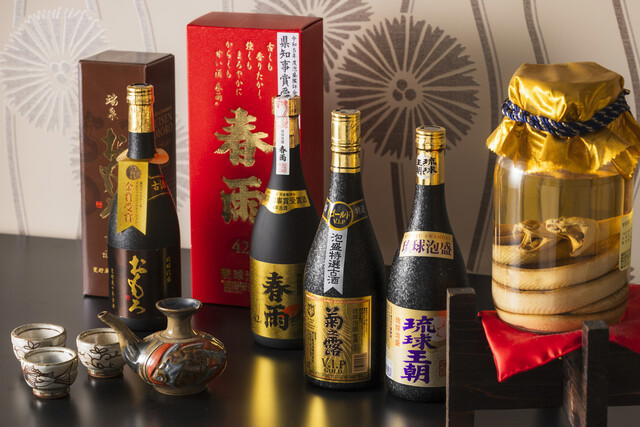
Details
- Cozy
- Intimate
- Date Night
- Group Dining
- Private Dining
- Sake Program
- A La Carte
Current opening hours
- Monday
- 4–11 PM
- Tuesday
- 4–11 PM
- Wednesday
- 4–11 PM
- Thursday
- 4–11 PM
- Friday
- 4–11 PM
- Saturday
- 4–11 PM
- Sunday
- 4–11 PM
Hours can change for holidays and private events. Hours as of .
Calm and relaxing with spacious counter seats ideal for dates and private table seating.