Our verdict
島cuisine あーすん sits in the Kanagusuku district of Naha, operating within the tradition of Okinawan shima cuisine, a cooking style shaped by the prefecture's subtropical geography, distinct agricultural calendar, and centuries of cultural exchange between Japan, China, and the Ryukyu Kingdom. For visitors timing a trip around Okinawa's seasonal produce, this address in southern Naha offers a grounded entry point into that tradition.

Pearl is the En Primeur Club membership app, where members save venues, book tables and use the concierge.
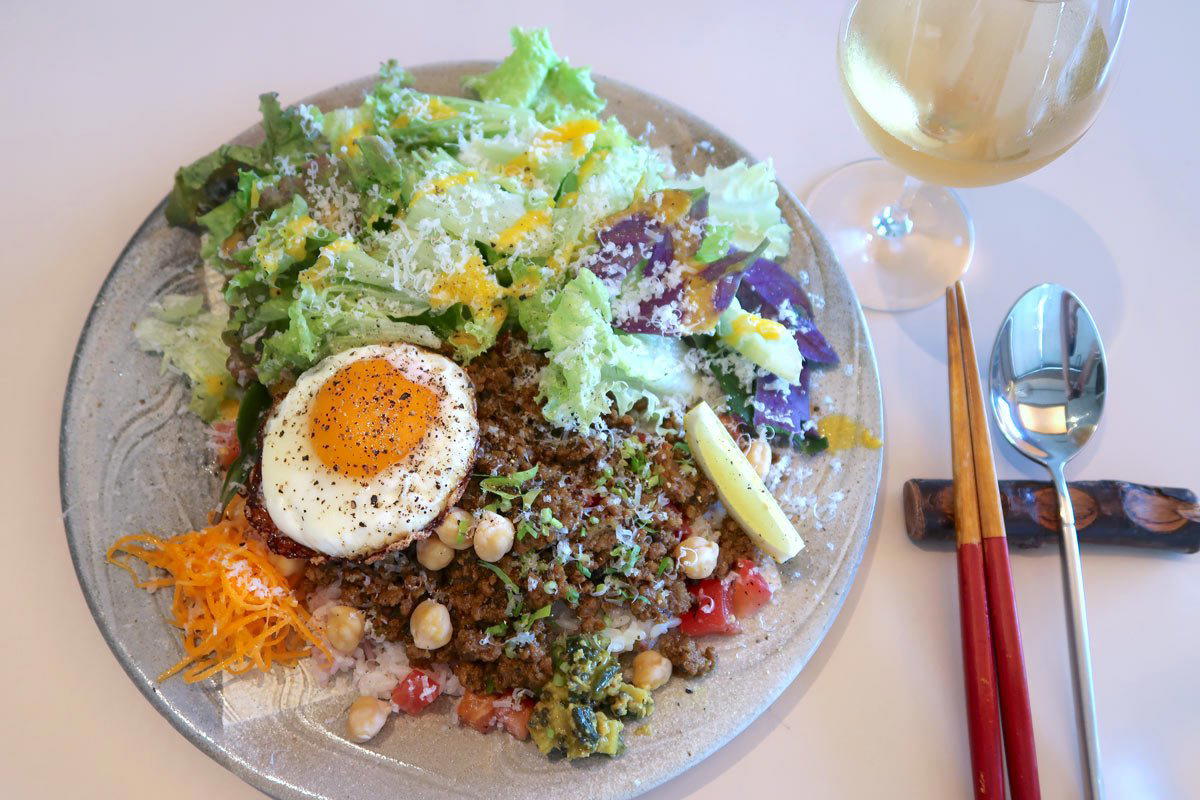
Kanagusuku and the Logic of Shima Cooking
Approach the Kanagusuku district from central Naha and the city gradually loosens its urban density. The streets here are quieter than the Kokusai-dori corridor, the low-rise buildings more residential, the pace slower. It is the kind of neighbourhood that rewards arriving on foot rather than by taxi, you absorb something of its character before you reach your destination. 島cuisine あーすん occupies an address at 5 Chome-13-5 Kanagusuku, situated away from the tourist-facing restaurant strips that cluster around Makishi and Tsuji, which already tells you something about its intended audience and its relationship to the city it operates in.
The word shima means island in Japanese, and in an Okinawan cooking context it signals a specific set of commitments: ingredients sourced from the prefecture's islands, preparations rooted in Ryukyuan culinary tradition, and a seasonal rhythm governed by the subtropical climate rather than the mainland Japanese calendar. Okinawa's growing season extends further into the year than most of Japan, which means the produce on the table in December or March differs markedly from what a Kyoto or Tokyo kitchen would be working with at the same moment. That temporal specificity is part of what makes shima cuisine interesting to visit rather than merely read about.
The Okinawan Table in Context
To understand where a venue like 島cuisine あーすん sits within Naha's dining structure, it helps to map the broader scene. The city has several tiers of restaurant experience: the large izakaya chains and tourist-oriented folk-cuisine halls around Kokusai-dori; a mid-market layer of independent restaurants covering everything from Okinawan soba to teppanyaki; and a smaller, quieter tier of dining rooms that treat the prefecture's culinary heritage with something closer to the seriousness you find at specialist restaurants in Kyoto or Fukuoka. Gion Sasaki in Kyoto and Goh in Fukuoka represent what happens when a regional culinary tradition is filtered through decades of discipline and precision, Okinawa's version of that ambition is quieter, less Michelin-catalogued, and for that reason often more interesting to the traveller willing to look past the recognition infrastructure.
Within Naha specifically, the premium dining tier includes venues across different cuisine orientations. Izumi and YOROKOBI represent distinct positions in the city's considered-dining bracket, while Miyazaki Beef Specialty Restaurant Naha Miyachiku and Teppanyaki Matsuo anchor a different kind of premium experience centred on premium Japanese beef. オステリア ドゥエ signals that the city's serious diners are equally comfortable crossing into European formats. Against this range, a restaurant that grounds itself in shima cooking occupies a specific and increasingly valued position: it is the category least likely to be replicated by chefs outside the prefecture, and the one most dependent on Okinawa's particular agricultural and maritime ecology.
Seasonal Entry Points
The case for visiting 島cuisine あーすん is sharpest when timed to Okinawa's distinct seasonal transitions. The prefecture moves through several distinct agricultural windows across the year. Late spring and early summer bring the subtropical heat that drives bitter melon, goya, and a range of island vegetables unavailable in mainland supermarkets. Autumn and winter see a shift toward root vegetables, citrus, and the sea-facing produce of the surrounding waters. Okinawa's fishing grounds contribute ingredients, mozuku seaweed, reef fish, various molluscs, that have no equivalent in the colder waters of Honshu. A kitchen committed to shima principles should reflect these transitions, which means the table in June and the table in November are genuinely different experiences.
Japan's broader fine-dining circuit rewards patience with its seasonal specificity. Harutaka in Tokyo and HAJIME in Osaka both operate within seasonal frameworks shaped by mainland ingredient calendars. The Okinawan version of that discipline runs on a different clock, subtropical rather than temperate, which is precisely what makes the experience worth seeking out as a distinct category, not a southern variant of the same thing.
Reading the Room
Specialist cuisine restaurants in Japan's secondary cities tend to be small. The economics of sourcing genuinely local ingredients, maintaining supplier relationships, and running a kitchen focused on a relatively narrow culinary tradition do not scale well. This is not a limitation of ambition, it is a structural feature of how serious regional cooking operates in Japan, from Nanao to Sapporo to Takashima. Venues in this tier tend to sit outside the reach of Michelin's annual survey, Okinawa Prefecture does not currently appear in the Michelin Guide Japan, which makes discovery less algorithmic and more dependent on local knowledge or editorial curation.
The absence of formal rating infrastructure does not imply an absence of quality signals. It means different signals apply: neighbourhood reputation, years in operation, the kind of sustained local patronage that keeps a small dining room functioning in a residential district far from the tourist corridor. These are slower, less legible signals than a star count, but in many respects more durable ones. For context on how high-intent regional Japanese dining operates outside the major recognition circuits, the work being done at venues like Nishikawa Machi and akordu in Nara suggests a pattern: places committed to a specific geographic or culinary identity tend to develop audiences that are smaller but more purposefully selected.
Planning a Visit
The Kanagusuku address places 島cuisine あーすん in the southern section of Naha, reachable by taxi from central Naha in under ten minutes or by local bus from the Asahibashi and Makishi areas. For visitors building a broader Naha itinerary, our full Naha restaurants guide maps the city's dining options across cuisine type and price tier. Because verified booking information is not currently available through public channels, arriving with a confirmed reservation, arranged through the venue directly or via a local concierge service, is the prudent approach. Smaller specialist restaurants in residential Naha neighbourhoods do not typically hold tables for walk-ins during peak dining hours, particularly at weekend dinners. Okinawa's tourist season peaks between July and September, driven by beach travel; the shoulder months of April through June and October through November tend to offer more flexibility at the city's quieter dining rooms.
For travellers who want a reference point in the international tier before landing in Naha, the kind of ingredient-driven precision that defines high-intent regional cooking is visible at very different scale at venues like Le Bernardin in New York City and the fermentation-led Korean-American program at Atomix in New York City. The comparison is not about cuisine similarity, it is about the commitment to a specific sourcing logic that shapes everything on the table. That commitment, expressed through Okinawa's subtropical pantry, is what 島cuisine あーすん represents in the city's quieter dining tier.
Frequently asked questions
Where is 島cuisine あーすん in Naha?
島cuisine あーすん is located at 5 Chome-13-5 Kanagusuku, Naha, Okinawa 901-0155, Japan, Naha.
Is 島cuisine あーすん in the Kanagusuku district easy to reach from central Naha?
The Kanagusuku address in southern Naha puts 島cuisine あーすん within roughly ten minutes by taxi from the Kokusai-dori area, and local bus routes also connect the district to central Naha. It sits outside the main tourist corridor, which means less foot traffic and no walk-in culture, arriving with a confirmed reservation and a planned route is advisable. The address is 5 Chome-13-5 Kanagusuku, Naha, Okinawa 901-0155.
What's the best thing to order at 島cuisine あーすん?
What the venue's name signals directly is a focus on shima, island, cooking, which in Okinawa means ingredients tied to specific local producers, seasons, and preparation traditions distinct from mainland Japanese cuisine. Arriving with an open approach to whatever the kitchen is currently working with is consistent with how this category of restaurant operates in Japan's secondary cities.
How hard is it to get a table at 島cuisine あーすん?
Small specialist restaurants in Naha's residential districts tend to operate with limited covers and irregular advance booking windows, particularly those sourcing from local Okinawan producers where supply shapes the menu. Contacting the venue directly or checking through a local concierge in Naha is the most reliable path to securing a reservation.
Same-City Peers
Comparable venues nearby, for context on price, style, and recognition.
| Venue | Cuisine | Price | Awards | Notes |
|---|---|---|---|---|
| 島cuisine あーすんThis venue (the venue you are viewing) | Okinawan Island Cuisine | $50–100 | Not listed | Not listed |
| Niku no Hentai Shudan Shippu Horumon Kumoji honten | Ishigaki Beef Yakiniku & Horumon | $50–100 | Tabelog 100 #91 | Kumoji |
| Shabushabu Kin Honten | Okinawan Agu Pork Shabu-shabu | $50–100 | Tabelog 100 #96 | Makishi |
| 首里そば | Okinawan Soba | $1–10 | Not listed | Shuri |
| Agu Shabushabu Miruku Naha ten | Agu Pork Shabu-Shabu | $50–100 | Tabelog 100 #49 | Wakasa |
| Izumi | Edo-style Sushi Omakase | $100–150 | Not listed | Tomari |
Continue exploring
More in Naha
Restaurants in Naha
All restaurants in Naha →

Details
- Cozy
- Intimate
- Elegant
- Date Night
- Special Occasion
- Standalone
- Sake Program
- Farm To Table
- Local Sourcing
- A La Carte
- Prix Fixe
- Wine
Current opening hours
- Monday
- Closed
- Tuesday
- 12–3 PM, 6:30–11 PM
- Wednesday
- 12–3 PM, 6:30–11 PM
- Thursday
- 12–3 PM, 6:30–11 PM
- Friday
- 12–3 PM, 6:30–11 PM
- Saturday
- 12–3 PM, 6:30–11 PM
- Sunday
- Closed
Hours can change for holidays and private events. Hours as of .
Comfortable and relaxing space surrounded by greenery in a cozy house setting.