Our verdict
オステリア ドゥエ occupies a residential pocket of Tomari, one of Naha's quieter neighbourhoods, where Italian cooking meets the subtropical produce of Okinawa. The menu structure, the real story here, rewards closer reading than most Italian restaurants in southern Japan manage to offer. Plan ahead: tables in smaller Naha trattorias at this address level tend to fill well in advance.

Pearl is the En Primeur Club membership app, where members save venues, book tables and use the concierge.
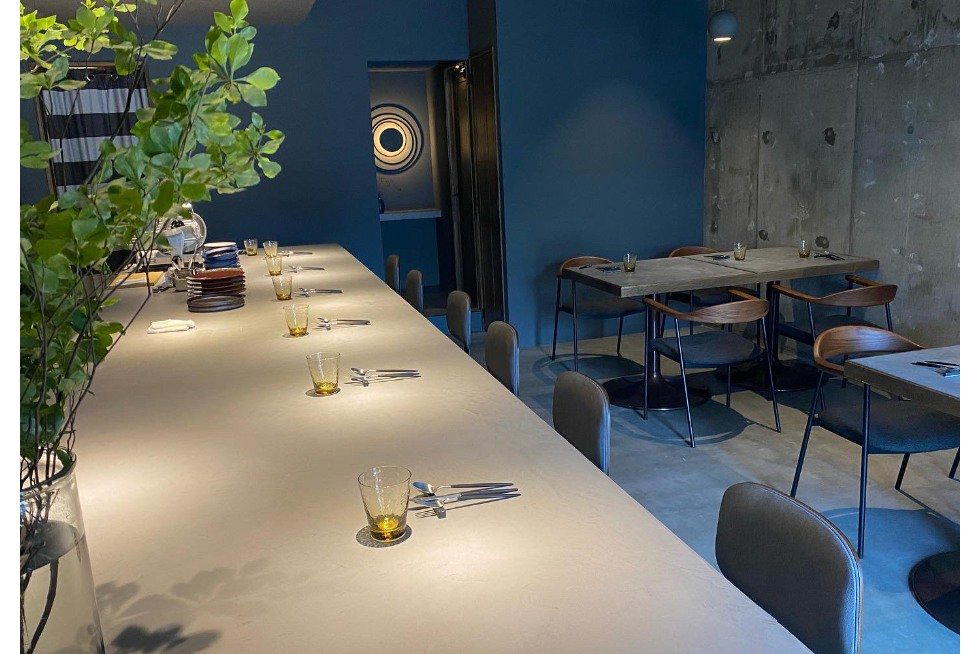
Italian Cooking at the Edge of the Ryukyu Chain
Naha's dining identity is layered in ways that confuse first-time visitors. The city carries a culinary legacy shaped by centuries of Ryukyu Kingdom trade, a distinct post-war food culture, and, increasingly, a generation of chefs who trained elsewhere and returned with continental European techniques. Italian restaurants sit within that last strand. Across southern Japan, the Italian trattoria format has taken hold not as imitation but as adaptation, absorbing local protein, citrus, and fermentation traditions into a European structural grammar. オステリア ドゥエ, at 1 Chome-8-12 Tomari, is part of that pattern.
Tomari is not where most visitors begin their Naha itinerary. The neighbourhood sits north of the Kokusai-dori tourist corridor, closer to the ferry terminal than to the izakayas of Makishi. That geographic position matters: restaurants here serve a more local clientele, which tends to shape menus toward honesty over performance. The physical approach to a small Italian restaurant on a Tomari side street, low signage, residential surroundings, the smell of the port a few hundred metres away, signals something different from the European-inflected dining rooms of Ginza or Minami-Aoyama.
How the Menu Is Built, and What That Tells You
The editorial angle worth applying to any Italian restaurant operating outside Italy's culinary geography is menu architecture: what the kitchen chooses to include, what it omits, and where it allows local logic to override European convention. In Okinawa's case, that means deciding what to do with sea grapes (umi-budō), goya bitter melon, Okinawan pork traditions, and the island's distinctly mineral-forward seafood, all of which present both opportunity and tension for a kitchen working within Italian structural categories.
The Italian osteria format, at its most coherent, organises itself around antipasto, primo, secondo, and dolce in a progression that treats each course as a pause rather than a relay. Where Japanese-Italian restaurants in larger cities such as Tokyo or Osaka sometimes collapse this structure into a single tasting register, as seen in highly conceptual formats like HAJIME in Osaka, smaller regional restaurants like オステリア ドゥエ tend to maintain more recognisable European course logic while substituting ingredients at the point of sourcing. The result is menus that are intelligible to Italian-trained diners without being derivative.
This approach positions オステリア ドゥエ within a tier of Japanese Italian restaurants that treat the European framework as a container, not a constraint. Compare this to the trajectory of kaiseki-influenced menus at venues like Gion Sasaki in Kyoto or the French-Japanese dialogue at akordu in Nara: in each case, the borrowed European form becomes the lens through which local ingredient culture is made legible to a wider audience.
Naha's Wider Italian and European Dining Field
Okinawa Prefecture produces a short but coherent list of restaurants operating in the European tradition. Within Naha itself, the dining options that draw consistent attention tend to cluster around either Okinawan ingredient purity, represented by spots like 島cuisine あーすん, or premium protein-forward formats such as Miyazaki Beef Specialty Restaurant Naha Miyachiku and the teppanyaki counter at Teppanyaki Matsuo. Japanese-style fine dining is represented through venues like Izumi and YOROKOBI.
European cooking in this context is neither dominant nor marginal, it occupies a specific niche, drawing on Okinawa's agricultural abundance while addressing a clientele that has often encountered Italian food in Japan's larger cities and arrives with calibrated expectations. For a broader view of where オステリア ドゥエ sits within the city's full dining spectrum, the our full Naha restaurants guide maps the field in detail.
The comparison with Japan's other regional Italian practitioners is useful for positioning. Restaurants like Goh in Fukuoka demonstrate how a mid-sized Japanese city can sustain ambitious European cooking through strong local sourcing networks. Naha's position at the southern edge of Japan gives it access to ingredients that northern Japanese kitchens cannot source as easily, Okinawan sea fish, subtropical herbs, island pork, which, in the right hands, can give a small Italian restaurant a distinctive ingredient argument rather than simply a geographic novelty.
Placing Okinawa in the Broader Japanese Fine Dining Conversation
Japan's recognised fine dining conversation is weighted toward Tokyo, Kyoto, and Osaka, with meaningful secondary clusters in Fukuoka and, increasingly, Sapporo, a trajectory visible in restaurants like 夕佳亭山乃 in Sapporo. Regional operators in Okinawa, Nanao, Takashima, and Nishikawa Machi, see 一本杉川嶋 in Nanao, 湖畔荘 in Takashima, and 鶴羽屋 in Nishikawa Machi, work outside that mainstream recognition economy and are often more ingredient-driven and less format-constrained as a result.
Globally, the pressure to justify European fine dining in non-European cities has produced some of the most interesting menu architecture of the past decade. New York venues like Le Bernardin and Atomix have each found different answers to the question of how to operate within a European or European-adjacent framework while developing a genuinely local identity. For a small osteria in Tomari, that question plays out at a different scale, but the underlying tension between imported form and local material is the same.
The Harutaka in Tokyo and Birdland in Sakai represent the kind of focused, format-rigorous Japanese restaurants that have built reputations through consistency and restraint rather than novelty. That discipline, running a specific format well over time, is what separates durable neighbourhood restaurants from seasonal concepts, and it is the quality worth watching for in Naha's smaller European operators.
Planning Your Visit
オステリア ドゥエ is located at 1 Chome-8-12 Tomari, Naha, Okinawa, a short distance from the Tomari ferry terminal and accessible from central Naha by taxi or monorail connection to Miebashi station followed by a short walk north. As with most small Italian restaurants operating in residential Japanese neighbourhoods, seat count is limited and reservations are advisable, particularly on weekend evenings and during Okinawa's busier travel windows between late March and early May and again in late summer. Booking through the venue directly, either by telephone or in person, is the standard approach for restaurants at this scale in Naha, given that international booking platforms have uneven coverage of smaller operators in the prefecture.
Frequently asked questions
Where is オステリア ドゥエ in Naha?
オステリア ドゥエ is located at 1 Chome-8-12 Tomari, Naha, Okinawa 900-0012, Japan, Naha.
How does オステリア ドゥエ fit into Naha's European dining scene?
Italian and European restaurants represent a small fraction of Naha's overall dining options, which are dominated by Okinawan cuisine rooted in the prefecture's Ryukyu Kingdom heritage. An osteria format, typically a more casual, food-focused Italian establishment compared to a ristorante, is a rarer category still within the city. オステリア ドゥエ's Tomari address places it away from the main Kokusai-dori tourist corridor, situating it more firmly within the local dining circuit.
What's the must-try dish at オステリア ドゥエ?
What the kitchen's Italian framework in Naha does suggest is that the most revealing order at any Italian osteria operating this far outside the Italian culinary orbit is whatever reflects local Okinawan ingredient crossover, ask staff directly what the kitchen is sourcing that week from Okinawa Prefecture's markets.
Should I book オステリア ドゥエ in advance?
Italian restaurants with a fixed address in Naha's Tomari district, a neighbourhood without heavy tourist foot traffic, tend to operate on a smaller covers model, which makes walk-ins a gamble on weekends and during Okinawa's peak travel windows (spring and summer). Contacting the restaurant directly before visiting is the practical approach, particularly for dinner. The address is 1 Chome-8-12 Tomari, Naha, Okinawa 900-0012.
Recognition Snapshot
Comparable venues nearby, for context on price, style, and recognition.
| Venue | Cuisine | Price | Awards | Notes |
|---|---|---|---|---|
| オステリア ドゥエThis venue (the venue you are viewing) | Cozy Italian Osteria with Low-Water Pasta Fresca | $50–100 | Not listed | Not listed |
| Jack's Steak House (ジャッキーステーキハウス) | Classic Okinawan Steakhouse | $20–30 | Not listed | 西 |
| Niku no Hentai Shudan Shippu Horumon Kumoji honten | Ishigaki Beef Yakiniku & Horumon | $50–100 | Tabelog 100 #91 | Kumoji |
| YOROKOBI | Okinawan Shabu-Shabu | $50–100 | Not listed | Makishi |
| サウザンステーキ | Affordable Japanese Steakhouse | $10–20 | Not listed | Sakae-machi |
| Teppanyaki Matsuo | Teppanyaki Steakhouse | $50–100 | Not listed | Kokusai-dori |
Continue exploring
More in Naha
Restaurants in Naha
All restaurants in Naha →




Details
- Cozy
- Intimate
- Elegant
- Date Night
- Special Occasion
- Sake Program
- A La Carte
Current opening hours
- Monday
- Closed
- Tuesday
- 11:30 AM–2:30 PM, 5–10 PM
- Wednesday
- 11:30 AM–2:30 PM, 5–10 PM
- Thursday
- 11:30 AM–2:30 PM, 5–10 PM
- Friday
- 11:30 AM–2:30 PM, 5–10 PM
- Saturday
- 11:30 AM–2:30 PM, 5–10 PM
- Sunday
- 11:30 AM–2:30 PM, 5–10 PM
Hours can change for holidays and private events. Hours as of .
Quiet and classy with a stylish gray interior, cozy and intimate atmosphere praised in guest reviews.